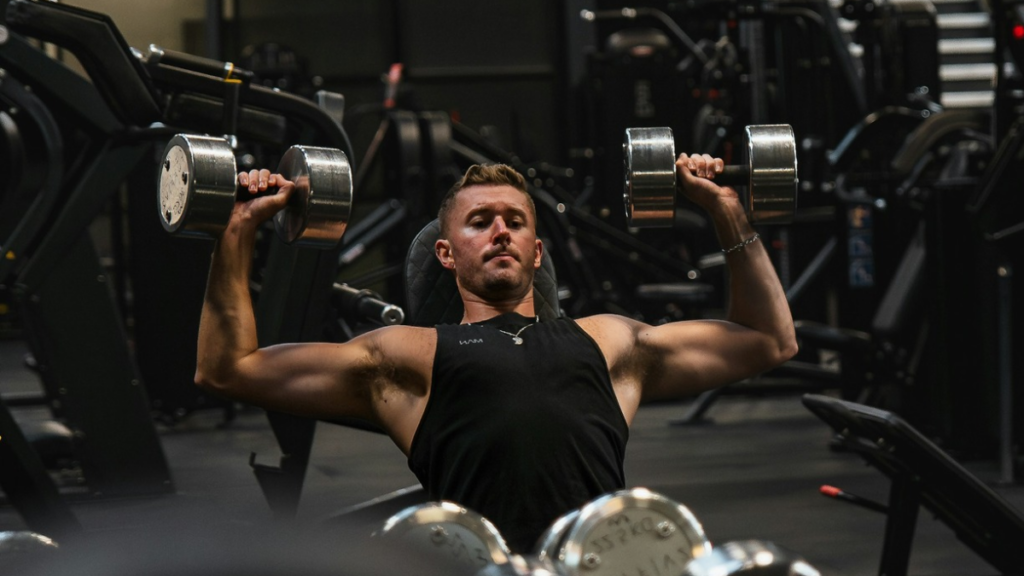


Upper body strength is not just about looking muscular in a T shirt. It affects how well you can push, pull, carry, hang, and control your own bodyweight. It also makes everyday tasks easier, from lifting luggage into an overhead compartment to moving furniture or carrying heavy shopping bags.
The problem is that many people judge their upper body strength only by the weight on one machine or by how their arms look in the mirror. Neither gives you a complete answer. Real upper body strength involves pressing power, pulling ability, muscular endurance, grip strength, and the ability to stabilize your body under load.


There is no single test that can perfectly define an average man. Age, body mass, training history, injury history, and body composition all matter. A 220 pound man will usually have different absolute strength numbers from a 150 pound man, while a lighter athlete may perform better in bodyweight exercises.
Still, established fitness norms and commonly used strength tests can give you a useful picture. If you can hit several of the following standards with clean technique, your upper body is likely stronger than that of the average adult man.
What Makes Upper Body Strength Useful?
Strong upper body muscles do much more than produce a bigger chest, shoulders, and arms. The chest, triceps, shoulders, upper back, lats, biceps, forearms, and grip muscles all work together during athletic movements and daily tasks.
Resistance training is consistently associated with improvements in muscular strength and physical function. Research also shows that greater muscular strength is linked with better health outcomes, although strength is only one piece of the bigger health picture. Aerobic fitness, body composition, sleep, nutrition, and regular activity still matter.
A useful upper body assessment should include both absolute and relative strength. Absolute strength is the total load you can lift. Relative strength compares your performance with your bodyweight. Both matter. A heavy bench press demonstrates impressive pressing force, but the ability to control your own bodyweight in strict pull ups and push ups reveals another valuable kind of strength.
Sign 1: You Can Bench Press Your Bodyweight
For many men, a bodyweight bench press is a meaningful upper body strength milestone. It requires the chest, shoulders, triceps, upper back, and core to work together while you control a loaded barbell through a full range of motion.
Why Relative Bench Press Strength Matters
Bench press performance is often judged only by plates on the bar, but that can be misleading. A 225 pound bench press means something very different for a 160 pound lifter than it does for a 250 pound lifter. Dividing your one repetition maximum by bodyweight offers a more useful comparison.
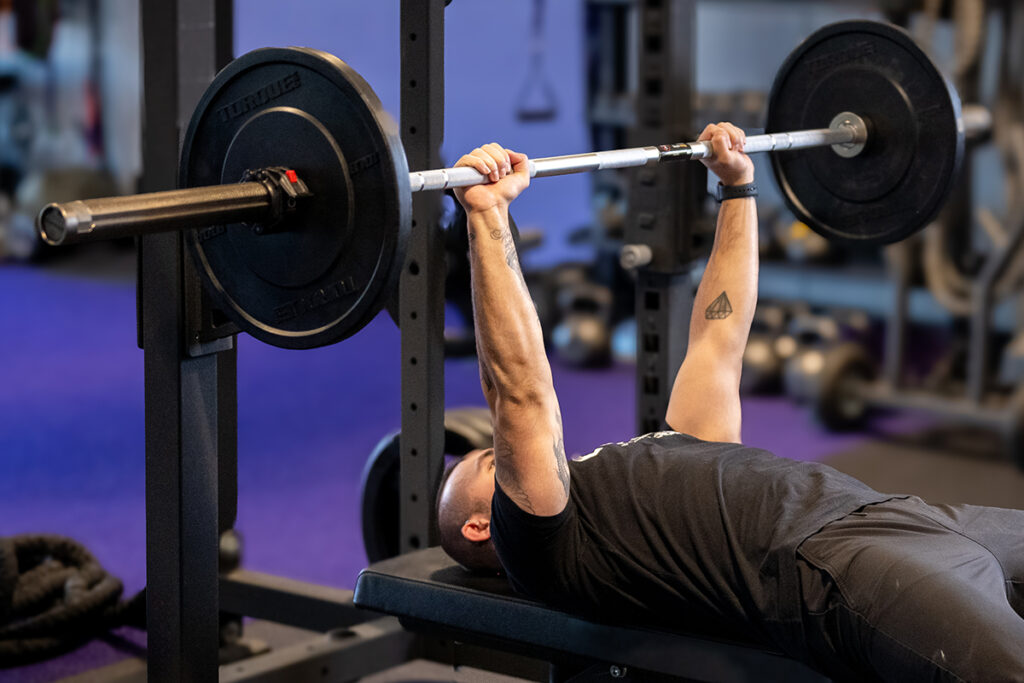
Normative data used in strength and conditioning settings suggest that a bodyweight bench press places many adult men around or above the middle of the distribution, depending on age. For men in their twenties, a one repetition maximum of roughly 1.06 times bodyweight has been used as a 50th percentile benchmark. The benchmark falls slightly with age, which reflects the gradual decline in strength that can occur without regular resistance training.
That does not mean every man who benches less than bodyweight is weak. Many men do not train the barbell bench press, and some can build excellent upper body strength through dumbbells, push ups, gymnastics, or manual work. It does mean that a controlled bodyweight bench press is a strong sign that your pressing strength is ahead of the general population.
How to Test It Properly
Use a full range of motion. Lower the bar under control until it touches the chest, then press it back to locked elbows without bouncing it off your rib cage. Keep your feet planted, shoulder blades pulled back, and a spotter nearby if the weight is challenging.
If you weigh 180 pounds and can bench press 180 pounds for one technically sound repetition, that is a clear sign of solid relative pressing strength. If you can press more than 1.25 times bodyweight, your performance moves further into above average territory for recreationally trained men.
Sign 2: You Can Do 30 Strict Push Ups Without Stopping
Push ups are easy to underestimate because they require no equipment. In reality, a strict push up is a demanding upper body exercise that involves the chest, triceps, front shoulders, core, and shoulder stabilizers.
A Simple Test of Strength Endurance
Push up tests are widely used in fitness assessments because they are practical, inexpensive, and reliable when the technique is standardized. They measure muscular endurance more directly than maximum strength, but endurance is still an important expression of upper body performance.
For men aged 20 to 29, completing around 30 consecutive push ups has been used as an above average benchmark. For men aged 30 to 39, around 24 repetitions is similarly above average. These figures are not a verdict on your fitness, but they provide a useful target.
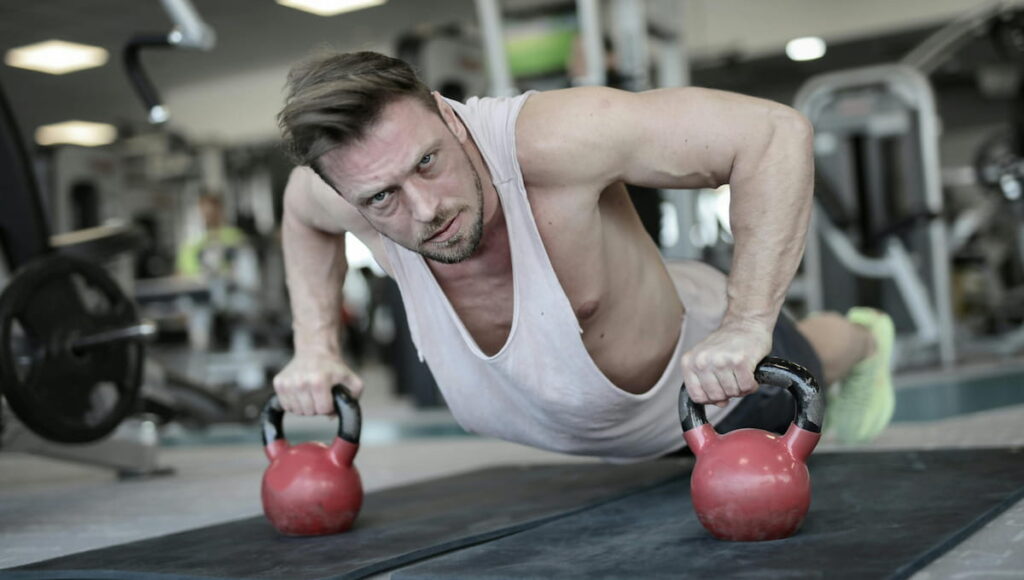
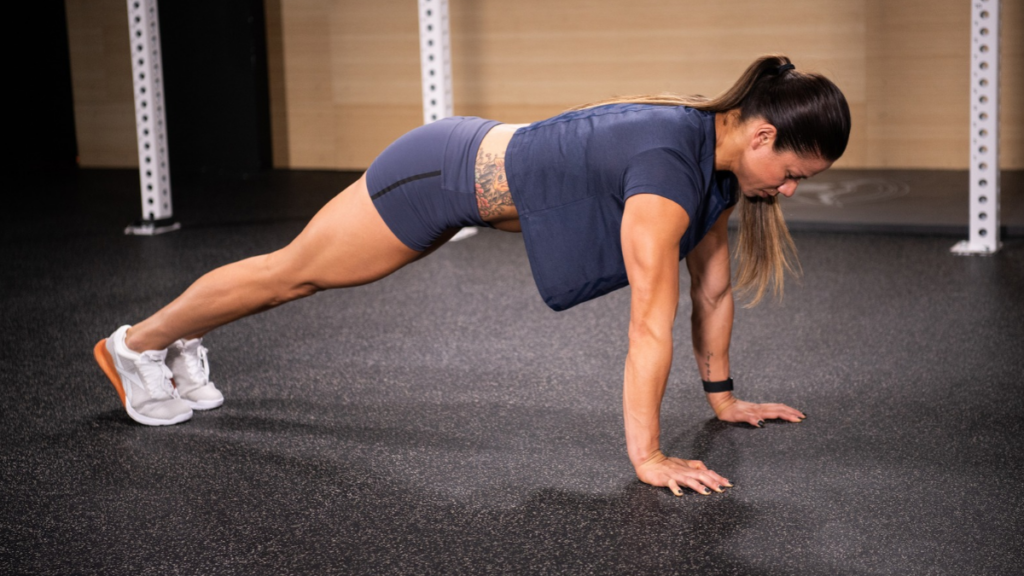
The key word is strict. Half repetitions, sagging hips, flared elbows, and bouncing through the bottom do not count. Start in a straight plank position, lower your chest close to the floor, and press back up until your elbows are straight.
What Your Number Actually Tells You
A strong push up score indicates that you can repeatedly produce force while stabilizing your torso. That is useful for sport, training, and everyday movement. It also gives you a performance measure that is less dependent on access to a gym.
Research in active men has found that greater push up capacity was associated with a lower risk of later cardiovascular events. That finding does not mean push ups alone prevent heart disease, and the study involved active firefighters rather than the full population. Still, it reinforces the idea that muscular fitness can be a meaningful marker of overall physical capacity.
If you can complete 30 clean push ups in one set, you are not just demonstrating decent chest and triceps endurance. You are showing that your upper body can repeatedly handle a substantial percentage of your bodyweight.
Sign 3: You Can Perform 8 Strict Pull Ups
A strict pull up is one of the clearest demonstrations of relative upper body strength. It asks you to move your entire bodyweight using the lats, biceps, forearms, upper back, rear shoulders, and core.
Why Pull Ups Separate Strong Lifters From Strong Bodies
A pull up can expose weaknesses that machine exercises sometimes hide. A lat pulldown allows you to choose the load, while a pull up requires you to control your full bodyweight. This becomes harder as body mass rises, which is why pull ups reward a combination of strength, body composition, and movement skill.
Being able to complete eight strict pull ups is a strong sign that your pulling strength is ahead of the average untrained man. The repetitions should begin from a controlled hang with straight elbows and finish with the chin clearly over the bar. Avoid using a kip, swinging the legs, or shortening the range of motion.
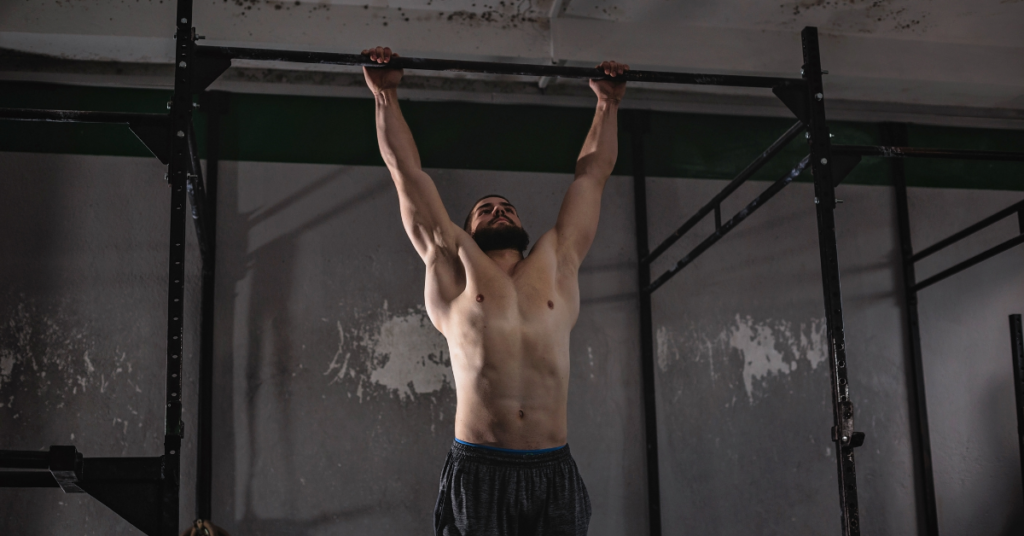
The pull up also trains movement patterns that support balanced upper body development. A training program built only around pressing can leave the upper back underdeveloped. Pulling exercises help develop the muscles that support the shoulder blades and contribute to strong posture during pressing, carrying, and overhead work.
Do Not Let Ego Change the Test
Grip the bar with palms facing away, keep your legs still, and pull your chest upward rather than craning your neck toward the bar. If you can perform eight repetitions this way, you have a very good base of relative strength.
If you cannot yet do one, that is not a reason to avoid the movement. Assisted pull ups, slow lowering repetitions, pulldowns, rows, and dead hangs can all help you progress toward your first strict repetition.
Sign 4: Your Grip Strength Is Above 50 Kilograms
Grip strength may seem like a forearm test, but it influences nearly every serious upper body exercise. Your grip connects your body to a barbell, dumbbell, pull up bar, rope, kettlebell, or heavy object.
Why a Strong Grip Matters
Handgrip strength is commonly measured with a dynamometer and is one of the most studied physical performance measures in health research. It is associated with overall strength, physical function, and health outcomes across adulthood. It is not a complete measure of fitness, but it is a useful and convenient indicator.
Large population studies show that grip strength differs substantially by age, sex, height, and body mass. In younger adult men, a maximum grip reading of 50 kilograms in one hand is a strong result. A number above that level suggests that your hands and forearms can generate force well beyond what many adult men can produce.
Grip strength supports performance in rows, deadlifts, pull ups, loaded carries, and climbing. If your hands give out before your back or legs, your training may be limited by grip rather than the muscles you actually want to challenge.
How to Test It
Use a handgrip dynamometer if you have access to one. Set the handle so it sits comfortably in your hand, stand tall, keep the arm by your side, and squeeze as hard as possible without twisting your body. Perform several attempts on each hand and record the best result.
Your dominant hand will often be slightly stronger, so do not worry if the two sides are not identical. A large gap, however, may be worth addressing with unilateral carries, hangs, and single arm pulling exercises.
Sign 5: You Can Hold a Dead Hang for 60 Seconds
A dead hang looks simple, but it is a demanding test of grip endurance, shoulder control, and the ability to support your bodyweight. Hang from a secure pull up bar with your arms straight, shoulders active, and feet clear of the floor.
Strength That Holds Up Under Fatigue
Holding your bodyweight from a bar challenges the forearms and hands, but it also requires the shoulder muscles to stabilize the upper arm in a demanding overhead position. The lats, rotator cuff muscles, and muscles around the shoulder blades all contribute to keeping the position controlled.
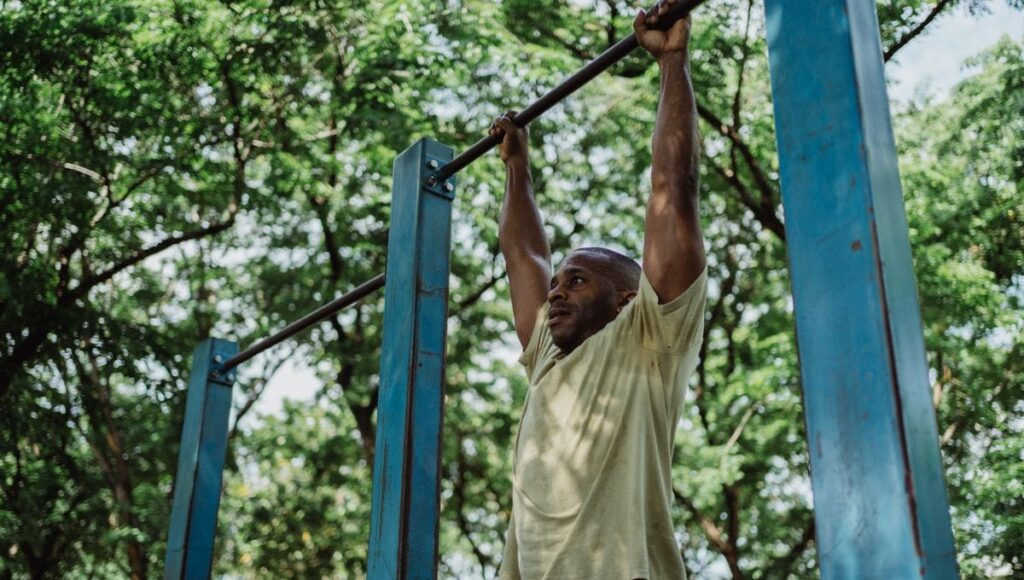
A 60 second dead hang is a strong practical benchmark for a healthy adult man. It suggests you have the grip endurance to maintain force over time and the shoulder control to remain stable while suspended. It does not replace a medical shoulder assessment, especially if you have pain, instability, or a history of dislocations.
The dead hang is particularly useful because it offers a different challenge from a heavy single repetition. You might be able to deadlift a large barbell once, yet still struggle to support your bodyweight from a bar for a minute. Both forms of strength are useful.
Make Shoulder Position a Priority
Do not simply collapse into your shoulders. Think about keeping a small amount of tension around the shoulder blades while maintaining straight elbows. This active position is often more comfortable and more controlled than a completely relaxed hang.
If 60 seconds is currently too difficult, accumulate time across several sets. For example, four 20 second hangs with good control will build the capacity needed for a longer unbroken hold.
Stronger Than Average Does Not Mean Finished
Upper body strength is not a permanent label. It changes with training, age, bodyweight, sleep, nutrition, injuries, and consistency. One excellent test does not guarantee that every part of your upper body is equally capable.
The strongest overall result comes from performing well across several patterns. A man who can bench press his bodyweight, complete 30 strict push ups, perform eight pull ups, produce strong grip numbers, and hold a 60 second dead hang has a genuinely well rounded upper body.
You do not need to chase all five standards at once. Pick the test that exposes your biggest weakness and train it for eight to twelve weeks. Use gradual progressions, maintain clean technique, and give your body enough recovery. Strength is built through repeated practice, not one heroic workout.
Key Takeaways
| Measure | Stronger Than Average Sign | What It Shows |
|---|---|---|
| Barbell bench press | A one repetition maximum equal to bodyweight | Relative pressing strength through the chest, shoulders, and triceps |
| Strict push ups | 30 consecutive repetitions for younger adult men | Upper body muscular endurance and trunk stability |
| Strict pull ups | 8 controlled repetitions | Relative pulling strength, grip strength, and body control |
| Handgrip strength | More than 50 kilograms in one hand | Strong hands and forearms that support pulling and carrying |
| Dead hang | 60 seconds with controlled shoulders | Grip endurance, shoulder stability, and bodyweight control |
References
- American College of Sports Medicine (2021) ACSM’s Guidelines for Exercise Testing and Prescription. 11th edn. Philadelphia: Wolters Kluwer.
- Bohannon, R.W. (2019) ‘Grip strength: An indispensable biomarker for older adults’, Clinical Interventions in Aging, 14, pp. 1681 to 1691.
- Dodds, R.M., Syddall, H.E., Cooper, R., Benzeval, M., Deary, I.J., Dennison, E.M., Der, G., Gale, C.R., Inskip, H.M., Jagger, C., Kirkwood, T.B.L., Lawlor, D.A., Robinson, S.M., Starr, J.M., Steptoe, A., Tilling, K., Kuh, D. and Sayer, A.A. (2014) ‘Grip strength across the life course: Normative data from twelve British studies’, PLoS One, 9(12), e113637.
- Haff, G.G. and Triplett, N.T. (eds.) (2016) Essentials of Strength Training and Conditioning. 4th edn. Champaign, IL: Human Kinetics.
- Knapik, J.J., Bauman, C.L., Jones, B.H., Harris, J.M. and Vaughan, L. (1991) ‘Preseason strength and flexibility imbalances associated with athletic injuries in female collegiate athletes’, American Journal of Sports Medicine, 19(1), pp. 76 to 81.
- Mayhew, J.L., Ball, T.E., Arnold, M.D. and Bowen, J.C. (1992) ‘Relative muscular endurance performance as a predictor of bench press strength in college men and women’, Journal of Applied Sport Science Research, 6(4), pp. 200 to 206.
- Ortega, F.B., Silventoinen, K., Tynelius, P. and Rasmussen, F. (2012) ‘Muscular strength in male adolescents and premature death: Cohort study of one million participants’, BMJ, 345, e7279.
- Yang, J., Christophi, C.A., Farioli, A., Baur, D.M., Moffatt, S., Zollinger, T.W. and Kales, S.N. (2019) ‘Association between push up exercise capacity and future cardiovascular events among active adult men’, JAMA Network Open, 2(2), e188341.