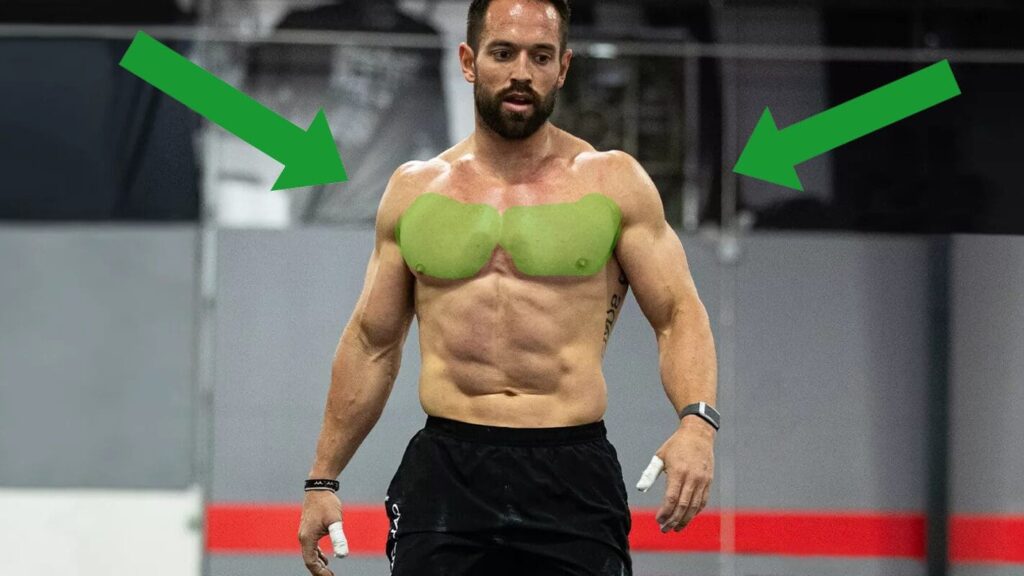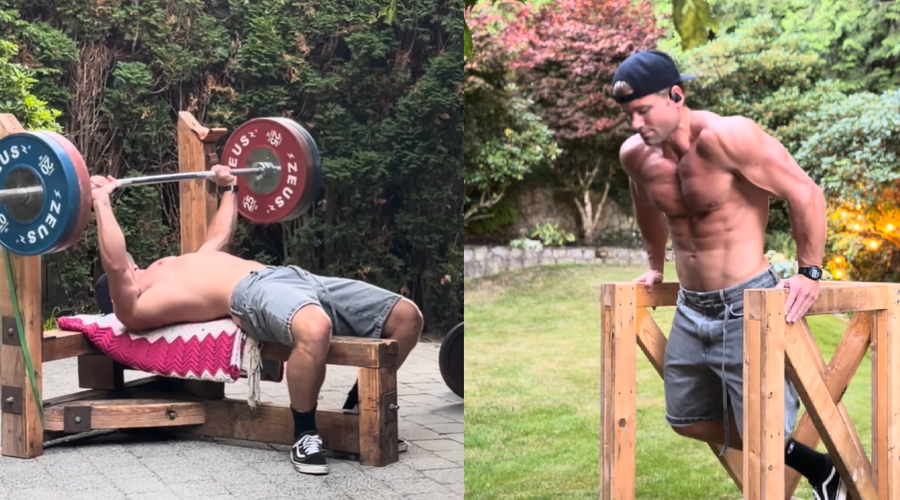


Building a bigger, stronger chest does not necessarily require a long list of exercises. In a recent YouTube video, Sober Fitness creator Jack Wiltshire explained why he has kept his chest training remarkably simple, focusing on just two movements during his weekly chest session: the bench press and dips.
His Monday workout is built around 10 sets of each exercise, with a focus on intensity, progressive overload and getting stronger at a small number of movements.


“Just one day, two exercises, as simple as it gets. Major chest gains week over week.”
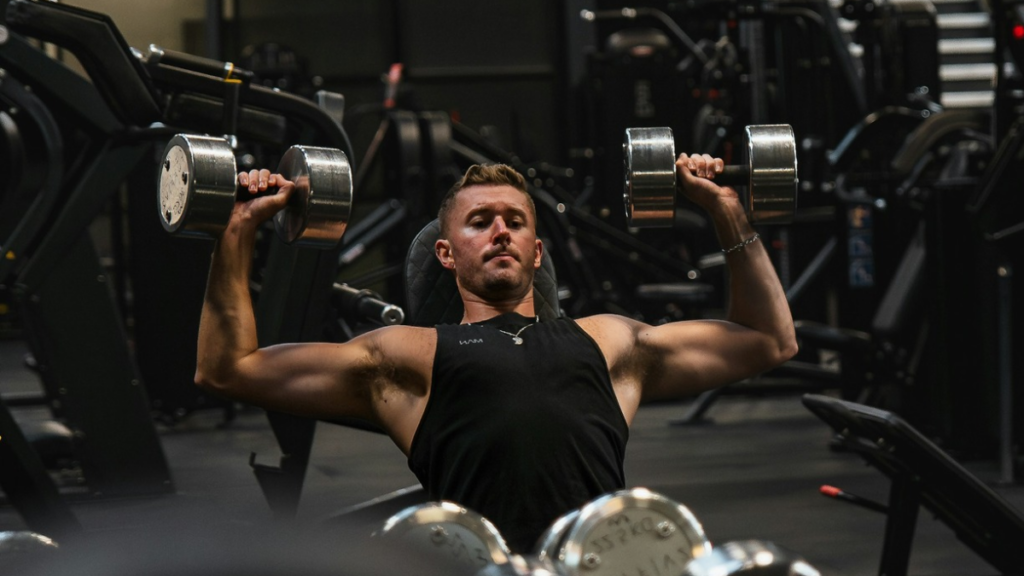
10 Sets of Bench Press
Wiltshire starts his chest day with the flat bench press, gradually working up to a two or three-rep maximum around sets four and five before dropping the weight back down.
Although the approach is not designed specifically for powerlifting, he says it has helped him make significant strength and size gains. Every few weeks, he also attempts a heavy single-rep personal record during the 10-set sequence.
His opening sets can use a weight around his 30-rep maximum, while partial reps may be used toward the end of a lightweight warm-up set. The goal is still to push each working set toward failure, with longer rest periods helping him maintain performance later in the workout.
10 Sets of Dips
After bench press, Wiltshire moves on to dips, but he does not treat them simply as a finisher. Instead, he gives dips the same level of attention and intensity as the bench press.
He typically begins with bodyweight dips, progresses to weighted sets and then returns to bodyweight for the final sets.
For anyone new to dips, he recommends spending plenty of time mastering bodyweight repetitions before adding external weight. He explains that muscles can become stronger faster than connective tissues such as tendons and ligaments, making gradual progression particularly important.
Why Fewer Exercises?
Wiltshire’s reasoning for limiting his exercise selection comes down to focus. He argues that recreational lifters should not necessarily copy professional bodybuilders, who may perform numerous exercises and bring extremely high intensity to each set.
Focusing on fewer movements allows lifters to accumulate more sets, practice the exercises more frequently and become more technically proficient.
“All that extra volume is practice. It builds skill, which helps you get more out of the exercise.”
For natural lifters, he believes this can be particularly useful when the exercises are major movements such as bench press and dips. The additional volume provides more opportunities to challenge the chest while developing strength and work capacity.
Is Incline Press Necessary?
Wiltshire also challenges the idea that an incline press is essential for developing the upper chest. He suggests alternatives such as reverse-grip bench press or overhead pressing performed elsewhere in the training week.
His broader point is that lifters who are not highly advanced may benefit more from mastering a smaller number of movements rather than constantly adding new exercises.
Keep Chest Training Simple
Wiltshire’s approach is straightforward: one chest day, two exercises and plenty of hard sets. Rather than constantly changing movements, he prioritizes becoming stronger and more skilled at the exercises already in his program.
For him, simplifying chest training does not mean doing less work. It means concentrating that work where it can have the greatest impact.
The result is a minimalist chest routine built around consistency, intensity and progressive overload.
About the Author
Jeremiah Oliva

Jeremiah Oliva is a writer passionate about fitness, sports, and active living. He has experience in songwriting and managing content and social media for online radio and magazine platforms.
He covers HYROX, CrossFit®, and competitive fitness, with a focus on performance, mindset, and athlete development.
Outside of writing, Jeremiah trains in boxing, cycles, explores the outdoors with his kids, and plays the guitar.