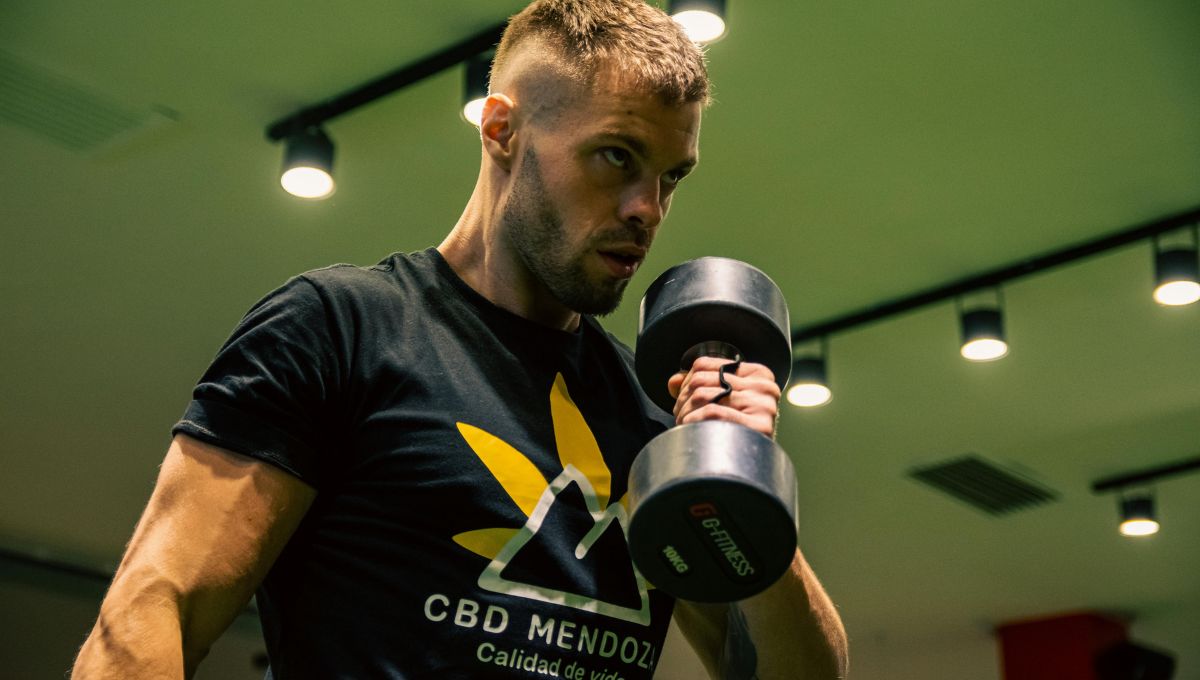


Most lifters build their biceps training around the same small group of exercises. They use standing barbell curls, alternating dumbbell curls, and perhaps a preacher curl machine. These are all useful movements, but repeating the same pattern for months can make training stale and leave parts of the elbow flexors underchallenged.
The biceps are more than a muscle that bends the elbow. The biceps brachii also helps turn the palm upward, while the brachialis and brachioradialis contribute heavily to elbow flexion. Building visibly bigger arms requires enough hard, progressive training for this whole group, not simply more sets of identical curls.


The three exercises below look unusual compared with a standard curl. That does not make them magic. Bigger arms still come from consistent training, sufficient weekly volume, challenging sets, enough protein, and progressive overload. However, these movements can give your biceps a new stimulus, make your arm sessions more engaging, and help you train through different shoulder positions and grip demands.
Why Exercise Variety Can Help Biceps Growth
Muscle growth is driven primarily by mechanical tension. In practical terms, that means making the working muscle produce force against a challenging resistance through a controlled range of motion. Research shows that resistance training can produce meaningful hypertrophy across a broad range of loads when sets are performed with sufficient effort.
For biceps training, exercise selection changes where the resistance is hardest, the position of the shoulder, the grip you use, and how stable the body feels. These details affect what you can load, how close you can safely train to muscular failure, and whether you can keep tension on the target muscles.
Variety is not an excuse to constantly change exercises. If you replace every movement every week, it becomes difficult to track progress. A better approach is to use a small selection of movements for several weeks, improve your execution and loading, then rotate a variation when progress slows or when you need a fresh training stimulus.
1. Bayesian Cable Curl
The Bayesian cable curl looks odd because you face away from the cable stack. With the pulley set low behind you, you hold the handle with your arm slightly behind your torso and curl the handle toward your shoulder. The shoulder position places the long head of the biceps in a lengthened position before the curl begins.
How to Perform the Bayesian Cable Curl
Set a cable pulley at its lowest position and attach a single handle. Stand facing away from the stack, take the handle in one hand, and walk forward until the cable creates tension with your arm behind your body. Use a staggered stance for balance and keep your chest tall.
Start with the elbow close to straight, but do not force it into an uncomfortable locked position. Keep the upper arm behind the torso, turn your palm upward, and curl the handle toward the front of your shoulder. Pause briefly when the elbow is fully flexed, then lower the handle under control until the biceps feels stretched again.
The most common error is allowing the shoulder to drift forward as the set becomes difficult. Keep the upper arm in position and use a load that lets you control the lowering phase. The movement should feel like an arm exercise, not a full body cable pull.
Why It Could Help Build Bigger Arms
The Bayesian curl is valuable because it trains elbow flexion with the shoulder extended. In this position, the biceps brachii begins the rep at a relatively long muscle length. Interest in training muscles at longer lengths has grown because several studies have found that resistance exercises emphasizing longer muscle lengths can produce favorable hypertrophy outcomes.
Specific research on cable Bayesian curls is encouraging but should be interpreted sensibly. A ten week study comparing Bayesian cable curls with preacher cable curls found significant growth in the biceps brachii and brachialis in both conditions. The researchers did not find a statistically significant difference in hypertrophy between the two exercises when their resistance profiles were matched. This is useful news because it means the Bayesian curl is a viable muscle building option, rather than proof that it is automatically superior to every other curl.
If regular dumbbell curls feel repetitive, the constant cable tension and stretched starting position can make Bayesian curls a productive addition. Use them as a controlled hypertrophy exercise, not as an ego lift. Two or three sets of eight to fifteen repetitions near the end of an upper body or arm session work well for most lifters.
2. Drag Curl
A drag curl replaces the usual arc of a barbell curl with a movement that keeps the bar close to the torso. Instead of allowing the elbows to move forward as the bar rises, you pull the elbows backward and drag the bar upward along the front of your body.
It looks strange at first because the bar travels vertically rather than swinging forward in the familiar pattern of a conventional curl. Done correctly, it limits momentum and can make a light barbell feel surprisingly demanding.
How to Perform the Drag Curl
Stand tall with an underhand grip on a barbell, EZ bar, or cable bar. Begin with the bar against the upper thighs and your arms straight. Brace your trunk, squeeze your glutes, and keep your ribs down.
Start the repetition by bending your elbows while deliberately pulling them backward. Let the bar travel close to your body, moving upward across the thighs and torso. Continue until the bar reaches around the lower chest or upper abdomen, depending on your arm length and mobility. Lower slowly and allow the elbows to return forward only enough to reach the starting position.
Do not turn the exercise into a shoulder extension movement. The elbows move backward, but the purpose remains elbow flexion. Choose a load that allows you to keep the bar close and avoid leaning backward.
Why It Could Help Build Bigger Arms
The drag curl changes the mechanics of the movement by limiting forward elbow travel and reducing the chance of using body swing. This may help some lifters keep the biceps under more deliberate tension, especially if standing curls usually become loose and momentum driven.
It also provides a useful change in shoulder position without requiring a new machine. The biceps crosses both the shoulder and elbow joints, so shoulder angle changes the muscle’s starting length and role during a curl. That does not mean one elbow path is uniquely capable of building the biceps. Instead, it means different curl patterns can offer a practical way to train hard while managing comfort and fatigue.
Research comparing cable and barbell preacher curls found that both approaches increased biceps muscle thickness after ten weeks of training. The study also showed that changes in where torque was emphasized during the curl did not create a clear hypertrophy advantage. The useful takeaway is that effective biceps training does not depend on finding one perfect point in the range of motion. It depends on performing challenging, consistent work with good technique.
Drag curls are best used as a secondary barbell variation. They work especially well after a heavier curl, when you want to reduce cheating and focus on smooth repetitions. Try two or three sets of ten to fifteen repetitions, stopping when you can no longer keep the bar close to your body.
3. Zottman Curl
The Zottman curl combines two grip positions in one repetition. You curl the dumbbells with an underhand grip, rotate your hands at the top, then lower the dumbbells with an overhand grip. Before the next rep, you rotate the hands back to an underhand position.
This makes the exercise look more complicated than a standard curl, but the sequence becomes natural after a few light practice sets. The underhand lifting phase challenges the biceps brachii strongly, while the overhand lowering phase increases the demand on the brachioradialis and forearm muscles.
How to Perform the Zottman Curl
Stand with a dumbbell in each hand and your palms facing forward. Curl both dumbbells upward using a controlled underhand grip. At the top, rotate the hands so the palms face downward.
Lower the dumbbells slowly with the palms facing downward. Once the arms are nearly straight, rotate the hands back to the underhand position and begin the next repetition. Keep your upper arms close to the body throughout the set.
Use a lighter load than you would for regular dumbbell curls. The rotating grip and overhand lowering phase make this exercise more demanding than it appears. Rushing the rotation is the main mistake, so make each change of grip smooth and deliberate.
Why It Could Help Build Bigger Arms
The Zottman curl is not just a novelty exercise for the forearms. It can help you train the muscles that make the upper arm appear thicker when viewed from the front and side. The brachialis lies underneath the biceps brachii, while the brachioradialis runs along the outer forearm toward the elbow. Developing these muscles can contribute to a fuller arm appearance.
Grip matters because it changes the relative demands placed on the elbow flexors. Recent electromyography research has found that grip variation during curl exercises changes activation patterns in the biceps brachii and brachioradialis. Electromyography cannot directly measure muscle growth, but it helps explain why changing grip can alter how an exercise feels and which tissues must contribute to the movement.
The controlled overhand lowering phase is particularly useful because eccentric training is a normal and valuable part of resistance exercise. Muscles can produce high force while lengthening, although this also means that excessively heavy eccentric work can create more soreness and fatigue. Keep the lowering phase controlled rather than trying to use a load that forces you to swing or twist the wrists.
Blow Up Your Pecs Using These 3 Exercises in the Gym
Zottman curls fit well near the end of an arm workout. Two or three sets of eight to twelve controlled repetitions are usually enough. If your wrists feel uncomfortable, use a neutral grip hammer curl instead and include reverse curls separately.
How to Program These Exercises
You do not need all three movements in every arm session. Choose one or two, keep them in your program long enough to improve, and train them with consistent effort. For most people, two weekly biceps sessions provide a practical way to accumulate quality work without making one workout excessively long.
A simple approach is to perform a heavier, more familiar curl first, then follow it with one unusual variation. For example, you could perform regular EZ bar curls before Bayesian cable curls on one day. On the second day, you could perform incline dumbbell curls before drag curls or Zottman curls.
Weekly training volume should suit your experience, recovery, and the amount of pulling already present in your program. Rows, pull ups, and pulldowns involve elbow flexion, but direct curls remain useful when arm size is the goal. Evidence suggests that multiple sets are generally more effective for hypertrophy than a single set, though more volume is only useful when you can recover and continue progressing.

Keep most sets close to muscular failure while maintaining clean form. You do not need to reach absolute failure on every set. Leaving one to three repetitions in reserve is a practical target for many lifters. When you can complete the top end of your chosen repetition range with the same technique, increase the load slightly or add a repetition the next session.
The Bigger Arm Building Basics Still Matter Most
Unusual exercises can make biceps training more productive, but they cannot replace the fundamentals. Your arms will not grow well if total training volume is too low, your sets are far too easy, or your nutrition does not support the goal.
Protein intake is particularly important during resistance training. Meta analytical research indicates that protein supplementation can further support gains in muscle mass and strength from resistance training, especially when overall protein intake is inadequate. Adequate sleep, recovery, and a calorie intake that matches your goal also matter.
Use the Bayesian cable curl when you want a cable based curl with the arm behind the torso. Use the drag curl when standard barbell curls become too loose or momentum driven. Use the Zottman curl when you want to challenge the biceps, brachialis, brachioradialis, and forearms in one controlled movement.
None of these exercises are magic. All three can earn a place in a bigger arm program because they offer a different way to apply hard, progressive tension to the elbow flexors. Choose the one that feels good, perform it consistently, and give it enough time to work.
References
- Attarieh, P., Nunes, J.P., Khani, S., Negahdar, S., Goli, A., Nazarirad, H., Nazarirad, S., Mojtahedi, S., Nosaka, K. and Soori, R. (2025) ‘Comparison between shoulder flexed and extended positions in elbow flexion resistance training on regional hypertrophy and maximum strength: Preacher versus Bayesian cable curls’, European Journal of Sport Science, 25(4), e12279.
- Grgic, J., Schoenfeld, B.J., Orazem, J., Sabol, F., Kocjan, A. and Štirn, I. (2022) ‘Effects of resistance training performed to repetition failure or non failure on muscular strength and hypertrophy: A systematic review and meta analysis’, Journal of Sport and Health Science, 11(2), pp. 202–211.
- Nunes, J.P., Jacinto, J.L., Ribeiro, A.S., Mayhew, J.L., Nakamura, M., Capel, D.M.G., Santos, L., Santos, L., Cyrino, E.S. and Aguiar, A.F. (2020) ‘Placing greater torque at shorter or longer muscle lengths? Effects of cable versus barbell preacher curl training on muscular strength and hypertrophy in young adults’, International Journal of Environmental Research and Public Health, 17(16), 5859.
- Schoenfeld, B.J., Ogborn, D. and Krieger, J.W. (2017) ‘Dose response relationship between weekly resistance training volume and increases in muscle mass: A systematic review and meta analysis’, Journal of Sports Sciences, 35(11), pp. 1073–1082.
- Schoenfeld, B.J., Grgic, J., Van Every, D.W. and Plotkin, D.L. (2021) ‘Loading recommendations for muscle strength, hypertrophy, and local endurance: A re examination of the repetition continuum’, Sports, 9(2), 32.
- Schoenfeld, B.J., Wilson, J.M., Lowery, R.P. and Krieger, J.W. (2016) ‘Muscular adaptations in low versus high load resistance training: A meta analysis’, European Journal of Sport Science, 16(1), pp. 1–10.
- Schoenfeld, B.J., Aragon, A.A. and Krieger, J.W. (2013) ‘The effect of protein timing on muscle strength and hypertrophy: A meta analysis’, Journal of the International Society of Sports Nutrition, 10, 53.
- Morton, R.W., Murphy, K.T., McKellar, S.R., Schoenfeld, B.J., Henselmans, M., Helms, E., Aragon, A.A., Devries, M.C., Banfield, L., Krieger, J.W. and Phillips, S.M. (2018) ‘A systematic review, meta analysis and meta regression of the effect of protein supplementation on resistance training induced gains in muscle mass and strength in healthy adults’, British Journal of Sports Medicine, 52(6), pp. 376–384.
Key Takeaways
| Exercise | Main benefit | Best use |
|---|---|---|
| Bayesian cable curl | Trains the biceps with the arm behind the torso and cable tension throughout the movement | Use for controlled sets of eight to fifteen repetitions |
| Drag curl | Reduces momentum and creates a strict barbell curl variation | Use after heavier curls for ten to fifteen repetitions |
| Zottman curl | Combines underhand curling with an overhand lowering phase to challenge the elbow flexors and forearms | Use as a lighter finishing exercise for eight to twelve repetitions |
| Bigger arm principle | Consistent hard sets, progressive overload, recovery, and adequate protein matter more than novelty | Keep exercises long enough to track and improve performance |