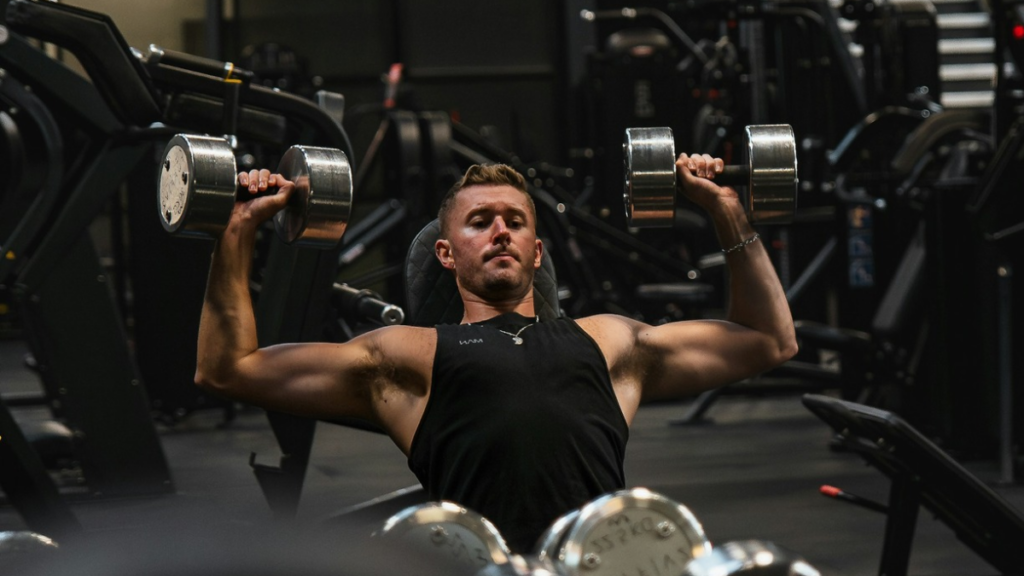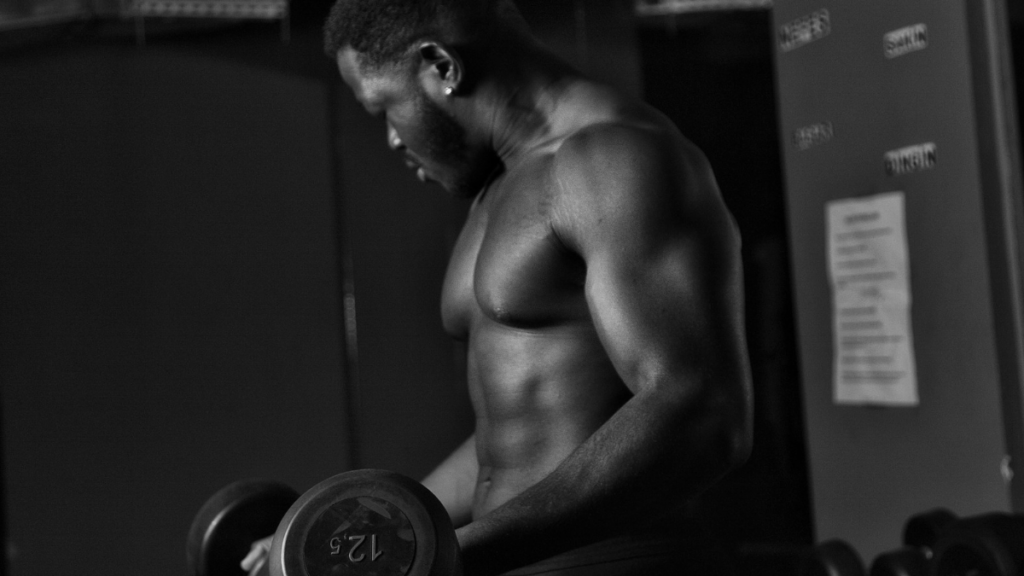


A bigger chest is built through consistent resistance training, good exercise technique, enough challenging weekly work, and recovery that allows your muscles to adapt. You do not need a complicated chest day packed with six variations of presses and flyes. You need a small number of movements that train the pectoralis major through useful ranges of motion and that you can progressively load over time.
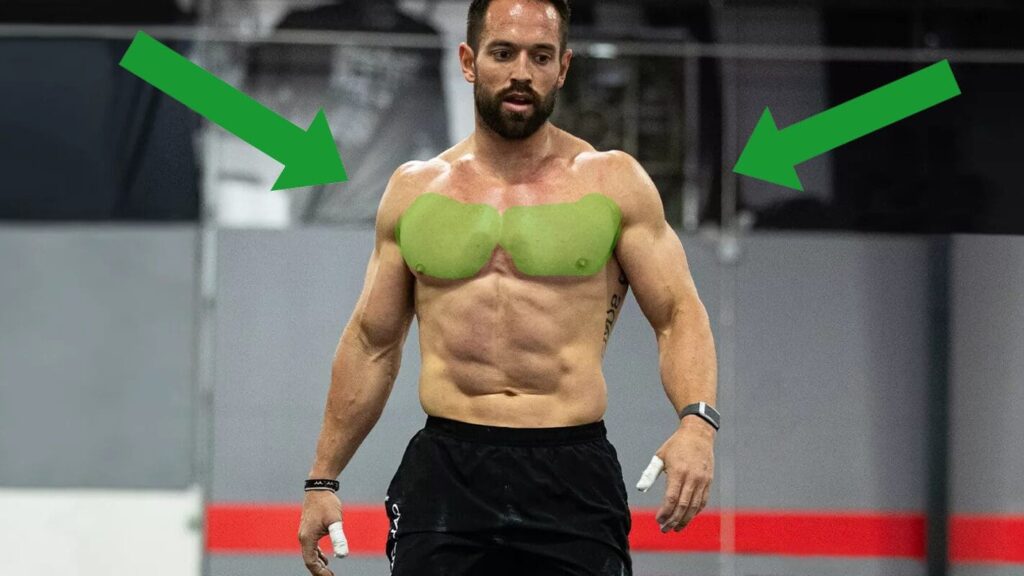
The pectoralis major is the large fan shaped muscle that covers most of the chest. Its main jobs include bringing the upper arm toward the body, moving it across the body, and helping control the shoulder through pressing movements. The muscle has fibers that run from the collarbone and fibers that run from the sternum and ribs, which is why pressing from more than one angle can be useful. However, there is no secret exercise that builds only one small section of the chest. The goal is to train the entire muscle hard, while using angles that give both the upper and middle chest plenty of high quality work.



The three exercises below provide a strong foundation: the flat dumbbell bench press for heavy, stable pressing; the low incline Smith machine press for the upper chest; and the cable fly for loaded work in a long muscle position. Together, they give you a simple chest session that is easy to progress and challenging enough to drive growth.
What Actually Makes Your Pecs Grow?
Muscle growth is primarily driven by resistance training that exposes a muscle to sufficient mechanical tension over time. Your body responds to the repeated training stimulus by building muscle tissue that is better able to handle future demands. Research consistently shows that performing more hard weekly sets tends to produce greater muscle growth, although the return from every added set gradually becomes smaller and your ability to recover still matters.
A practical starting point is around 10 hard chest sets per week, divided across two sessions if possible. This is not a magic number, and beginners can grow with less while experienced lifters may need more. The right amount is the amount that lets you train hard, improve your repetitions or load over time, and recover well enough to repeat the work next week.
Hard sets should be challenging, but they do not all need to end with the weight stuck halfway through a repetition. Most lifters can get excellent results by finishing the majority of sets with roughly one to three good repetitions still possible. This lets you create enough effort to stimulate growth while protecting technique and limiting unnecessary fatigue. On the final set of an exercise, you can occasionally work closer to failure if your form remains solid and the exercise is safe to push.
Use a full, controlled range of motion that your shoulders tolerate comfortably. A deep stretch is valuable when you can maintain a stable shoulder position and avoid turning the movement into a painful joint stress test. Full range training generally produces better strength outcomes than partial repetitions, and it helps ensure the chest is working through the positions where it is meant to produce force.
Exercise 1: Flat Dumbbell Bench Press
The flat dumbbell bench press should be your main chest strength and size builder. It allows you to use substantial loads while each arm works independently, which can help you find a comfortable pressing path. Dumbbells also give you more freedom than a barbell to adjust wrist and elbow position according to your shoulder structure.
Lie on a flat bench with your feet firmly on the floor. Start with the dumbbells above your chest, then lower them slowly with your elbows angled roughly halfway between your sides and a straight out position. Keep your shoulder blades gently pulled back and down against the bench. Lower until the dumbbells reach a depth that gives you a strong chest stretch without discomfort, then press them upward and slightly inward until your arms are straight.
The purpose is not to force the dumbbells together at the top. Instead, think about driving your upper arms toward each other while keeping the rib cage stable. This keeps the emphasis on the chest rather than turning the movement into a loose shoulder press. A moderate grip usually works best, although a slightly more neutral grip can be a useful option if your shoulders feel better with it.
Dumbbell pressing is especially valuable because it provides a large range of motion and can be loaded progressively for years. Start with three to four sets of six to 10 repetitions. Choose a weight that makes the final few repetitions difficult without changing your pressing path or letting your shoulders roll forward. When you can reach the top of the repetition range for every set with good technique, increase the load at your next session.
Do not rush the lowering phase. A controlled descent improves consistency, makes it easier to maintain position, and stops the dumbbells from bouncing into the bottom range. You do not need an exaggeratedly slow tempo, but two to three seconds down is a useful target for most lifters.
Common Dumbbell Bench Press Mistakes
The biggest mistake is lowering the dumbbells with the elbows flared directly out from the shoulders. This can make the movement less comfortable and reduce your ability to control the bottom position. Another common error is allowing the shoulders to slide forward as the dumbbells descend. Keep the upper back stable on the bench and let the chest, rather than the front of the shoulders, do the majority of the work.
Avoid shortening every repetition because the dumbbells feel heavy. If you need to cut the range of motion dramatically, the weight is probably too heavy for productive chest training. Use a load that allows you to reach a controlled bottom position and finish each repetition with intent.
Exercise 2: Low Incline Smith Machine Press
The low incline Smith machine press is an excellent second exercise because it gives the clavicular portion of the pectoralis major more attention while providing a stable setup. Research using electromyography has found that a low incline bench angle can increase activation of the clavicular region of the chest compared with a flat bench press. The key word is low. A steep incline shifts much more work toward the front deltoids, which is useful for shoulder training but less ideal when chest growth is the priority.
Set the bench at approximately 15 to 30 degrees. Position it so the bar lowers toward the upper chest rather than the neck or lower ribs. Use a grip slightly wider than shoulder width and keep your wrists stacked over your forearms. Before unracking the bar, press your upper back firmly into the bench and place your feet securely on the floor.
Lower the bar under control to the upper chest, then press it back upward without violently locking out or lifting your shoulders toward your ears. The Smith machine provides a fixed bar path, so bench position is important. Adjust the bench until the movement feels natural through the shoulders and you can lower the bar to a comfortable depth.
This exercise works well for three to four sets of eight to 12 repetitions. The slightly higher repetition range is useful because it allows you to accumulate challenging chest work without needing to use maximal loads. The machine’s stability also lets you focus on pressing hard and keeping the chest under tension, rather than spending as much effort balancing the weight.
A Smith machine is not inferior just because it is a machine. Muscle growth is driven by repeated hard effort, appropriate volume, and progression. If a stable machine setup lets you train closer to your intended effort level with good technique, it can be an extremely productive tool for hypertrophy.
How to Keep the Upper Chest Involved
Keep the bench angle low and avoid turning the press into a front shoulder exercise. If you feel your deltoids doing almost all the work, lower the incline slightly, reduce the load, and make sure the bar is descending toward the upper chest rather than the throat. Use a controlled bottom position and do not bounce the bar off your chest.
It is also important to use a load that lets you feel the chest working across the complete repetition. Heavier is not always better. A clean set of 10 with a full range of motion and stable shoulders will usually be more useful than a messy set of five with a shortened path.
Exercise 3: Cable Fly
The cable fly complements pressing by training the main horizontal adduction function of the chest. Unlike a press, where the triceps and front deltoids contribute significantly, the cable fly allows you to focus on bringing the upper arms toward the midline under continuous resistance.
Set the pulleys just above shoulder height or at shoulder height. Stand in the middle of the cable station and take a small staggered stance for balance. Start with the handles out to your sides and a soft bend in the elbows. Keep that elbow angle almost unchanged as you bring your upper arms forward and together in a wide arc.
The movement should come from the shoulder joint, not from repeatedly bending and straightening the elbows. Think of hugging a large tree in front of you. Bring your hands together in front of your chest, squeeze briefly, and then return slowly until you feel a meaningful stretch across the chest. You do not need to force your arms far behind your torso if that position causes shoulder discomfort.
Cables are especially useful because they keep resistance on the chest throughout the repetition. A dumbbell fly becomes easier near the top because gravity no longer pulls directly against the horizontal movement of the arms. With cables, the line of resistance continues to challenge your chest as you bring your arms together.
Perform three sets of 10 to 15 repetitions. Use a weight that allows you to control the stretched position and feel the chest doing the work. The cable fly is not an ego lift. If you need to swing your torso, bend your elbows aggressively, or shrug your shoulders to move the stack, reduce the weight.
Get More From the Stretched Position
The bottom portion of a cable fly can be very productive, but only when your shoulders are stable and pain free. Lower the handles slowly and stop at the deepest position you can control. A brief pause in the stretch can help prevent you from using momentum, although it is not essential.
Keep your chest lifted without exaggerating the arch in your lower back. Your rib cage should remain stacked over your pelvis rather than flaring upward. This gives you a more stable base and makes it easier to repeat the same movement path from set to set.
The Three Exercise Chest Workout
Start your session with the flat dumbbell bench press, when you are freshest and able to handle the most demanding free weight work. Follow it with the low incline Smith machine press to add more pressing volume with an upper chest emphasis. Finish with cable flyes, using controlled repetitions and a deep but comfortable stretch.
3 Best Cable Machine Exercises for a Jacked and More Attractive Upper Body
Train this session once or twice per week. If you perform it twice per week, use slightly fewer sets in each workout so your total weekly chest volume remains manageable. Rest for roughly two to three minutes between pressing sets and one to two minutes between cable fly sets. Longer rest periods can help you preserve performance across sets, which matters because growth depends on accumulating quality work rather than simply becoming exhausted.
Progression should be patient and measurable. Keep a training log. First aim to add repetitions within the prescribed range while maintaining good technique. Once you reach the top of that range on every set, add a small amount of weight and build the repetitions back up. This simple approach is more reliable than changing exercises every week in search of novelty.
Your chest will not grow overnight, but it will respond when you repeatedly train it with enough hard work, use a full comfortable range of motion, and eat enough protein and total calories to support your goal. Build the habit first, then let the results accumulate.
References
- Grgic, J., Schoenfeld, B.J., Orazem, J., Sabol, F., Krieger, J.W., Brad, J. and Pedisic, Z. (2022) ‘Effects of resistance training performed to repetition failure or non failure on muscular strength and hypertrophy: A systematic review and meta analysis’, Journal of Sport and Health Science, 11(2), pp. 202–211.
- Pallarés, J.G., Hernández Belmonte, A., Martínez Cava, A., Vetrovsky, T., Steffl, M. and Courel Ibáñez, J. (2021) ‘Effects of range of motion on resistance training adaptations: A systematic review and meta analysis’, Scandinavian Journal of Medicine and Science in Sports, 31(10), pp. 1866–1881.
- Schoenfeld, B.J., Ogborn, D. and Krieger, J.W. (2017) ‘Dose response relationship between weekly resistance training volume and increases in muscle mass: A systematic review and meta analysis’, Journal of Sports Sciences, 35(11), pp. 1073–1082.
- Schoenfeld, B.J., Grgic, J., Ogborn, D. and Krieger, J.W. (2017) ‘Strength and hypertrophy adaptations between low versus high load resistance training: A systematic review and meta analysis’, Journal of Strength and Conditioning Research, 31(12), pp. 3508–3523.
- Trebs, A.A., Brandenburg, J.P. and Pitney, W.A. (2010) ‘An electromyography analysis of 3 muscles surrounding the shoulder joint during the performance of a chest press exercise at several angles’, Journal of Strength and Conditioning Research, 24(7), pp. 1925–1930.
Key Takeaways
| Focus | What to do | Why it matters |
|---|---|---|
| Main chest builder | Perform flat dumbbell bench presses for three to four sets of six to 10 repetitions | It provides heavy, progressive pressing through a large range of motion |
| Upper chest emphasis | Use a 15 to 30 degree incline Smith machine press for three to four sets of eight to 12 repetitions | A low incline increases the contribution of the clavicular chest fibers without making the shoulders dominate |
| Chest isolation work | Finish with cable flyes for three sets of 10 to 15 repetitions | Cables provide resistance while you bring the arms together and can load a controlled chest stretch |
| Weekly work | Start with about 10 challenging chest sets per week and adjust based on recovery and progress | Sufficient weekly training volume is a major driver of hypertrophy |
| Progression | Add repetitions first, then add small amounts of load | Progressive overload gives your chest a reason to keep adapting |