

Strength is not defined by one number on a barbell or by how athletic someone looks. It is your ability to produce force, control your body, move external load, and keep doing those things as fatigue builds. A strong body makes everyday tasks easier, supports healthy aging, and gives you a better foundation for sport, training, and life.
The phrase “stronger than the average woman” needs some context. Strength changes with age, body size, training history, injury status, and the specific test used. A woman who is strong at pull ups may not have the same advantage in a heavy squat, while a powerful lifter may not perform exceptionally in a long push up test. The most useful comparison is therefore with women of a similar age, using the same exercise and the same standards of form.


Still, certain abilities provide clear signs that your body is stronger than average. These five tests cover grip, upper body pushing and pulling, lower body strength, and practical movement capacity. They also identify strengths that matter outside the gym.
What Stronger Than Average Actually Means
Average does not mean weak, and being above average does not require elite performance. It simply means that, when measured against a relevant group, you can produce more force or complete more high quality repetitions than most people.
Research consistently shows that strength training improves muscular strength in women across different ages and training levels. Progressive resistance training can also increase lean mass, physical function, bone related outcomes, and confidence with demanding movement. The benefits are especially valuable because muscle mass and strength tend to decline with age when they are not actively trained.
Body weight also matters. A 150 pound woman completing a strict pull up is lifting more total load than a 120 pound woman completing the same movement. For that reason, bodyweight exercises measure relative strength, while dumbbell, barbell, and grip tests can provide either relative or absolute measures depending on how they are recorded.
The five signs below are not a diagnosis and they are not a reason to compare yourself harshly with someone else. They are useful ways to recognize real physical capability and decide where your training can go next.
1. Your Grip Strength Is High for Your Age
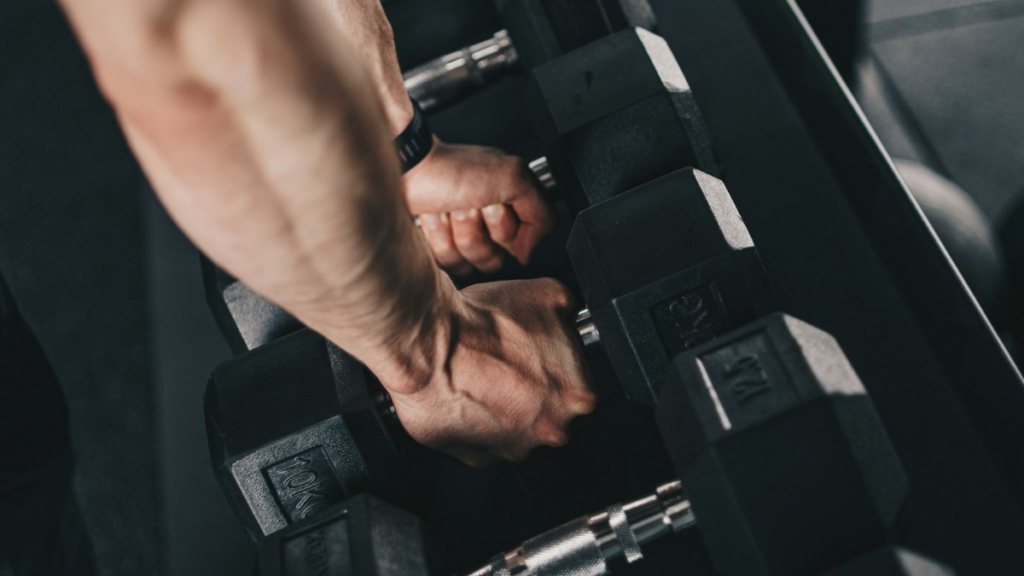
Grip strength is one of the simplest ways to assess physical strength. It is usually tested by squeezing a hand dynamometer as hard as possible, typically with each hand tested more than once. Although gripping is a local action, the result reflects the strength of the hand and forearm muscles, along with coordination and the ability to produce force.
Large population data show that women’s grip strength generally rises through early adulthood, peaks around midlife, and declines with advancing age. In global reference data, women in their twenties and thirties commonly demonstrate average grip strength in the mid twenties in kilograms, although the exact result varies by country, testing method, body size, and device. A score in the high twenties or above can therefore be a strong result for many adult women, particularly when it is measured with a reliable device and standardized technique.
Grip strength matters beyond handshakes and opening jars. Lower grip strength is associated with poorer physical function and greater risk of later life health problems in observational research. It should not be treated as a complete picture of health, but it is a practical marker of muscular function that is easy to track over time.
How to Test It Fairly
Use the same dynamometer, hand position, and testing procedure each time. Sit or stand in the same position, squeeze hard for a few seconds, and record the best result from two or three attempts per hand. Your dominant hand may be slightly stronger, but a large gap between sides can be worth discussing with a qualified clinician if it follows pain, injury, or a sudden loss of function.
3 Best Barbell Exercises for a Muscular and More Attractive Upper Body
If your grip score has risen after months of rows, deadlifts, carries, climbing, pull ups, or resistance training, that is meaningful progress. A stronger grip also helps you hold onto heavy weights long enough for your larger muscles to do their job.
2. You Can Perform Multiple Strict Push Ups From the Floor
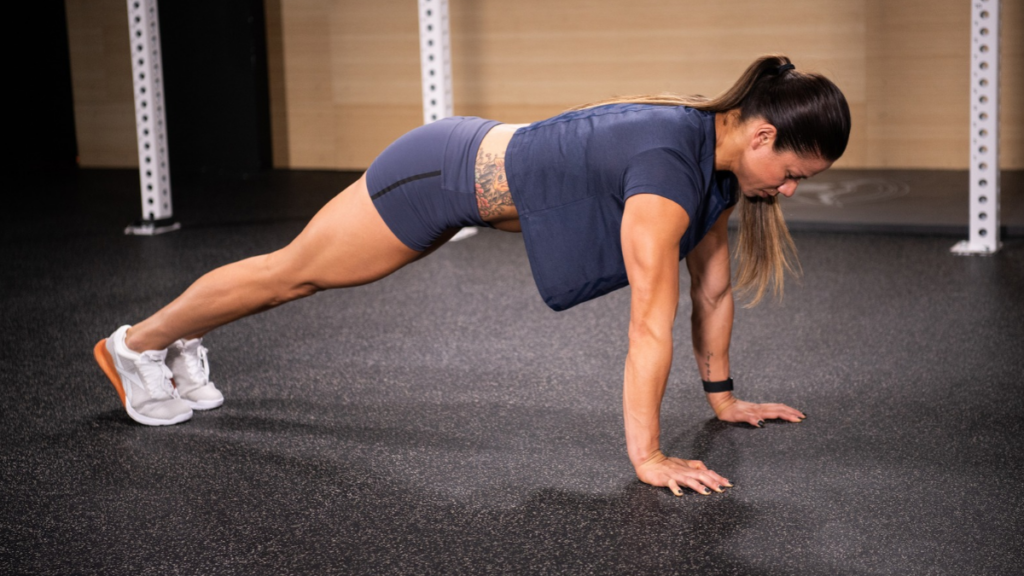
A strict push up is a demanding test of relative upper body strength. Your chest, triceps, shoulders, core, and hips must work together to lower and raise a substantial proportion of your body weight while keeping your body rigid.
This movement is more difficult than it often appears because it combines strength with control. The hands need to remain stable, the torso must resist sagging or twisting, and the shoulders must tolerate repeated loading. For many adults who do not regularly strength train, even a few strict push ups from the toes are challenging.
Being able to complete a controlled set of strict push ups is a clear sign that you have developed useful upper body strength. If you can perform ten or more repetitions with your chest lowering consistently, elbows moving smoothly, and hips staying in line with your shoulders, you have a strong base of pressing endurance. If you can perform substantially more without compromising form, your upper body strength endurance is likely well developed compared with many women who are not specifically training the movement.
Form Determines Whether the Number Counts
Start in a high plank with your hands beneath or slightly wider than shoulder width. Keep your ribs controlled, squeeze your glutes, and lower your chest toward the floor. Press back to the top without letting your hips drop first or shortening the range of motion as fatigue builds.
Knee push ups can be an excellent training exercise, especially when they are performed through a full range of motion. However, they are not directly comparable with standard push ups from the toes because they require less of your body weight to be moved. If you are building toward your first strict repetition, use incline push ups, knee push ups, slow lowering repetitions, presses, and triceps work to develop the necessary strength.
3. You Can Perform a Strict Pull Up or Chin Up
A strict pull up is one of the clearest signs of high relative upper body strength. You must lift your full body weight using the muscles of the upper back, arms, shoulders, hands, and trunk. Unlike many gym exercises, there is no way to reduce the load unless you use assistance.
A standard pull up uses an overhand grip, while a chin up uses an underhand grip. Chin ups are often easier because the biceps can contribute more strongly, but both movements require substantial pulling strength. Completing either one with a dead hang start, controlled movement, and no kicking demonstrates a level of strength that many untrained adults do not possess.
There is no single high quality population database that can provide a precise percentage of adult women who can perform a strict pull up. That limitation matters because fitness claims often present overly confident figures. Even so, the mechanics of the exercise make the conclusion straightforward. If you can lift your full body weight through a strict pull or chin up, your relative pulling strength is high.
Why This Matters
Pulling strength supports posture, shoulder function, lifting capacity, and performance in activities such as climbing, obstacle racing, gymnastics, and rowing. It also balances pressing work. Many training plans include plenty of push ups and bench presses but not enough heavy rows, pulldowns, or pull up practice.
If a full repetition is not there yet, use assisted pull ups, slow lowering repetitions, lat pulldowns, chest supported rows, and dead hangs. Each of these exercises can build the strength and control needed to progress toward an unassisted repetition.
4. You Can Rise From a Chair Repeatedly Without Using Your Hands
Lower body strength is essential for moving independently and confidently. One simple way to assess it is the 30 second chair stand test. Sit on a stable chair with your arms crossed over your chest, stand up fully, sit back down under control, and repeat for 30 seconds.
This test assesses the strength and endurance of the legs and hips in a practical task. It is especially useful for women over 60 because it has established reference values from a large sample of community dwelling adults. For women aged 60 to 64, completing more than 17 stands in 30 seconds is above the typical middle range. For women aged 65 to 69, more than 16 repetitions is similarly above the central reference range. Expected scores decline with age, which makes age specific comparison essential.
A high score suggests you have strong, enduring quadriceps, glutes, and hip muscles for everyday movement. It also suggests that standing from low seats, climbing stairs, and getting up from the floor may be easier for you than for women with lower lower body strength.
Why Strong Legs Matter at Every Age
The chair stand test was developed for older adults, but the ability it measures matters throughout life. Squatting, sitting, standing, walking uphill, and carrying groceries all require your lower body to repeatedly produce force.
For younger women, there are fewer large, representative chair stand reference datasets. That does not make the test useless. It simply means that a younger woman should use it to track her own progress rather than claiming a precise ranking against the general population. Adding goblet squats, split squats, step ups, deadlifts, and lunges can improve the muscles that drive this movement.
5. You Can Lift Heavy Loads With Control and Keep Getting Stronger
A strong body is not only able to complete bodyweight tests. It can also produce force against progressively heavier external resistance. Being able to squat, deadlift, press, row, or carry weights with good technique is a major sign of developed strength.
The most meaningful marker is not a universal number such as a specific barbell weight. Training experience, limb length, body size, equipment, and exercise technique all influence performance. Instead, look at whether you can add load, repetitions, or control over time while maintaining solid form.
For example, a woman who can steadily progress her squat, Romanian deadlift, dumbbell press, row, or farmer carry has evidence that her muscles and nervous system are adapting to training. Resistance training research shows that women can make substantial strength gains through progressive overload, including women who begin with little previous lifting experience.
Strength Should Be Useful, Not Just Impressive
A heavy lift is valuable when it is performed safely and consistently. You do not need to chase maximal attempts every week to prove you are strong. A controlled set of squats, a loaded carry that challenges your grip and trunk, or a set of rows that becomes steadily heavier can reveal more about durable strength than an occasional dramatic lift.
A good sign of above average strength is that everyday loads no longer feel demanding. Carrying bags, moving furniture, lifting a suitcase into storage, holding a child, or performing physically demanding work becomes easier because your body has more capacity than the task requires.
How to Build and Keep Your Strength
Strength is trainable at almost every age. The most effective approach is to perform resistance training regularly, include movements for the legs, hips, push muscles, pull muscles, and trunk, and gradually make the work more demanding.
Two or three full body resistance sessions per week can be enough to produce meaningful improvement. Focus on controlled technique, use a load that feels challenging near the end of the set, and progress gradually. Adequate protein intake, sleep, recovery, and enough total food also support adaptation to training.
Do not let one weak test convince you that you are not strong. You may have excellent leg strength and still be building your push ups. You may have a powerful deadlift and need more time to develop a pull up. Real strength is broad, trainable, and built through consistent practice.
Conclusion
A strong woman is not defined by appearance or a single exercise. She has the capacity to grip, push, pull, stand, lift, and carry with control. High grip strength, strict push ups, a pull up or chin up, strong chair stand performance, and steady progress with resistance training are all meaningful signs that your body is capable.
The most useful comparison is always against women of a similar age using the same test conditions. Use these signs as practical benchmarks, celebrate the abilities you have built, and keep training the areas that will make your body stronger for years to come.
Key Takeaways
| Sign | What It Indicates | Best Way to Track It |
|---|---|---|
| Strong grip | Hand, forearm, and general muscular function | Test both hands with the same dynamometer and protocol |
| Strict push ups | Relative upper body pushing strength and endurance | Record high quality repetitions from the toes |
| Pull up or chin up | High relative pulling strength | Track unassisted repetitions and controlled assisted work |
| Chair stands | Practical leg strength and endurance | Count full repetitions in 30 seconds using the same chair |
| Progressive lifting | Increasing whole body strength | Log loads, repetitions, range of motion, and technique |
References
- American College of Sports Medicine (2009) ‘American College of Sports Medicine position stand: Progression models in resistance training for healthy adults’, Medicine and Science in Sports and Exercise, 41(3), pp. 687 to 708.
- Dodds, R.M., Syddall, H.E., Cooper, R., Benzeval, M., Deary, I.J., Dennison, E.M., Der, G., Gale, C.R., Inskip, H.M., Jagger, C., Kirkwood, T.B.L., Lawlor, D.A., Robinson, S.M., Starr, J.M., Steptoe, A., Tilling, K., Kuh, D., Cooper, C. and Sayer, A.A. (2016) ‘Global variation in grip strength: A systematic review and meta analysis of normative data’, Age and Ageing, 45(2), pp. 209 to 216.
- Fragala, M.S., Cadore, E.L., Dorgo, S., Izquierdo, M., Kraemer, W.J., Peterson, M.D. and Ryan, E.D. (2019) ‘Resistance training for older adults: Position statement from the National Strength and Conditioning Association’, Journal of Strength and Conditioning Research, 33(8), pp. 2019 to 2052.
- Grgic, J., Schoenfeld, B.J., Skrepnik, M., Davies, T.B. and Mikulic, P. (2020) ‘Effects of rest interval duration in resistance training on measures of muscular strength: A systematic review’, Sports Medicine, 48(1), pp. 137 to 151.
- Leong, D.P., Teo, K.K., Rangarajan, S., Lopez Jaramillo, P., Avezum, A., Orlandini, A., Seron, P., Ahmed, R., Rosengren, A., Kelishadi, R., Rahman, O., Swaminathan, S., Iqbal, R., Gupta, R., Kumar, R., Mohan, V., Khatib, R., Yusoff, K., Lanas, F., Oguz, A., Yusufali, A., Yusuf, R., Mente, A., Anand, S.S. and Yusuf, S. (2015) ‘Prognostic value of grip strength: Findings from the Prospective Urban Rural Epidemiology study’, The Lancet, 386(9990), pp. 266 to 273.
- Morton, R.W., Murphy, K.T., McKellar, S.R., Schoenfeld, B.J., Henselmans, M., Helms, E., Aragon, A.A., Devries, M.C., Banfield, L., Krieger, J.W. and Phillips, S.M. (2018) ‘A systematic review, meta analysis and meta regression of the effect of protein supplementation on resistance training induced gains in muscle mass and strength in healthy adults’, British Journal of Sports Medicine, 52(6), pp. 376 to 384.
- Rikli, R.E. and Jones, C.J. (1999) ‘Development and validation of a functional fitness test for community residing older adults’, Journal of Aging and Physical Activity, 7(2), pp. 129 to 161.
- Rikli, R.E. and Jones, C.J. (2013) Senior Fitness Test Manual. 2nd edn. Champaign, IL: Human Kinetics.
- Roberts, B.M., Nuckols, G. and Krieger, J.W. (2020) ‘Sex differences in resistance training: A systematic review and meta analysis’, Journal of Strength and Conditioning Research, 34(5), pp. 1448 to 1460.
- Schoenfeld, B.J., Ogborn, D. and Krieger, J.W. (2017) ‘Dose response relationship between weekly resistance training volume and increases in muscle mass: A systematic review and meta analysis’, Journal of Sports Sciences, 35(11), pp. 1073 to 1082.