

A pull up looks simple: hold a bar, lift your body until your chin clears it, then lower under control. In reality, it is one of the most demanding bodyweight strength exercises because it asks you to move nearly all of your mass using your upper body, grip, trunk, and coordination at the same time.
That is why two people with similar gym habits can have dramatically different pull up numbers. One person may knock out ten clean reps with little drama, while another cannot leave the bottom position despite being fit, athletic, and strong in other movements. This difference is not usually about toughness or effort. It is largely explained by relative strength, body composition, training history, anatomy, skill, and the way the exercise is performed.


Understanding those factors gives you a more useful answer than simply telling someone to “get stronger.” It also makes the pull up more trainable, because you can identify the actual limiter instead of randomly adding more exercises.
A Pull Up Is a Relative Strength Test
The most important concept is relative strength. Absolute strength is the total force you can produce. Relative strength is that force compared with the body mass you have to move.
In a pull up, the resistance is mostly your own body. If two people have the same pulling strength but one weighs more, the heavier person must produce more force to complete the same rep. That does not mean the heavier person is less capable overall. They may be stronger in absolute terms and still find bodyweight pulling more difficult.
This is why pull ups can feel unusually hard after body mass increases, even if your gym numbers have gone up. Added muscle can improve pulling force, but it also adds mass to the load being lifted. Added fat increases the load without directly increasing the force available from the muscles that perform the pull up. The result is a movement where the ratio between pulling capacity and body mass matters more than almost any single muscle measurement.
Research on pull up performance supports the importance of task specific relative strength. In trained female swimmers, greater lat pull down strength relative to body mass was related to better pull up repetition performance. That relationship makes practical sense: a lat pull down can build relevant strength, but the pull up still demands enough force relative to the mass hanging below the bar.
Why This Can Be Frustrating
Relative strength is not a moral score, and it is not a complete measure of fitness. A larger athlete can be highly powerful, healthy, and successful in sport while finding strict pull ups difficult. Likewise, a very light person may have an easier starting point but still need substantial strength and practice to control a full repetition.
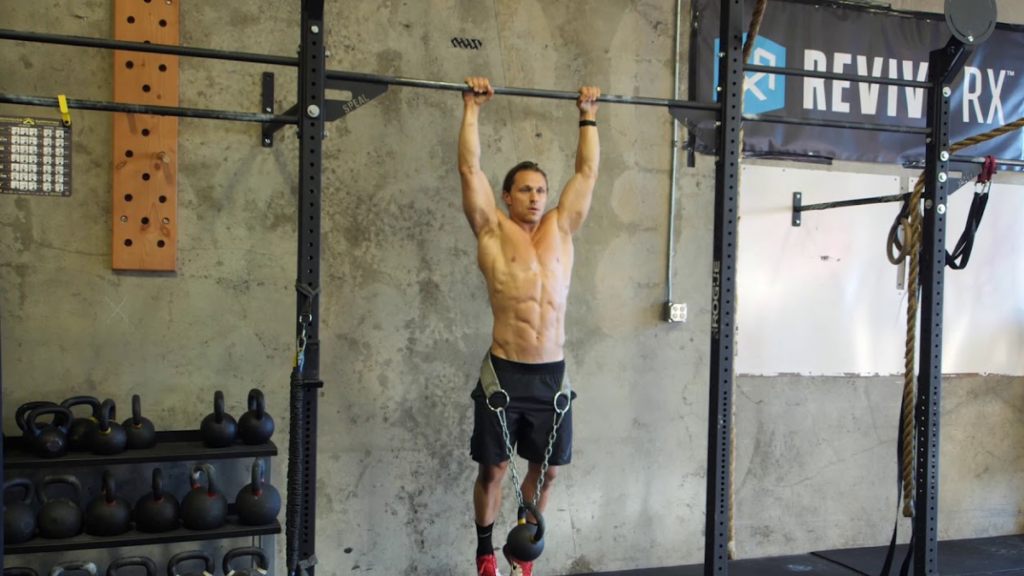
The productive question is not, “Why am I bad at pull ups?” It is, “How much pulling force can I create relative to the mass I need to move?” That question points directly to the training target.
Your Upper Body Strength Matters More Than Your Leg Strength
A pull up is not a lat only exercise. It is a coordinated pulling task involving the latissimus dorsi, biceps, brachioradialis, trapezius, shoulder stabilizers, forearm muscles, chest, and trunk. Electromyography studies show substantial activity in the latissimus dorsi and biceps during pull ups and chin ups, while the lower trapezius and other shoulder muscles help organize the movement.
This broad demand is one reason people can be strong at rows, deadlifts, squats, or running and still struggle at the bar. Those exercises can improve general fitness, but they do not guarantee enough strength in the exact muscles and joint positions needed to suspend and raise the body.
The pull up also places a large demand on elbow flexors. Research comparing grip variations found that the biceps brachii and pectoralis major showed higher activation during chin ups than during pronated pull ups, while the lower trapezius was more active during the pronated version. This does not mean one variation is universally better. It means hand position can change which muscles contribute most, which may make one version feel more natural for a particular person.
The Bottom Position Is Often the Hardest Part
Many beginners can lower from the top of a pull up but cannot initiate the upward phase from a dead hang. That is not strange. The first part of the movement requires you to establish shoulder control, create tension through the trunk, and start pulling from a long muscle position.
The upward phase also demands more active force than the downward phase. Studies of pull up variations have found greater average activity in several upper body muscles during the concentric, or lifting, phase than during the eccentric, or lowering, phase. That helps explain why controlled negatives are useful for learning and strength building, but do not automatically guarantee that a full upward repetition is ready.
Sex Differences Affect the Starting Point, Not the Potential
On average, men have greater absolute upper body strength than women. This affects pull up performance because the exercise relies heavily on the upper body. Average differences do not predict what any individual can do, however. Training experience, body mass, body composition, technique, and sport background can create much larger differences between individuals than sex alone.
It is also important not to turn an average starting difference into a fixed limit. A systematic review and meta analysis found that women and men had similar muscle growth responses to the same resistance training programs. The same review found that women showed a larger relative improvement in upper body strength in the studies analyzed. In plain language, women may often begin with less upper body pulling strength, but they can make major improvements with consistent resistance training.
This is why “women cannot do pull ups” is not a scientific conclusion. It is a poor assumption that ignores both trainability and individual variation. The more useful approach is to set a starting progression that matches the person’s current strength, then add challenge gradually.
Anatomy Can Change How the Movement Feels
Body proportions influence the mechanics of a pull up. Longer arms can increase the range of motion from a dead hang to chin over bar position. A longer range means more total work per repetition when body mass and strength are otherwise similar. Hand size and forearm size can also affect grip comfort and endurance, particularly on thick or slippery bars.
Shoulder structure, elbow comfort, and individual mobility also influence which grip feels best. A pronated pull up, a neutral grip pull up, and a chin up all train similar broad patterns, but they do not load the shoulder and elbow in exactly the same way. Research comparing several variations found similar overall activity across the shoulder, arm, and forearm complex, with meaningful differences in some muscles and phases of the movement.
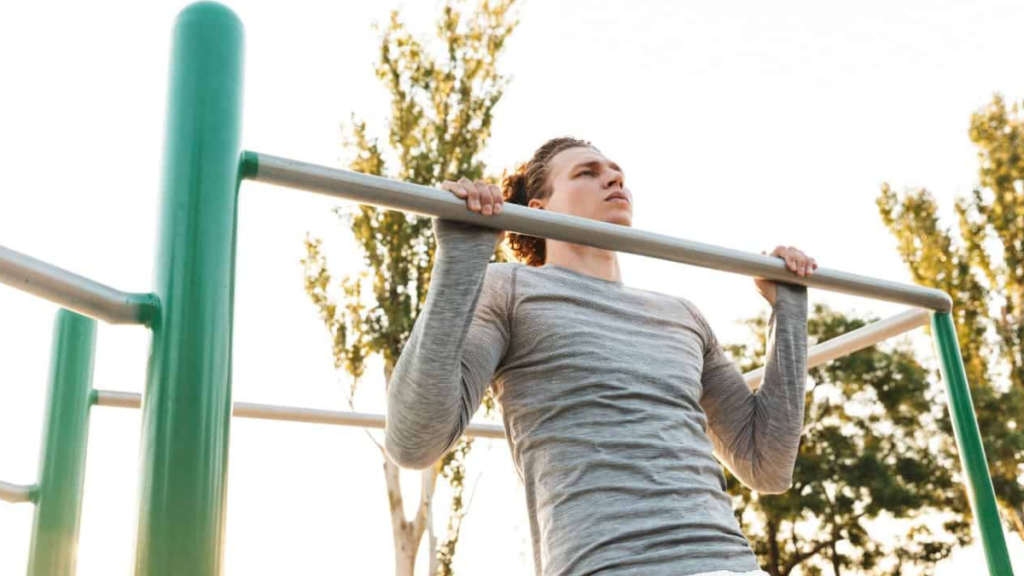
The practical lesson is that you should not force a painful grip because it is considered the “real” version. A neutral grip or supinated chin up can be a sensible way to build strength, as long as it is comfortable and aligned with your goal. If shoulder or elbow pain persists, it deserves assessment from a qualified clinician rather than repeated testing on the bar.
Skill and Coordination Matter More Than People Think
A pull up is a strength exercise, but it is also a motor skill. You must control the shoulder blades, maintain a stable rib cage and pelvis, keep the body from swinging, and coordinate the arms and back through a demanding range. Poor coordination can waste force and make a person feel weaker than they actually are.
Biomechanical research shows that pull up execution varies between individuals, including differences in posture, alignment, limb symmetry, and compensations used to complete repetitions. This matters because a rep that turns into a swing, a partial range movement, or an exaggerated back arch may change the difficulty and the muscles doing the work.
Skill improves with practice. Resistance training does not only change muscle size. It also improves neural factors such as the ability to activate and coordinate motor units. A systematic review and meta analysis of resistance training research found evidence that neural adaptations contribute to strength gains. For a beginner, some early pull up progress can come from learning how to apply existing strength more effectively, even before substantial muscle growth occurs.
Why Grip Can End a Set Early
Your back and arms may have enough strength for another rep, but the hands still need to hold the bar. Grip is not a side issue in pull ups. The fingers and forearms must create enough force to maintain a stable hand position while the rest of the body moves.
A weak or fatigued grip can make the whole exercise feel insecure. Once the hands begin to open, the nervous system may reduce effort because it senses that the bar is no longer under reliable control. Grip training, hangs that are appropriate for your current ability, and regular pulling practice can help, but grip should be progressed patiently if the elbows or fingers are sensitive.
Bar type matters too. A thick, slick, rotating, or unusually high bar can make a familiar movement much harder. When tracking progress, use similar equipment and the same range of motion whenever possible. Otherwise, you may be comparing different tests rather than true changes in strength.
What Actually Helps You Get Better
The best progression is the one that provides enough challenge to improve strength while allowing clean repetitions and recovery. General resistance training research shows that muscle strength improves with repeated exposure to sufficient resistance training volume. That principle applies to pull up training, but the exact exercise should match your current capacity.
If you cannot yet do a full rep, assisted pull ups, band assisted pull ups, machine assisted pull ups, and controlled eccentric reps can all reduce the load enough to practice the pattern. Lat pull downs and rows can add pulling volume, while curls can strengthen the elbow flexors that contribute strongly to the movement. The goal is not to collect exercises. The goal is to build the specific pulling strength, grip, shoulder control, and skill that a strict repetition requires.
Once you can do a few reps, avoid making every set an all out test. Quality practice with a repeatable range of motion is easier to recover from and makes it simpler to see whether your strength is improving. Bodyweight pronated grip pull up training has been shown to improve strength and endurance performance in trained participants, reinforcing the value of practicing the actual movement.
A Better Way to Judge Progress
Use a consistent standard. Begin from a controlled hang or agreed starting position, avoid kicking, bring the chin clearly over the bar, and lower with control. Then record the number of clean reps, the assistance used, or the duration of controlled negatives.
Progress may first appear as less assistance, a slower negative, a stronger start from the bottom, or more consistent technique. Those are meaningful changes even before your first strict pull up arrives. The ability to produce one clean rep is built from many smaller improvements.
3 Weird Chest Exercises That Are Surprisingly Effective for Beginners
The Bottom Line
Pull ups are harder for some people because the exercise magnifies differences in relative strength. Body mass changes the load, upper body pulling strength determines much of the available force, and anatomy, grip, coordination, training history, and technique influence how efficiently that force is used.
The movement is difficult by design, but it is not mysterious. Build the ratio of pulling strength to body mass where appropriate, practice a comfortable variation, train the bottom position and grip, and use a progression that makes full range reps possible. For most people, consistent training turns the pull up from an impossible test into a measurable skill.
Key Takeaways
| Factor | Why it changes pull up difficulty | Useful training focus |
|---|---|---|
| Relative strength | You must lift most of your own body mass | Increase pulling strength and use appropriate assistance |
| Upper body strength | The lats, biceps, forearms, and shoulder stabilizers must work together | Practice pull ups, rows, pulldowns, and elbow flexor work |
| Body composition | Additional mass increases the load being lifted | Focus on performance, health, and sustainable training rather than quick fixes |
| Grip | The hands must secure the bar throughout every rep | Progress hangs and pulling volume carefully |
| Technique | Poor coordination can waste force and change the movement | Use controlled reps and a consistent range of motion |
| Anatomy and grip choice | Arm length and joint comfort can change leverage and feel | Choose a comfortable variation that suits your goal |
| Training history | Familiarity improves coordination and specific strength | Practice a scalable pull up variation consistently |
References
- Dickie, J.A., Faulkner, J.A., Barnes, M.J. and Lark, S.D. (2017) ‘Electromyographic analysis of muscle activation during pull up variations’, Journal of Electromyography and Kinesiology, 32, pp. 30–36.
- Garavaglia, L., Romanò, J., Lazzari, F. and Pittaccio, S. (2024) ‘Biomechanical characterisation of the pull up exercise’, Sport Sciences for Health, 20, pp. 221–234.
- Ralston, G.W., Kilgore, L., Wyatt, F.B. and Baker, J.S. (2018) ‘The effect of weekly set volume on strength gain: A meta analysis’, Sports Medicine, 48(11), pp. 2585–2601.
- Roberts, B.M., Nuckols, G. and Krieger, J.W. (2020) ‘Sex differences in resistance training: A systematic review and meta analysis’, Journal of Strength and Conditioning Research, 34(5), pp. 1448–1460.
- Travlos, A.K. (2010) ‘Intensive physical training in the navy and the incidence of lower extremity overuse injuries’, Military Medicine, 171(5), pp. 422–428.
- Vigotsky, A.D., Halperin, I., Lehman, G.J., Trajano, G.S. and Vieira, T.M. (2018) ‘Interpreting signal amplitudes in surface electromyography studies in sport and rehabilitation sciences’, Frontiers in Physiology, 8, article 985.
- Youdas, J.W., Amundson, C.L., Cicero, K.S., Hahn, J.J., Harezlak, D.T. and Hollman, J.H. (2010) ‘Surface electromyographic activation patterns and elbow joint motion during a pull up, chin up, or rotational exercise’, Journal of Strength and Conditioning Research, 24(12), pp. 3404–3414.
- Youdas, J.W., Guck, B.R., Hebrink, R.C., Rugotzke, J.D., Noh, K. and Walker, T.J. (2009) ‘Relationship of one repetition maximum lat pull to pull up and lat pull repetitions in elite collegiate women swimmers’, Journal of Strength and Conditioning Research, 23(7), pp. 1996–2002.
- Žaloudek, M., et al. (2020) ‘Effects of velocity loss during body mass prone grip pull up training on strength and endurance performance’, Journal of Strength and Conditioning Research, 34(10), pp. 2846–2852.