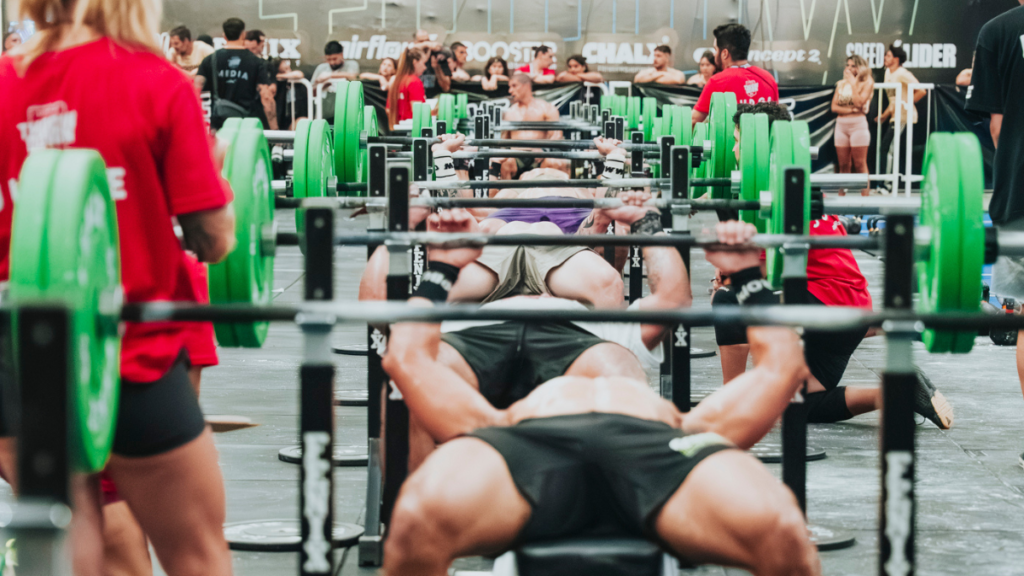


A strong chest is not just about how much muscle you can see in the mirror. It is also about how well you can produce force through horizontal pressing patterns, control your shoulder position, and repeatedly move either external load or your own bodyweight.
The bench press, push up, and dip each test a slightly different quality. The bench press is the best choice for measuring maximum pressing strength because the load is easy to standardize and progress. Push ups test relative upper body strength, trunk control, and muscular endurance. Dips demand strength through a deeper shoulder range of motion while asking you to stabilize your whole body.


No single exercise can completely define chest strength. Your bodyweight, limb length, technique, training history, and shoulder health all influence performance. However, testing all three movements gives you a useful, practical picture of your pressing ability.
What Your Chest Actually Does During Pressing
The pectoralis major is the largest chest muscle and has two broad regions: a clavicular portion near the collarbone and a sternocostal portion that covers most of the chest. Its main roles include bringing the upper arm toward the body, moving it across the chest, and helping rotate it inward.
The chest does not work alone. The triceps extend the elbow, the front deltoids assist with shoulder flexion and pressing, and muscles around the shoulder blade provide a stable platform from which force can be produced. This is why a person with a visibly muscular chest may still have a limited bench press if their triceps, shoulders, technique, or upper back stability are weak.
Research using electromyography consistently shows substantial pectoralis major involvement in the bench press and push up. The exact contribution changes with grip width, hand position, load, range of motion, and the angle of the body, but chest strength is always expressed through a coordinated upper body movement rather than an isolated muscle action.
3 Best Beginner Exercises for Jacked Traps
That coordination matters when you assess yourself. A high score in one exercise and a low score in another does not automatically mean something is wrong. It can simply show that you are more developed in maximum strength, bodyweight endurance, or movement skill.
Test One: The Bench Press
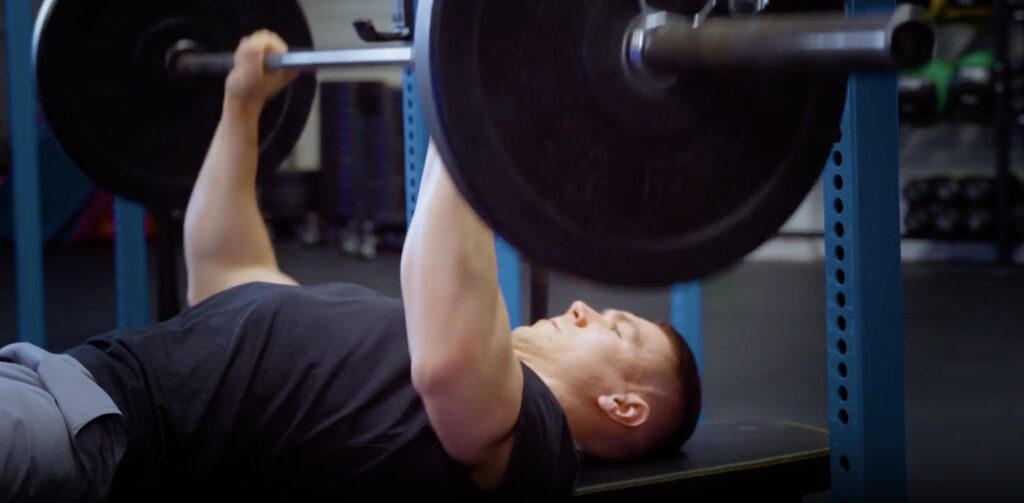
The bench press is the clearest measure of absolute upper body pressing strength. It allows you to gradually add load in small increments and compare your performance to your own bodyweight over time.
A one repetition maximum is the heaviest load you can lift once with sound technique. You do not need to test a true maximum every week. A hard set of three to six repetitions can be used to estimate it, which is often more practical and less fatiguing.
How to Test Your Bench Press
Use a flat bench, a barbell, and ideally a competent spotter. Begin with several warm up sets, increasing the load gradually while reducing the repetitions. Your final attempt should be controlled from start to finish.
Place your feet firmly on the floor and keep your upper back tight against the bench. Lower the bar under control to the chest, then press it until your elbows are fully extended. Your buttocks should remain in contact with the bench throughout the repetition.
A consistent range of motion is essential. Half repetitions may let you lift more weight, but they do not provide an honest comparison with previous tests or future progress. Full range pressing also trains the chest, triceps, and shoulders through the positions that matter most for strength development.
Bench Press Strength Guide
The following benchmarks are practical targets for healthy adults who train regularly. They are not medical standards or a diagnosis of fitness. They work best when you compare the weight lifted to your own bodyweight.
A beginner who can bench press around three quarters of their bodyweight for one controlled repetition has built a useful foundation of pressing strength. Reaching bodyweight on the bar is a meaningful intermediate milestone for many recreational lifters. A bench press of 1.25 times bodyweight reflects very good relative pressing strength, while 1.5 times bodyweight is an advanced target that usually requires years of consistent training.
For example, a 180 pound lifter who benches 180 pounds has reached the bodyweight benchmark. A 220 pound lifter who benches 220 pounds has also reached it. The absolute loads differ, but the relative challenge is similar.
These numbers should be interpreted carefully. Larger lifters often have an advantage in absolute load, while lighter lifters may perform more strongly when their result is expressed relative to bodyweight. Age, sex, previous injuries, and training experience also create wide normal differences in performance.
Test Two: The Push Up
Push ups are one of the most useful tests of relative upper body strength. Unlike the bench press, you cannot remove most of your bodyweight from the movement. You must repeatedly press a substantial proportion of your mass while controlling your trunk and shoulder blades.
Biomechanical research indicates that a standard push up loads the upper limbs with a meaningful percentage of bodyweight. The precise amount changes across the repetition and depends on body position, but it is high enough to make push ups a demanding strength endurance exercise.
Push ups also provide useful information that the bench press cannot. If your hips sag, your shoulders rise toward your ears, or your range of motion becomes shorter as fatigue builds, the test reveals limits in trunk stiffness, shoulder control, and muscular endurance.
How to Test Your Push Ups
Start in a high plank with hands approximately beneath or slightly wider than the shoulders. Keep your body in a straight line from head to heels. Lower your chest until it is close to the floor, then press back to full elbow extension.
Use a controlled pace. Do not bounce the chest from the floor, shorten the bottom range, or allow the hips to drop. Stop the test when you can no longer complete another technically clean repetition.
For a simple self test, aim to complete as many strict push ups as possible in one set. Rested performance is most useful, so avoid testing after a heavy chest workout.
Push Up Strength Guide
Ten strict push ups is a sensible first benchmark for an adult building general upper body strength. Reaching 20 good repetitions shows a solid basic level of pressing endurance. Thirty five clean push ups indicates strong relative upper body capacity, while 50 or more reflects excellent endurance for most regular gym goers.
These targets are only useful if every repetition follows the same standard. Twenty full range push ups are more valuable than 40 shallow repetitions completed with poor body control.
Push up capacity is influenced by bodyweight more strongly than bench press strength. Gaining body mass, even if some of it is muscle, can temporarily make the movement harder. This is one reason a strong bench presser may have modest push up numbers, while a lighter athlete with less absolute strength may complete many repetitions.
Higher push up performance has also been associated with favorable health outcomes in specific occupational populations. That does not mean push ups alone prevent disease, but it supports the broader idea that muscular fitness is an important component of long term health.
Test Three: The Dip
The dip is a demanding bodyweight press that places the shoulder into a deeper position than a typical push up or bench press. It strongly involves the chest, triceps, and front deltoids while requiring active control of the shoulder blades and torso.
For many lifters, the dip is a useful bridge between push ups and weighted bench pressing. It can build substantial pressing strength without needing much equipment. However, it is not suitable for everyone. People with current shoulder pain, a history of shoulder instability, or discomfort at the bottom of the movement should not force the range of motion.
How to Test Your Dips
Use parallel bars that allow you to hang freely without your feet touching the floor. Begin with elbows locked and shoulders held away from the ears. Lower under control until your upper arms are at least parallel to the floor, provided this position is comfortable and pain free.
Press back to the top without swinging your legs or bouncing from the bottom. Keep the repetition smooth and repeatable. Leaning the torso slightly forward may increase chest involvement, while a more upright posture can shift more work toward the triceps. For testing, choose one style and use it every time.
If you cannot yet perform a full dip, begin with assisted dips, controlled eccentric repetitions, push ups, and bench press variations. Building the strength gradually is more productive than forcing painful attempts.
Dip Strength Guide
Three strict bodyweight dips is a solid initial goal. Reaching eight controlled repetitions suggests good relative pressing strength and shoulder control. Fifteen clean dips is a strong result for a recreational lifter, while 25 or more is an advanced bodyweight pressing performance.
As with push ups, bodyweight matters. A heavier athlete completing 10 strict dips is moving more total load than a lighter athlete completing the same number. The lighter athlete may still have excellent relative strength, but the two performances should not be treated as identical in absolute terms.
Once you can complete 12 to 15 pain free dips with consistent form, adding external weight can provide a more direct strength challenge. Progress slowly, because the bottom position can stress the front of the shoulder when load rises faster than your tissues can adapt.
How to Read Your Results
Your three scores tell a more useful story together than separately. A person who benches heavily but struggles with push ups may have strong absolute pressing strength but lower relative strength or endurance. Improving body composition, trunk control, and higher repetition training may help.
Someone who performs many push ups but has a low bench press may be highly skilled at moving their own bodyweight but lack experience producing force against heavy external load. Regular bench press practice and progressive overload can improve this.
A person with good push up and bench press numbers but very few dips may need more exposure to the deeper shoulder position and greater demand for stability. That does not mean they must force dips into their program. If the movement causes shoulder discomfort, other chest exercises can develop pressing strength safely.

The strongest overall profile is not necessarily the person with the highest number in one test. It is the person who can bench a meaningful load relative to bodyweight, perform strict push ups with control, and handle dips pain free through a repeatable range of motion.
How to Improve All Three Numbers
Strength gains depend on progressive overload. This means gradually increasing the challenge through load, repetitions, sets, range of motion, or exercise difficulty. Research shows that resistance training can increase strength across a wide range of loads when sets are performed with sufficient effort, although heavier loads are generally more specific to improving maximum strength.
For bench press progress, include regular practice with challenging sets of approximately three to eight repetitions. Add some additional pressing volume with moderate repetitions to build muscle and reinforce technique. Train your upper back as well, because stable shoulder blades and strong pulling muscles support efficient pressing.
For push ups, use a progression that allows clean repetitions. Elevated push ups reduce the load, while feet elevated push ups increase it. Once standard push ups become easy, slower lowering phases, pauses near the bottom, or external load can make them more demanding.
For dips, earn the movement gradually. Assisted repetitions, slow eccentric work, and reduced range training can build confidence and strength. Keep the shoulders controlled, avoid painful depth, and do not chase high volume before you can perform every repetition smoothly.
Training the chest two or three times per week gives most people enough exposure to improve while allowing recovery. Include pulling work in your program as well. A balanced upper body routine supports shoulder function and helps you build pressing strength that lasts.
The Bottom Line
Bench press, push up, and dip numbers each reveal a different aspect of chest strength. The bench press measures how much external load you can press. Push ups show how well you can move your bodyweight repeatedly. Dips challenge your pressing strength, stability, and control through a deeper range.
Test each movement with consistent form, record your results, and retest after six to eight weeks of focused training. The most meaningful comparison is not with another person. It is whether your own technique, strength, and confidence are improving over time.
Key Takeaways
| Test | What it shows | Solid benchmark | Strong benchmark |
|---|---|---|---|
| Bench press | Absolute and relative pressing strength | Bodyweight for one controlled repetition | 1.25 times bodyweight for one controlled repetition |
| Push up | Relative upper body strength and pressing endurance | 20 strict repetitions | 35 strict repetitions |
| Dip | Bodyweight pressing strength, shoulder control, and stability | 8 strict repetitions | 15 strict repetitions |
| Best use | Overall chest strength assessment | Test all three movements with the same form each time | Retest after six to eight weeks of structured training |
References
- Bohannon, R.W. (2019) ‘Grip strength: An indispensable biomarker for older adults’, Clinical Interventions in Aging, 14, pp. 1681–1691.
- Calatayud, J., Borreani, S., Colado, J.C., Martin, F., Flandez, J., Page, P. and Andersen, L.L. (2015) ‘Bench press and push up at comparable levels of muscle activity results in similar strength gains’, Journal of Strength and Conditioning Research, 29(1), pp. 246–253.
- Cogley, R.M., Archambault, T.A., Fibeger, J.F., Koverman, M.M., Youdas, J.W. and Hollman, J.H. (2005) ‘Comparison of muscle activation using various hand positions during the push up exercise’, Journal of Strength and Conditioning Research, 19(3), pp. 628–633.
- Knapik, J.J., Bauman, C.L., Jones, B.H., Harris, J.M. and Vaughan, L. (1991) ‘Preseason strength and flexibility imbalances associated with athletic injuries in female collegiate athletes’, American Journal of Sports Medicine, 19(1), pp. 76–81.
- Kotani, Y., Shima, N., Takahashi, M., Masani, K. and Kouzaki, M. (2012) ‘Relationship between the surface electromyogram activity of trunk muscles and the center of pressure during push ups’, Journal of Physical Therapy Science, 24(9), pp. 877–880.
- LeSuer, D.A., McCormick, J.H., Mayhew, J.L., Wasserstein, R.L. and Arnold, M.D. (1997) ‘The accuracy of prediction equations for estimating one repetition maximum bench press performance in college men’, Journal of Strength and Conditioning Research, 11(4), pp. 211–213.
- Ludyga, S., Gronwald, T. and Hottenrott, K. (2016) ‘The athlete’s brain: Cross sectional evidence for a link between cardiorespiratory fitness and executive function in endurance athletes’, Journal of Sport and Exercise Psychology, 38(3), pp. 237–248.
- Mortensen, S.P., Mørkeberg, J., Thaning, P., Hellsten, Y. and Saltin, B. (2012) ‘High intensity interval training improves exercise performance and reduces muscle interstitial potassium accumulation in humans’, Journal of Physiology, 590(24), pp. 6399–6408.
- Morton, R.W., Oikawa, S.Y., Wavell, C.G., Mazara, N., McGlory, C., Quadrilatero, J., Baechler, B.L., Baker, S.K. and Phillips, S.M. (2016) ‘Neither load nor systemic hormones determine resistance training mediated hypertrophy or strength gains in resistance trained young men’, Journal of Applied Physiology, 121(1), pp. 129–138.