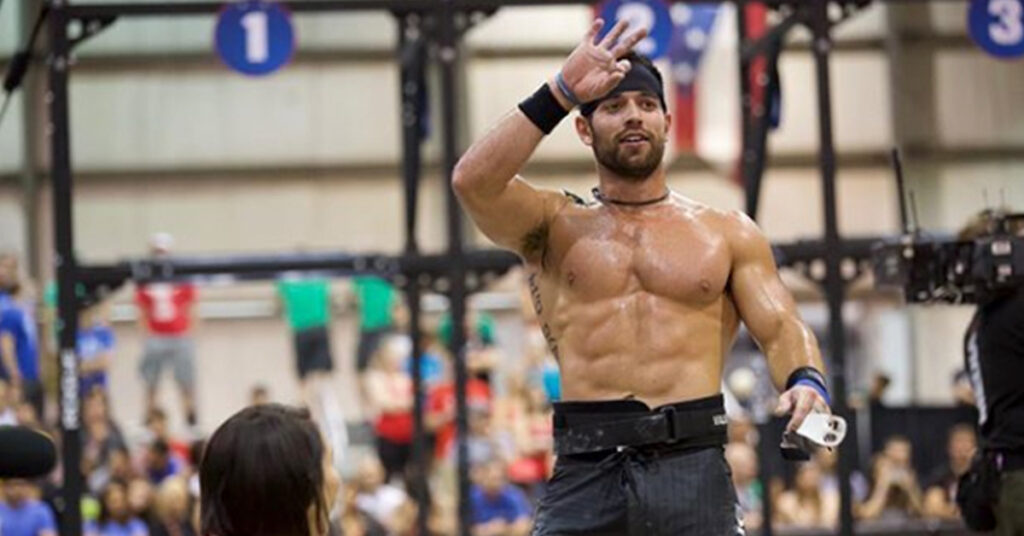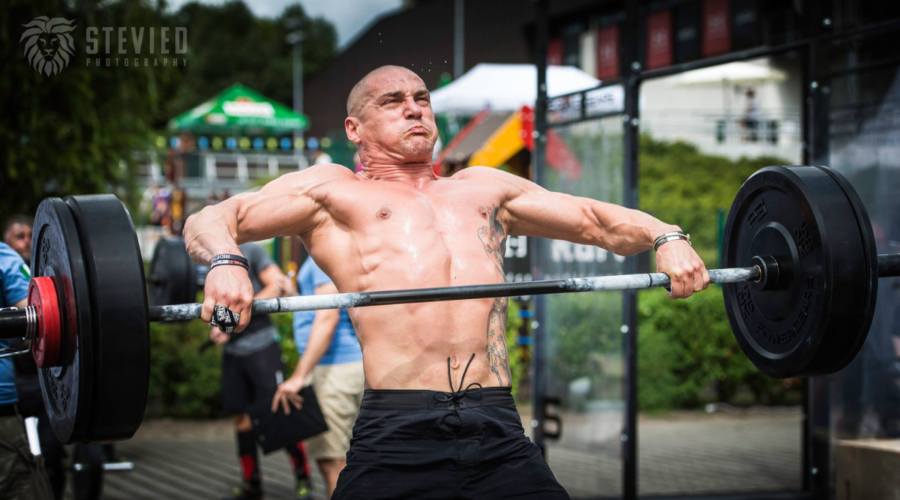


A bigger upper chest can make your whole torso look more muscular. It creates a stronger line between your chest, shoulders, and collarbones, helps your physique look more complete from the front, and can make T shirts fit better through the upper body.
The upper portion of the chest is primarily formed by the clavicular head of the pectoralis major. This area runs from the collarbone toward the upper arm and contributes to pressing, bringing the arm across the body, and lifting the arm forward. You cannot completely isolate it from the rest of the chest, but exercise angle can change how much it contributes during a pressing movement.


For beginners, the best upper chest exercises are not necessarily the most complicated ones. You need movements that are easy to learn, allow safe progression, and let you train hard enough to create a growth stimulus. The three exercises in this article meet those criteria: the incline dumbbell press, the incline chest press machine, and the feet elevated push up.
They all train the chest, front delts, and triceps. However, each one offers a slightly different benefit. Used together, they give beginners a practical way to build the upper chest while developing pressing strength and confidence in the gym.
What Builds a Bigger Upper Chest?
Muscle growth happens when resistance training provides enough mechanical tension, sufficient effort, and regular progression over time. Your chest will not grow because you perform a specific exercise once or because you feel a strong burn during a set. It grows when you repeatedly challenge the muscle, recover well, and gradually make your training more demanding.
Research shows that muscles can grow across a wide range of loads, provided sets are performed with enough effort. Heavier weights tend to be better for improving maximum strength, but lighter and moderate loads can still build muscle when you take sets close to muscular failure. This is especially useful for beginners because it means you do not need to start with extremely heavy weights to make progress.
Is your 1km Row Time Good for Your Age?
The exercise angle also matters. Flat pressing exercises train the pectoralis major effectively, but incline pressing can increase the contribution of the clavicular portion of the chest. Studies using electromyography have found that pressing on an incline can increase activation of the upper chest compared with a flat bench press. However, there is an important detail: a very steep incline starts to shift more work toward the front delts.
For most beginners, a modest incline is the best place to start. A bench angle of around 30 to 45 degrees allows you to train the upper chest while still keeping the movement chest focused. The exact angle that feels best will vary slightly according to your body shape, shoulder comfort, and equipment.
1. Incline Dumbbell Press
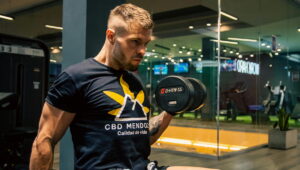
The incline dumbbell press is one of the best upper chest exercises for beginners because dumbbells are easy to scale, allow each arm to work independently, and often feel more comfortable on the shoulders than a barbell.
Unlike a barbell, dumbbells do not lock your hands into one fixed path. Your arms can move in a position that feels natural for your shoulders, which may help beginners learn the movement without forcing an uncomfortable grip or range of motion. Dumbbells also make it easier to identify differences between your left and right side.
Why It Works for the Upper Chest
The incline position places your upper body at an angle that can increase the role of the clavicular head of the pectoralis major. Your upper chest has to work hard to press the dumbbells upward and inward while your front delts and triceps assist.
The dumbbell press is also useful because it can be loaded progressively for a long time. You may start with very light dumbbells while learning the movement, then add weight in small increments as you become stronger. This makes it much easier to apply progressive overload without sacrificing technique.
Research comparing different bench press variations suggests that free weight pressing can produce substantial activation of the chest, shoulders, and triceps. Dumbbells also require greater control than a machine, which can help beginners develop coordination and stability alongside chest strength.
How to Do It
Set an adjustable bench to a low or moderate incline. Around 30 degrees is a sensible starting point for most people. Sit on the bench with a dumbbell resting on each thigh, then use your legs to help guide the dumbbells into the starting position as you lie back.
Hold the dumbbells over your upper chest with your palms facing forward or turned slightly inward. Keep your feet firmly planted on the floor, your upper back against the bench, and your shoulder blades gently pulled back and down.
Lower the dumbbells slowly toward the upper portion of your chest. Your elbows should travel slightly out from your torso, but they should not flare directly out to the sides. Press the dumbbells back up with control, finishing with the weights above your upper chest rather than directly above your face.
Avoid turning the movement into a front shoulder press. If the bench is too steep or your elbows drift too far forward, the front delts may take over. Lowering the bench angle slightly can often bring more tension back to the chest.
How to Program It
Begin with two or three sets of eight to 12 repetitions. Choose a load that allows you to keep control throughout the set while still making the final few repetitions challenging.
Train the incline dumbbell press once or twice per week. If you are also doing flat presses, push ups, or chest machines, start conservatively. Your chest, shoulders, and triceps all need enough recovery to get stronger.
2. Incline Chest Press Machine
The incline chest press machine is an excellent choice for beginners who want to train their upper chest hard without worrying too much about balance or stabilizing the weights. It is particularly useful if you are new to the gym, training alone, or still building confidence with free weights.
Machines are sometimes dismissed as less effective than barbells or dumbbells, but that is not supported by the wider evidence on hypertrophy. Muscles respond to tension, effort, volume, and progression. A machine can provide all of these when it is used properly.
Why It Works for the Upper Chest
The biggest advantage of an incline chest press machine is stability. Because the machine guides the movement path, you can direct more attention toward pressing hard and controlling the repetition. This may allow beginners to train closer to muscular failure safely.
Training close to failure can be valuable because it helps ensure that enough muscle fibers are recruited to create a meaningful growth stimulus. Beginners do not need to take every set to absolute failure, but finishing a set with only one to three good repetitions left is often a productive target.
Many incline press machines also provide a comfortable handle path that brings the hands slightly inward as you press. This can suit the role of the chest, which helps move the upper arm toward the midline of the body.
The machine may be particularly valuable after dumbbell pressing. Once your stabilizing muscles are tired, it can be difficult to continue training productively with free weights. A chest press machine lets you add more quality chest work while keeping your technique more consistent.
How to Do It
Adjust the seat so the handles begin around upper chest level. If the handles start too low, the movement may become more similar to a flat chest press. If they start too high, your shoulders may dominate the exercise.
Place your feet firmly on the floor and sit tall against the back pad. Keep your chest up without excessively arching your lower back. Grip the handles, pull your shoulder blades gently back, and press forward with control.
Do not slam the weight stack or lock your elbows forcefully at the top. Pause briefly when your arms are nearly straight, then return the handles slowly until you feel a comfortable stretch through the chest.
A full range of motion is usually useful for muscle growth, but you should never force your shoulders into pain. If the bottom position feels uncomfortable, reduce the load, adjust the seat, or choose a different machine.
How to Program It
Perform two or three sets of 10 to 15 repetitions after your main free weight pressing exercise. The slightly higher repetition range is useful because machines are stable and easy to control under fatigue.
Focus on a slow lowering phase and a hard but controlled press. When you can complete all your target repetitions with good form, increase the weight by the smallest available increment.
3. Feet Elevated Push Up
The feet elevated push up is one of the best bodyweight exercises for beginners who want to build their upper chest at home or add more chest volume without relying entirely on gym equipment.
A standard push up trains the chest, triceps, and front delts. Raising the feet changes the angle of your body and places more of your body weight through your arms. It also creates a pressing angle that is closer to an incline bench press, which makes it a useful upper chest focused variation.
Why It Works for the Upper Chest
Push ups can build muscle when they are challenging enough. Research has found that push up training can produce chest muscle growth and strength improvements comparable with low load bench press training when the relative resistance is matched.
The important point is effort. If you can perform 40 easy repetitions without approaching fatigue, the push up may no longer provide enough resistance for efficient chest growth. Elevating your feet is a simple way to make the exercise harder without adding equipment.
Feet elevated push ups also teach useful body control. You have to keep your torso rigid, control your shoulder blades, and maintain a straight line from your head to your heels. This gives the movement an additional core stability demand that does not exist to the same degree during a machine press.
How to Do It
Place your feet on a stable bench, box, or step. Start with a low surface. Even a small amount of elevation can make the exercise noticeably more difficult.
Place your hands slightly wider than shoulder width, with your fingers pointing forward or turned out slightly if that feels more comfortable. Create a straight line from your head through your hips to your heels.
Lower your chest toward the floor under control. Keep your elbows at a moderate angle from your torso instead of letting them flare straight outward. Press the floor away and return to the top without allowing your hips to sag.
The exercise should feel like a chest press, not a shoulder press. If the elevation is too high, your front delts may become the limiting factor. Lower the height of the platform until you can feel your chest working strongly while maintaining good form.
How to Program It
Start with two or three sets of six to 15 repetitions. Stop when your technique begins to break down, but aim to make each set challenging.
If feet elevated push ups are too difficult, begin with standard push ups or hands elevated push ups. As you become stronger, increase the height of your feet, use a weighted vest, or add a resistance band across your back.
How to Combine These Exercises
A beginner does not need an enormous chest workout. More exercises are not automatically better. What matters is performing enough hard, high quality sets each week and progressing gradually.
You could begin with the incline dumbbell press as your main exercise, use the incline chest press machine for additional stable volume, and finish with feet elevated push ups for bodyweight practice. This combination gives you free weight training, machine work, and a simple exercise that you can also perform at home.
Aim to train your chest two times per week. Start with a manageable amount of work, then add repetitions or load gradually over time. Your shoulders, elbows, and wrists should feel challenged but not painful.
Remember that the upper chest will not grow in isolation. Your front delts and triceps contribute to every pressing movement, and your overall physique will look better if you also train your back, legs, and core consistently.
Common Mistakes That Limit Upper Chest Growth
The first mistake is using an incline that is too steep. A very high bench angle often turns a chest press into a shoulder focused press. Start with a lower incline and only increase it if the movement still feels chest dominant.

The second mistake is choosing weights that are too heavy. Beginners often rush to add load before they have learned to control the lowering phase, maintain stable shoulders, and use a full comfortable range of motion. Strong technique creates a better foundation for long term progress.
The third mistake is never progressing. Your upper chest needs a reason to adapt. Keep track of the weight, repetitions, and sets you perform. When the current workload becomes easier, add a repetition, increase the load slightly, or improve your control.
The final mistake is expecting rapid change. Building noticeable chest muscle takes months of consistent training, enough protein, sufficient calories for your goal, and good recovery. The exercises matter, but your consistency matters more.
Key Takeaways
| Focus | What beginners should do |
|---|---|
| Best primary exercise | Use the incline dumbbell press to build upper chest strength and learn stable pressing technique. |
| Best stable exercise | Use an incline chest press machine to add controlled chest training with less balance demand. |
| Best bodyweight exercise | Use feet elevated push ups to make push ups more challenging and create an upper chest focused pressing angle. |
| Bench angle | Start with a low to moderate incline, usually around 30 degrees, to emphasize the upper chest without making the movement overly shoulder dominant. |
| Repetition range | Use roughly eight to 15 repetitions for most sets and finish with only a small number of good repetitions left. |
| Weekly frequency | Train chest one or two times per week and increase weight or repetitions gradually. |
| Long term progress | Build muscle through consistent training, progressive overload, enough food, protein, and recovery. |
References
- Calatayud, J., Borreani, S., Colado, J.C., Martin, F., Tella, V. and Andersen, L.L. (2015) ‘Bench press and push up at comparable levels of muscle activity results in similar strength gains’, Journal of Strength and Conditioning Research, 29(1), pp. 246 to 253.
- Kikuchi, N. and Nakazato, K. (2017) ‘Low load bench press and push up induce similar muscle hypertrophy and strength gain’, Journal of Exercise Science and Fitness, 15(1), pp. 37 to 42.
- Lauver, J.D., Cayot, T.E. and Scheuermann, B.W. (2016) ‘Influence of bench angle on upper extremity muscular activation during bench press exercise’, European Journal of Sport Science, 16(3), pp. 309 to 316.
- Rodriguez Ridao, D., Antequera Vique, J.A., Martin Fuentes, I., Muyor, J.M. and Saavedra, F. (2020) ‘Effect of bench angle on the muscle activation of upper extremity muscles during bench press exercise’, International Journal of Environmental Research and Public Health, 17(19), 7336.
- Schoenfeld, B.J., Grgic, J., Ogborn, D. and Krieger, J.W. (2017) ‘Strength and hypertrophy adaptations between low versus high load resistance training: A systematic review and meta analysis’, Journal of Strength and Conditioning Research, 31(12), pp. 3508 to 3523.
- Trebs, A.A., Brandenburg, J.P. and Pitney, W.A. (2010) ‘An electromyography analysis of three muscles surrounding the shoulder joint during the performance of a chest press exercise at several angles’, Journal of Strength and Conditioning Research, 24(7), pp. 1925 to 1930.