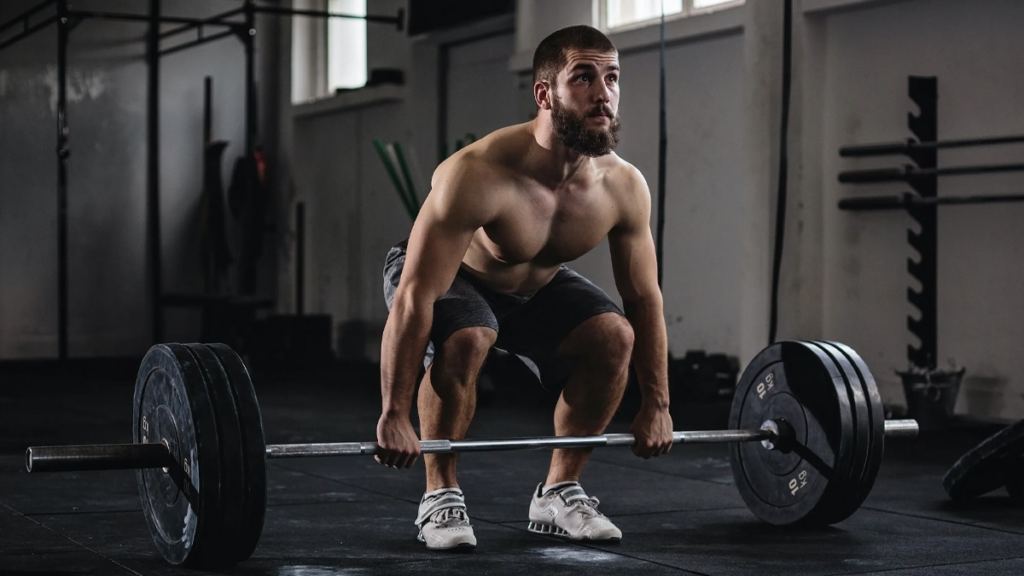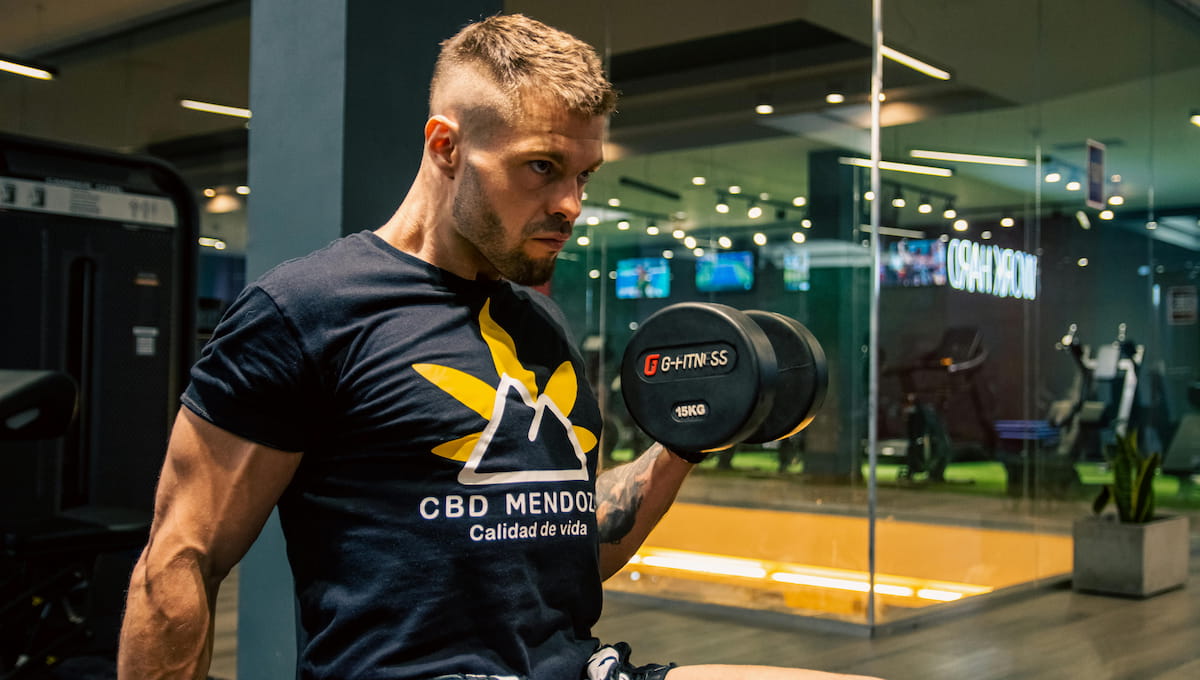


Building bigger biceps does not require an endless collection of exercises. It requires consistent resistance training, good technique, enough challenging repetitions, and progression over time. For beginners, dumbbell curls and barbell curls are two of the most useful ways to train the elbow flexors, but they feel very different in practice.
Dumbbell curls allow each arm to work independently and let your hands rotate naturally during the repetition. Barbell curls keep both hands fixed on one bar, which can make it easier to handle heavier total loads and keep the movement simple. Both can build muscle effectively when they are performed through a comfortable range of motion and trained hard enough.


The important point is that there is no convincing long term evidence showing that dumbbell curls universally build more biceps muscle than barbell curls, or the other way around. The best choice depends on your current strength, your joint comfort, your ability to control the movement, and whether you can progress it consistently. For most beginners, dumbbell curls offer a slight practical advantage because they make it easier to learn the movement and keep both arms honest. Barbell curls remain an excellent exercise once you can perform them without swinging or irritating your wrists and elbows.
What Your Biceps Actually Do
The biceps brachii sits on the front of the upper arm and has two heads, commonly called the long head and short head. Its main actions include bending the elbow and turning the palm upward, which is called supination. The biceps also assists with shoulder flexion, although this is not its main job during a curl.
The biceps do not work alone. The brachialis sits underneath the biceps and is a powerful elbow flexor regardless of hand position. The brachioradialis, located on the thumb side of the forearm, also contributes strongly when you bend your elbow. This is why a well designed arm program should include controlled elbow flexion through a useful range of motion, rather than obsessing over the idea of isolating one tiny part of a muscle.
Both dumbbell curls and barbell curls train these elbow flexors. The main difference comes from how freely you can position your hands, wrists, and shoulders while performing the exercise.
Dumbbell Curls
Why Dumbbells Are Beginner Friendly
A dumbbell curl lets each arm lift its own weight. This means your stronger arm cannot take over as easily, which can help you notice and address strength differences between sides. It also requires you to control two separate weights, encouraging a more deliberate movement and making excessive momentum easier to spot.
The most common version starts with the arms by the sides and the palms facing inward or slightly forward. As you curl the dumbbells upward, you can gradually rotate the palms upward. This rotating action fits the biceps brachii’s role in supination and often feels natural for beginners.
Dumbbells also allow small adjustments to wrist and elbow position. If a fully supinated curl irritates your wrists or elbows, you can use a more neutral hand position without abandoning the exercise completely. This flexibility can make training more comfortable and sustainable, which matters more than forcing yourself into a supposedly perfect position that causes pain.
Technique for Dumbbell Curls
Stand tall with a dumbbell in each hand. Start with your ribs stacked over your pelvis and your shoulders relaxed rather than pulled aggressively backward. Keep your upper arms close to your torso and curl the weight by bending your elbows. Rotate your palms upward as you lift if that feels comfortable.
Chin-Ups vs Pull-Ups – Which Is Better for Wider and Bigger Arms?
At the top, squeeze the biceps without thrusting your elbows far forward. Lower the dumbbells under control until your elbows are nearly straight. You do not need to lock out forcefully, but you should avoid stopping halfway down simply because the upper part of the repetition feels easier.
Use a weight that allows you to keep your torso relatively still. A small amount of natural body movement may occur during a hard final repetition, but beginners should not turn every set into a swinging exercise. If your shoulders roll forward, your lower back arches dramatically, or the dumbbells fly upward, the load is probably too heavy for the target repetition range.
The Limitations of Dumbbell Curls
Dumbbells can be slightly more awkward to set up than a barbell, especially when the weights become challenging. They also demand more coordination because each arm must stabilize its own load. Some beginners may find it difficult to increase the weight in small enough steps if their gym only has large jumps between dumbbell sizes.
A dumbbell curl may also feel less stable than a barbell curl. That is not automatically a disadvantage, but it can limit how much weight you are able to use with clean technique. If your main goal is simply to practice progressively heavier elbow flexion, a barbell can make that progression more straightforward.
Barbell Curls
Why Barbells Can Be Effective
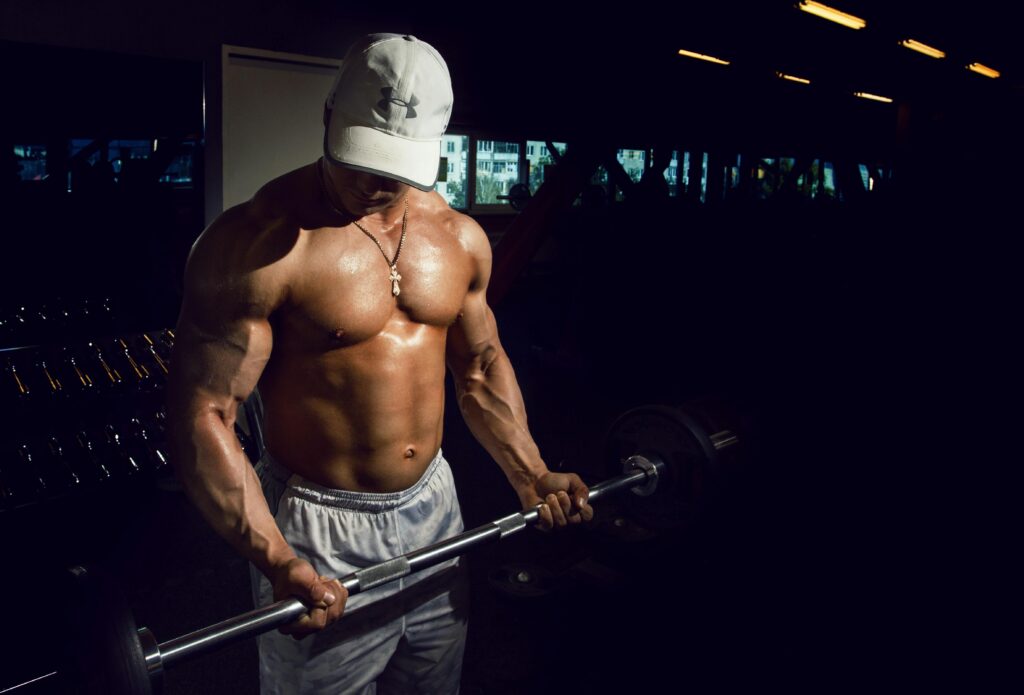
A barbell curl involves holding one bar with both hands, usually with palms facing upward. Because both arms are connected to the same implement, the movement feels stable and simple. Many lifters find they can use more total load with a barbell than with dumbbells.
The barbell curl also makes progression easy. Most gyms have plates that let you add small amounts of weight over time, which is useful for beginners who are becoming stronger but are not ready to jump to much heavier dumbbells. Gradually increasing training stress is one of the central principles of building muscle and strength.
A straight bar places the wrists in a fully supinated position. Some people enjoy this feeling and can train it comfortably for years. Others find that the fixed hand position places unwanted stress on the wrists, elbows, or forearms. If that happens, an EZ bar can be a useful alternative because its angled grips allow a less extreme wrist position.
Technique for Barbell Curls
Hold the bar with a grip around shoulder width, although a slightly narrower or wider grip may feel better depending on your build and comfort. Stand tall, brace your trunk, and keep your elbows near your sides. Curl the bar upward by bending your elbows, then lower it with control.
Avoid treating the barbell curl as a whole body lift. Leaning backward to launch the bar upward can turn the movement into a confusing combination of hip extension, lower back movement, and shoulder flexion. That does not mean every repetition must look robotic, but beginners will generally get more useful biceps practice by choosing a load they can control.
Keep the lowering phase purposeful. Resistance training research shows that both the lifting and lowering phases contribute to muscular adaptations. Lowering the bar under control also reduces the temptation to let it fall quickly before rebounding into the next repetition.
The Limitations of Barbell Curls
The fixed hand position is the main limitation. Unlike dumbbells, a straight bar does not let each wrist and elbow find its own comfortable path. If your shoulders, wrists, or elbows do not tolerate the position well, forcing it may turn a productive biceps exercise into an irritating one.
A barbell can also disguise an imbalance between arms. Your stronger side may contribute more force while the weaker side follows along. This does not make barbell curls ineffective, but it is one reason beginners can benefit from including dumbbell work.
Finally, it is easy to add too much weight to a barbell and compensate with momentum. The ability to load an exercise heavily is valuable only if you can maintain a movement that actually challenges the intended muscles.
What the Research Says
A study comparing dumbbell curls, straight barbell curls, and EZ bar curls found differences in muscle activation between the exercises. In that study, the barbell and EZ bar variations produced greater electrical activity in the biceps brachii and brachioradialis than dumbbell curls under the specific testing conditions. The EZ bar produced the highest overall activity in several measures.
However, muscle activation measured during one workout is not the same thing as long term muscle growth. Electromyography can provide useful information about how a muscle behaves during an exercise, but it cannot tell us with certainty which exercise will build the most muscle after months of progressive training. For that reason, it would be a mistake to conclude that every beginner should abandon dumbbells and use only a barbell.
The broader evidence on hypertrophy gives a more useful answer. Muscle growth is strongly influenced by sufficient training volume, progressive overload, effort, consistency, and a sensible range of motion. Different loading ranges can produce similar muscle growth when sets are performed with enough effort, although heavier loads are generally more specific to improving maximum strength.
For a beginner, this means the choice between dumbbell curls and barbell curls is less important than performing whichever option you can control, tolerate, and progress. A technically sound dumbbell curl done consistently will outperform an unstable barbell curl performed with excessive swinging. Equally, a well executed barbell curl that you can gradually load can be an outstanding tool for biceps development.
Which Builds Better Biceps for Beginners?
Dumbbell curls are the better default choice for many beginners. They allow natural wrist rotation, train each arm independently, and make it easier to identify whether one side is doing less work. They can also be more comfortable for lifters who have limited wrist mobility or who dislike the fixed grip of a straight bar.
Barbell curls may be the better choice if you find the movement comfortable, want a highly stable exercise, and need smaller increases in load than your dumbbells allow. They are particularly useful once you have learned to keep your torso controlled and resist the temptation to use momentum.
The most effective answer for many beginners is not to choose only one forever. Start with dumbbell curls to learn clean elbow flexion and develop balanced control. Add barbell curls later if they feel comfortable and allow you to make consistent progress. You can also alternate them across training sessions.
For example, you could perform dumbbell curls in one weekly workout and barbell curls in another. This gives you the independent arm work and adaptable wrist position of dumbbells, alongside the stable loading potential of the barbell. There is no need to make your biceps training more complicated than that.
How to Program Curls for Muscle Growth
Beginners can begin with two or three sets of curls per workout, performed one or two times per week. A practical repetition range is around eight to 15 repetitions per set. Choose a weight that makes the final few repetitions challenging while allowing you to maintain good control.
As you become stronger, increase the load gradually, add repetitions with the same load, or add a set when your recovery and overall program allow it. More weekly resistance training volume is generally associated with greater hypertrophy, but beginners do not need huge amounts of direct arm work to grow. Compound pulling exercises such as rows and chin ups also train the elbow flexors.
Use a full and comfortable range of motion. Start each repetition with the elbow close to straight, then curl until you have reached the top position without lifting your shoulders excessively. Full range training generally supports strength development and can be a useful default when it is comfortable and controlled.
Do not train through sharp pain. Muscle fatigue and a burning sensation during hard sets are normal. Pain in the wrist, elbow, or shoulder is a reason to adjust the grip, reduce the load, change the exercise, or seek advice from an appropriately qualified health professional if it persists.
The Verdict
Dumbbell curls and barbell curls can both build bigger biceps for beginners. Dumbbell curls win slightly as the best starting option because they allow each arm to work independently, permit a more natural wrist path, and teach control. Barbell curls are equally valuable when they feel comfortable and are performed without turning the movement into a swinging lift.
Your biceps will not grow because you found a magical curl variation. They will grow because you train consistently, use controlled repetitions, challenge the muscles gradually, recover well, and keep progressing over time. Pick the curl you can perform well today, then earn the right to make it heavier tomorrow.
References
- American College of Sports Medicine (2009) ‘American College of Sports Medicine position stand. Progression models in resistance training for healthy adults’, Medicine and Science in Sports and Exercise, 41(3), pp. 687–708.
- Marcolin, G., Panizzolo, F.A., Petrone, N., Moro, T., Grigoletto, D., Piccolo, D. and Paoli, A. (2018) ‘Differences in electromyographic activity of biceps brachii and brachioradialis while performing three variants of curl’, PeerJ, 6, e5165.
- Pallarés, J.G., Hernández Belmonte, A., Martínez Cava, A., Vetrovsky, T., Steffl, M. and Courel Ibáñez, J. (2021) ‘Effects of range of motion on resistance training adaptations: A systematic review and meta analysis’, Scandinavian Journal of Medicine and Science in Sports, 31(10), pp. 1866–1881.
- Schoenfeld, B.J., Ogborn, D. and Krieger, J.W. (2016) ‘Effects of resistance training frequency on measures of muscle hypertrophy: A systematic review and meta analysis’, Sports Medicine, 46(11), pp. 1689–1697.
- Schoenfeld, B.J., Ogborn, D. and Krieger, J.W. (2017) ‘Dose response relationship between weekly resistance training volume and increases in muscle mass: A systematic review and meta analysis’, Journal of Sports Sciences, 35(11), pp. 1073–1082.
- Schoenfeld, B.J., Grgic, J., Ogborn, D. and Krieger, J.W. (2017) ‘Strength and hypertrophy adaptations between low versus high load resistance training: A systematic review and meta analysis’, Journal of Strength and Conditioning Research, 31(12), pp. 3508–3523.
- Schoenfeld, B.J., Ogborn, D.I. and Vigotsky, A.D. (2017) ‘Hypertrophic effects of concentric versus eccentric muscle actions: A systematic review and meta analysis’, Journal of Sports Sciences, 35(23), pp. 2385–2391.
Key Takeaways
| Question | Practical answer for beginners |
|---|---|
| Which curl is the best starting choice? | Dumbbell curls are often the best starting option because each arm works independently and the wrist can move naturally. |
| Can barbell curls build big biceps? | Yes. Barbell curls can be highly effective when they are comfortable, controlled, and progressively loaded. |
| Is one exercise scientifically proven to build more muscle? | No long term evidence proves that dumbbell curls universally build more biceps than barbell curls, or vice versa. |
| How many repetitions should beginners use? | Around eight to 15 controlled repetitions per set is a practical starting range. |
| What matters most for biceps growth? | Consistent training, good technique, challenging sets, progressive overload, recovery, and enough total weekly work. |