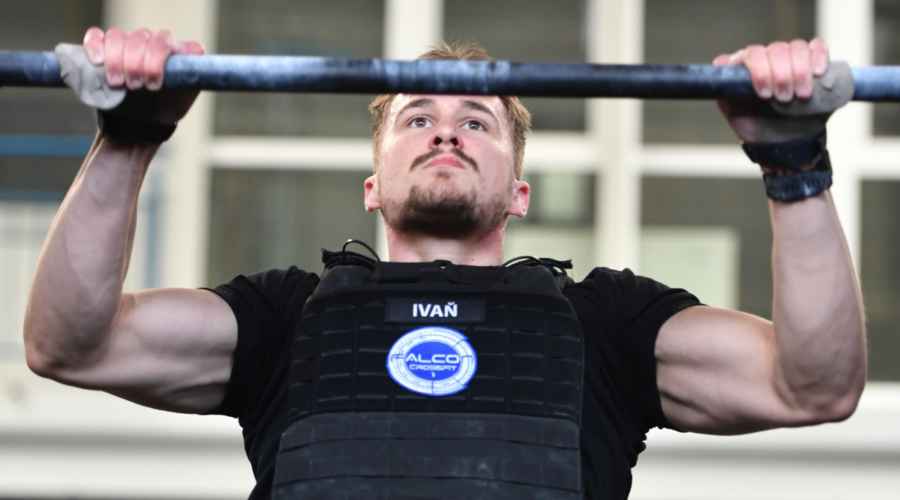


A wider back can make your upper body look more athletic, create a stronger V shape, and improve the visual balance between your shoulders, waist, and arms. Pull ups and dumbbell rows are both excellent exercises, but they do not challenge the back in exactly the same way.
If your main goal is to build visible back width, pull ups usually deserve priority. They train the latissimus dorsi through a vertical pulling pattern and require you to move your entire body through space. Dumbbell rows are still highly valuable, especially for adding training volume, improving side to side balance, and building the muscles that give the upper and mid back more thickness.


The best answer is not that one exercise makes the other unnecessary. It is understanding what each movement contributes, then using both in a program that you can progress over time.
What Creates the Appearance of a Wider Back?
The latissimus dorsi, usually called the lats, are the largest muscles of the upper body. They begin across a broad area of the lower back and pelvis and attach to the upper arm. When they grow, they can make the torso look wider, particularly when the arms are relaxed at the sides.
The lats extend, adduct, and internally rotate the shoulder. In practical gym terms, they work hard when you pull your upper arm down toward your torso and when you pull your upper arm back. Both pull ups and dumbbell rows train these functions, but the emphasis changes with the direction of the pull.
Is your 1km Row Time Good for Your Age?
Back width is not only about the lats. The teres major, rear deltoids, and muscles around the shoulder blade also contribute to the outline of your upper body. Still, if someone wants the clearest improvement in the width of their back, developing the lats should be the main focus.
Resistance training is a reliable way to increase muscle size when exercises are performed with sufficient effort, enough weekly training volume, and progressive overload. Research also suggests that a broad range of loads can build muscle effectively when sets are performed close enough to muscular failure. This means you do not need to use only heavy weights, but you do need a movement that you can perform consistently and progressively.
Pull Ups for Back Width
A pull up is a vertical pulling exercise. You begin hanging from a bar and pull your body upward until your chin reaches or passes the bar. The lats work as the upper arms move down toward the sides of the torso, which is one of their key functions.
Why Pull Ups Are So Effective for the Lats
Pull ups place the lats under tension through a large range of motion. At the bottom, the arms are overhead and the lats are lengthened. As you pull upward, the upper arms travel down and in toward the body. Training muscles through long, controlled ranges of motion can be useful for hypertrophy, provided that the movement is performed with stable technique and enough resistance.
The exercise also requires the trunk, shoulders, and grip to work together. Your forearms must hold the bar, your trunk must resist unwanted swinging, and the muscles around the shoulder blades must help maintain a secure position. This makes pull ups an efficient upper body exercise, especially for people who want to develop usable pulling strength as well as muscle.
Research comparing vertical pulling variations has found that pull ups and pulldowns both activate major back muscles, including the lats. The exact muscle activity recorded during an exercise does not guarantee long term hypertrophy on its own, but it supports the practical idea that vertical pulling movements are a strong choice for training the lats.
The Advantages of Pull Ups
One major advantage is that progression is easy to understand. At first, you may work toward your first strict repetition with assisted pull ups, resistance bands, or controlled negatives. Once you can perform several good repetitions, you can gradually add reps, increase the load with a weight belt, or improve the quality of each repetition.
Pull ups are also time efficient. They challenge the lats, biceps, forearms, and upper back in one movement. If you can only include a small number of exercises in your training plan, a strong vertical pull is usually a smart choice.
A neutral grip pull up may feel more comfortable for some lifters because the palms face one another. A pronated grip pull up, with palms facing away, can reduce the contribution of the biceps compared with a chin up and may encourage some lifters to feel the upper back and lats more clearly. Neither grip is universally best. The best option is usually the one that lets you train hard without shoulder, elbow, or wrist discomfort.
The Limitations of Pull Ups
Pull ups can be difficult to load appropriately for beginners. If you cannot yet perform one clean rep, repeatedly attempting full pull ups may not provide enough useful training volume. Assisted variations can solve this problem, but the assistance should be light enough that you can still use a controlled full range of motion.
They can also be limited by grip strength or elbow discomfort before the lats are fully challenged. This is not a reason to avoid them, but it is one reason dumbbell rows can be useful alongside them. A row lets you adjust the load more precisely and can be easier to perform when fatigue makes bodyweight pulling difficult.
Dumbbell Rows for Back Width
The single arm dumbbell row is usually performed with one hand supported on a bench while the other hand rows a dumbbell toward the hip. It is often considered a thickness exercise, and that description is partly true. Rows strongly train the middle back muscles that control the shoulder blades, including the rhomboids and middle trapezius.
However, dumbbell rows can also train the lats very effectively when performed with the right arm path.
How Dumbbell Rows Train the Lats
The direction of your elbow matters. If you row with your elbow flared wide from the torso, the upper back and rear shoulder often do more of the work. If you keep the elbow closer to your side and pull the dumbbell toward your hip, you create a movement that more directly matches the lats’ role in pulling the upper arm back toward the torso.
This does not mean that a close elbow path removes the upper back from the exercise. The shoulder blade muscles still stabilize and control the movement. It simply shifts more attention toward shoulder extension, which is an important function of the lats.
A dumbbell row also allows you to use a large range of motion. You can let the shoulder blade move naturally at the bottom, then pull the elbow back with control. Avoiding excessive torso twisting makes it easier to keep tension where you want it. If you rotate aggressively or use momentum to heave the weight upward, the lift may become less effective for the back and harder to progress consistently.
The Advantages of Dumbbell Rows
Dumbbell rows are highly practical because you can choose the exact load that suits your current strength. This makes them useful for beginners who are not yet strong enough for pull ups, and for advanced lifters who need more weekly back volume after their heavier vertical pulling work.
Is your 1km Row Time Good for Your Age?
The unilateral format can also reveal and address side to side differences. Each arm works independently, so the stronger side cannot take over in the same way it can during some barbell movements. Small asymmetries are normal, but using unilateral exercises can help you develop more even control and strength.
Rows may also be easier to train close to failure than pull ups. When your grip or pulling strength gives out during a pull up set, the set is over. With dumbbell rows, you can use straps if appropriate, choose a load that fits the target rep range, and support your body on a bench to reduce the demand on the lower back.
The Limitations of Dumbbell Rows
A dumbbell row does not require you to lift your entire bodyweight. That does not make it inferior, but it can make progression feel less obvious. You need to record the weight, repetitions, and quality of your technique so you can steadily improve.
It is also easy to turn a row into a momentum based exercise. A very heavy dumbbell may look impressive, but if the torso rotates dramatically and the elbow barely moves through a controlled range, the lats may receive less useful stimulus than they would from a lighter, more disciplined set.
Dumbbell rows are not a full replacement for vertical pulling if your goal is a broad, well developed back. They train the lats, but they do so from a different angle and with a different emphasis than pull ups.
Pull Ups vs Dumbbell Rows: The Key Differences
Pull ups are usually the better primary exercise for building back width because they are a vertical pull that directly challenges the lats in an overhead position. They also provide a clear long term strength target. Being able to perform more strict pull ups, or perform them with additional load, is a meaningful sign that your upper body pulling strength has improved.
Dumbbell rows are usually the better supporting exercise because they allow more precise loading, unilateral work, and additional volume for both the lats and upper back. They are particularly helpful for lifters who need more back work than pull ups alone can provide.

The difference is not that pull ups build only width and rows build only thickness. Human anatomy is more complicated than that. Both exercises train the lats and both can contribute to a larger back. The question is which movement is more aligned with the main goal.
For a wider back, use pull ups as the anchor if you can perform them safely. Then use dumbbell rows to add high quality training volume and build the broader strength base that supports better pull ups.
How to Perform Pull Ups for Better Lat Development
Start each repetition from a controlled hang. Your shoulders should be stable, but you do not need to force them into an exaggerated position. Keep your ribs from flaring excessively and avoid swinging your legs to create momentum.
Think about pulling your elbows down toward your sides rather than trying to pull your chin toward the bar. This cue can help direct attention toward the lats and reduce the temptation to crane the neck forward. Aim for a smooth ascent, a brief controlled top position, and a deliberate lowering phase.
If you cannot yet do pull ups, use an assisted pull up machine or a resistance band. Another useful option is the eccentric repetition. Step or jump to the top position, then lower yourself slowly over several seconds. Eccentric training can improve strength and may help bridge the gap toward full pull ups, although it should be introduced gradually because it can create significant muscle soreness.
How to Perform Dumbbell Rows for Better Lat Development
Set up with one hand and the same side knee supported on a bench, or use a chest supported row bench if one is available. Keep your spine stable and allow the working arm to hang naturally at the bottom without rounding the lower back.
Pull the dumbbell toward your hip rather than directly toward your chest. Keep the elbow relatively close to your torso and avoid shrugging the shoulder toward your ear. Pause briefly near the top only if you can do so without rotating your torso.
Lower the dumbbell slowly until the arm is extended and the shoulder blade can move naturally. The goal is not to force an extreme stretch or lose control. The goal is to use a repeatable range of motion that you can load and improve over time.
How to Program Both Exercises for a Wider Back
For many people, two or three back focused sessions per week work well. Research suggests that training a muscle group with multiple weekly sets can support hypertrophy, with the most useful amount depending on training experience, exercise selection, recovery, and effort.
A practical starting point is to perform pull ups early in one or two sessions per week, when you are fresh enough to use strong technique. Use three to five sets of assisted, bodyweight, or weighted pull ups. Choose a repetition range that allows you to stay controlled, usually somewhere between five and twelve repetitions.
Add dumbbell rows later in the session for two to four sets per side. A moderate to higher repetition range often works well because it gives you time to control the arm path and accumulate quality volume. Aim to finish most working sets with only a small number of repetitions left before failure.
As you become stronger, add repetitions first when possible. Once you reach the top of your chosen rep range with solid form, add a small amount of weight or reduce the assistance. This gradual progression is more reliable than changing exercises every week.
The Verdict
Pull ups are the better single choice for building a wider back because their vertical pulling pattern strongly targets the lats through a challenging range of motion. They also build valuable bodyweight pulling strength and create a simple goal that you can progress for years.
Dumbbell rows are not second rate. They are one of the best additions to a back program because they train the lats and upper back with adjustable loading, unilateral control, and a movement pattern that complements pull ups.
If you can only choose one exercise, choose pull ups or an assisted pull up variation. If you want the best results, use pull ups for your main vertical pull and dumbbell rows for extra volume, balance, and overall back development. Build both movements steadily, eat enough to support muscle growth, and give your training enough time to work.
References
- American College of Sports Medicine (2009) ‘American College of Sports Medicine position stand: Progression models in resistance training for healthy adults’, Medicine and Science in Sports and Exercise, 41(3), pp. 687–708.
- Grgic, J., Schoenfeld, B.J., Davies, T.B., Lazinica, B., Krieger, J.W. and Pedisic, Z. (2018) ‘Effect of resistance training frequency on gains in muscular strength: A systematic review and meta analysis’, Sports Medicine, 48(5), pp. 1207–1220.
- Lusk, S.J., Hale, B.D. and Russell, D.M. (2010) ‘Grip width and forearm orientation effects on muscle activity during the lat pull down’, Journal of Strength and Conditioning Research, 24(7), pp. 1895–1900.
- Schoenfeld, B.J., Ogborn, D. and Krieger, J.W. (2017) ‘Dose response relationship between weekly resistance training volume and increases in muscle mass: A systematic review and meta analysis’, Journal of Sports Sciences, 35(11), pp. 1073–1082.
- Schoenfeld, B.J., Grgic, J., Ogborn, D. and Krieger, J.W. (2017) ‘Strength and hypertrophy adaptations between low versus high load resistance training: A systematic review and meta analysis’, Journal of Strength and Conditioning Research, 31(12), pp. 3508–3523.
- Signorile, J.F., Zink, A.J. and Szwed, S.P. (2002) ‘A comparative electromyographical investigation of muscle utilization patterns using various hand positions during the lat pull down’, Journal of Strength and Conditioning Research, 16(4), pp. 539–546.
- Youdas, J.W., Amundson, C.L., Helmus, T.J., Stevans, K.G., Peterson, K.A. and Hollman, J.H. (2010) ‘The effects of hand grip position on muscle activity of the shoulder complex during pull ups’, Journal of Strength and Conditioning Research, 24(12), pp. 3404–3414.
Key Takeaways
| Exercise or factor | What it means for building a wider back |
|---|---|
| Pull ups | Usually the best primary exercise because vertical pulling strongly trains the lats through an overhead range of motion. |
| Dumbbell rows | An excellent supporting exercise for adding lat and upper back volume, particularly when you pull the elbow toward the hip. |
| Best approach | Use pull ups first when possible, then include dumbbell rows for additional controlled sets. |
| Progression | Add repetitions, load, or reduce assistance gradually while keeping technique consistent. |
| Weekly training | Train the back across two or three sessions and use enough hard sets that you can recover from consistently. |