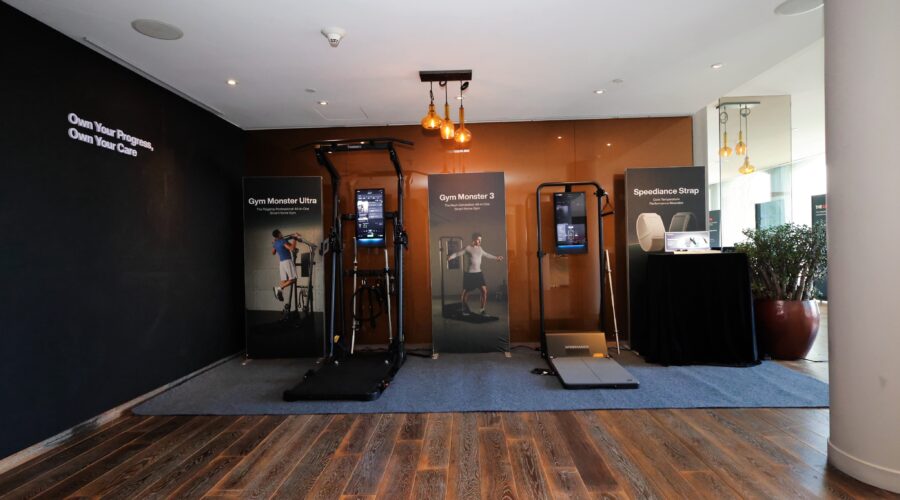


Speediance unveiled Gym Monster 3, Gym Monster Ultra, Gym Nano and a much bigger AI strategy in Los Angeles. BOXROX went hands on with the new equipment and spoke to the team building what comes next.
Speediance is best known for Gym Monster, its compact home training system built around digitally controlled cable resistance. At its latest launch in Los Angeles, the company showed how far it intends to expand beyond it.


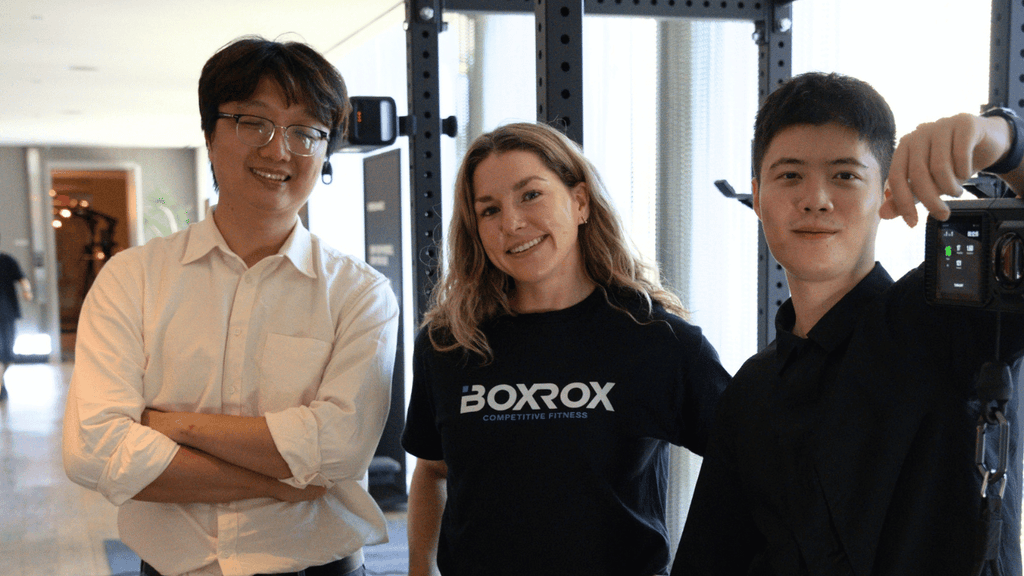
Xiaoya Lin, Head of AI Product at Speediance Intelligence Lab, and Hongbo Wei, Head of Brand and Global Operations at Speediance.
There was plenty of new hardware to see and try, including Gym Monster 3, Gym Monster Ultra, Gym Nano and Speediance Strap. But much of the presentation focused on what Speediance wants to happen behind the equipment.
I attended the event for BOXROX and spoke to the Speediance team about four technologies in particular: Votus, Oryn, Somni and AEVIS.
Votus analyses movement. Oryn is focused on decisions around training, nutrition and recovery. Somni is a research project exploring how decisions made now might affect someone’s physical state later. AEVIS is being developed as the layer that carries information between them.
Speediance Brand Director Sean Wade described Votus to me as the eyes of the system, while Oryn is closer to its brain.
In practice, the clearest demonstration came from Votus.
Your Phone Becomes Part of the Gym
Speediance showed Votus analysing somebody exercising using the camera on a standard smartphone.
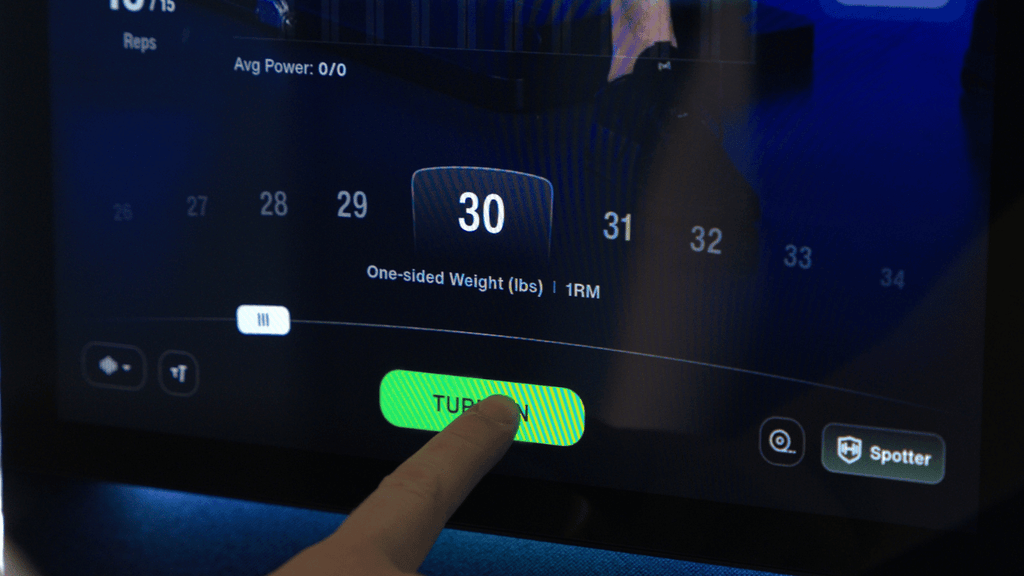
From that video, the system can reconstruct movement in 3D and analyse how an exercise is being performed. Speediance also demonstrated it being used for velocity based training, adding repetition speed and movement data to the information normally recorded during a workout.
It was one of the more convincing demonstrations at the event because the use is immediately obvious.
Most connected fitness equipment is already very good at counting things. It knows the resistance selected, the number of repetitions completed and how long somebody trained.
It is much harder for a machine to know what those repetitions looked like.
Using a phone camera gives Speediance another source of information without asking somebody to attach sensors to their body or buy another piece of equipment.
For somebody training at home, I could see the appeal. You can follow a programme perfectly well on your own. Knowing what your squat or deadlift looks like once you start to fatigue is another matter.
Speediance is currently demonstrating Votus as part of its own fitness system rather than offering it as standalone software for use across conventional gyms.
Speediance Wants Its AI to Specialise in Fitness
Oryn deals more with the decisions surrounding a workout.
It is being developed specifically around exercise, nutrition and sleep, with Speediance arguing that a fitness system should understand more than the workout somebody has asked it to create.
The team was quite clear that it does not want to build another general AI assistant.
“We call it ‘know everything a little’, but now our proposition is from ‘know everything a little’ to ‘know one thing completely’,” the Speediance team told BOXROX. “The one thing means fitness.”
That could mean keeping a session exactly as planned. It could also mean changing the training load or putting greater emphasis on recovery.
None of that will sound especially unusual to a coach. Training has always been adjusted according to fatigue, recovery, sleep and everything else happening in an athlete’s life.
What Speediance is trying to change is how much of that information consumer fitness technology can process itself.
This became clearer during an AEVIS demonstration.
The example Speediance chose involved a user telling the system that they had an upcoming six hour round trip drive.
AEVIS took the journey into account and adjusted the planned training load, while placing greater emphasis on sleep and recovery. Information from the subsequent workout, including movement footage and heart rate data, could then be used when considering the next session.
It was not the most dramatic demonstration of AI at the event, but it was one of the easiest to relate to.
People miss sleep. Work runs late. Travel gets in the way. A hard session leaves you more tired than expected.
A training plan written on Sunday does not know any of that unless somebody updates it.
Speediance wants AEVIS to retain enough information for those changes to become part of the next decision.
Somni Looks at What Could Happen Next
Somni is earlier in its development.
Speediance calls it a human state world model. The research looks at how different choices could lead to different outcomes around fatigue, sleep, appetite and someone’s capacity to train.
Rather than attempting to predict one certain outcome, Somni is designed to consider a range of possibilities.
One member of the Speediance team described the wider ambition as building a system with “eyes” and a “brain” that could eventually help users focus less on reviewing what has already happened and more on what they should do next.
There are obvious limits to what can currently be claimed here. Somni is a technology preview and Speediance is clear that it is not a medical device.
It was still an interesting inclusion in the launch because it showed the timescale Speediance is thinking about.
A lot of fitness technology tells you what you did yesterday. Speediance is researching whether that information can eventually help its software make more useful decisions about tomorrow.
I Tried Gym Monster 3 and Gym Monster Ultra
For all the attention given to software, Speediance had also brought a substantial amount of new hardware to Los Angeles.
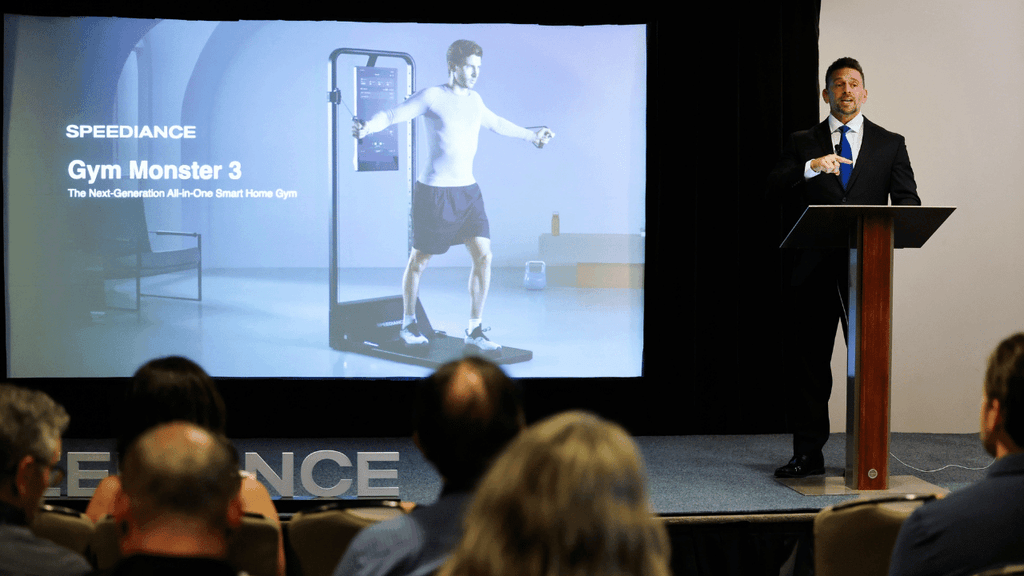
Gym Monster 3 delivers up to 220 pounds of digital resistance across 19 cable positions.
Gym Monster Ultra increases that to 260 pounds, with 33 cable positions, a vertical high lat pulldown, a multi grip pull up setup and an adjustable thigh restraint.
The first thing I noticed when I tried the equipment was the resistance itself. I told the Speediance team at the time that it was incredibly smooth and easy to use, probably the best cable resistance I had tried.
That matters more than some of the specifications when you are standing in front of the machine. Digital resistance can offer all sorts of training modes, but none of them are particularly useful if the cable does not feel good to pull.
The other advantage of controlling resistance digitally is that it does not have to behave like a conventional weight stack. The machine can alter the way resistance is delivered through a movement and use software to create training modes that would be difficult to replicate with plates.
There is a ceiling.
Gym Monster Ultra tops out at 260 pounds, which means stronger athletes are going to exceed what it can provide on some exercises.
I asked the Speediance team about that directly.
“People will ask, ‘260 pounds is not enough. My squat is like 300, 400. Can you support that?’” they told BOXROX. “We are still developing and we’re trying to break that limit.”
It is an important consideration if Speediance wants the Ultra to appeal further into the performance market. For many home users, 260 pounds of cable resistance will be plenty. For a strong athlete looking to replace more of their conventional gym setup, there will still be movements where it is not.
Gym Nano Might Be the Most Surprising New Product
Gym Nano is a very different proposition.
It weighs 8.2 kilograms but can produce up to 220 pounds of digital resistance.
It also records velocity and power and can be used for assessments including peak force, rate of force development and left to right asymmetry.
Seeing the size of it in person makes those figures more striking.
There are plenty of compact exercise products aimed at travellers. Most involve accepting a fairly obvious compromise in what you can actually do with them.
The attraction of Nano is the amount of resistance Speediance has managed to put into something that could realistically travel with you.
It also shows why the company’s software plans extend beyond Gym Monster. Once several different pieces of Speediance equipment are producing training data, there is more information for its wider system to work with.
Speediance Strap Adds Recovery Data
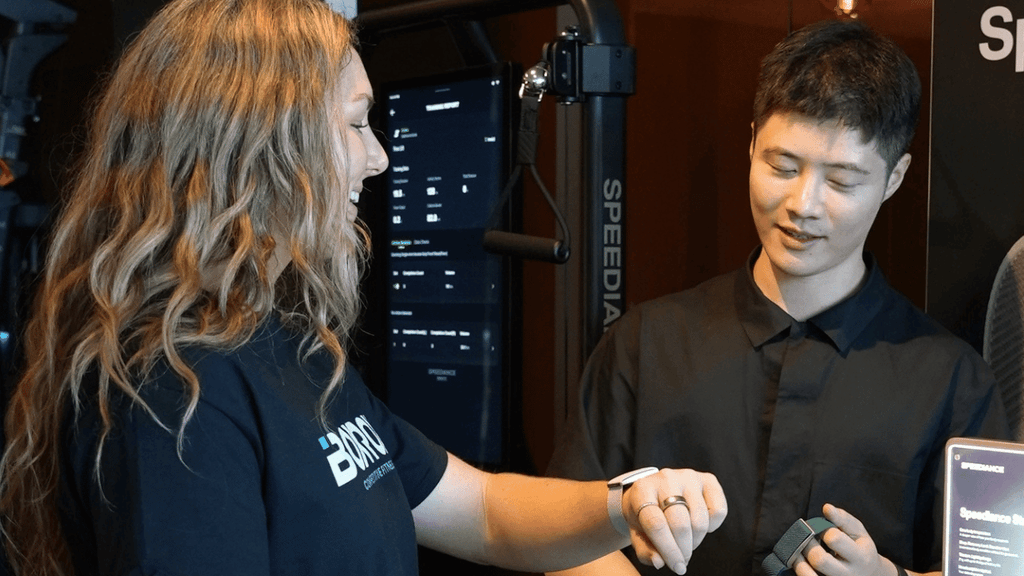
Speediance Strap adds another source of information.
The screen free wearable is designed to collect physiological and recovery data between workouts. It uses greenteg Calera technology to monitor core body temperature trends from the wrist alongside other training and recovery signals.
Wearables are hardly in short supply, so the important part for Speediance will be what it can do with the information rather than simply collecting more of it.
The Strap can collect information away from training. Gym Monster records what happens during the workout. Votus can look at how somebody moves.
Speediance wants its AI systems sitting between them.
Not all of those connections exist yet.
AEVIS does not currently decide that somebody is poorly recovered and then autonomously change the resistance on their Gym Monster. Speediance describes that deeper relationship between its software and training hardware as part of its longer term plans.
That is worth making clear because there is a considerable difference between what Speediance demonstrated in Los Angeles and what the finished system might eventually be able to do.
What I saw was new hardware alongside some genuinely interesting technology for movement analysis, training decisions and recovery.
Speediance summarised the process at the event as four stages: Sense. Decide. Act. Learn.
The company built its name by putting a surprising amount of gym equipment into a relatively small space.
Its next challenge is more complicated: working out what to do with everything that equipment knows about the person using it.
We’ll be hoping to run a BOXROX Rated Review on this series soon too.
More information on the products can be found at Speediance.com