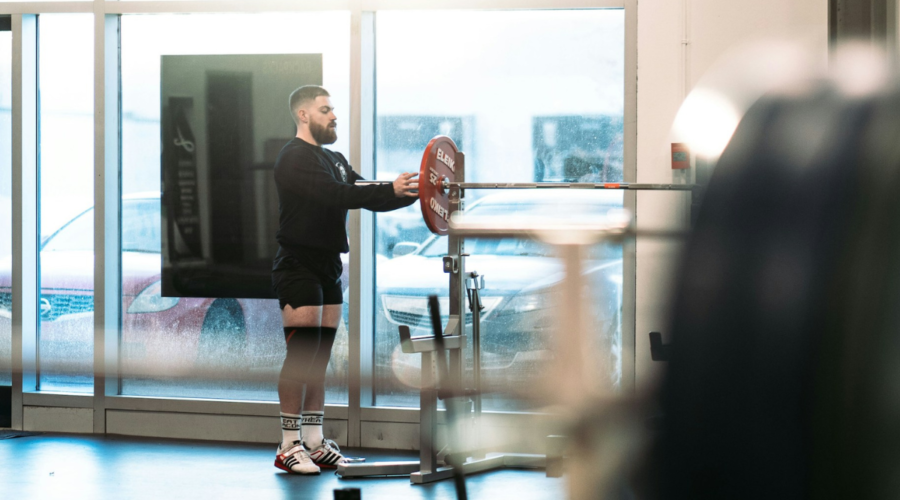


Barbell training can transform your body because it gives you a clear way to get stronger over time. You can add small amounts of weight, practice the same major movement patterns, and train a large amount of muscle with a relatively small number of exercises. For a beginner, that combination is powerful.
The secret is not finding a complicated workout or trying to copy the routine of an advanced lifter. It is learning how to make simple barbell movements productive, repeatable, and safe enough to practice consistently. Strength training can increase muscle size, improve strength, support bone health, and improve body composition when it is combined with appropriate nutrition and regular physical activity.


You do not need to spend hours in the gym or use every piece of equipment. A barbell, weight plates, a rack, and a bench can cover almost everything a beginner needs. The three tips below will help you get far more from that equipment while building a stronger, more athletic body.
Why Barbells Work So Well for Beginners
A barbell allows you to use multi joint exercises that train several muscles at the same time. A squat trains the legs, hips, and trunk. A press challenges the chest, shoulders, triceps, and upper back. A row strengthens the back, arms, and muscles that help stabilize the torso.
These exercises are efficient because they allow beginners to perform meaningful training volume without needing a long list of isolation movements. Resistance training is effective for increasing muscular strength and size across a wide range of training approaches, provided the training creates enough challenge and progresses over time.
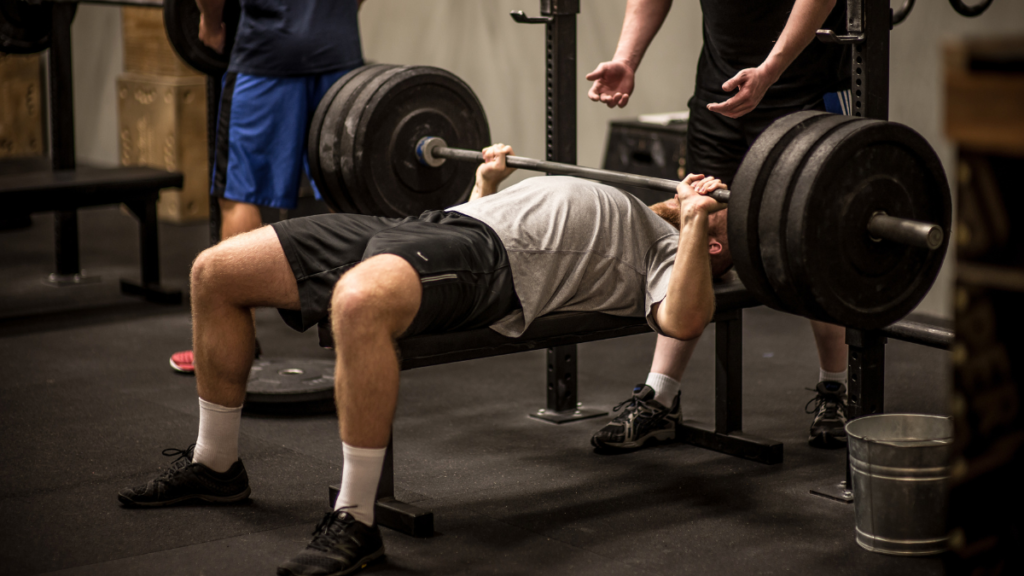
Barbells also make progress easy to measure. If you squat with good control for three sets of eight repetitions this week, then complete the same work with a small amount of additional weight later, you have a clear sign that your body is adapting. That progression is one of the main reasons resistance training changes the body.
The goal is not to chase heavy lifts before you have earned them. The goal is to repeatedly give your muscles a reason to adapt while keeping your technique strong enough to train again in the next session.
Secret Tip 1: Build Your Training Around a Few Big Movement Patterns
The first secret is to stop thinking in terms of individual muscles and start thinking in terms of movement patterns. Beginners often believe they need a different exercise for every body part. In reality, a few well selected barbell exercises can train almost the entire body.
Learn the Main Barbell Patterns First
Your program should include a squat pattern, a hip hinge pattern, a horizontal press, a horizontal pull, and a vertical press. These patterns cover the major muscle groups and teach you how to produce force through the legs, hips, upper body, and trunk.
The back squat is an excellent squat pattern because it challenges the quadriceps, glutes, adductors, calves, and trunk. If you are new to squatting, begin with a light barbell, a box squat, or a goblet squat until you can control the bottom position. Your knees should track in the same direction as your toes, while your torso stays braced and balanced over the middle of your feet.
For the hip hinge pattern, the Romanian deadlift is often easier to learn than a full deadlift from the floor. Start from a standing position, push your hips back, keep the bar close to your legs, and lower it only as far as you can maintain a neutral and controlled spine. This movement trains the hamstrings, glutes, upper back, and grip while teaching an important skill for deadlifting safely.

The barbell bench press is a simple horizontal pressing movement that develops the chest, triceps, and front of the shoulders. It can be adjusted easily by changing the load, repetitions, grip width, or bench angle. If a regular bench press feels uncomfortable for your shoulders, start with a lighter load and a closer grip, or use a dumbbell variation while you improve your control.
A bent over barbell row gives your back the pulling work it needs to balance pressing. It trains the latissimus dorsi, upper back, rear shoulders, and elbow flexors, while also requiring the hips and trunk to stay stable. Keep the weight light enough that you can avoid turning the movement into a bouncing, full body effort.
Finally, the standing overhead press develops the shoulders, triceps, upper chest, and trunk. It also teaches you to create full body tension. Squeeze your glutes, brace your midsection, and press the bar in a controlled path rather than leaning backward to force the weight overhead.
Use Fewer Exercises and Do Them Better
You do not need all five patterns in every single workout, but each should appear consistently across the week. A beginner could train three days per week and use a full body structure. One session might include squats, bench press, and rows. Another might include Romanian deadlifts, overhead press, and a lighter squat variation.
This approach gives you enough practice to improve your technique while allowing sufficient recovery between sessions. Training a muscle group more than once per week can be an effective way to distribute useful training volume, particularly when total weekly work is matched. For beginners, this usually feels more manageable than trying to crush one body part with excessive work on a single day.
The benefit is not only physical. Repeating the same movements helps you become more confident. You learn what good repetitions feel like, how much effort you can handle, and when you are ready to make progress.
Secret Tip 2: Leave Your Ego Outside the Gym and Progress Slowly
The second secret is that your first months of barbell training should look almost boring. That is a compliment. The best beginner program is not dramatic. It is a plan you can perform week after week while adding small improvements.
Muscle and strength are built through progressive overload. This means gradually increasing the challenge placed on the body. More weight is one way to do this, but it is not the only way. You can also complete more repetitions with the same load, improve your range of motion, make your repetitions more controlled, or add a set when your recovery allows it.
Start With Repetitions You Can Own
A useful starting point for many beginners is two or three working sets of six to twelve repetitions for the main exercises. Choose a weight that feels challenging toward the end of the set but still allows you to keep your technique steady.
You do not need to reach complete muscular failure on every set. Training close to failure can stimulate muscle growth, but beginners can make excellent progress while leaving a small number of repetitions in reserve. This means finishing a set when you feel you could probably perform another one or two high quality repetitions.

That small margin matters. It reduces the chance that a technical error turns into a missed lift or an unnecessary injury risk. It also means you will recover better for your next session. The aim is to accumulate productive repetitions, not to prove how exhausted you can become.
For example, if you bench press 40 kilograms for three sets of eight repetitions with clean form, keep that load until it feels clearly easier. In a later session, add one repetition to each set. When you can complete three sets of ten or twelve repetitions with strong technique, increase the bar by a small amount and return to the lower end of the repetition range.
This is a simple double progression system. It works because it gives you a clear target without forcing big jumps in weight before you are ready.
Small Increases Create Big Changes
Many beginners make the mistake of adding weight too quickly. They see rapid early progress and assume every session needs a large increase. Early strength gains often come partly from improved coordination and skill, which is why the bar can feel noticeably easier after only a few sessions.
Take advantage of this learning phase, but do not let it rush you. Add the smallest practical amount of weight when you have completed your planned repetitions with reliable form. For upper body exercises, even an extra one or two kilograms can be a meaningful increase. For lower body exercises, a small increase may be appropriate when your movement remains controlled.
Keep a training log. Write down the exercise, weight, sets, repetitions, and a brief note about how the set felt. This removes guesswork. Instead of walking into the gym and randomly deciding what to do, you can compare today’s performance with your previous session.
A training log also helps you recognize when you need to hold steady. If sleep has been poor, work has been stressful, or your joints feel unusually sore, repeating the previous session can be the smart decision. Long term progress depends on consistency, and consistency depends on respecting recovery.
Secret Tip 3: Treat Technique and Recovery as Muscle Building Tools
The third secret is that muscle building does not happen only while you are lifting. Training provides the stimulus, but adaptation happens when you recover from it. Good technique and good recovery are not separate from results. They are part of the process that allows you to train hard enough, often enough, and long enough to change your body.
Make Every Rep Look Similar
Technique is not about making every lift look identical to somebody else’s. People have different limb lengths, mobility levels, and training histories. However, every repetition should be controlled, balanced, and repeatable.

Before a squat, take a breath into your trunk and brace as if you are preparing to absorb a light punch. Keep pressure through the whole foot rather than tipping onto your toes or heels. Descend under control, then push the floor away as you stand.
Before a deadlift or Romanian deadlift, set your shoulders and pull the bar close to your body. The bar should move in a path that is as efficient as possible. When the load drifts far away from your legs, the demand on your lower back increases and the movement becomes harder to control.
During pressing exercises, avoid rushing the lowering phase. Lower the bar with control, pause briefly if needed, and press with intent. A controlled eccentric phase can help you maintain positions and produce consistent repetitions. It also helps you identify when a weight is becoming too heavy for your current skill level.
3 Best Exercises for Women to Get More Defined Ab Muscles
If you are unsure of your technique, record a short video from the side and from the front, or ask a qualified coach for feedback. A few corrections early in your training can prevent months of practicing the same mistake.
Recover Like Your Progress Depends on It
Resistance training can support positive changes in body composition, but food intake remains important. If your goal is to build muscle, consume enough total calories and include adequate protein across the day. Higher protein intakes, especially when combined with resistance training, can support gains in lean body mass and strength.
A practical target for many active adults is around 1.4 to 2.0 grams of protein per kilogram of body weight per day. You do not need to consume it all in one meal. Spread it across meals that you can maintain consistently. Lean meat, fish, eggs, dairy products, legumes, soy foods, and protein powders can all contribute.

Sleep is equally important. Short or disrupted sleep can interfere with recovery, training performance, appetite regulation, and the ability to make good decisions in the gym. Aim for a regular sleep routine and give yourself enough time in bed to recover from your training and daily life.
You should also expect some muscle soreness when learning new movements, especially during the first few weeks. Soreness is not a reliable measure of workout quality, and severe soreness is not a goal. A good program lets you train again without feeling destroyed. If soreness is preventing you from moving normally or maintaining good form, reduce the amount of work in the next session.
A Simple Three Day Barbell Template
A beginner can apply all three secrets with a simple three day full body plan. On the first day, perform back squats, bench presses, and barbell rows. On the second day, perform Romanian deadlifts, overhead presses, and a lighter squat variation. On the third day, perform deadlifts or a second Romanian deadlift session, bench presses, and rows.

Start with two or three hard but controlled sets for each exercise. Use a repetition range that allows you to practice technique, usually six to twelve repetitions for most movements. Deadlifts can be performed for fewer repetitions if maintaining form becomes difficult as fatigue increases.
The exact exercises can change over time, but the principles should stay the same. Practice the major movement patterns. Use gradual progression. Keep your technique honest. Eat, sleep, and recover well enough to return to training consistently.
The Real Secret Is Repetition
A barbell can be intimidating because it makes progress visible. There is nowhere to hide when the number on the plate increases. But that is also why it is such a valuable tool for beginners.
You do not need perfect genetics, an advanced routine, or endless motivation. You need a small group of useful exercises, a progression plan that does not rush you, and enough patience to repeat the basics until they work.
Train with purpose, add weight gradually, and protect your recovery. Do that for several months and your body will have a compelling reason to become stronger, more muscular, and more capable.
References
- American College of Sports Medicine (2009) ‘American College of Sports Medicine position stand. Progression models in resistance training for healthy adults’, Medicine and Science in Sports and Exercise, 41(3), pp. 687 to 708.
- Grgic, J., Schoenfeld, B.J., Skrepnik, M., Davies, T.B. and Mikulic, P. (2018) ‘Effects of rest interval duration in resistance training on measures of muscular strength: A systematic review’, Sports Medicine, 48(1), pp. 137 to 151.
- Grgic, J., Schoenfeld, B.J., Orazem, J., Sabol, F., Schoenfeld, B.J. and Pedisic, Z. (2022) ‘Effects of resistance training performed to repetition failure or non failure on muscular strength and hypertrophy: A systematic review and meta analysis’, Journal of Sport and Health Science, 11(2), pp. 202 to 211.
- Morton, R.W., Murphy, K.T., McKellar, S.R., Schoenfeld, B.J., Henselmans, M., Helms, E., Aragon, A.A., Devries, M.C., Banfield, L., Krieger, J.W. and Phillips, S.M. (2018) ‘A systematic review, meta analysis and meta regression of the effect of protein supplementation on resistance training induced gains in muscle mass and strength in healthy adults’, British Journal of Sports Medicine, 52(6), pp. 376 to 384.
- Ralston, G.W., Kilgore, L., Wyatt, F.B., Buchan, D., Baker, J.S. and Kleiner, S.M. (2018) ‘The effect of weekly set volume on strength gain: A meta analysis’, Sports Medicine, 48(11), pp. 2585 to 2601.
- Schoenfeld, B.J., Ogborn, D. and Krieger, J.W. (2017) ‘Dose response relationship between weekly resistance training volume and increases in muscle mass: A systematic review and meta analysis’, Journal of Sports Sciences, 35(11), pp. 1073 to 1082.
- Schoenfeld, B.J., Grgic, J., Ogborn, D. and Krieger, J.W. (2019) ‘Strength and hypertrophy adaptations between low versus high load resistance training: A systematic review and meta analysis’, Journal of Strength and Conditioning Research, 33(Suppl. 1), pp. S120 to S138.
- Schoenfeld, B.J., Grgic, J., Krieger, J. (2019) ‘How many times per week should a muscle be trained to maximize muscle hypertrophy? A systematic review and meta analysis of studies examining the effects of resistance training frequency’, Journal of Sports Sciences, 37(11), pp. 1286 to 1295.
- Stokes, T., Hector, A.J., Morton, R.W., McGlory, C. and Phillips, S.M. (2018) ‘Recent perspectives regarding the role of dietary protein for the promotion of muscle hypertrophy with resistance exercise training’, Nutrients, 10(2), 180.
- Vitale, J.A., Bonato, M. and La Torre, A. (2019) ‘Banishing the hound of the baskervilles: A review of the current evidence for the role of sleep in resistance training’, Sports Medicine, 49(4), pp. 595 to 606.
Key Takeaways
| Tip | What beginners should do | Why it helps |
|---|---|---|
| Focus on major movement patterns | Use squats, hinges, presses, and rows consistently | These exercises train large amounts of muscle efficiently and build useful strength |
| Progress in small steps | Add repetitions first, then make small weight increases | Gradual overload supports strength and muscle gains while protecting technique |
| Prioritize recovery and form | Leave a small number of repetitions in reserve, eat enough protein, and sleep well | Better recovery helps you train consistently and makes long term progress more likely |