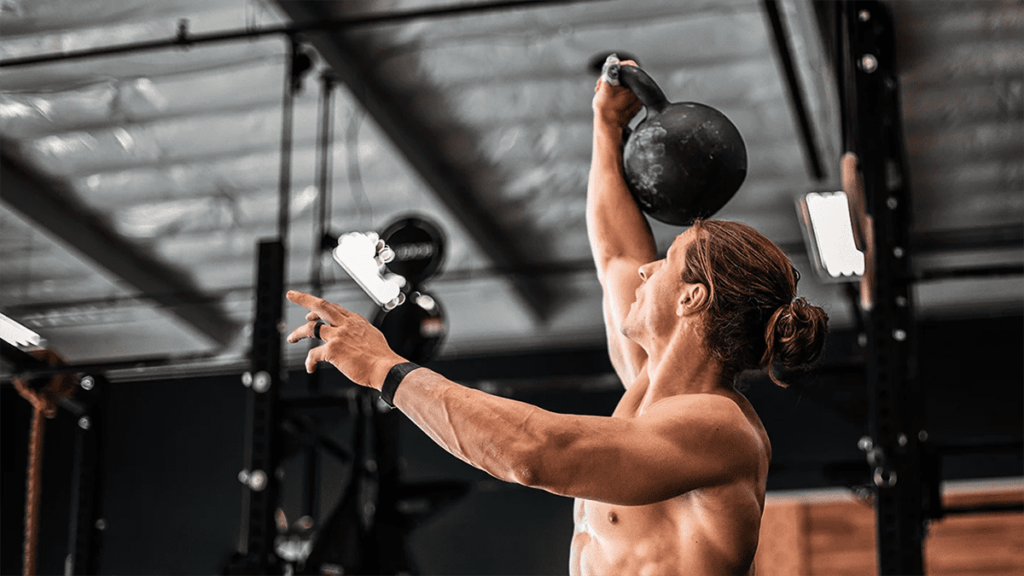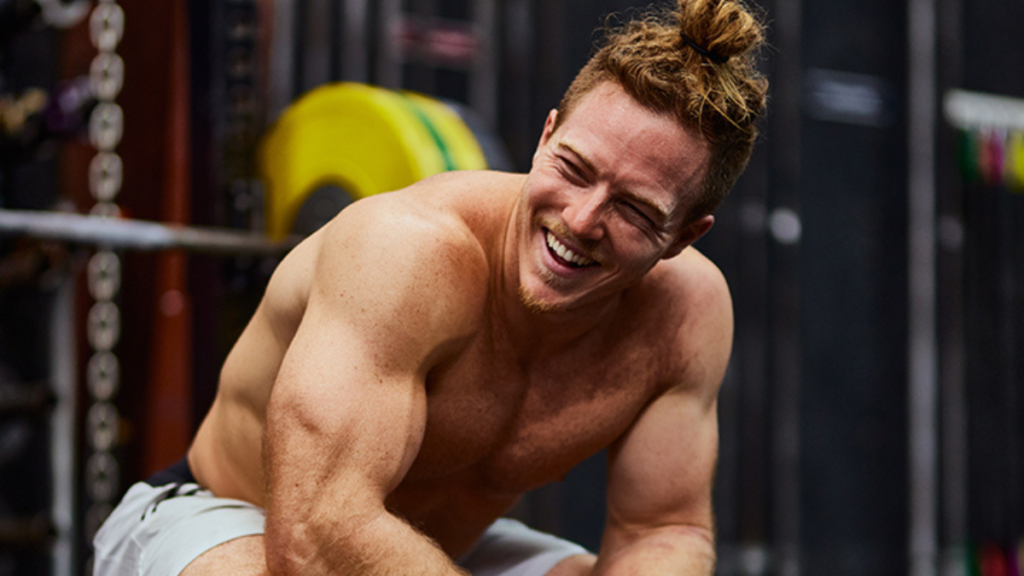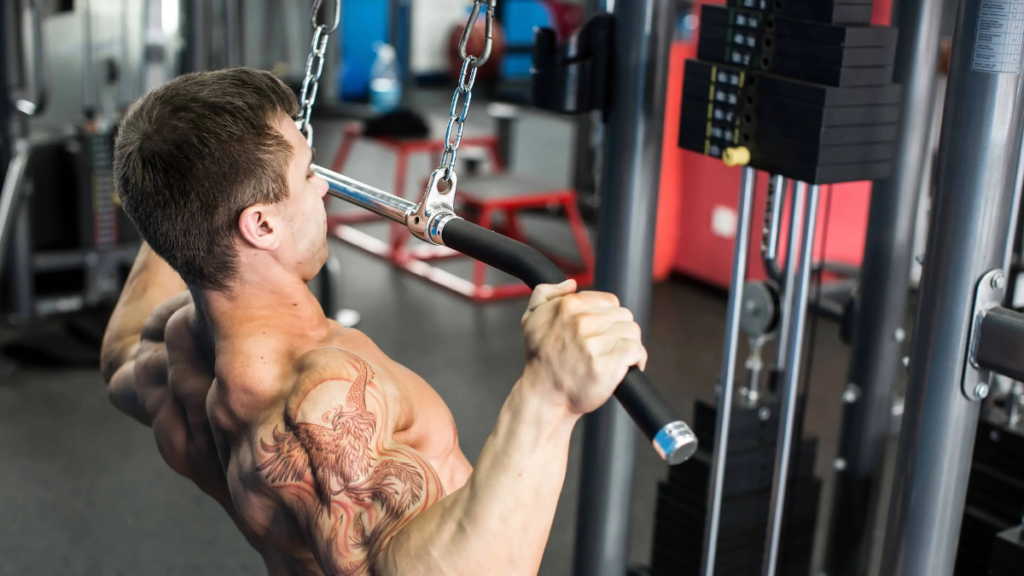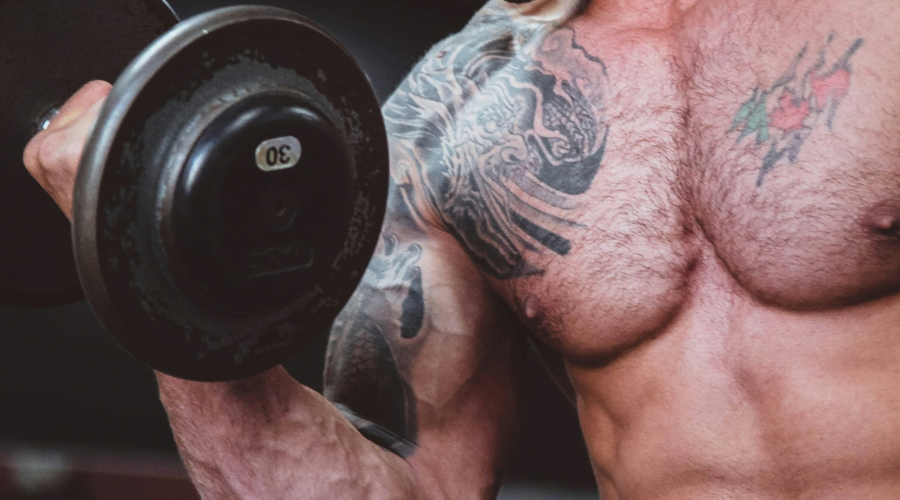


A bigger biceps peak can make your arms look noticeably more muscular, particularly when you flex with your palms facing toward you. It is the high point that appears between your elbow and shoulder, and it is one of the details many lifters want to improve.
There is an important reality to understand before choosing exercises. The exact shape of your biceps is influenced by genetics, including the length of the muscle belly and the position of its tendons. You cannot completely redesign that shape through training.


What you can do is add overall size to the biceps, prioritize exercises that train the muscle effectively in a lengthened position, and build the long head of the biceps as much as your anatomy allows. That combination can make the peak look fuller and more pronounced.

The biceps brachii has two heads. The long head runs along the outside of the upper arm and contributes strongly to the visual shape seen from the front and side. The short head lies more toward the inside of the arm. Both heads flex the elbow, but the biceps also helps turn the palm upward, a movement called supination. Good biceps training should respect both of those functions rather than treating every curl as identical.
Research shows that resistance training can increase muscle size across a wide range of loads when the sets are challenging enough. Higher weekly training volume also tends to support hypertrophy, with around 10 or more hard sets per muscle group each week providing a productive starting point for many lifters. Exercise selection still matters, though, because shoulder position, resistance profile, and range of motion can change how the elbow flexors are trained.
These are the three best exercises to prioritize if your goal is a bigger biceps peak.
What Actually Builds a Bigger Biceps Peak?
Building your biceps peak does not mean finding one magical curl that isolates a tiny section of the muscle. Muscles do not grow in completely separate compartments simply because you change an exercise. However, different curl positions can create slightly different growth patterns across the elbow flexors.
A recent training study compared preacher curls with incline dumbbell curls over eight weeks. Both exercises increased elbow flexor size, but incline curls produced a greater increase in muscle thickness closer to the shoulder. Since the upper portion of the biceps is closely linked with the appearance of a fuller peak, this makes incline curls a particularly useful choice.
The practical lesson is simple. Choose movements that allow your biceps to work hard through a large, controlled range of motion, include at least one exercise where the arm sits behind the torso, and progressively make the work more demanding over time. The best program is not built around chasing a pump alone. It is built around accumulating quality hard sets with sound technique.
1. Incline Dumbbell Curl
The incline dumbbell curl is the most valuable exercise in this article because it places the shoulder behind the body. This lengthens the biceps at the bottom of each repetition, especially the long head. You begin each rep from a stretched position and then curl the dumbbells upward while keeping your upper arms relatively still.
This setup gives the exercise a major advantage over many standing curls. In a regular standing curl, it is easy to let the elbows drift forward and turn the movement into a shoulder swing. On an incline bench, the bench supports your body position and makes it harder to create momentum. Your biceps must do more of the work.
How to Perform the Incline Dumbbell Curl
Set an adjustable bench to a moderate incline. Sit back with a dumbbell in each hand and let your arms hang naturally toward the floor. Start with your palms facing forward or slightly inward if that feels more comfortable on your elbows.
Keep your shoulders pulled gently back against the bench. Curl the dumbbells upward by bending your elbows, then actively rotate your palms so they face upward as the weights rise. Squeeze the biceps near the top without allowing your elbows to travel forward. Lower the weights slowly until your arms are straight and the biceps are fully lengthened.
Do not select a load that forces you to lift your shoulders off the pad or rush the bottom of the rep. The stretched position is useful, but it also demands control. A smooth descent of roughly two seconds will help you maintain tension and avoid dropping into the bottom range.
Why It Works for Peak Development
The incline curl is not guaranteed to create a dramatic peak in every lifter, because individual anatomy still matters. It does, however, give you a strong evidence based reason to train the biceps with the shoulder extended. The available long term research suggests this position may produce more growth near the upper portion of the elbow flexors than preacher curling.
Use a load that allows approximately eight to 15 controlled repetitions. Start with two or three hard sets once or twice per week. Leave one or two repetitions in reserve for most sets, then occasionally take the final set close to the point where another clean repetition would not be possible.
2. Bayesian Cable Curl
The Bayesian cable curl is a cable based version of the behind the body curl. It trains the biceps in a shoulder extended position like the incline dumbbell curl, but the cable provides tension through more of the movement. This can make the exercise especially useful if dumbbell curls feel awkward at the top or if you want a steadier resistance profile.
Set a cable pulley at its lowest position and attach a single handle. Stand facing away from the machine, hold the handle in one hand, and take a small step forward so the cable pulls your arm slightly behind your torso. Your palm should face forward at the start.
Curl the handle upward by bending the elbow while keeping your upper arm behind your body. Turn your palm upward as you curl, then pause briefly when the biceps are fully shortened. Lower under control until the elbow is straight again.
Why Cable Resistance Helps
A free weight is pulled downward by gravity, so the resistance changes as your forearm moves through the curl. A cable can keep meaningful tension on the biceps through a greater proportion of the movement. That does not mean cables are automatically superior to dumbbells. Both can build muscle well. It simply gives you a useful second exercise that challenges the biceps with a different resistance pattern.
Research comparing cable and barbell preacher curls found that both methods increased biceps thickness to a similar degree when training volume was matched. This is a useful reminder that muscle growth does not depend on one perfect machine or resistance curve. Consistent progressive training matters more than equipment loyalty.
The Bayesian cable curl is particularly good after incline curls, when you want more high quality work without repeating exactly the same movement. Perform two or three sets of 10 to 15 repetitions per arm. Keep your torso still. If your shoulder rolls forward or your elbow drifts far behind you, reduce the load and regain control.
3. Alternating Supinating Dumbbell Curl
The alternating supinating dumbbell curl deserves a place in any peak focused program because it trains both major functions of the biceps. You flex the elbow and actively rotate the forearm so the palm faces upward. That rotation is not a cosmetic detail. The biceps brachii is an important forearm supinator, and training it through this action can help make the curl more specific to the muscle you want to develop.
Start standing tall with a dumbbell in each hand and your palms facing your sides. Curl one dumbbell upward while rotating the palm toward the ceiling. Keep the upper arm close to your torso and avoid tipping backward as the weight rises. Lower slowly, turn the palm back toward your thigh, then repeat on the other side.
Focus on the Rotation
Many lifters rush the rotation or begin with the palms already facing forward. Instead, start from a neutral grip and intentionally rotate as you curl. Think about turning your pinky slightly toward your shoulder at the top. This cue can help you finish each rep with a fully supinated hand position without forcing the wrist into an uncomfortable angle.
Studies examining hand position during elbow flexion show that the contribution of the biceps and brachioradialis changes with forearm position. When the forearm is pronated, the biceps is placed at a biomechanical disadvantage and the brachioradialis tends to contribute more. A supinated curl is therefore a sensible way to keep the biceps central to the movement.
3 Best Exercises for Beginners that Want Wider Shoulders
This exercise also allows you to train each arm independently. That can help prevent your stronger side from taking over during a barbell curl. Use it for two to four sets of eight to 15 repetitions per side, ideally after your heavier or more stable curl variation.
How to Program These Exercises for Growth
You do not need to perform all three exercises in every workout. Most lifters will make better progress by training biceps two times per week and spreading the work across those sessions. This provides enough exposure to practice good technique while giving the elbows and forearms time to recover.
A productive weekly setup could include incline dumbbell curls and supinating dumbbell curls in the first session, then Bayesian cable curls and a lighter incline curl variation in the second session. Aim for around eight to 14 challenging direct sets each week to start. Rows and pullups also train the elbow flexors, so people who do a high volume of back training may need less direct biceps work.
Progressive overload should be your main focus. Try to add a repetition when you can maintain clean technique. Once you reach the top of your chosen repetition range for every set, increase the load slightly and build again. Small improvements repeated over months are far more important than constantly changing exercises.
Use a full comfortable range of motion. Current evidence generally supports training through a large range of motion for muscle growth, and lengthened training positions are especially promising. Do not force painful depth, though. A muscle stretch sensation is normal. Sharp pain at the front of the elbow or shoulder is not a signal to push harder.
Mistakes That Can Limit Your Biceps Peak
The first mistake is using too much weight. If the hips swing forward, the lower back leans backward, and the elbows travel wildly, the biceps are no longer receiving the focused stimulus you want. Reduce the load and make each rep look similar.
The second mistake is doing only neutral grip or pronated curls. Hammer curls are excellent for the brachialis and brachioradialis, and they can make the arm look thicker. They should not replace supinated biceps work if your goal is to develop the biceps brachii itself.
The third mistake is expecting a fast visual transformation. Muscle gain is gradual, particularly once you are past the beginner stage. Track your training, eat enough protein and total calories to support your goal, sleep well, and give the plan enough time to work.
The Bottom Line
You cannot completely change your inherited biceps shape, but you can build larger biceps and create the fullest peak your structure allows. Prioritize incline dumbbell curls for their stretched shoulder position, use Bayesian cable curls to add controlled cable resistance, and include alternating supinating dumbbell curls to train the biceps through both elbow flexion and forearm rotation.
Train them with controlled form, enough weekly volume, and a clear progression plan. Do that consistently, and your arms will become bigger, stronger, and more impressive when you flex.
References
- Bernárdez Vázquez, R., Raya González, J., Castillo, D. and Beato, M. (2022) ‘Resistance training variables for optimization of muscle hypertrophy: An umbrella review’, Frontiers in Sports and Active Living, 4, 949021.
- Currier, B.S., D’Souza, A.C., Fiatarone Singh, M.A., Lowisz, C.V., Rawson, E.S., Schoenfeld, B.J., Smith Ryan, A.E., Steen, J.P., Thomas, G.A., Triplett, N.T., Washington, T.A., Werner, T.J. and Phillips, S.M. (2026) ‘American College of Sports Medicine position stand: Resistance training prescription for muscle function, hypertrophy, and physical performance in healthy adults: An overview of reviews’, Medicine and Science in Sports and Exercise, 58, pp. 851 to 872.
- Kassiano, W., Costa, B., Nunes, J.P., Ribeiro, A.S., Schoenfeld, B.J. and Cyrino, E.S. (2023) ‘Which ranges of motion lead to muscle hypertrophy? A systematic review of the effects of range of motion on muscle hypertrophy’, Journal of Strength and Conditioning Research, 37, pp. 1135 to 1144.
- Kleiber, T., Kunz, L. and Disselhorst Klug, C. (2015) ‘Muscular coordination of biceps brachii and brachioradialis in elbow flexion with respect to hand position’, Frontiers in Physiology, 6, 215.
- Marcolin, G., Panizzolo, F.A., Petrone, N., Moro, T., Grigoletto, D., Piccolo, D. and Paoli, A. (2018) ‘Differences in electromyographic activity of biceps brachii and brachioradialis while performing three variants of curl’, PeerJ, 6, e5165.
Key Takeaways
| Focus | What to do |
|---|---|
| Best first exercise | Make incline dumbbell curls your priority because they train the biceps with the arm behind the torso. |
| Cable option | Use Bayesian cable curls to add stable resistance through the curl without repeating the same dumbbell movement. |
| Forearm position | Include supinated curls and actively rotate the palm upward to train a key function of the biceps. |
| Weekly training | Begin with around eight to 14 challenging direct biceps sets each week, divided across two sessions. |
| Progression | Add repetitions or small amounts of load while preserving controlled technique and a full comfortable range of motion. |