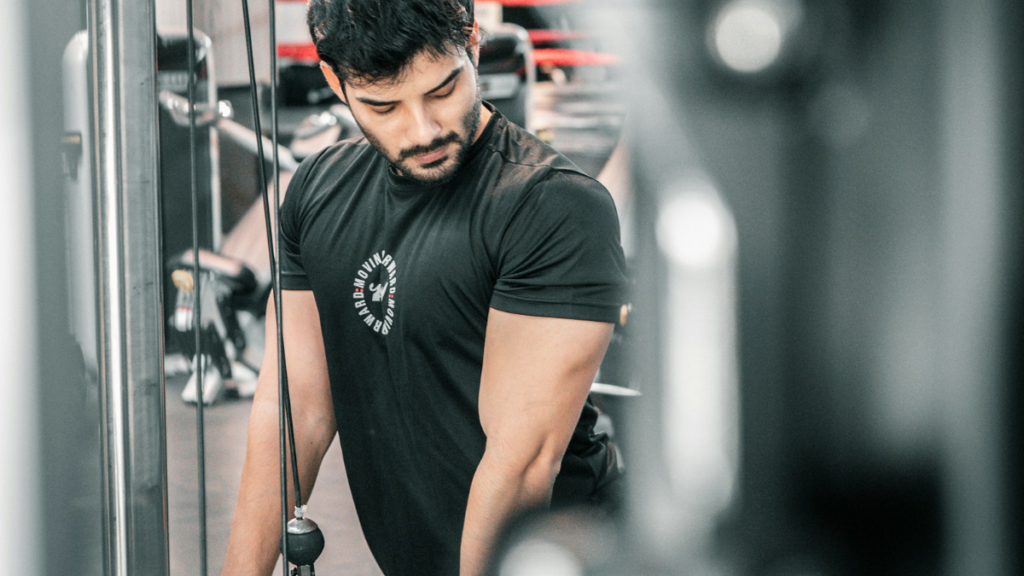


A V shaped torso comes from creating more visual width through the upper body while keeping the waist strong and proportionate. The lats are the biggest contributor because they create the broad sweep from under the armpits toward the waist. The side delts also matter because wider shoulders make the torso look broader from the front, while the upper back improves posture and adds depth from behind.
Cables are an excellent tool for this goal. Unlike free weights, a cable stack can provide resistance through much of the movement rather than relying on gravity alone. You can also change the direction of resistance, use one arm at a time, and make small load adjustments. That makes cables useful for building the lats, delts, and upper back with consistent technique.


The three exercises below cover the main areas that create the V shaped look: vertical pulling for lat width, straight arm shoulder extension for the lats, and lateral shoulder work for upper body width. Train them with controlled technique, enough hard sets, and a gradual increase in reps or load over time.
What Creates a V-Shaped Torso?
The V shaped look is partly structural. Shoulder width, rib cage size, pelvis width, and muscle insertions all influence how dramatic the shape can become. You cannot change your skeleton, but you can build muscle in the areas that make your upper body look wider and more powerful.
The latissimus dorsi is the large muscle that covers much of each side of the back. When developed, it creates width beneath the shoulders and gives the torso its tapered outline. The middle deltoids sit on the outer shoulders and make the upper body appear broader from the front. The rear deltoids, trapezius, and upper back muscles help support a more upright posture and add thickness around the shoulder girdle.
Your waist also affects the contrast. Building a strong core is valuable, but there is no need to rely on endless weighted side bends if visual taper is your main aim. Instead, prioritize building your upper body while maintaining a body composition that lets that development show.
3 Squat Milestones Every Man 30+ Should Aim For
Research consistently shows that muscle growth is driven by challenging resistance training performed over time. Training volume matters, and muscles generally respond well to enough hard sets completed with good technique. A full, controlled range of motion is also a sensible default for hypertrophy, provided it can be performed comfortably and without losing position.
Exercise 1: Cable Lat Pulldown
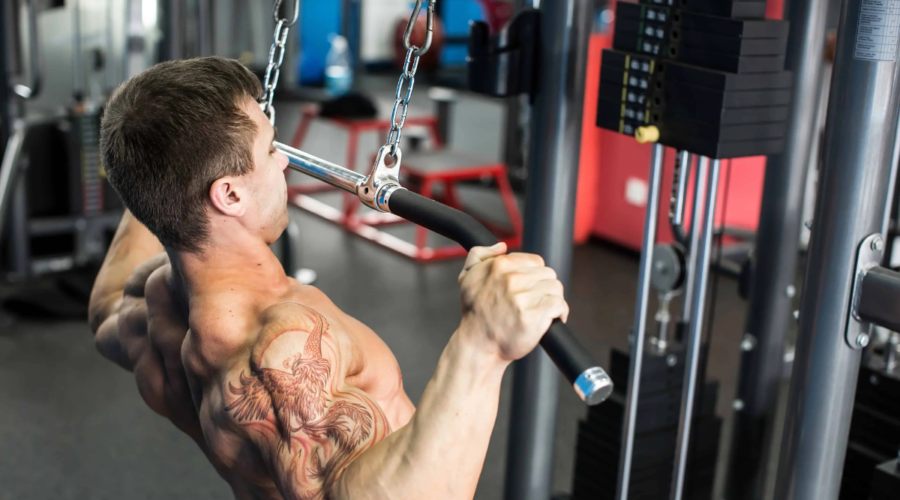
The cable lat pulldown is the foundation of this plan. It trains the lats through a large range of motion and allows you to use progressively heavier loads than most single joint back exercises. It also gives beginners a practical way to train a vertical pull before they are ready for bodyweight pull ups.
Why It Builds Back Width
The lats are heavily involved when you pull your upper arm down toward your torso. During a pulldown, the upper arm starts overhead and finishes close to the sides of the body. That long pulling path gives the lats a clear role, especially when you keep the torso stable and avoid turning every rep into a backward lean.
Pulldowns also train the biceps, forearms, rear deltoids, and muscles around the shoulder blades. These muscles support the movement, but the goal is to make the back do most of the work. Think about driving your elbows down rather than pulling the handle with your hands.
A medium to moderately wide grip is usually a practical choice. An extremely wide grip can shorten the range of motion and make it harder to control the movement. A shoulder width or slightly wider grip lets you reach fully overhead, then pull the elbows down through a comfortable path.
How to Do It
Sit at a cable pulldown station and secure your thighs under the pads. Take a grip that is slightly wider than shoulder width. Start tall with your chest lifted gently, your feet planted, and your ribs stacked over your hips.
Allow the bar to rise until your arms are straight overhead, but do not let the weight pull you out of position. Pull your elbows down toward your sides and bring the bar toward the upper chest area. Keep your neck relaxed and avoid thrusting your head forward to meet the bar.
Pause briefly when your elbows are near your torso. Then let the bar return upward with control. The upward phase matters because the lats are still working as they lengthen under load.
You should feel the exercise mainly along the sides of your back, below the armpits. If you only feel your forearms and biceps, reduce the load slightly, slow the lowering phase, and focus on starting each rep by pulling the elbows down.
Sets and Reps
Perform three to four sets of eight to 15 repetitions. Choose a load that leaves you working hard near the end of each set while still allowing a controlled return to the overhead position. When you can complete the top end of the rep range with solid form, increase the load by the smallest available amount.
Exercise 2: Cable Straight Arm Pulldown
The straight arm pulldown is one of the most useful cable exercises for learning how to use your lats. Because the elbows remain nearly straight, the biceps cannot dominate the movement in the same way they can during rows and pulldowns. That makes it an excellent accessory exercise for anyone who struggles to feel their back working.
Why It Helps Create the Taper
This movement trains shoulder extension, meaning the upper arm moves from overhead and in front of the body down toward the hips. That is one of the major actions performed by the lats. The exercise lets you train this function with steady tension and a very manageable load.
The straight arm pulldown will not replace a heavier compound pull, but it can add useful volume without placing the same demands on the elbows and biceps. It is also effective as a preparation exercise before pulldowns because it reinforces the feeling of pulling with the lats rather than simply bending the arms.
Cables suit this movement particularly well because the resistance is present from the stretched position through to the finish. The cable should pull your arms upward as you return, which gives you a clear reason to control the eccentric phase rather than letting the stack pull you back.
How to Do It
Set a straight bar or rope attachment at the top of a cable stack. Stand facing the machine and take a few steps back so the cable pulls slightly forward as well as upward. Hold the attachment with straight arms and use a small bend in the knees for balance.
Begin with your hands around head height or slightly above it. Keep a soft bend in your elbows, then pull the attachment down in an arc until your hands reach the front of your thighs. Your torso should remain mostly still throughout the rep.
Focus on moving your upper arms down toward your sides. Avoid turning the exercise into a triceps pushdown by bending and straightening the elbows. Also avoid leaning far forward at the bottom, since that can make it easier to use bodyweight instead of the lats.
Return the attachment slowly until you feel a controlled stretch along the sides of the back. Keep your ribs down as the arms travel upward. This helps prevent the lower back from arching excessively to create the illusion of a bigger range of motion.
Sets and Reps
Perform two to four sets of 10 to 20 repetitions. This exercise works well with moderate to higher reps because it is easier to keep tension on the target muscles without needing very heavy loading. The final few repetitions should feel demanding, but your shoulders should still move smoothly and your torso should stay stable.
Exercise 3: Single Arm Cable Lateral Raise
Wide lats create much of the V shaped outline from the back, but shoulder width makes the shape stand out from every angle. The single arm cable lateral raise directly trains the middle deltoid, which sits on the outside of the shoulder and contributes strongly to a broader upper body.
Why It Builds Wider Looking Shoulders
The middle deltoid is responsible for lifting the arm out to the side. Lateral raise variations target this action more directly than pressing exercises, which usually place more emphasis on the front deltoids and triceps.
A cable can be especially useful for lateral raises because the line of resistance can remain challenging through more of the movement. With a dumbbell, resistance is lowest when the arm hangs by the side because gravity acts straight down. With a cable set at a low position, the side deltoid has to work from the beginning of the lift.
Recent research comparing cable and dumbbell lateral raises found that both can increase lateral deltoid muscle thickness when training effort and range of motion are matched. This is useful news for lifters with access to cables because the exercise is not a compromise. The best version is the one you can perform consistently, control well, and progressively overload.
How to Do It
Set a single handle at the lowest point on the cable stack. Stand with your working side away from the machine and hold the handle with the outside hand. You can hold the upright of the machine with your free hand for balance.
Start with your arm slightly across the front of your body, with a relaxed but firm grip. Raise the arm out to the side until your upper arm is roughly parallel with the floor. Keep a slight bend in the elbow and lead with the elbow rather than trying to lift with the hand.
Keep your shoulder away from your ear as you raise the handle. If your upper trap takes over, the load may be too heavy or you may be lifting too high. Lower the handle slowly until the arm comes back across the body and the cable keeps gentle tension on the shoulder.
Use a light enough load that you can avoid swinging your torso. The side deltoid is relatively small, so forcing heavy weight through the movement often shifts the work to the traps, lower back, and momentum.
Sets and Reps
Perform three to five sets of 12 to 20 repetitions per side. Rest long enough between sides that you can maintain the same range of motion and control. The exercise should create a strong burn around the outer shoulder, but it should not cause sharp pain at the top of the movement.
How to Program These Exercises
You can perform these three exercises in the same session twice per week. Start with the lat pulldown, because it is the heaviest and most technically demanding exercise. Follow with the straight arm pulldown, then finish with cable lateral raises.

A simple session could include three sets of cable lat pulldowns, three sets of straight arm pulldowns, and three sets of single arm cable lateral raises. This gives you nine working sets focused on the muscles that contribute most directly to a wider upper body.
As you gain experience, add a set to one or two movements if you can recover well and continue progressing. More volume can support greater hypertrophy, but only when the sets are hard enough and your technique remains consistent. Adding endless sets simply to chase fatigue is not productive.
Aim to train these muscles at least twice per week if your schedule allows. Splitting the work over two sessions can help you perform each set with better quality and makes it easier to accumulate useful training volume without turning one workout into a marathon.
Progress can be simple. First, try to perform more repetitions with the same weight while keeping form unchanged. Once you reach the top of your target rep range on every set, increase the weight slightly and build the repetitions back up. Record your sets, reps, and loads so your training has a clear direction.
Technique Mistakes That Limit Results
The biggest mistake is using more weight than you can control. A V shaped torso is built by repeatedly loading the target muscles, not by moving the heaviest possible stack with poor mechanics. If you are rocking backward on pulldowns, bending your elbows during straight arm pulldowns, or swinging through lateral raises, reduce the load.
Another common issue is rushing the return phase. The lowering portion of a rep is not time to relax. Controlled eccentrics help you maintain tension, improve your awareness of the movement, and get more useful work from every repetition.
Finally, do not expect one exercise to transform your physique in a few weeks. Muscle growth is gradual. Give the program enough time, eat sufficient protein and calories for your goal, sleep well, and keep training with intent. The visual changes will come from months of steady work, not from searching for a secret cable attachment.
The Bottom Line
For a stronger V shaped torso using only cables, build your plan around the cable lat pulldown, cable straight arm pulldown, and single arm cable lateral raise. Together, these exercises target the lats and middle deltoids with complementary movement patterns and cable resistance that is easy to adjust.
Train them consistently, use controlled full ranges of motion that suit your body, and make gradual progress over time. The cable stack can provide everything you need to build a wider back, broader shoulders, and a more athletic upper body.
References
- Larsen, S., Wolf, M., Schoenfeld, B.J., Pallarés, J.G., Helms, E. and Marín, P.J. (2025) ‘Dumbbell versus cable lateral raises for lateral deltoid hypertrophy: an experimental study’, Frontiers in Physiology, 16, 1611468.
- Schoenfeld, B.J., Contreras, B., Krieger, J., Grgic, J., Delcastillo, K., Belliard, R. and Alto, A. (2019) ‘Resistance training volume enhances muscle hypertrophy but not strength in trained men’, Medicine and Science in Sports and Exercise, 51(1), pp. 94–103.
- Schoenfeld, B.J. and Grgic, J. (2020) ‘Effects of range of motion on muscle development during resistance training interventions: a systematic review’, SAGE Open Medicine, 8, pp. 1–8.
- Schoenfeld, B.J., Ogborn, D. and Krieger, J.W. (2016) ‘Effects of resistance training frequency on measures of muscle hypertrophy: a systematic review and meta analysis’, Sports Medicine, 46(11), pp. 1689–1697.
- Wolf, M., Androulakis Korakakis, P., Fisher, J.P., Schoenfeld, B.J. and Steele, J. (2023) ‘Partial versus full range of motion resistance training: a systematic review and meta analysis’, International Journal of Strength and Conditioning, 3(1), pp. 1–23.
Key Takeaways
| Focus | Best cable exercise | Main training target |
|---|---|---|
| Back width | Cable lat pulldown | Lats, upper back, biceps |
| Lat isolation | Cable straight arm pulldown | Lats and shoulder extension |
| Shoulder width | Single arm cable lateral raise | Middle deltoids |
| Weekly approach | Train each movement twice weekly | Consistent volume and progressive overload |
| Best progression method | Add repetitions before load | Better technique and sustained muscle growth |