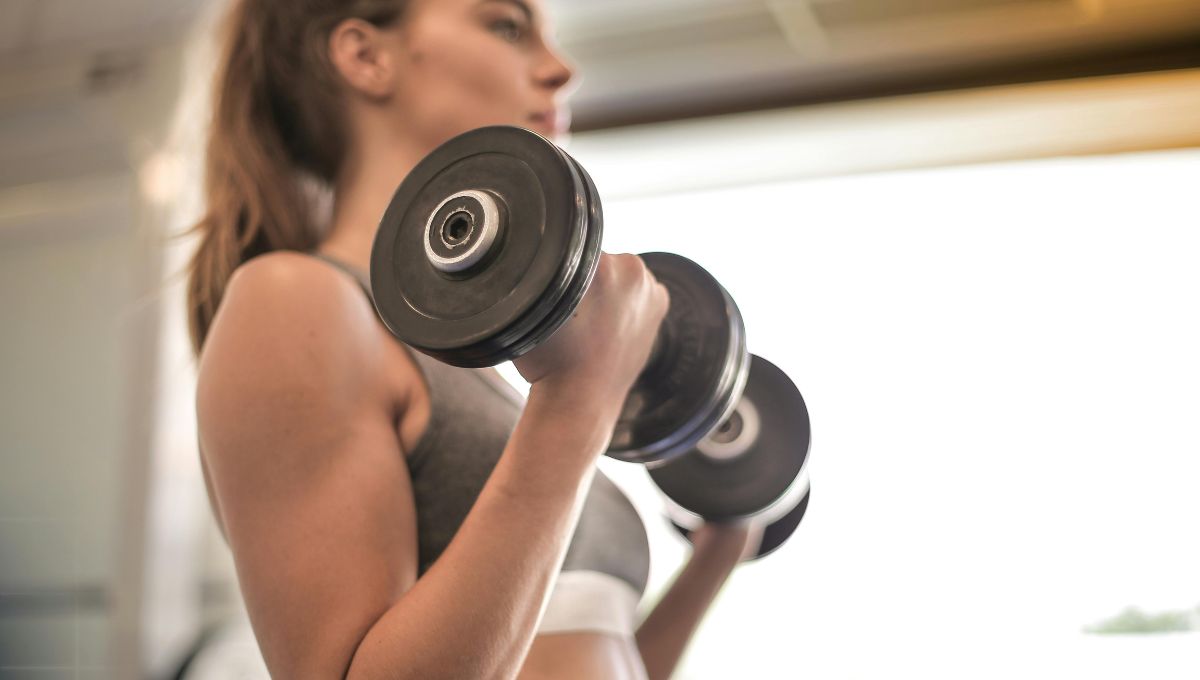


Building bigger shoulders is not about finding the most complicated exercise in the gym. It is about choosing movements you can perform safely, load progressively, and repeat consistently. For beginners, the Arnold press and the standard dumbbell shoulder press are both useful choices, but they are not identical.
The Arnold press begins with the dumbbells in front of the shoulders and the palms facing you. As you press upward, you rotate the hands so the palms face forward near the top. A standard dumbbell shoulder press starts with the hands in a more forward facing position and moves directly overhead without the deliberate rotation.


The Arnold press looks more complete because it includes a rotation, while the standard shoulder press appears simpler and more direct. However, bigger shoulders come from accumulating high quality training over time, not from making every rep more elaborate. The best option for a beginner is usually the exercise that provides a strong training stimulus while allowing consistent technique, sensible loading, and reliable progression.
The Short Answer
For most beginners, the standard dumbbell shoulder press is the better main exercise for building bigger shoulders. It is easier to learn, easier to progressively overload, and easier to keep consistent as the weights get heavier. The Arnold press can still be a valuable variation, particularly if it feels comfortable and you enjoy it, but it should not replace basic pressing just because it has a more complex movement path.
A small electromyography study comparing the Arnold press with a conventional overhead dumbbell press found greater electrical activity in the front and middle portions of the deltoid during the Arnold press. That finding is interesting, but it does not prove that the Arnold press produces more long term shoulder growth. The study involved only ten trained young men, measured muscle activity during a brief testing session, and did not track changes in muscle size.
For beginners, the most important practical question is not which exercise produces the largest signal in a laboratory. It is which exercise you can perform through a controlled range of motion, challenge near the end of a set, and steadily improve over months of training. On that standard, the basic dumbbell shoulder press usually wins.
What Your Shoulders Need to Grow
The deltoid muscle has three main regions. The front deltoid helps raise the arm in front of the body and contributes strongly during pressing. The middle deltoid helps lift the arm out to the side. The rear deltoid helps move the upper arm backward and works during many rowing and reverse fly movements.
Both pressing variations train the front deltoid and triceps heavily. The middle deltoid assists, but a press alone is not usually the most direct way to develop the rounded outer shoulder look that many lifters want. That is why a beginner shoulder program works best when it combines a press with a lateral raise variation and enough pulling work to train the upper back and rear deltoids.
3 Best Exercises for Bigger Pecs Without the Bench Press
Research on resistance training volume shows that performing more weekly hard sets for a muscle tends to produce greater hypertrophy, at least up to a point. This does not mean every beginner needs an enormous amount of work. It means that a repeatable exercise that allows you to build productive sets over time is more valuable than a movement that looks impressive but is difficult to control.
A growing body of research also suggests that a wide range of loads can build muscle when sets are performed with sufficient effort. You do not need to chase failure on every set, especially while learning a new movement, but you should generally finish working sets feeling that only a few more good repetitions were possible. This balance allows you to create a strong stimulus without regularly turning technique into a battle.
The Standard Dumbbell Shoulder Press
Why It Works Well for Beginners
The standard dumbbell shoulder press is simple. You bring the dumbbells to shoulder level, brace your torso, and press them upward in a controlled path. The movement has fewer moving parts than the Arnold press, which makes it easier to learn where your hands, elbows, ribs, and head should be during each repetition.
That simplicity matters. A beginner has a limited amount of attention during a hard set. If you must think about rotating your hands, keeping the dumbbells from drifting, avoiding excessive lower back arching, and pressing smoothly at the same time, technique can become inconsistent. With a standard shoulder press, you can focus on the most important job: pressing the weight through a stable, comfortable range of motion.
Dumbbells allow each arm to move independently. This can make the press feel more natural than a fixed barbell path for many people. Research comparing several shoulder press setups found that standing dumbbell pressing produced high muscle activity, although it also reduced the amount of weight participants could lift compared with more stable options. For a beginner whose goal is muscle growth, a seated dumbbell press with back support is often a practical starting point because it reduces the demand on balance and helps you focus on the shoulders and triceps.
How to Perform It
Sit tall with the dumbbells around shoulder height. Keep your feet firmly on the floor and your upper back supported if you are using a bench. Your elbows should sit slightly in front of your body rather than flared directly to the sides. This usually creates a more comfortable shoulder position.
Press the dumbbells up and slightly inward, following a path that feels natural for your shoulders. At the top, your arms do not need to lock out aggressively if doing so causes discomfort. Lower the dumbbells slowly until you return to a controlled bottom position. Keep your ribs down and avoid turning the rep into a backbend.
The goal is not to force a perfectly vertical path. The goal is to create a repeatable path that feels stable and pain free. Shoulder anatomy differs from person to person, so a comfortable grip width and elbow angle can vary.
The Arnold Press
What Makes It Different
The Arnold press starts in a more internally rotated position, with the palms facing the lifter. As the weights rise, the lifter rotates the hands into a forward facing position and finishes with the arms overhead. The movement is longer and more complex than a standard shoulder press.
The rotation changes how the exercise feels, especially near the bottom. Because the elbows begin in front of the torso, many people feel a strong contraction in the front deltoids. The Arnold press can also make a relatively light dumbbell feel challenging because the movement demands more coordination and control.
The available direct comparison found greater front and middle deltoid electrical activity during the Arnold press than during a standard dumbbell overhead press. This is useful information, but it needs context. Surface electromyography measures electrical activity during a particular task. It does not directly measure mechanical tension across a whole training session, recovery cost, or the muscle growth that will occur after weeks of training.
In other words, the Arnold press may be a good shoulder exercise, but higher electrical activity in one short study does not make it automatically superior for hypertrophy.
Where Beginners Can Struggle
The Arnold press demands more from shoulder mobility and coordination. If the lower position feels cramped, pinchy, or unstable, forcing the rotation is not a good strategy. An exercise should challenge the muscles, not ask you to repeatedly work through joint pain.
It can also be harder to load progressively. With the standard press, you can often add a small amount of weight or complete more repetitions without changing the movement quality. With the Arnold press, a heavier dumbbell can quickly make the rotation untidy. The wrists may bend back, the elbows may drop unevenly, or the dumbbells may swing forward rather than move smoothly upward.
These issues do not make the Arnold press a bad exercise. They simply make it a less efficient first choice for many beginners. It works best once you already own a comfortable, stable shoulder press pattern.
Which Exercise Builds Bigger Shoulders?
The Winner for Most Beginners
The standard dumbbell shoulder press is the better overall choice for most beginners because it is easier to perform consistently and easier to progress. Those two factors matter more than small differences in acute muscle activity.
Muscle growth is a long term adaptation. You need repeated exposure to challenging sets, adequate recovery, and a gradual increase in training demands. A basic exercise that you can perform well twice per week for several months is usually more productive than a more complicated variation that changes from set to set.
The Arnold press can be included as a secondary variation if it feels good. It may add variety to training and can provide a useful change in stimulus when you are bored with your standard press. However, it is not necessary for shoulder growth, and beginners should not feel that they are missing out if they choose the simpler movement.
The Winner for Front Deltoid Emphasis
The Arnold press may offer a slight practical advantage if you want an exercise that feels especially demanding for the front deltoids. The beginning position places the elbows forward, and the rotation can make the bottom half of the movement feel more deliberate.
Still, your front deltoids already work during chest pressing, incline pressing, push ups, and standard overhead pressing. Many beginners do not need more front deltoid work as much as they need balanced shoulder development. If your goal is visibly broader shoulders, direct work for the middle deltoids is essential.

A shoulder press is valuable, but it is not a complete shoulder plan by itself. Pair it with lateral raises performed through a controlled range of motion. Train your upper back with rows or pulldowns, and include a rear deltoid movement when your program allows. This approach gives each part of the shoulder a more balanced role.
How to Program Either Exercise
Start by choosing one primary pressing variation. Perform two or three working sets once or twice each week. A practical beginner repetition range is about six to twelve repetitions, provided you can use a controlled tempo and finish the set with one to three good repetitions still available.
Rest long enough to recover your breathing and maintain strong form. For many people, that means around two minutes or more between challenging sets. Very short rest periods can make the next set feel dramatically harder, but the fatigue may limit the load and repetitions you can perform with good technique.
Use double progression. Choose a weight that allows you to complete the lower end of your repetition target with solid form. Each week, try to add one or two repetitions while keeping the same weight. Once you can complete the upper end of the target on all working sets, use slightly heavier dumbbells and begin building the repetitions again.
For example, you might begin with two sets of eight repetitions. Over several sessions, you build toward two sets of twelve repetitions. Then you increase the weight and return to sets of eight or nine repetitions. This is a clear, beginner friendly way to make training more demanding without constantly guessing.
Technique and Comfort Matter More Than Exercise Loyalty
No pressing variation deserves loyalty if it consistently causes joint pain. Muscle fatigue, a burning sensation, and a temporary pump are normal parts of challenging training. Sharp pain, catching, numbness, or pain that worsens from session to session are different. If you experience those symptoms, stop the painful movement and seek advice from a qualified health professional.
You also do not need to use the same variation forever. A seated dumbbell shoulder press may be your best starting point. Later, you may enjoy standing presses, machine presses, landmine presses, or the Arnold press. The useful exercise is the one that suits your current goal, equipment, skill level, and comfort.
The most effective shoulder routine is rarely built around novelty. It is built around good repetitions, enough hard work, and enough patience to let the results accumulate.
Final Verdict
Choose the standard dumbbell shoulder press as your main shoulder pressing exercise if you are a beginner who wants bigger shoulders. It is straightforward, easy to track, and well suited to progressive overload. It also leaves more mental energy for learning excellent technique and building confidence under load.
Use the Arnold press if you enjoy the movement, it feels comfortable, and you can control the rotation without losing position. It may increase front and middle deltoid activity during a set, but current evidence does not show that it produces more muscle growth than a regular shoulder press over a training program.
The bigger lesson is simple. Pick one press you can perform well, train it consistently, gradually make it harder, and support it with lateral raises and pulling exercises. That combination will do far more for your shoulders than chasing the most elaborate press in the gym.
References
- Grgic, J., Schoenfeld, B.J., Orazem, J., Sabol, F., Smajić, M., Bishop, D.J. and Pedisic, Z. 2022. Effects of resistance training performed to repetition failure or non failure on muscular strength and hypertrophy: A systematic review and meta analysis. Journal of Sport and Health Science, 11(2), pp. 202 to 211.
- Raizada, S. and Bagchi, A. 2017. Comparison among the EMG activity of the anterior deltoid and medial deltoid during two variations of dumbbell shoulder press exercise. Indian Journal of Public Health Research and Development, 8(4), pp. 653 to 656.
- Refalo, M.C., Helms, E.R., Hamilton, D.L. and Fyfe, J.J. 2023. Influence of resistance training proximity to failure on skeletal muscle hypertrophy: A systematic review with meta analysis. Sports Medicine, 53(3), pp. 649 to 665.
- Saeterbakken, A.H. and Fimland, M.S. 2013. Effects of body position and loading modality on muscle activity and strength in shoulder presses. Journal of Strength and Conditioning Research, 27(7), pp. 1824 to 1831.
- Schoenfeld, B.J., Ogborn, D. and Krieger, J.W. 2017. Dose response relationship between weekly resistance training volume and increases in muscle mass: A systematic review and meta analysis. Journal of Sports Sciences, 35(11), pp. 1073 to 1082.
- Vigotsky, A.D., Halperin, I., Lehman, G.J., Trajano, G.S. and Vieira, T.M. 2018. Interpreting signal amplitudes in surface electromyography studies in sport and rehabilitation sciences. Frontiers in Physiology, 8, article 985.
Key takeaways
| Exercise or issue | Best takeaway for beginners |
|---|---|
| Main exercise choice | Use the standard dumbbell shoulder press as your primary press because it is easier to learn, repeat, and progressively overload. |
| Arnold press | Use it as an optional variation when the rotation feels smooth and comfortable, not because it is guaranteed to build more muscle. |
| Muscle activation findings | The Arnold press may create higher electrical activity in the front and middle deltoids during a set, but this does not prove superior long term hypertrophy. |
| Building wider shoulders | Add lateral raises because pressing emphasizes the front deltoids more than it directly targets the middle deltoids. |
| Productive effort | Finish most working sets with about one to three good repetitions left rather than forcing poor quality repetitions to failure. |
| Progression | Add repetitions first, then increase the dumbbell weight once you reach the top of your target range with strong form. |