

Building bigger biceps is not about finding one magical exercise. It is about choosing movements you can perform consistently, load with good technique, and gradually make more challenging over time. For beginners, incline curls and preacher curls are both excellent choices because they reduce the temptation to swing the weight and make the biceps do more of the work.
However, they are not identical. The position of your upper arm changes how the biceps work through the curl, how stable you feel, and where the exercise is most difficult. Recent research comparing these exact exercises suggests that both can grow the elbow flexors effectively, but they may produce slightly different regional adaptations.


So, which should you choose if your goal is bigger biceps? The short answer is that incline curls are the better all around choice if you can control the stretched position comfortably. Preacher curls are an excellent alternative if you want more stability, clearer technique, and a simple way to train hard without using momentum.
Understanding What Your Biceps Actually Do
The biceps brachii has two heads, called the long head and short head. It crosses both the shoulder and elbow joints, which means its length changes when either joint moves. Its main actions are bending the elbow and turning the palm upward, a movement called forearm supination.

The biceps also assist with shoulder flexion, although elbow flexion is the action most people train during curls. Because the muscle crosses the shoulder, the angle of your upper arm matters. When your upper arm sits behind your torso, as it does in an incline curl, the biceps begin in a more lengthened position. When your upper arm is supported in front of your torso, as it is during a preacher curl, the starting position feels different and the resistance challenge changes through the movement.
This does not mean one exercise suddenly isolates only one part of the biceps. Both movements train the elbow flexors, including the biceps brachii, brachialis, and brachioradialis. But changing shoulder position can affect the mechanical demands placed on the muscles and the part of the range where you feel the most tension.
For a beginner, the most important takeaway is simple. Both exercises can build muscle when you use a challenging load, control the movement, train consistently, and progress gradually.
What Is an Incline Curl?
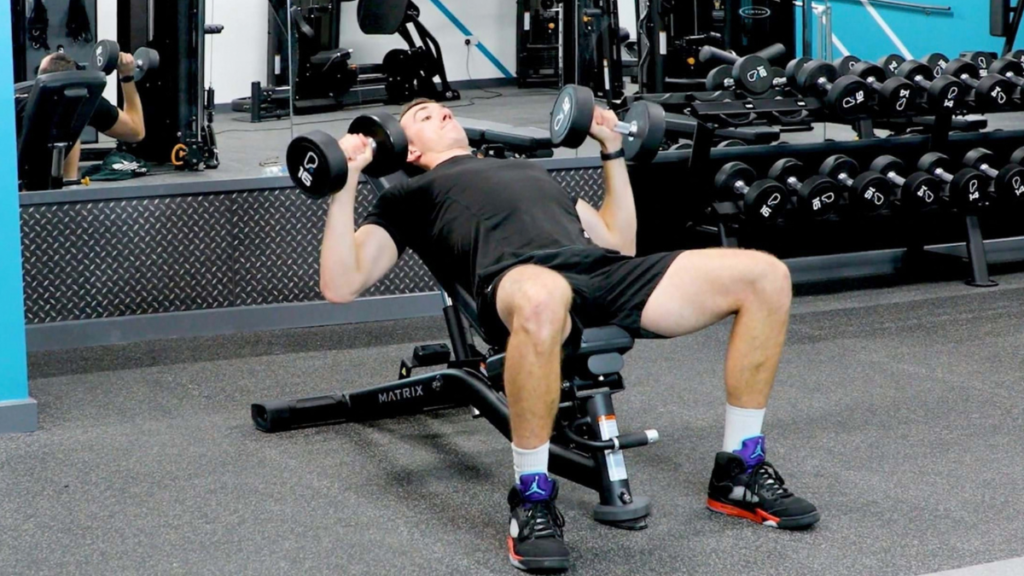
An incline curl is usually performed while seated on an adjustable bench set at an incline. You hold dumbbells with your arms hanging down and slightly behind your body. From there, you curl the weights upward by bending your elbows and squeezing your biceps.
The key feature is the shoulder position. Since the arms begin behind the torso, the biceps are placed under a long muscle length at the bottom of the curl. This can make even light dumbbells feel demanding, particularly during the first part of each repetition.
Why Incline Curls Can Be Effective
Incline curls make it harder to use body English. Your torso is supported by the bench, and your arms start behind you, so there is less opportunity to turn the movement into a shoulder driven curl. This can help beginners learn what a strict curl should feel like.
The exercise also produces a strong stretch sensation in the biceps at the bottom. Training muscles at longer lengths has received substantial attention in resistance training research. Across many exercises, work performed at longer muscle lengths can be a useful stimulus for hypertrophy, although results vary depending on the muscle, exercise, range of motion, and program design.
A direct eight week study comparing incline curls with preacher curls found that both exercises increased elbow flexor size. However, the incline curl group experienced greater growth at the proximal measurement site, which is closer to the shoulder. This does not prove that incline curls uniquely build the biceps peak or transform the shape of the muscle. Genetics, overall muscle mass, and body fat have much more influence on appearance. Still, the result suggests that shoulder position may influence where growth is measured along the upper arm.
The Main Challenge for Beginners
The stretched position is also what makes incline curls demanding. If you lower the dumbbells too quickly, use too much load, or force your shoulders into an uncomfortable position, the exercise can feel unpleasant at the front of the shoulder or near the lower biceps tendon.
That does not make incline curls unsafe. It simply means beginners should start conservatively. Use a bench angle that feels comfortable, keep the shoulders relaxed, and lower the dumbbells under control. There is no prize for using a very steep stretch if you cannot maintain good form.
What Is a Preacher Curl?
A preacher curl is performed with the upper arms supported on an angled pad. You can use an EZ bar, straight bar, dumbbell, cable attachment, or machine. The pad keeps the upper arms relatively fixed and limits the ability to swing the weight upward.
This setup makes the preacher curl one of the most stable biceps exercises available. You sit or stand behind the pad, press the upper arms into position, and bend the elbows to lift the weight. The bench gives you feedback immediately. If the elbow drifts off the pad or the shoulder moves excessively, you know your technique has changed.
Why Preacher Curls Can Be Effective
The greatest advantage of preacher curls for beginners is stability. When your upper arms are supported, you do not need to think as much about controlling your torso or preventing your elbows from drifting. That makes it easier to focus on elbow flexion and a smooth repetition.
The resistance profile also feels different from an incline curl. Many lifters find the preacher curl particularly difficult in the lower half of the movement, although the exact challenge depends on the equipment used. A free weight preacher curl, cable preacher curl, and machine preacher curl can all feel very different despite sharing the same upper arm support.
In the direct comparison study, the preacher curl group experienced greater growth at the distal elbow flexor measurement site, which is closer to the elbow. The preacher curl group also improved more in preacher curl strength, while the incline curl group improved more in incline curl strength. This reflects the principle of specificity. You usually improve most at the exercise you practice.
Again, this does not mean preacher curls can reshape your biceps or selectively build one head in isolation. It does show that exercise selection can create slightly different training demands, and that both movements are valid options for gaining size.
The Main Challenge for Beginners
The most common preacher curl mistake is using too much weight and forcing the bottom position. When the elbow is close to straight, the biceps can be under substantial tension. Dropping into that position fast or aggressively locking out every repetition can make the exercise harder to control.
Instead, lower the weight slowly and stop just short of the point where the elbow joint feels strained. Keep your chest against the pad, maintain contact with the upper arms, and avoid turning each repetition into a partial range movement. A controlled, nearly full range of motion with moderate weight is far more productive than a heavy set with rushed technique.
Incline Curls vs Preacher Curls for Muscle Growth
The best available direct evidence is encouraging for both exercises. Over eight weeks of twice weekly training, incline and preacher curls both increased elbow flexor muscle thickness. That is the most important point for a beginner who is deciding between them.
The differences found between the exercises were regional, not an indication that one exercise dramatically outperformed the other for total biceps development. Incline curls produced a larger increase closer to the shoulder, while preacher curls produced a larger increase closer to the elbow.
3 Best Exercises for Rounder and More Defined Shoulders
In practical terms, this means neither exercise deserves to be called the undisputed winner. If you perform either movement consistently and improve your repetitions, load, control, or total useful training volume over time, you can build bigger biceps.
Your results will depend more on the quality of your training than the label of the curl. A beginner who does preacher curls with a full controlled range, adds repetitions over several weeks, and trains hard enough to challenge the muscle will make better progress than someone who chooses incline curls but swings the dumbbells, skips sessions, and changes exercises every workout.
Which Exercise Is Better for Beginners?
For most beginners, preacher curls have a small practical advantage because the setup is stable and easier to learn. The pad limits common errors, especially swinging the torso and allowing the elbows to move forward during the curl. If your gym has a preacher bench or preacher curl machine, it is a simple and effective place to start.
Incline curls may be the better choice if you have dumbbells and an adjustable bench but no preacher station. They are also ideal for lifters who enjoy the long muscle length position and can perform it without shoulder discomfort. The independent dumbbells allow each arm to work separately, which can make it easier to notice and address a meaningful side to side difference.
There is no need to choose one forever. A smart approach is to use one movement for several weeks, learn it well, and then introduce the other. This gives you a new angle of training without making your program unnecessarily complicated.
How to Perform an Incline Curl
Set an adjustable bench to a comfortable incline and sit with your back supported. Hold a dumbbell in each hand with your arms hanging naturally behind your torso. Start with your palms facing forward or gradually rotate them upward as you curl.

Keep your upper arms still as you bend your elbows. Raise the dumbbells until your biceps are fully contracted without allowing your shoulders to roll forward. Lower them slowly until you reach a comfortable stretch, then begin the next repetition.
Use a load that lets you keep the movement controlled. If your elbows drift far forward or your shoulders feel strained, reduce the weight or use a slightly more upright bench angle.
How to Perform a Preacher Curl
Adjust the preacher bench so your upper arms rest securely on the pad and your armpits sit close to the upper edge. Grip the handle, dumbbell, or bar with your wrists in a comfortable neutral position.
Start with the elbows close to straight but not aggressively locked. Curl the weight upward while keeping your upper arms pressed into the pad. Squeeze your biceps near the top, then lower the weight slowly and under control.
Avoid lifting your elbows off the pad to finish the repetition. If you cannot complete a full controlled rep without doing that, the weight is too heavy.
How to Program Them for Bigger Biceps
Beginners do not need endless curl variations. Two weekly biceps sessions are enough for most people, particularly when combined with pulling exercises such as rows, pulldowns, chin ups, and pull ups.
Start with two or three sets of either incline curls or preacher curls in the range of approximately eight to fifteen repetitions. Choose a weight that leaves you with a small number of repetitions in reserve while still making the final repetitions demanding. As your technique improves, aim to add repetitions before increasing the load.
For example, if you can complete three sets of ten good preacher curls, try to work toward three sets of twelve or fifteen with the same weight. Once you reach the top of your chosen repetition range with clean form, make a small weight increase and build back up again.
You can also use both exercises in the same week. Perform incline curls in one session and preacher curls in another. This approach is useful if your recovery is good and you enjoy both movements, but it is not essential for progress.
The Verdict
Incline curls and preacher curls can both build bigger biceps for beginners. The direct research comparing them shows meaningful elbow flexor growth from each exercise, with small regional differences rather than one clear overall champion.
Choose preacher curls if you want maximum stability, a simple technique to learn, and less opportunity to cheat the movement. Choose incline curls if you want a dumbbell based exercise that trains the biceps from a longer starting position and feels comfortable on your shoulders.
If you want the most practical answer, start with preacher curls to master strict elbow flexion. Add incline curls later, or rotate them into your program after several weeks. Bigger biceps will come from consistent training, controlled repetitions, progressive overload, adequate recovery, and patience.
References
- American College of Sports Medicine (2009) ‘American College of Sports Medicine position stand: Progression models in resistance training for healthy adults’, Medicine & Science in Sports & Exercise, 41(3), pp. 687 to 708.
- Kassiano, W., Costa, B., Kunevaliki, G., Lisboa, F., Stavinski, N., Prado, A., Tricoli, I., Francsuel, J., Lima, L., Nunes, J.P., Ribeiro, A.S. and Cyrino, E.S. (2025) ‘Distinct muscle growth and strength adaptations after preacher and incline biceps curls’, International Journal of Sports Medicine, 46(5), pp. 334 to 343.
- Krzyszkowski, J. and Kipp, K. (2020) ‘The effects of load and training volume on muscle hypertrophy’, Strength and Conditioning Journal, 42(5), pp. 1 to 10.
- Lasevicius, T., Ugrinowitsch, C., Schoenfeld, B.J., Roschel, H., Tavares, L.D., De Souza, E.O., Laurentino, G. and Tricoli, V. (2018) ‘Effects of different intensities of resistance training with equated volume load on muscle strength and hypertrophy’, European Journal of Sport Science, 18(6), pp. 772 to 780.
- McMahon, G.E., Morse, C.I., Burden, A., Winwood, K. and Onambélé, G.L. (2014) ‘Impact of range of motion during ecologically valid resistance training protocols on muscle size, subcutaneous fat, and strength’, Journal of Strength and Conditioning Research, 28(1), pp. 245 to 255.
- Pedrosa, G.F., Freitas, S.R., Bentes, C.M., Vale, R.G.S. and Novaes, J.S. (2013) ‘Effect of the shoulder position on the biceps brachii electromyographic activity during different dumbbell curl exercises’, Journal of Sports Science and Medicine, 12(3), pp. 481 to 486.
- Pelland, K., Vollaard, N., Gifford, J. and Phillips, S.M. (2023) ‘Resistance training prescription for muscle strength and hypertrophy in healthy adults: A systematic review and Bayesian network meta analysis’, British Journal of Sports Medicine, 57(18), pp. 1211 to 1220.
Key Takeaways
| Exercise | Best reason to choose it | Beginner focus |
|---|---|---|
| Incline curl | Challenges the biceps from a long starting position and can support proximal upper arm growth | Use light dumbbells, control the bottom position, and keep the shoulders relaxed |
| Preacher curl | Provides upper arm support that makes strict technique easier to learn | Keep the upper arms on the pad and avoid forcing the elbow into a hard lockout |
| Best overall choice | Both movements can grow the biceps when trained consistently | Start with the exercise that feels comfortable, then progress reps and load gradually |