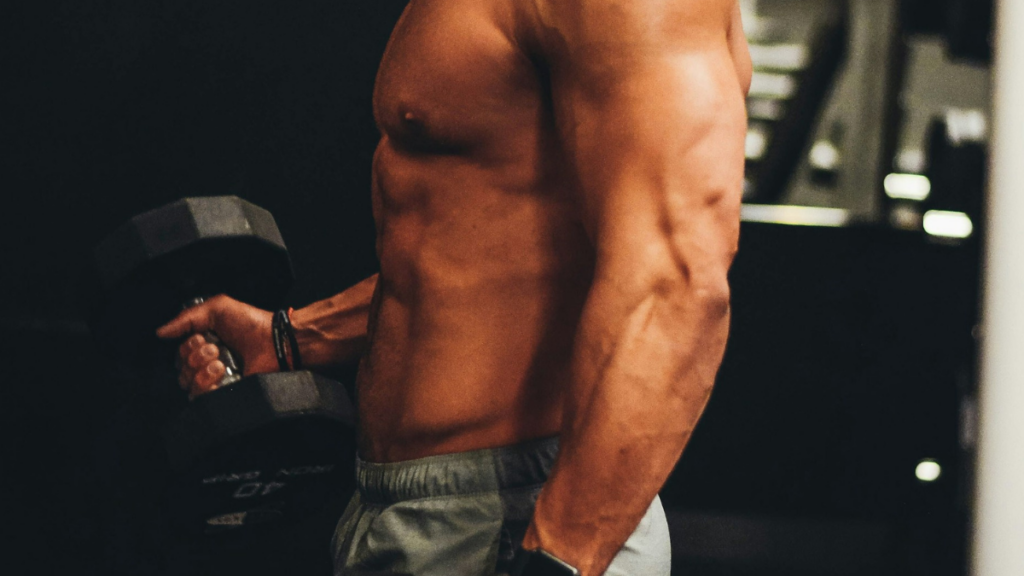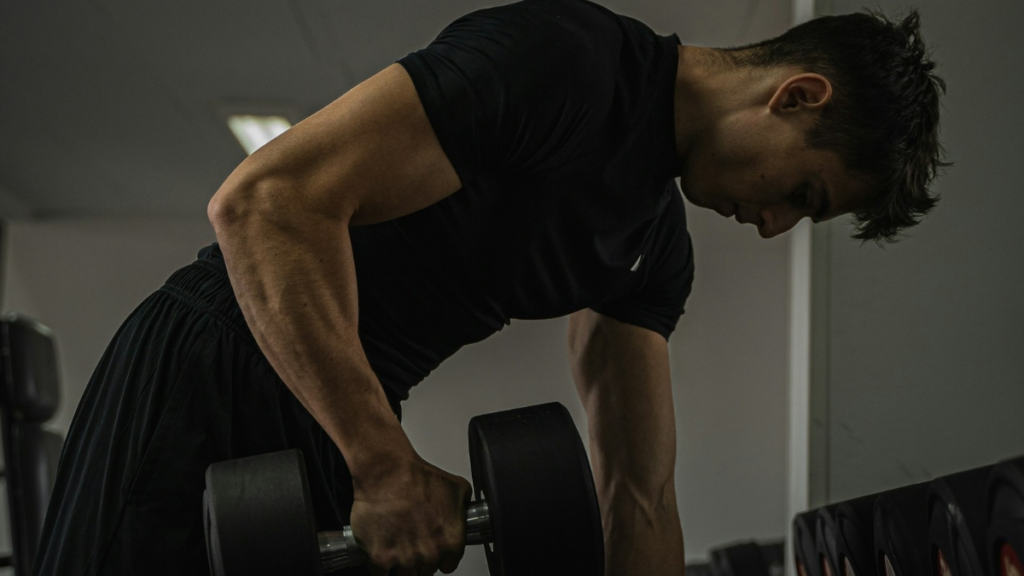


Building wider looking arms takes more than adding another curl to your workout. The biceps brachii has a long head and a short head, but no curl can isolate one head completely. The brachialis, a muscle that sits beneath the biceps, also contributes to the shape and thickness of the upper arm. Training the elbow flexors from different positions, using both supinated and neutral grips, gives you a practical way to develop the whole area.
Free weights are useful because dumbbells and barbells are widely available and easy to adjust as you get stronger. The five exercises below combine different arm positions and grips. They can help build your biceps and the surrounding elbow flexor muscles, but results depend on consistent training, suitable effort, and enough recovery. No single exercise can guarantee wider arms, and people respond differently to training.


What Makes Biceps Look Wider?
The biceps brachii bends the elbow and helps turn the palm upward, a movement called supination. Its two heads work together in many curling movements, so trying to make one exercise target only the long head or short head can promise more than the research supports. Arm width also reflects more than the biceps alone. The brachialis lies beneath it, and developing the elbow flexors as a group can contribute to a thicker upper arm.
That is why this list includes both palm up curls and hammer curls. A supinated grip trains the biceps through its role in elbow flexion and forearm rotation, while a neutral grip changes how the elbow flexors share the work. These variations offer useful options, but they should be treated as ways to train the arm muscles from different positions rather than as tools that isolate a particular head.
1. Barbell Curl
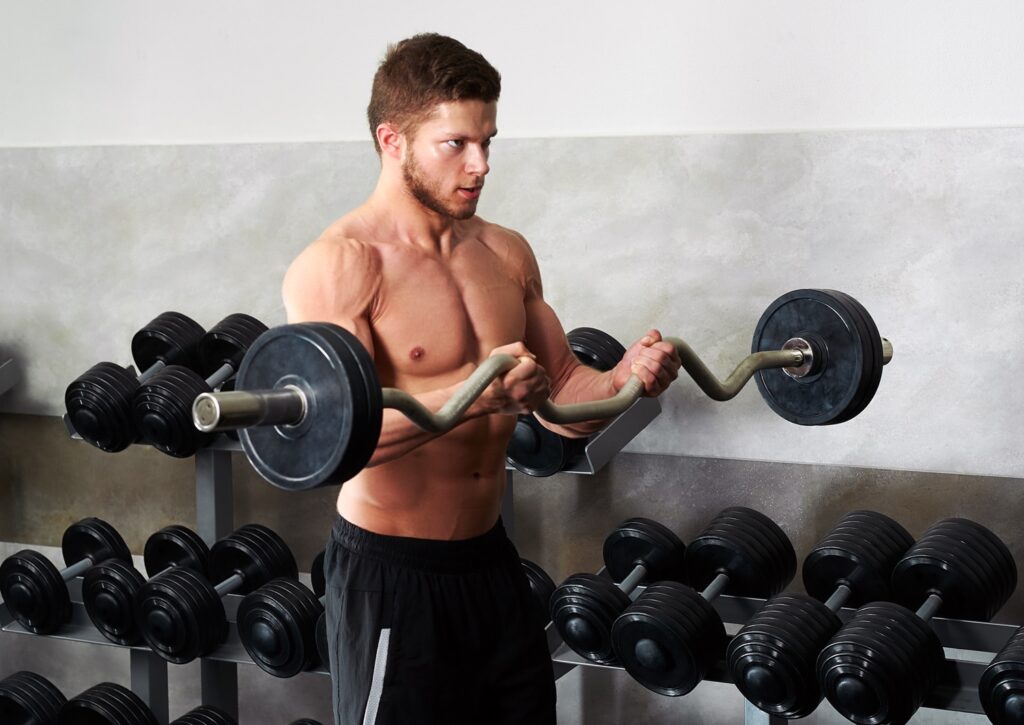
The barbell curl is a straightforward way to train elbow flexion with both hands working together. Stand with your feet about hip width apart and hold the bar with your palms facing forward. Keep your upper arms close to your sides, bend your elbows to raise the bar, and lower it under control. Choose a grip that feels comfortable on your wrists. If a straight bar causes discomfort, an EZ bar is a reasonable alternative.
Avoid using a large swing to lift the weight. Your torso may move slightly, but if you have to lean back or drive your hips forward on every repetition, the load is probably too heavy for a controlled curl. Lower the bar until your elbows are nearly straight, as long as that position feels comfortable, and keep your shoulders from rolling forward as you fatigue.
Barbell curls are a useful main lift because they are easy to load and track over time. Research comparing straight bar, EZ bar, and dumbbell curls found relatively small differences in muscle activity between the bar variations, so comfort can help guide your choice. The barbell curl is not a magic width builder, but it gives you a dependable way to train the biceps and progress gradually.
2. Incline Dumbbell Curl
The incline dumbbell curl puts your upper arms slightly behind your torso. Sit back on an incline bench with a dumbbell in each hand and let your arms hang naturally. Keep your shoulders relaxed and curl the weights without letting your elbows drift forward. Lower the dumbbells slowly until your arms return to the starting position.
Because the upper arm is behind the body, this variation places the biceps in a different shoulder position from a standing curl. That makes it a useful complement to curls performed with the arms beside or in front of the torso. A study comparing incline and preacher curls found different patterns of regional muscle growth, although both exercises increased elbow flexor thickness. This supports using variations for variety and training coverage, not the idea that one curl guarantees a specific shape.
Use a lighter weight than you might choose for a standing curl, especially when you are learning the movement. The stretched starting position can feel demanding, and swinging the dumbbells can take the work away from a controlled curl. Stop short of any range that causes sharp or unusual shoulder discomfort.
3. Alternating Supinating Dumbbell Curl
This curl lets each arm move independently and adds deliberate forearm rotation. Stand tall with a dumbbell in each hand and begin with your palms facing one another. As you curl one weight, gradually turn that hand until your palm faces upward near the top. Lower the dumbbell with control and return the hand to its starting position before switching sides.
The biceps helps turn the forearm from palm down or palm inward toward palm up, as well as helping bend the elbow. The rotation makes this exercise a natural choice for practicing both actions in one repetition. It does not mean that supinating curls isolate the biceps completely, since other muscles also help bend the elbow.
Keep your elbow near your side and avoid rotating your whole shoulder to lift the weight. You can alternate arms on each repetition or complete all repetitions on one side before switching. Either approach works if you use a steady tempo and avoid turning the set into a full body movement.
4. Dumbbell Hammer Curl
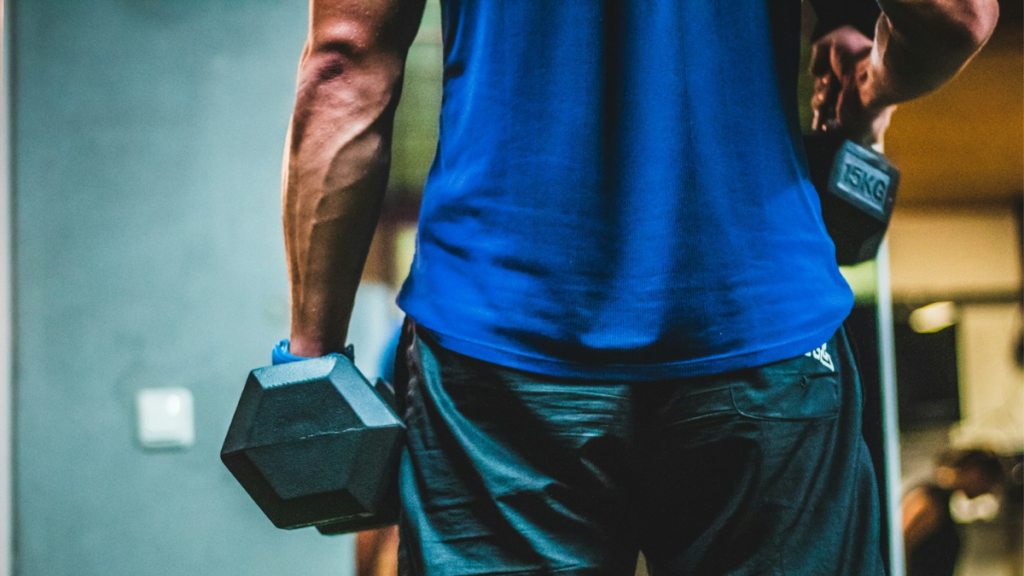
The hammer curl uses a neutral grip, with your palms facing each other throughout the movement. Stand or sit with a dumbbell in each hand, keep your upper arms close to your torso, and curl the weights without rotating your wrists. Lower them steadily until your elbows are nearly straight.
The neutral grip makes hammer curls a helpful partner to palm up curls. The brachialis and brachioradialis are among the elbow flexor muscles involved in curling, and the brachialis sits beneath the biceps. Developing the elbow flexors can add to the overall thickness of the upper arm, although the precise contribution of each exercise depends on the person and the training program.
Do not let your wrists bend or your elbows swing forward as the weights rise. If you need momentum to finish repetitions, reduce the load. A controlled range with a manageable weight is more useful than heavier dumbbells that force you to change the movement.
5. Concentration Curl
The concentration curl gives you a seated option that can make it easier to focus on one arm at a time. Sit on a bench with your legs apart, hold one dumbbell, and rest the back of your upper arm against the inside of your thigh. Curl the weight toward your shoulder while keeping your upper arm supported, then lower it slowly until your elbow is nearly straight. Complete the set and repeat on the other side.
This position limits some opportunities to swing the torso, but it does not make the exercise automatically more effective than other curls. Keep your shoulder relaxed and avoid pressing your arm aggressively into your leg. The goal is to move the dumbbell through a comfortable range with control, not to force the bottom position or chase a painful stretch.
Barbell vs Dumbbell Bench Press – Which Builds Chest Muscle Faster?
Concentration curls work well near the end of an arm session because each arm is trained separately and the setup is simple. They can also help you notice whether one side is doing more work than the other. If you find a clear difference, use the same number of controlled repetitions on each side rather than adding extra work to the stronger arm.
How to Use These Exercises
You do not need to perform all five exercises in every workout. Choose two or three, such as a barbell curl, an incline dumbbell curl, and a hammer curl, then use them consistently long enough to track progress. You can rotate in alternating supinating curls or concentration curls when you want a different variation. A practical starting point is two to four sets per exercise, with a load that lets you complete roughly 8 to 15 controlled repetitions. Adjust the total work to your experience, recovery, and the other pulling exercises in your routine.
For muscle growth, use a weight that makes the last few repetitions challenging while allowing you to keep your technique. Training to the point where you cannot complete another repetition is not required on every set. Add repetitions or a small amount of weight when you can complete your planned work with consistent control. Training volume has a relationship with muscle growth, but more is not automatically better if it leaves you unable to recover or perform well.
Give your arms time to recover between hard sessions. Curls also train muscles that assist with pulling exercises, so account for rows, chin ups, and other upper body work when deciding how much direct arm training to add. If you feel sharp pain, stop the movement and reassess your load, range of motion, and technique. Soreness is not a requirement for progress.
Key Takeaways
| Focus | Practical takeaway |
|---|---|
| Exercise choice | Use curls from different arm positions and include a neutral grip variation. |
| Arm width | Train the biceps and the other elbow flexors, including the brachialis. |
| Technique | Use a controlled range and choose a weight that does not require swinging. |
| Progress | Gradually add repetitions or load while keeping your form consistent. |
| Recovery | Count your other pulling work when planning direct biceps training. |
References
- Attarieh, P. et al. (2025) ‘Comparison between shoulder flexed and extended positions in elbow flexion resistance training on regional hypertrophy and maximum strength: preacher versus Bayesian cable curls’, European Journal of Sport Science, 25(4), e12279.
- Kassiano, W. et al. (2025) ‘Distinct muscle growth and strength adaptations after preacher and incline biceps curls’, International Journal of Sports Medicine, 46(5), pp. 334–343.
- Marcolin, G. et al. (2018) ‘Differences in electromyographic activity of biceps brachii and brachioradialis while performing three variants of curl’, PeerJ, 6, e5165.
- Oliveira, L.F. et al. (2009) ‘Effect of the shoulder position on the biceps brachii EMG in different dumbbell curls’, Journal of Sports Science and Medicine, 8(1), pp. 24–29.
- Schoenfeld, B.J., Ogborn, D. and Krieger, J.W. (2017) ‘Dose-response relationship between weekly resistance training volume and increases in muscle mass: a systematic review and meta-analysis’, Journal of Sports Sciences, 35(11), pp. 1073–1082.
- Standring, S. (ed.) (2016) Gray’s Anatomy: The Anatomical Basis of Clinical Practice. 41st edn. London: Elsevier.