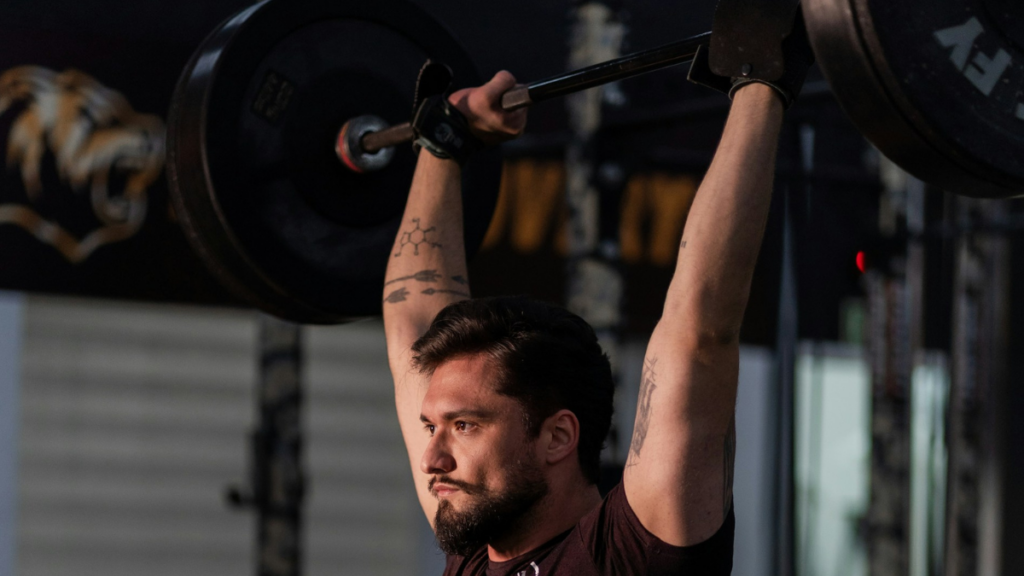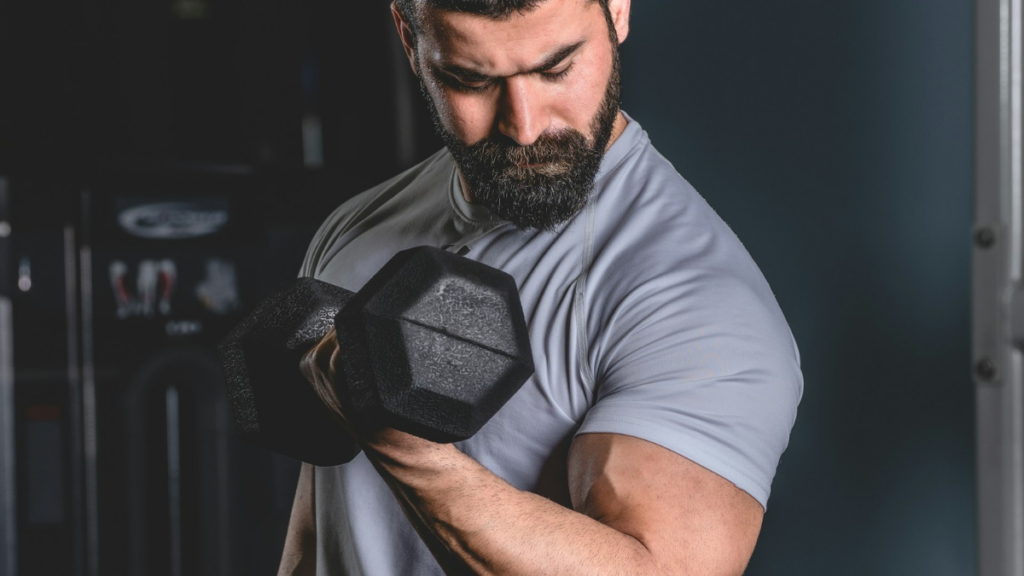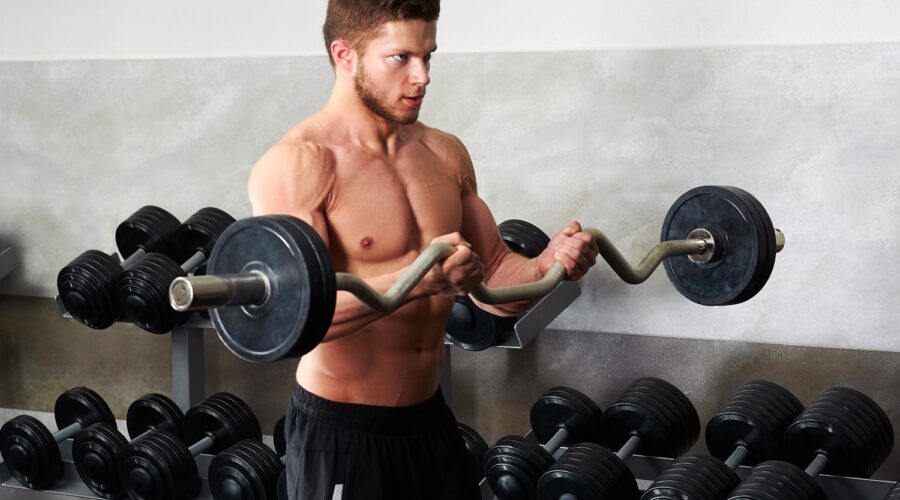


Neither the barbell curl nor the dumbbell curl has been shown to produce more biceps growth in a direct, long term comparison. Both train the elbow flexors, and both can help build bigger arms when you use a challenging load, perform controlled repetitions, and train consistently.
A barbell is useful when you want to curl both arms together with a stable grip and add weight in small, measurable steps. Dumbbells let each arm work independently and allow you to adjust your wrist position. That can make them a comfortable option for people whose wrists feel strained with a fixed bar grip.


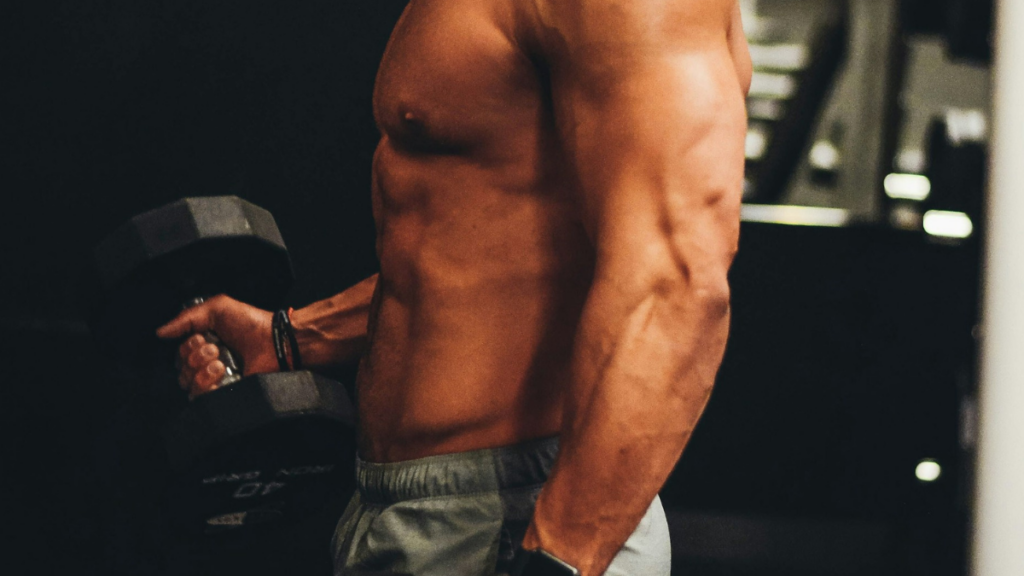
For most lifters, the better choice is the one that lets them train the biceps hard with good control and progress over time. You can use either as your main curl, or include both in your training. The available research does not establish one as the universal winner for muscle growth.
What the Biceps Do During a Curl
The biceps brachii is a two headed muscle on the front of the upper arm. It helps bend the elbow and turn the forearm so the palm faces upward. Other muscles, including the brachialis and brachioradialis, also contribute to elbow flexion. A curl therefore trains a group of muscles, even when the goal is to emphasize the biceps.
During a conventional barbell curl, both hands hold the bar with the palms facing upward. Your hands stay in that position throughout the repetition. In a standard dumbbell curl, each hand holds a separate weight, so you can keep your palms facing upward, use a neutral grip, or rotate from a neutral grip toward a palm up position as you lift.
3 Best Exercises for Building the Upper Body Beginners Often Ignore
That difference can affect how the exercise feels and how much freedom you have to move. It does not prove that one version creates more muscle growth. To establish that, researchers would need to compare the two exercises over a training period and measure changes in muscle size. Acute measurements, such as muscle electrical activity during a single set, cannot answer that question on their own.
The Case for Barbell Curls
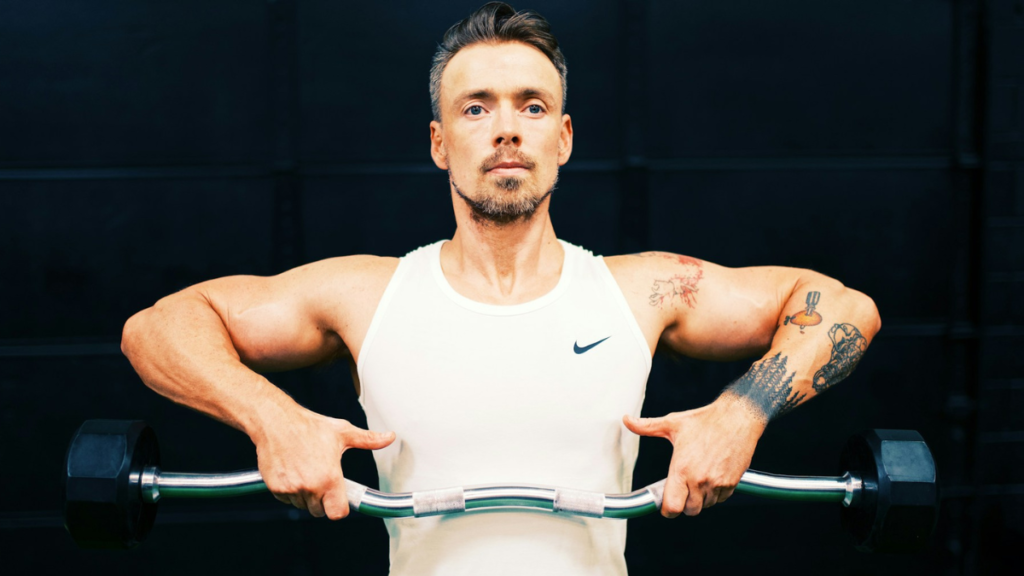
The barbell curl makes it straightforward to train both arms at the same time. The fixed hand position can also help you repeat the same movement from set to set. If you are comfortable with the grip, the bar can be a practical choice for tracking your load and adding weight gradually as you get stronger.
That stability may help some people focus on the lift without thinking about controlling two separate weights. It can also make it easier to maintain a consistent setup. Stand tall, keep your upper arms close to your sides, and bend your elbows to lift the bar. Lower it under control rather than letting the weight drop.
A straight bar keeps the forearms in a fully palm up position. Some lifters find this comfortable, while others feel wrist or elbow discomfort. If the position bothers you, reducing the load, adjusting your grip width, or choosing dumbbells may help. Pain is a reason to change the exercise or seek qualified advice, not a reason to force the same grip.
A barbell does not guarantee better loading or better technique. A weight that is too heavy can encourage you to lean back, move your elbows, or use momentum. Those changes make it harder to keep the curl controlled and consistent. The useful training load is the one you can lift through a comfortable range while maintaining the intended movement.
The Case for Dumbbell Curls
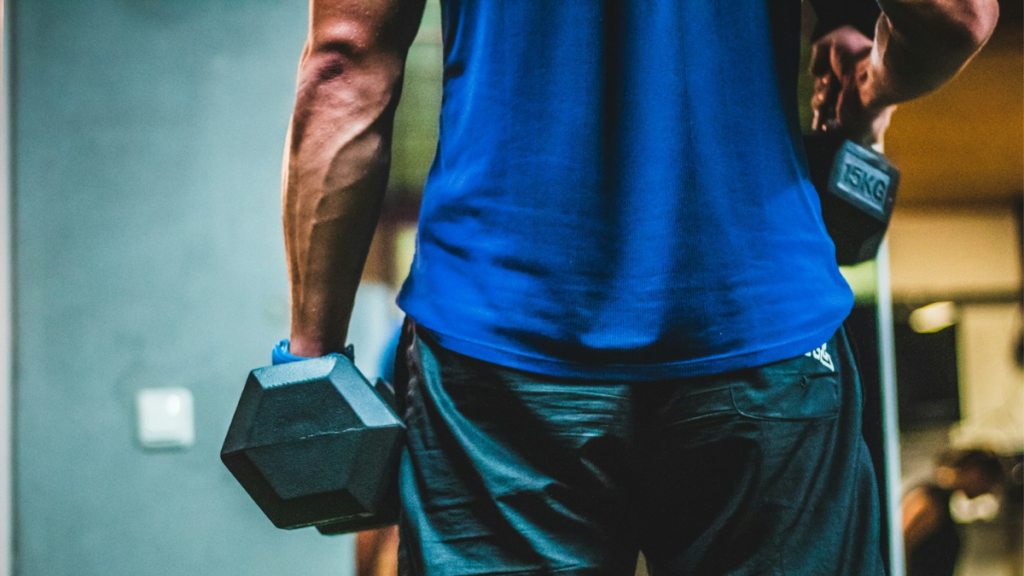
Dumbbells let each arm move independently. That makes it easier to notice if one side is doing more work or moving differently, although it does not automatically correct an imbalance. You can adjust your wrist position to suit your comfort, including using a neutral grip or turning the palm upward during the lift.
The ability to rotate the forearm is one reason many lifters like dumbbell curls. It allows you to choose a hand position that feels natural and change it during the repetition. However, turning the wrist is optional. A regular dumbbell curl with the palm facing upward can also train the elbow flexors effectively.
Because the arms work independently, dumbbells may make it easier to train one side at a time. This can be useful if you want to focus on a particular arm, but it also takes more time than curling both arms together. When alternating repetitions, avoid swinging the torso or rushing the lowering phase while the other arm works.
Dumbbells may feel more comfortable than a straight bar for some lifters, but this is an individual response. They are not automatically easier on every wrist or elbow. Try a manageable load and a comfortable range of motion, then judge the movement by how well you can control it without pain.
What the Research Says
A study comparing straight barbell curls, EZ bar curls, and alternating dumbbell curls measured electrical activity in the biceps brachii and brachioradialis during exercise. It found differences in muscle activity between the curl variations, but it did not measure long term muscle growth. The study involved a small group and tested single sets, so its results cannot tell us which exercise builds bigger biceps over months of training.
This distinction matters because a muscle showing more electrical activity in one test does not necessarily mean it will grow more from that exercise. Muscle growth depends on repeated training over time. The exercise also needs to be performed with enough effort and an appropriate amount of work, while allowing the person to recover and continue training.
Broader resistance training research suggests that a wide range of loads can build muscle when sets are sufficiently challenging. Heavier loads have a clearer advantage for improving strength in those specific heavier lifts, but they are not required for hypertrophy. This means you do not need to choose the curl that lets you lift the heaviest weight at all costs. A moderate load that allows controlled repetitions can be a sound choice.
Research also supports a relationship between weekly training volume and muscle growth, although individual response and recovery matter. More work is not automatically better if it leads to poor performance or prevents you from recovering. Treat curls as part of your full biceps and arm program, and count the other pulling exercises you do as part of your overall training demands.
How to Choose the Right Curl for You
Choose barbell curls if you like a stable, two handed setup, can use the fixed grip comfortably, and want an easy way to track increases in load. Choose dumbbell curls if you prefer independent arm movement, want to adjust your wrist position, or like training one side at a time. Either can work as your primary curl.
Your choice may also depend on your equipment and how the exercise feels after other training. If a straight bar bothers your wrists, dumbbells may offer a more comfortable option. If managing two weights makes it difficult to keep good control, a bar may suit you better. Comfort and repeatable technique help you train consistently, which is more useful than selecting an exercise based on a short term sensation alone.

You can also use both exercises across your training week or rotate them between training blocks. There is no need to change variations every workout if you are making progress and the exercise feels good. Keep the movement consistent long enough to judge whether you can perform more repetitions or use a slightly heavier weight with the same control.
How to Perform Either Curl for Muscle Growth
Use a load that lets you bend your elbows without turning the movement into a body swing. Keep your torso steady, and avoid driving your elbows far forward to finish each repetition. Lower the weight under control and use a range of motion that feels comfortable for your joints.
A practical starting point is two or three working sets in a moderate repetition range, performed as part of your regular program. Finish most sets with only a few good repetitions left before you would need to shorten the movement or use momentum. You do not have to reach complete failure on every set to make progress, and training to failure can create extra fatigue.
Record the load and repetitions you complete. When you can perform more repetitions with the same technique, you can consider adding a small amount of weight. Progress may be gradual, and your performance can vary from session to session. Judge your training over several weeks rather than expecting a new curl variation to produce immediate changes.
The Verdict
For more muscular biceps, neither the barbell curl nor the dumbbell curl is proven to be better in every case. The barbell offers a stable, bilateral lift and simple load tracking. Dumbbells provide independent movement and more flexibility in wrist position. Both can be effective when you train them consistently with controlled repetitions and a challenging but manageable load.
If one variation feels better and helps you progress, make it your main curl. If both feel comfortable, use both. The best choice is the one you can perform well, recover from, and keep progressing over time.
Key Takeaways
| Area | Key takeaway |
|---|---|
| Muscle growth | No direct long term evidence establishes a universal winner between barbell and dumbbell curls. |
| Barbell curls | They train both arms together and offer a stable, fixed grip. |
| Dumbbell curls | They allow independent arm movement and flexible wrist positions. |
| Exercise choice | Use the variation that feels comfortable and lets you maintain good control. |
| Progress | Track your repetitions and load, and build training gradually over time. |
References
- Mannarino, P., Matta, T., Lima, J., Simão, R. and Freitas de Salles, B. (2021) ‘Single-joint exercise results in higher hypertrophy of elbow flexors than multijoint exercise’, Journal of Strength and Conditioning Research, 35(10), pp. 2677–2681.
- Marcolin, G., Panizzolo, F.A., Petrone, N., Moro, T., Grigoletto, D., Piccolo, D. and Paoli, A. (2018) ‘Differences in electromyographic activity of biceps brachii and brachioradialis while performing three variants of curl’, PeerJ, 6, e5165.
- Neumann, D.A. (2017) Kinesiology of the Musculoskeletal System: Foundations for Rehabilitation. 3rd edn. St. Louis, MO: Elsevier.
- Refalo, M.C., Hamilton, D.L., Plotkin, D.L., et al. (2021) ‘Influence of resistance training load on measures of skeletal muscle hypertrophy and improvements in maximal strength and neuromuscular task performance: a systematic review and meta-analysis’, Journal of Sports Sciences, 39(15), pp. 1723–1745.
- Schoenfeld, B.J., Ogborn, D. and Krieger, J.W. (2017) ‘Dose-response relationship between weekly resistance training volume and increases in muscle mass: a systematic review and meta-analysis’, Journal of Sports Sciences, 35(11), pp. 1073–1082.
- Refalo, M.C., Helms, E.R., Trexler, E.T., Hamilton, D.L. and Fyfe, J.J. (2023) ‘Influence of resistance training proximity-to-failure on skeletal muscle hypertrophy: a systematic review with meta-analysis’, Sports Medicine, 53(3), pp. 649–665.