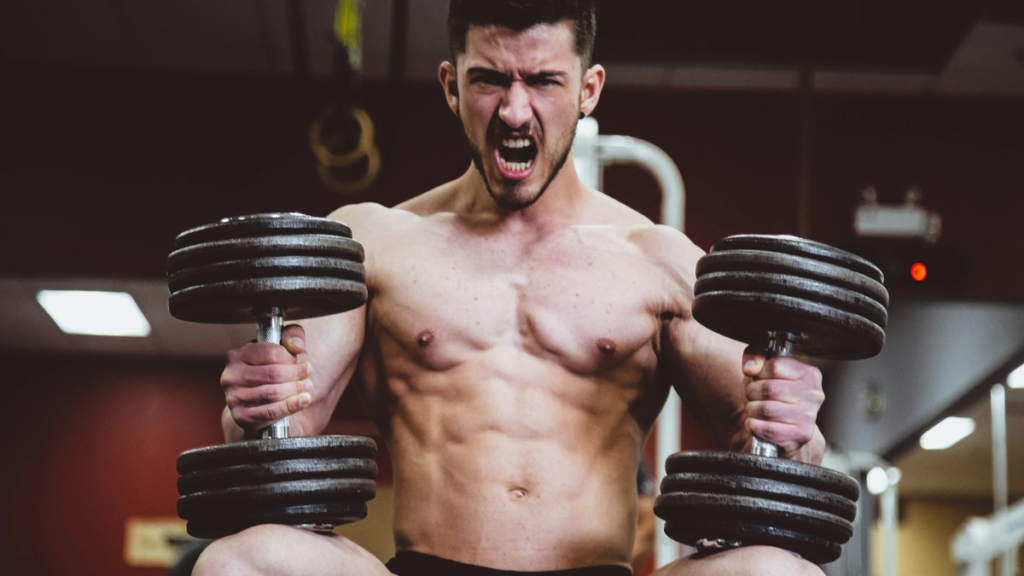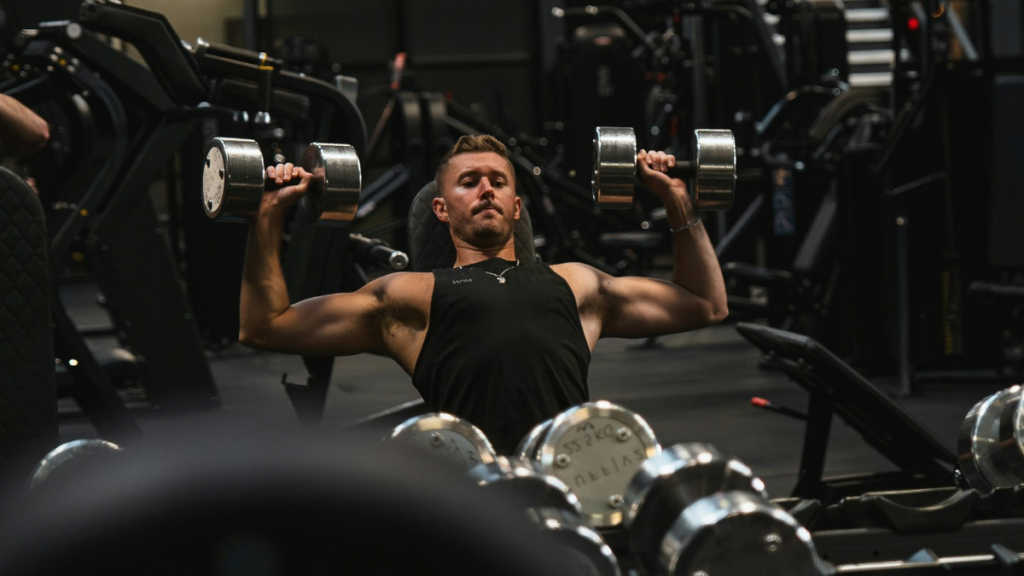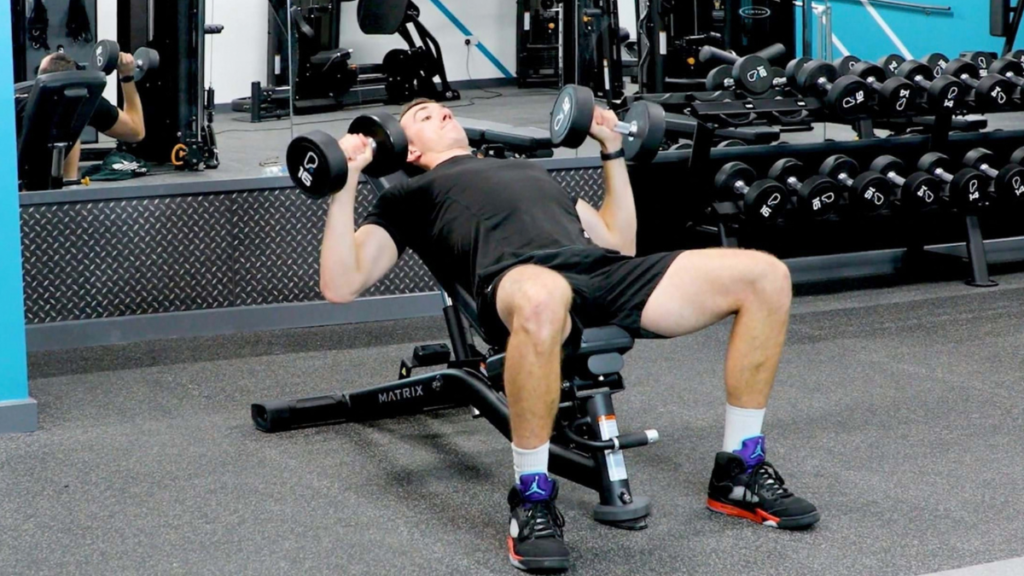


Dumbbells give you a straightforward way to build a stronger, more muscular chest. You can use them to press heavy weights, train at an incline, and work through a comfortable range of motion. They also let each arm move independently, which can help you notice and address differences in strength or control between sides.
The three exercises below cover the main jobs of a chest workout: pressing horizontally, pressing at an incline, and bringing your arms together in a fly. The pectoralis major is a large muscle with fibers that run in different directions, so changing the angle of a press can shift the emphasis across its regions. That does not mean one exercise isolates a single part of the chest. Each movement involves other muscles too, including the triceps and front of the shoulders.


Research comparing bench angles has found differences in activity across regions of the pectoralis major, but short term muscle activity measurements do not prove that one exercise will always build more muscle over time. A useful chest program can include both flat and incline pressing, with a fly as an additional exercise if it suits your shoulders and training goals.
1. Flat Dumbbell Bench Press
Why it works
The flat dumbbell bench press is a strong choice for training the middle and lower regions of the pectoralis major while also working the triceps and front of the shoulders. It lets you use a challenging load and move both arms through a pressing pattern that closely resembles the barbell bench press.
A small study that measured muscle activity during several chest lifts found similar pectoralis major activation during dumbbell bench presses, barbell bench presses, and dumbbell flyes. The researchers found that the fly had a shorter relative activation time, which supports using it as an accessory movement rather than relying on it as your only chest exercise. These findings describe activity during a small number of repetitions. They do not establish which lift produces the most muscle growth over months of training.
Dumbbells also allow each arm to find its own path. This can feel more natural than a fixed bar path for some lifters, although the dumbbells require control and may be harder to set up when the weights are heavy. Start with a load you can position safely.
How to do it
Sit on the edge of a flat bench with a dumbbell resting on each thigh. Use your legs to help guide the weights toward your chest as you lie back. Hold the dumbbells above your chest with your palms facing forward and your wrists stacked over your elbows.
Lower the weights under control until your upper arms are slightly below your torso or reach a comfortable depth. Keep your shoulder blades gently drawn back against the bench and your feet planted on the floor. Press the dumbbells upward until your arms are extended without forcefully locking your elbows. Keep the weights balanced over your chest rather than letting them drift toward your face.
Use a controlled lowering phase and avoid bouncing out of the bottom. If your shoulders feel pinched, shorten the depth slightly, adjust your arm angle, or reduce the weight. A repetition should stay smooth from start to finish.
Who should use it
The flat dumbbell bench press works for beginners learning to press and experienced lifters looking to add chest training. It is especially useful if you have access to dumbbells and a bench but not a barbell rack. If you are new to lifting, practice with light weights until you can control both dumbbells and get into position confidently.
2. Incline Dumbbell Bench Press
Why it works
The incline dumbbell bench press changes the angle of your upper body and the path of your upper arms. This can increase the contribution of the clavicular, or upper, region of the pectoralis major, while the front of the shoulders also helps with the press.
In a study comparing five bench angles, researchers found that incline angle affected muscle activity across measured regions of the chest and the front of the shoulder. A separate training study in untrained young men compared horizontal, incline, and combined bench pressing over eight weeks. Muscle thickness results were broadly similar across most measurement sites, although the incline group showed a larger change at one upper chest measurement site. The study used a Smith machine, so its findings do not prove that incline dumbbell presses will produce the same result.
These studies suggest that incline pressing can be a useful way to include a different pressing angle. They do not show that you need a steep incline or that incline presses replace flat presses. A modest incline is often a practical place to start because steeper angles tend to involve more shoulder contribution.
How to do it
Set an adjustable bench to a low or moderate incline. Sit with a dumbbell on each thigh, then use your legs to help lift the weights as you lean back. Hold the dumbbells above your upper chest with your palms facing forward or turned slightly inward.
Lower the dumbbells beside your upper chest while keeping your forearms close to vertical. Press them upward in a controlled path, stopping when your arms are extended and the weights remain steady. Keep your shoulder blades supported by the bench and avoid arching your lower back excessively to turn the movement into a flat press.
If the exercise feels mostly like a shoulder press, lower the bench angle and check that your elbows are not flared directly out to the sides. You should feel your chest working, but you do not need to chase a dramatic stretch by lowering the weights beyond a comfortable range.
Who should use it
The incline dumbbell press is a good option for lifters who want to train the upper chest with a pressing movement. It pairs well with the flat dumbbell press because the two exercises use different bench angles. If you have shoulder discomfort, test a lower incline, use a lighter load, or choose a pain free pressing variation.
3. Dumbbell Fly
Why it works
The dumbbell fly trains the chest through a motion in which the arms move toward each other across the body. Unlike a press, the elbows stay slightly bent and do not straighten much during the repetition. This makes the exercise a useful accessory when you want to add chest work without performing another heavy press.
The fly places more demand on controlling the shoulder joint, especially as the dumbbells move away from each other. The weight should therefore be lighter than the one you use for a dumbbell bench press. A fly is not automatically a better chest builder because it feels like a bigger stretch. Research on muscle activity has found that flies can activate the pectoralis major, but one study also found a shorter relative activation time during the fly than during bench pressing. That is one reason to use it alongside pressing rather than as a substitute for all pressing work.
How to do it
Lie on a flat bench with a dumbbell in each hand. Hold the weights above your chest with your palms facing each other and your elbows softly bent. Keep that elbow angle mostly unchanged as you open your arms out to the sides.
Lower the dumbbells until you feel a comfortable stretch across your chest. The upper arms do not need to drop far below the bench. Bring the weights back together by moving your arms inward, as if you were wrapping them around a large barrel. Keep the motion controlled and avoid clanking the dumbbells together at the top.
Use a light enough load that you can maintain the same elbow bend and control the bottom position. If you need to bend your elbows more as you lower the weight, you are likely turning the movement into a press or using more load than you can manage.
Who should use it
The dumbbell fly suits lifters who already have basic control of pressing movements and want an additional chest exercise. It can be performed on a flat or incline bench. Choose the version that feels comfortable, and stop the descent before your shoulders feel strained.
How to Put the Exercises Together
A simple chest session can include the flat dumbbell bench press, the incline dumbbell bench press, and the dumbbell fly. For example, you could perform three sets of each exercise, using a weight that allows controlled repetitions and leaves your form intact. The exact number of sets and reps should reflect your training experience, recovery, and how much other pressing you do during the week.

Muscle growth depends on more than choosing three exercises. Progressive resistance training, adequate weekly training volume, and consistent effort all matter. A meta analysis of resistance training studies found a dose response relationship between weekly sets and muscle growth, though the best amount varies from person to person. Start with a manageable amount of work, then add repetitions or a small amount of weight when you can complete your sets with good technique.
3 Best Dumbbell Exercises for Bigger Bicep Peaks
You do not need to take every set to the point where you cannot complete another repetition. Research reviews have not found clear evidence that reaching momentary failure is necessary for muscle growth. You can finish most sets when you feel that you could complete only a few more clean repetitions, then push closer to failure selectively if you are experienced and can maintain safe technique.
Rest long enough between sets to perform the next one well. Keep a simple record of your weights and repetitions so you can see whether your performance is improving. If you train chest several times a week, count pressing work from other sessions too. The goal is a routine that challenges your chest and that you can repeat consistently.
Key Takeaways
| Focus | Takeaway |
|---|---|
| Flat press | Use the flat dumbbell bench press as your main horizontal pressing movement. |
| Incline press | Add a modest incline to train with a different pressing angle and involve the upper chest. |
| Fly | Use lighter dumbbells and controlled motion for this accessory exercise. |
| Technique | Keep each repetition smooth and work within a comfortable range of motion. |
| Progress | Build gradually by adding repetitions or weight while maintaining good form. |
References
- Chaves, S.F.N., Rocha-Júnior, V.A., Azevedo, A.P.S., Schoenfeld, B.J., Roberts, B.M., Silva, R.F., Santos, J.O.L. and Simão, R. (2020) ‘Effects of horizontal and incline bench press on neuromuscular adaptations in untrained young men’, International Journal of Exercise Science, 13(6), pp. 859–872.
- Rodríguez-Ridao, D., Antequera-Vique, J.A., Martín-Fuentes, I. and Muyor, J.M. (2020) ‘Effect of five bench inclinations on the electromyographic activity of the pectoralis major, anterior deltoid, and triceps brachii during the bench press exercise’, International Journal of Environmental Research and Public Health, 17(19), 7339.
- Schoenfeld, B.J., Ogborn, D. and Krieger, J.W. (2017) ‘Dose-response relationship between weekly resistance training volume and increases in muscle mass: a systematic review and meta-analysis’, Journal of Sports Sciences, 35(11), pp. 1073–1082.
- Vieira, A.F., Umpierre, D., Teodoro, J.L., Lisboa, S.C., Baroni, B.M., Izquierdo, M. and Cadore, E.L. (2021) ‘Effects of resistance training performed to repetition failure or non-failure on muscular strength and hypertrophy: a systematic review and meta-analysis’, Journal of Sports Sciences, 39(1), pp. 17–28.
- Welsch, E.A., Bird, M. and Mayhew, J.L. (2005) ‘Electromyographic activity of the pectoralis major and anterior deltoid muscles during three upper-body lifts’, Journal of Strength and Conditioning Research, 19(2), pp. 449–452.