

Both push-ups and dumbbell presses can build a bigger chest. The better choice is the one you can perform with good form, challenge progressively, and repeat consistently. A dumbbell press often makes it easier to increase the resistance in small steps. Push-ups can work just as well when the version you choose is difficult enough and you keep progressing it.
There is a useful direct comparison between push-ups and the barbell bench press, but research comparing push-ups with dumbbell presses over a training program is limited. The available evidence supports a practical conclusion: the movement matters less than whether it provides a challenging, progressive workout for your chest.


How the two exercises train your chest
The pectoralis major, the large muscle across your chest, helps bring your upper arm toward the front of your body and across your torso. In both a push-up and a dumbbell press, you lower your body or the weights, then push back to the starting position. Your triceps and the muscles at the front of your shoulders also contribute to the movement.
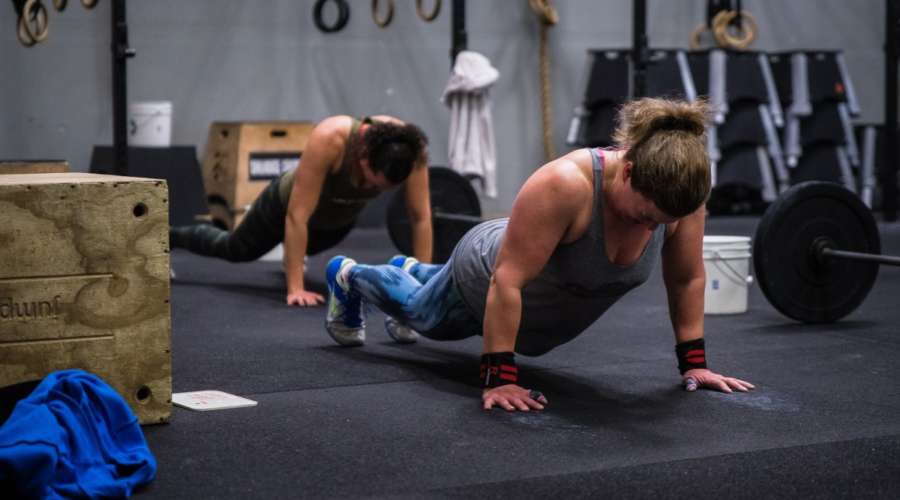
A push-up uses your body as resistance. The amount of your body weight supported by your arms changes with your position, and the exercise becomes harder or easier depending on the variation. A standard push-up may be too challenging for some beginners and too easy for people who can complete many controlled repetitions.
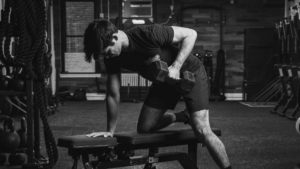
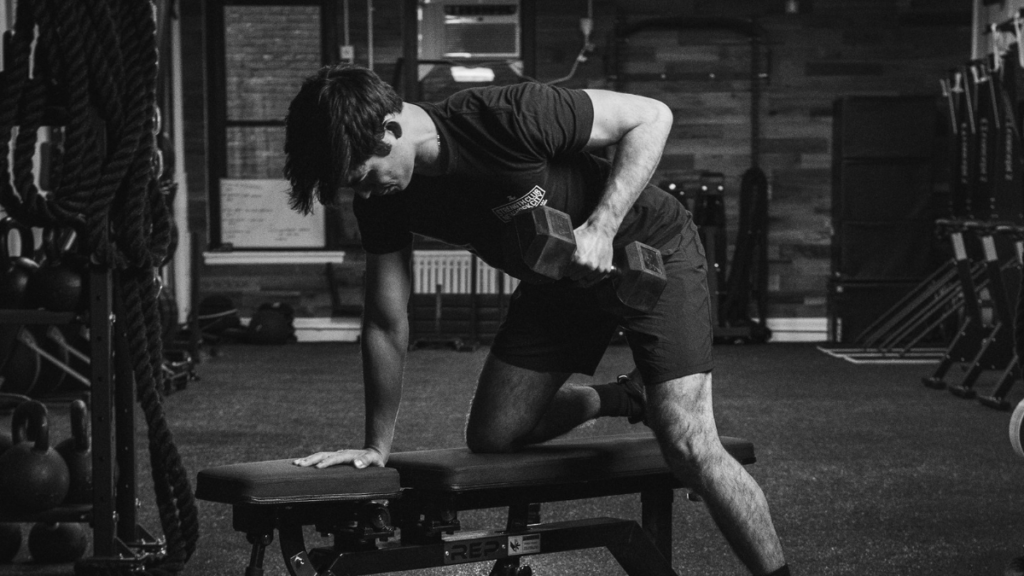
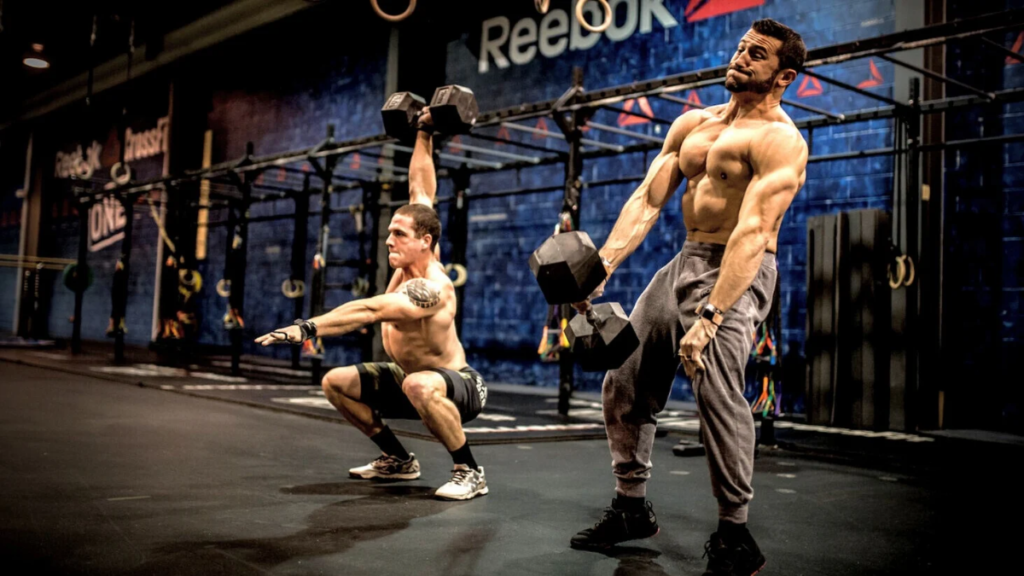
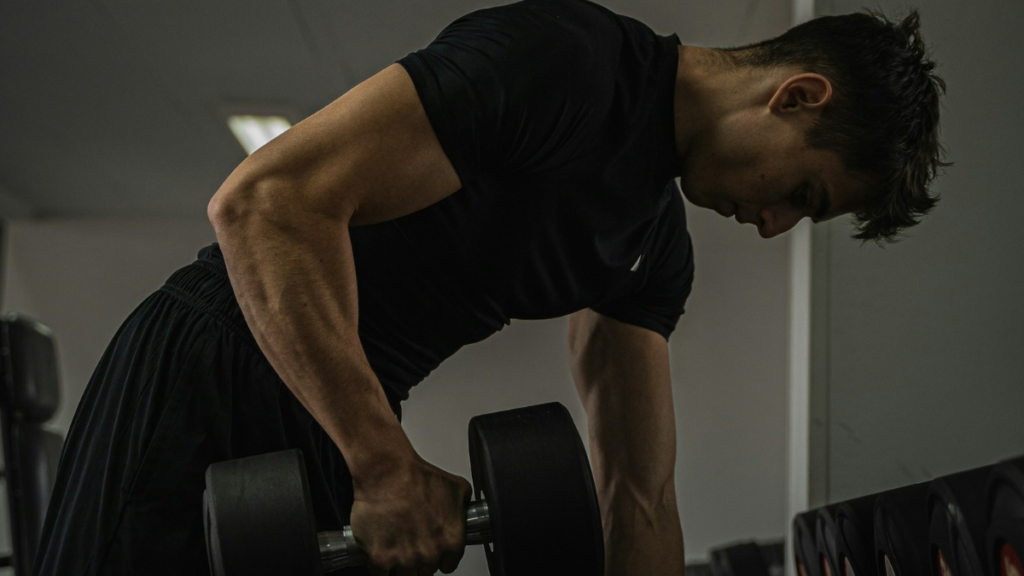
A dumbbell press lets you choose the load directly. You can add weight in small increments, change the angle of the bench, and move each arm independently. This can make it easier to adjust the exercise to your current strength and to keep the working range challenging as you get stronger.
What research says about push-ups and pressing
One eight week study compared push-ups with bench presses performed at a similar light load. The participants were 18 young men who trained twice a week. The push-up group used adjusted positions, including kneeling push-ups, so the exercise matched the intended load. Both groups increased chest muscle thickness, with similar average changes. This suggests that push-ups can stimulate chest growth when they are appropriately scaled and performed as a challenging training exercise.
That result should not be treated as proof that every push-up routine matches every pressing program. The study was small, lasted eight weeks, and compared push-ups with a barbell bench press, not a dumbbell press. It also involved young men who were not representative of every training population. The study offers encouraging evidence for push-ups, while leaving plenty of questions about different variations, training histories, and longer programs.
A separate study compared the movement and muscle activity of push-ups and bench presses across several loads in resistance trained participants. It found broadly similar movement patterns and muscle activity when the exercises were performed at comparable loads. This helps explain why both movements can train the chest effectively, but muscle activity during a single session does not prove that two exercises produce identical muscle growth over time.
Broader resistance training research also finds that muscle growth can occur across a range of loads. Heavier weights tend to be more useful for improving maximal strength, while lighter loads can still support hypertrophy when the sets are sufficiently challenging. In practice, this means that a set of push-ups does not need to resemble a heavy dumbbell press to contribute to chest growth.
When dumbbell presses have the advantage
Dumbbell presses are often easier to progress in a measurable way. If you can complete your target repetitions with good control, you can move to the next available dumbbell size. This gives you a clear way to increase the challenge without changing the exercise. With push-ups, progression may require a change in leverage, elevation, range of motion, or added resistance.
Dumbbells can also offer flexibility in how you position your hands and arms. Many lifters find a neutral or slightly turned grip comfortable, and each arm can follow a natural path. This may be useful if a fixed bar position does not feel comfortable. It does not mean dumbbells are automatically safer or better for everyone, but they give you more freedom to adjust the movement.
The main limitation is equipment. You need dumbbells and a bench or another stable surface. The weights can also become difficult to set up as they get heavier, especially when training alone. If you lack the equipment or space, push-ups are a practical alternative that can be trained almost anywhere.
When push-ups have the advantage
Push-ups require little equipment and are easy to include in a home workout. They also train you to keep your torso firm while your arms move, which requires work from the muscles that stabilize your body. That does not make push-ups a complete core workout, but maintaining a steady body position is part of the exercise.
Push-ups are easy to scale. Beginners can place their hands on a sturdy raised surface, such as a bench, to reduce the challenge. As strength improves, they can lower the hand position until they can perform floor push-ups. Stronger lifters can use a weighted vest, a resistance band, a slower lowering phase, or a more demanding variation.
The key is to choose a version that makes the set challenging without making your technique fall apart. If you can perform a very high number of repetitions while staying far from muscular fatigue, standard push-ups may no longer provide enough challenge for efficient training. Increasing the difficulty can help you keep the exercise productive.
How to make either exercise build your chest
Use a range of motion that you can control. During a push-up, lower your chest toward the floor while keeping your body in a steady line. During a dumbbell press, lower the weights under control and stop at a depth that feels comfortable for your shoulders. Do not force a deeper position if you feel sharp pain or lose control.

Choose a load or variation that lets you complete a useful set with good form. You do not have to reach the point where you cannot complete another repetition on every set. A systematic review found no clear requirement to train to momentary failure for muscle growth, although sets that finish close to failure can help ensure the muscle has worked hard enough. Stop when the next repetition would require a major change in technique.
Track your training so you can tell whether the challenge is increasing. For dumbbell presses, record the weight and repetitions. For push-ups, record the variation, hand position, and repetitions. When you can complete the planned repetitions comfortably, increase the weight or choose a harder push-up version.
Weekly training volume matters too. A systematic review found a general relationship between more weekly resistance training sets and greater muscle growth, although more is not automatically better for every person. Start with a manageable amount of chest training, recover between sessions, and add work gradually if your progress stalls and you are recovering well.
So, which builds a bigger chest?
If you have access to adjustable dumbbells and a bench, the dumbbell press is often the easier exercise to load and track over the long term. If you prefer training at home or have limited equipment, push-ups can build your chest when you choose a challenging variation and progress it over time.
3 Best Glute Exercises for Beginners in The Gym
For many people, the strongest plan is to use both. Dumbbell presses can provide a clear path for adding resistance, while push-ups offer a convenient way to add more chest work. You do not need both, though. Consistent training with one well chosen movement can be enough to make progress.
The answer is not that dumbbell presses always build a bigger chest, or that push-ups are always equal. The direct comparison evidence is limited, especially for dumbbells. What matters most is whether you can train the chest with controlled repetitions, enough effort, and a challenge that increases as you get stronger.
Key Takeaways
| Training question | Practical answer |
|---|---|
| Can push-ups build a bigger chest? | Yes. Choose a challenging variation and progress it over time. |
| Are dumbbell presses better? | They are often easier to load and track, but they are not automatically better for every lifter. |
| What does the direct research show? | A small eight week study found similar chest growth from appropriately scaled push-ups and light bench presses. |
| How hard should sets feel? | Finish with good form and close enough to fatigue that the set is challenging. |
| Do you need both exercises? | No. You can use either one, or combine them if that fits your training. |
References
- Grgic, J., Schoenfeld, B.J., Orazem, J. and Sabol, F. (2022). Influence of resistance training proximity-to-failure on skeletal muscle hypertrophy: a systematic review with meta-analysis. Sports Medicine, 52, pp. 745–763.
- Kikuchi, N. and Nakazato, K. (2017). Low-load bench press and push-up induce similar muscle hypertrophy and strength gain. Journal of Exercise Science & Fitness, 15(1), pp. 37–42.
- Schoenfeld, B.J., Ogborn, D. and Krieger, J.W. (2017). Dose-response relationship between weekly resistance training volume and increases in muscle mass: a systematic review and meta-analysis. Journal of Sports Sciences, 35(11), pp. 1073–1082.
- Schoenfeld, B.J., Grgic, J., Ogborn, D. and Krieger, J.W. (2017). Strength and hypertrophy adaptations between low- versus high-load resistance training: a systematic review and meta-analysis. Journal of Strength and Conditioning Research, 31(12), pp. 3508–3523.
- van den Tillaar, R. (2019). Comparison of kinematics and muscle activation between push-up and bench press. Sports Medicine International Open, 3(3), pp. E74–E81.