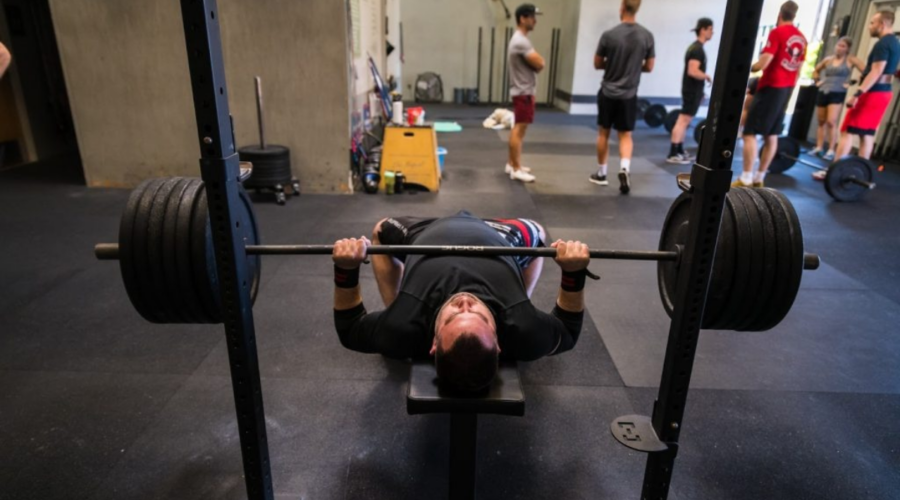


For beginners choosing between the bench press and chest flyes, the bench press is usually the better exercise to learn first. It trains the chest while also working the triceps and front shoulders, and it provides a clear way to track progress by adding repetitions or weight over time.
That does not mean chest flyes are ineffective. Both exercises can stimulate chest growth when they are performed with good technique and enough effort. A recent 10-week study found similar increases in pectoral muscle thickness from dumbbell bench presses and dumbbell flyes in recreationally trained men. However, research directly comparing the two exercises is limited, and that study did not test beginners.


For most new lifters, the best answer is to use the bench press as a main chest exercise and add flyes if they suit their training. The choice should also account for comfort, equipment, control, and the ability to progress consistently.
What the bench press and chest flyes train
The pectoralis major is the large muscle across the chest. It helps bring the upper arm across the body and contributes to pressing movements. The bench press trains this muscle alongside the triceps and anterior deltoids, which help extend the elbows and move the arms forward.
A chest fly is a single-joint exercise in which the arms move through a wide arc, with the elbows held slightly bent. The shoulder muscles bring the upper arms toward the midline, while the chest does much of the work. Flyes can be performed with dumbbells, cables, or a chest fly machine. The resistance feels different across these variations, so they are not perfectly interchangeable.
Neither exercise isolates the chest completely. The bench press involves more joints and supporting muscles, while the fly focuses more directly on bringing the arms together. That difference can affect how each exercise feels, how much weight a person can use, and how easy it is to maintain control.
What the research says about muscle growth
The most direct comparison available examined dumbbell bench presses and dumbbell flyes over 10 weeks. Twenty six recreationally trained men trained twice a week, and researchers measured pectoral muscle thickness at several locations. Both groups increased muscle thickness, with no meaningful difference between the exercises.
The study is useful because it measured changes after a training program rather than relying only on how much a muscle appeared to work during one workout. It also has important limits. The participants were not beginners, the study included only men, and the researchers compared dumbbell versions rather than every type of bench press or fly. The results suggest that both exercises can build chest muscle, but they do not prove that every beginner will respond identically.
Another study compared muscle activity during barbell bench presses and dumbbell flyes in resistance trained men. It found greater pectoral muscle activity during the bench press under the testing conditions. However, this was an acute electromyography study. It measured electrical activity during a session, not muscle growth over weeks or months. A difference in that signal does not establish that one exercise will build more muscle over time.
This distinction matters because exercise rankings based only on how much a muscle “activates” can be misleading. The best exercise is not automatically the one that produces the biggest reading in a single test. Long term growth depends on the training stimulus a person can repeat and progress, alongside adequate recovery and nutrition.
Why beginners often benefit from starting with the bench press
The bench press lets beginners train the chest with a movement pattern that can be loaded in small, measurable steps. A person can add a repetition, use a slightly heavier dumbbell, or make a small change to the barbell load when the current weight becomes manageable. Tracking that progress helps beginners see whether their training is becoming more challenging over time.
It also trains more than the chest. The triceps and front shoulders assist with each repetition, so the bench press can be an efficient choice for an upper body workout. That can be useful for someone with limited training time who wants to practice a foundational pressing movement.

The bench press does require practice. Beginners need to learn how to position themselves on the bench, control the weight, and use a comfortable range of motion. Starting with light dumbbells or a machine chest press can help someone learn the movement before using a barbell. A barbell is not required for chest growth.
The main advantage is not that pressing is proven to be inherently superior for chest hypertrophy. Rather, it is a practical first choice because it is easy to measure, can be performed in several stable variations, and develops pressing skill alongside the chest.
Where chest flyes fit
Chest flyes are a useful option for adding chest training without repeating another press. They use less elbow movement than the bench press and place the arms through a wide arc. Some beginners find cables or a chest fly machine easier to control than dumbbell flyes, especially while they are learning how to manage the stretched position.
Flyes can also suit people who do not want to lift heavy pressing loads or who find a particular pressing variation uncomfortable. That does not make flyes automatically safer for everyone. Dumbbell flyes can place a substantial stretch on the shoulders at the bottom of the movement, so beginners should use a manageable load and stop at a range they can control without discomfort.
3 Best Isolation Exercises for Wider Biceps
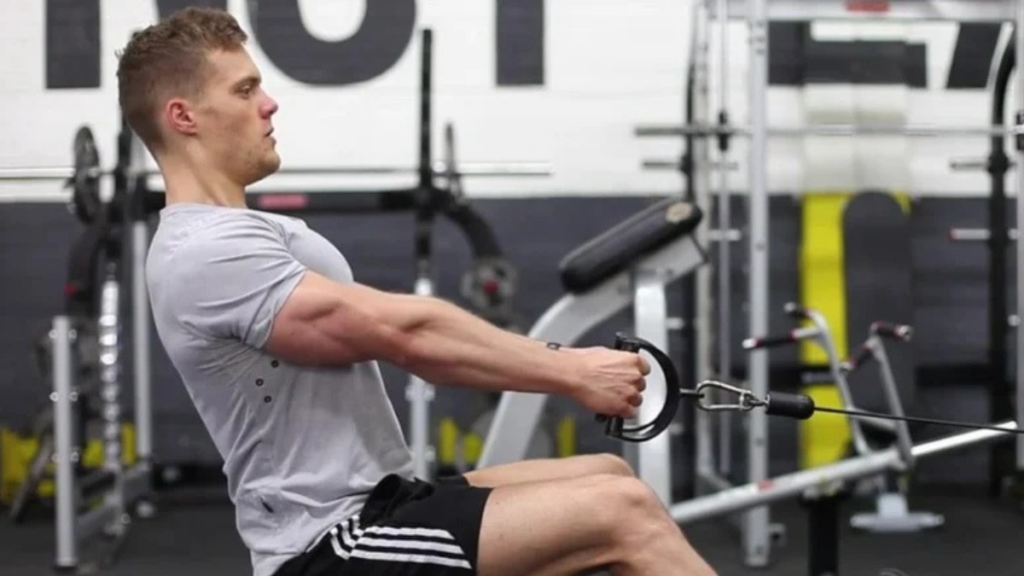
Cables and machines can provide a more consistent resistance through the movement than dumbbells, depending on the equipment. Beginners should choose the version that allows steady repetitions, a comfortable range of motion, and gradual progression. Sharp or increasing joint pain is a reason to stop and reassess the exercise rather than push through it.
How beginners can choose between them
If you are new to resistance training, begin with a pressing variation you can control. A machine chest press, dumbbell bench press, or barbell bench press can all be reasonable choices. Choose the one that feels stable, allows a comfortable range of motion, and fits the equipment available to you.
Add chest flyes if you want a second chest movement, prefer a different sensation, or need an alternative to more pressing. You do not need to include flyes simply because they are described as a “shaping” exercise. They do not sculpt a distinct chest shape; they train the pectoral muscles, as pressing does.
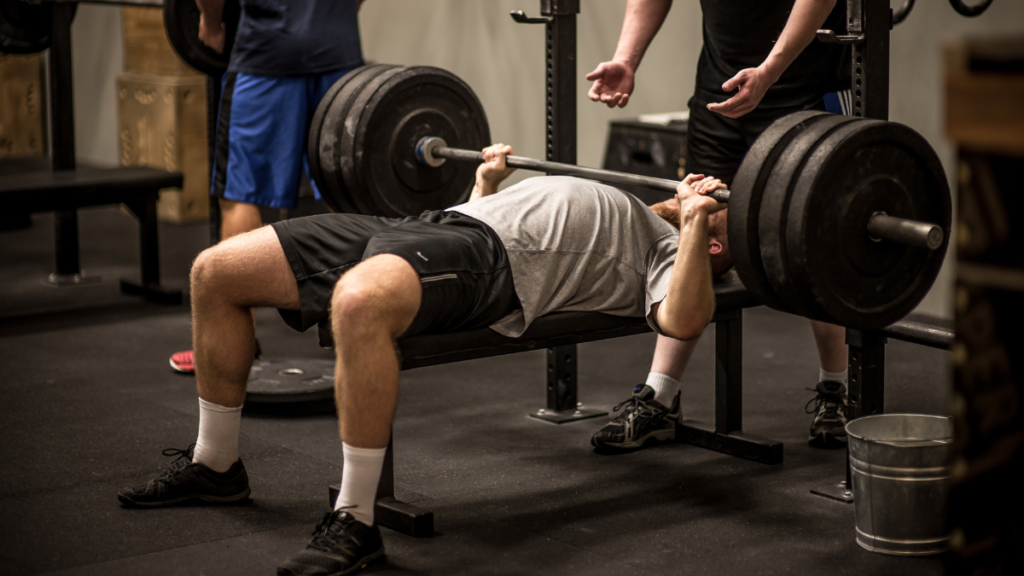
A sensible starting session could include two or three sets of a chest press and one or two sets of flyes. Train with a weight that lets you perform controlled repetitions while keeping good form. As you become more experienced, you can adjust your weekly number of sets based on how well you recover and whether your performance is improving.
Current resistance training evidence supports muscle growth across a broad range of loads when sets are sufficiently challenging. Beginners do not need to test their maximum strength or take every set to complete failure. They should focus on consistent practice, controlled repetitions, and gradual increases in repetitions or load when they can maintain technique.
A simple beginner approach
Train your chest once or twice each week as part of a balanced program that also covers the back, shoulders, arms, and lower body. If you train chest twice weekly, leave enough time between sessions to recover and repeat good quality work. More sessions are not automatically better if they reduce the quality of your training or make it difficult to recover.
Start with a press for two or three sets of about eight to twelve repetitions. Pick a load that makes the last few repetitions challenging while still allowing you to control the weight. If you can complete the top of your chosen repetition range across your sets with good form, increase the load slightly in a later session.
If you include flyes, use one or two sets of roughly ten to fifteen controlled repetitions. Keep a slight bend in your elbows and move through a comfortable range. Do not chase a deep stretch by letting the weights pull your shoulders into a position you cannot control.
These repetition ranges are practical starting points, not special numbers required for muscle growth. The current evidence indicates that multiple loads can build muscle. Beginners should prioritize a repeatable routine and sound technique over complicated programming.
So, which builds more muscle?
For beginners, the bench press is generally the stronger first choice because it is easy to track, trains several upper body muscles, and can be progressively loaded. Chest flyes can also build the pectorals and are a good complementary exercise or alternative when they feel more comfortable.
The limited direct evidence does not show a clear chest growth winner. One study found similar pectoral growth from dumbbell presses and dumbbell flyes in recreationally trained men, but more research is needed, especially in beginners and with other equipment variations.
If you enjoy both movements and can perform them comfortably, use both. If you prefer one, choose it and train it consistently. Muscle growth is more likely to follow a well controlled exercise that you can repeat and gradually progress than a movement selected because it is supposedly the one perfect chest builder.
Key Takeaways
| Question | Answer |
|---|---|
| Which exercise should beginners usually learn first? | A bench press variation is a practical starting point because it is easy to track and progressively load. |
| Are chest flyes effective for building muscle? | Yes. Research suggests dumbbell flyes can stimulate pectoral growth when trained consistently. |
| Does the bench press definitely build more chest muscle? | Current direct evidence is limited and does not establish a clear winner. |
| Should beginners use both exercises? | They can use both if they are comfortable and recover well, but both are not essential. |
| What matters most? | Controlled repetitions, consistent training, sufficient effort, and gradual progression. |
References
- Currier, B.S., D’Souza, A.C., Singh, M.A.F., Lowisz, C.V., Rawson, E.S., Schoenfeld, B.J., Smith-Ryan, A.E., Steen, J.P., Thomas, G.A., Triplett, N.T., Washington, T.A., Werner, T.J. and Phillips, S.M. (2026) ‘Resistance training prescription for muscle function, hypertrophy, and physical performance in healthy adults: An overview of reviews’, Medicine & Science in Sports & Exercise, 58(4), pp. 851–872.
- Dell’Avanzi, F.G. et al. (2026) ‘Dumbbell bench press and dumbbell fly elicit similar pectoralis major muscle hypertrophy in recreationally-trained individuals’, manuscript.
- Schoenfeld, B.J., Grgic, J., Ogborn, D. and Krieger, J.W. (2017) ‘Strength and hypertrophy adaptations between low- versus high-load resistance training: A systematic review and meta-analysis’, Journal of Strength and Conditioning Research, 31(12), pp. 3508–3523.
- Schoenfeld, B.J., Ogborn, D. and Krieger, J.W. (2017) ‘Dose-response relationship between weekly resistance training volume and increases in muscle mass: A systematic review and meta-analysis’, Journal of Sports Sciences, 35(11), pp. 1073–1082.
- Solstad, T.E., Andersen, V., Shaw, M., Hoel, E.M., Vonheim, A. and Saeterbakken, A.H. (2020) ‘A comparison of muscle activation between barbell bench press and dumbbell flyes in resistance-trained males’, Journal of Sports Science and Medicine, 19(4), pp. 645–651.