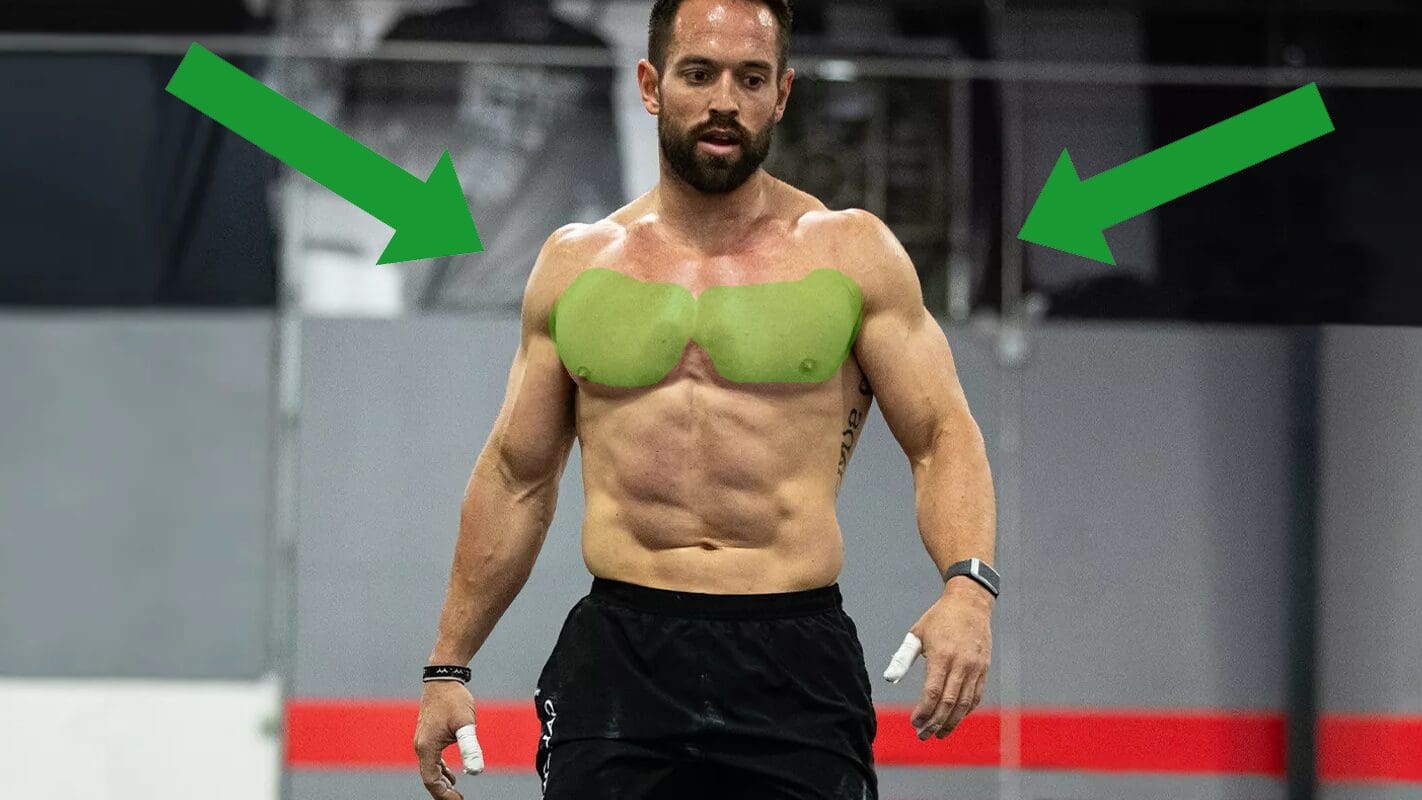


The “lower pecs” are not a separate muscle you can train in isolation. They are part of the pectoralis major, a large chest muscle with fibers that run in different directions. Changing the angle of a press can shift how much different regions of the chest contribute, but no exercise switches the rest of the chest off. Building a fuller lower chest means training the pectoralis major consistently, with movements that let you press or bring your arms down and across your body.
The three exercises below are beginner friendly because they can be adjusted to match your strength and equipment. A flat dumbbell press trains the chest through a stable pressing pattern. A decline push-up changes the direction of your body relative to the floor. A high-to-low cable fly lets you practice bringing your arms down and together with a lighter load. Each can fit into a chest workout without making lower pec training more complicated than it needs to be.


What to Know About Lower Pec Training
The pectoralis major has a clavicular portion near the collarbone and a larger sternocostal portion that attaches along the sternum and ribs. Researchers have found that bench angle can affect the electrical activity measured in different portions of the muscle. For example, flat bench pressing produced greater activity in the lower and middle portions than steeper incline pressing in one study. This kind of research measures muscle activity during exercise, however, rather than proving which exercise produces the most long term muscle growth.

That distinction matters because an exercise that produces more electrical activity in a small laboratory study is not automatically the best choice for every beginner. A useful exercise should also feel comfortable, allow you to control the movement, and give you a practical way to increase the challenge over time. You do not need to find a special movement that isolates the lower edge of the chest.
Start with a manageable load and learn the movement before adding weight. Use a range of motion that feels controlled and comfortable at your shoulders. If you have ongoing shoulder or chest pain, get advice from a qualified health professional before training through it.
1. Flat Dumbbell Bench Press
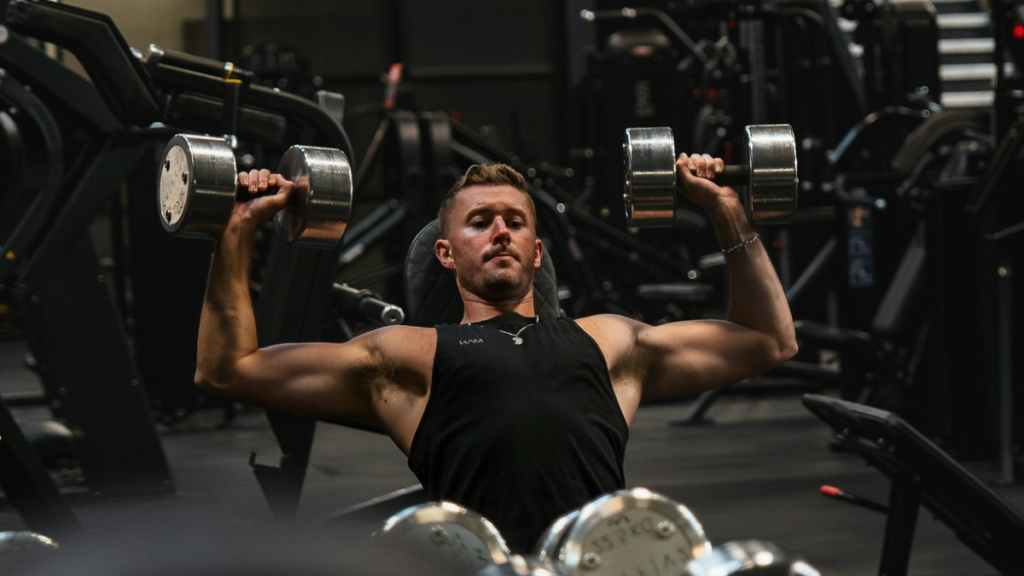
The flat dumbbell bench press is a good place to start because it trains the chest with a simple horizontal pressing motion. It also allows each arm to move independently, which can feel more natural than using a barbell. Research comparing bench angles has found that a flat press can involve the sternocostal and lower portions of the pectoralis major, while the exercise also trains the triceps and front of the shoulders.
How to Do It
Sit on a flat bench with a dumbbell resting on each thigh. Lie back and bring the weights to the sides of your chest, keeping your feet planted on the floor. Your wrists should stay stacked above your elbows, with your elbows slightly below shoulder level if that position feels comfortable.
Press the dumbbells upward until your arms are extended without forcefully locking your elbows. Bring the weights together only as far as you can while keeping control. Lower them slowly until you feel a comfortable stretch across your chest, then press again. Keep your shoulder blades gently drawn back against the bench and avoid bouncing the weights at the bottom.
3 Best Isolation Exercises for Wider Biceps
Choose a pair of dumbbells that lets you complete about 8 to 12 controlled repetitions. Stop the set when you think you could perform only a few more repetitions with good form. As the movement becomes easier, add a small amount of weight or perform an additional repetition while keeping the same control.
If setting up on a bench feels awkward, use a chest press machine until you are comfortable with the pressing pattern. Machines can provide a stable option, and consistency with a manageable exercise is more useful than forcing yourself into a movement you cannot yet control.
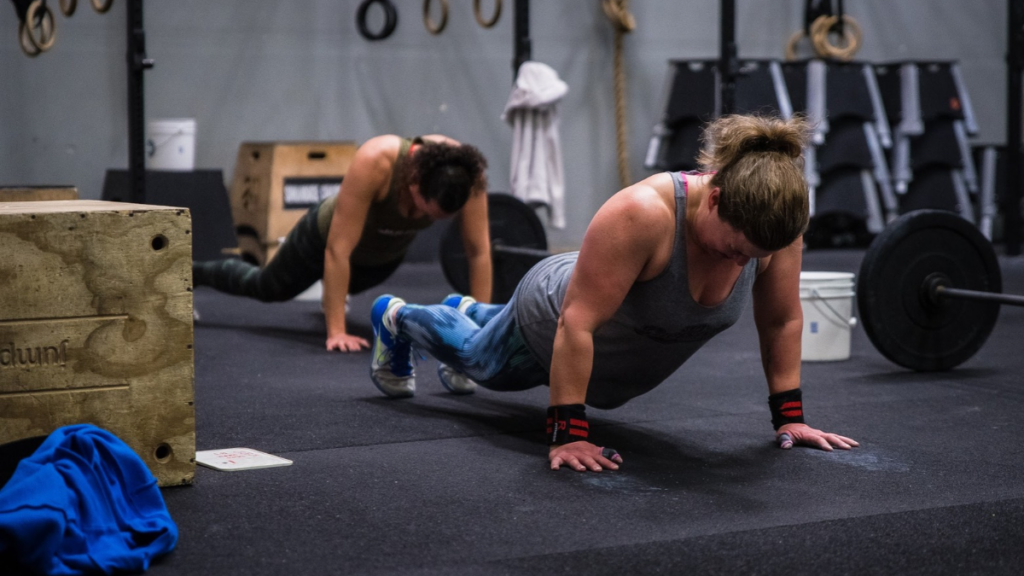
2. Decline Push-Up
A decline push-up is a bodyweight variation in which your feet rest on a low, stable surface and your hands stay on the floor. This position changes the angle of your body and makes the movement more challenging than a standard push-up for many people. Bench angle studies suggest that the way the body is positioned can change which parts of the pectoralis major contribute most, but direct research on long term lower pec growth from decline push-ups is limited.
How to Do It
Place your hands a little wider than shoulder width on the floor and set your feet on a low step or sturdy bench. Keep your body in a straight line from your shoulders through your hips to your ankles. Brace your midsection so that your lower back does not sag.
Bend your elbows and lower your chest toward the floor. Keep your elbows at a comfortable angle from your torso rather than flaring them straight out to the sides. Pause when your chest is close to the floor or when you reach the deepest position you can control without discomfort. Push the floor away to return to the start.
Start with a small foot elevation. Raising your feet higher can make the exercise harder, so use a height that lets you keep a steady body position. If you cannot yet complete several controlled repetitions, do push-ups with your hands elevated on a bench or counter. That makes the exercise easier while allowing you to practice the same basic pressing action.
Try 2 or 3 sets of 6 to 12 repetitions. The goal is to finish each set with good technique. When you can complete the top end of your chosen repetition range comfortably, make the movement slightly harder by using a lower hand support or a modestly higher foot position.
3. High-to-Low Cable Fly
A high-to-low cable fly trains the chest by bringing your arms down and inward. It is a useful lighter movement after pressing because it lets you focus on controlling your arms rather than pushing a heavy load. The chest contributes to bringing the arms across the front of the body, and cable fly variations have been studied as ways to train the pectoralis major.
Research on short term muscle activity does not establish that this specific cable path produces more lower pec growth than other chest exercises.
How to Do It
Set both cable pulleys above shoulder height and choose a light load. Stand in the middle of the machine with one foot slightly in front of the other. Hold a handle in each hand and take a small step forward so the cables remain under tension.
Keep a slight bend in your elbows throughout the movement. Bring your hands down and toward each other in front of your lower chest or upper abdomen. Think of drawing a wide arc rather than turning the movement into a press. Pause briefly when your hands meet or come close, then return slowly until you feel a comfortable stretch across your chest.
Keep your torso still and avoid using a strong forward lean or swinging your arms. If you feel the movement mostly in your shoulders, reduce the weight and shorten the range until you can control it comfortably. Perform 2 or 3 sets of about 10 to 15 repetitions.
A cable fly is optional. If your gym does not have a cable station, you can use a resistance band anchored securely above shoulder height. Check that the anchor is stable before starting, and keep the resistance light enough to maintain control.
How to Put These Exercises Into a Beginner Workout
You do not need to perform all three exercises every time you train chest. A simple session could include the flat dumbbell bench press and one of the other movements. For example, perform 3 sets of the dumbbell press followed by 2 sets of decline push-ups or cable flies. If you want to use all three, keep the number of sets modest and pay attention to how your shoulders and chest feel during and after training.

Train your chest consistently and give yourself time to recover between challenging sessions. Muscle growth depends on the training program as a whole, not on a single exercise or a special angle. Increase the weight or repetitions gradually when you can complete your current workload with controlled form. You do not need to take every set to the point where you cannot complete another repetition. Research reviews have not found that reaching momentary failure is necessary for muscle growth.
Give the routine several weeks before deciding whether it is working. Keep a simple record of the exercise, weight, and repetitions you complete. If you are gradually doing more work with good technique, you have a practical sign that your training is progressing. Training the chest as a whole, rather than chasing a perfectly isolated lower pec exercise, is a straightforward way for beginners to build a stronger and more muscular chest.
Key Takeaways
| Topic | Takeaway |
|---|---|
| Lower pecs | They are part of the pectoralis major, not a separate muscle that can be isolated completely. |
| Beginner exercises | Start with the flat dumbbell bench press, decline push-up, and high-to-low cable fly. |
| Technique | Use a comfortable range of motion and controlled repetitions. |
| Progress | Add repetitions or a small amount of resistance when your form remains steady. |
| Effort | Sets can be challenging without reaching the point where you cannot complete another repetition. |
References
- Coratella, G., Tornatore, G., Longo, S., Esposito, F. and Cè, E. (2020) ‘Specific prime movers’ excitation during free-weight bench press variations and chest press machine in competitive bodybuilders’, European Journal of Sport Science, 20(6), pp. 869–878.
- de Souza, L.M.L., Chaves, S.F.N., Lima, F.V., Gentil, P., Steele, J., Fisher, J.P. and Vilela, G. (2020) ‘Effect of five bench inclinations on the electromyographic activity of the pectoralis major, anterior deltoid, and triceps brachii during the bench press exercise’, Journal of Functional Morphology and Kinesiology, 5(4), 72.
- Refalo, M.C., Helms, E.R., Trexler, E.T., Haff, G.G. and Hamilton, D.L. (2023) ‘Influence of resistance training proximity-to-failure on skeletal muscle hypertrophy: a systematic review with meta-analysis’, Sports Medicine, 53(3), pp. 649–665.