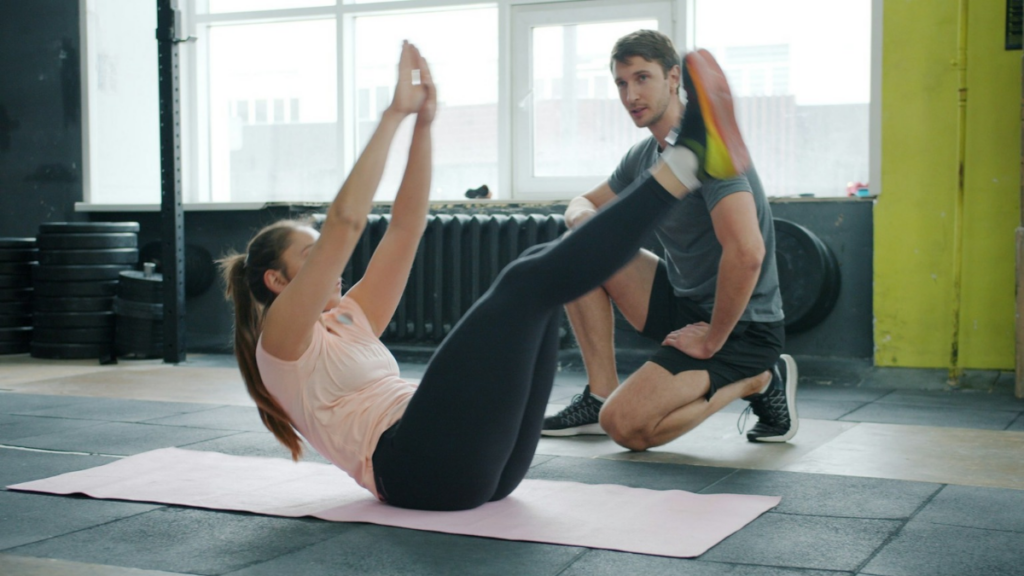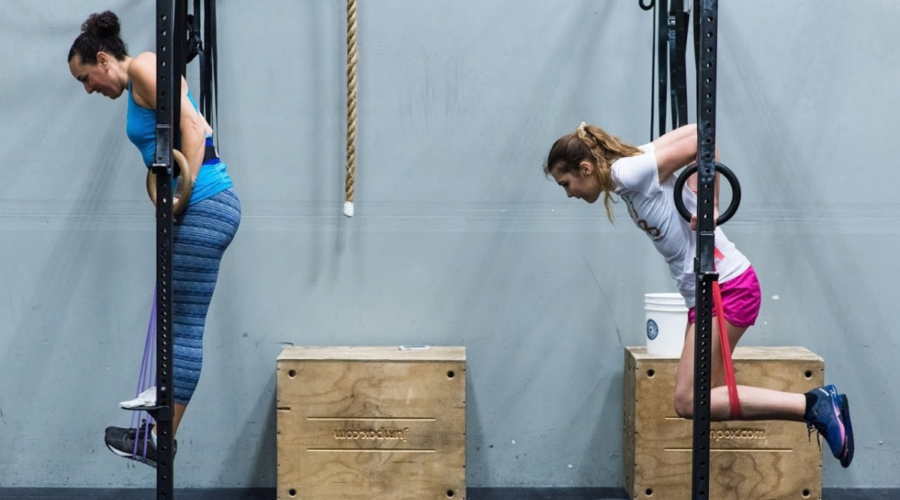


If you want bigger arms, both dips and push-ups can help. Each is a bodyweight exercise that involves straightening your elbows, which means your triceps do a lot of work. The key difference is that dips can load the triceps more heavily as you progress, while push-ups are usually easier to adjust to your current strength and easier to practice with consistent form.
There is no long term study directly comparing dips with push-ups for triceps growth. That means science cannot tell us that one exercise will always build bigger arms. The best choice depends on which version you can perform safely, make challenging over time, and recover from well.


What Is the Difference Between Dips and Push-Ups?
A dip starts with your arms supporting your body. You bend your elbows to lower yourself, then straighten them to rise. Dips can be done with your hands on a bench behind you, on parallel bars, or on rings. These versions differ in how much body weight you support, how stable you are, and how far your shoulders move.
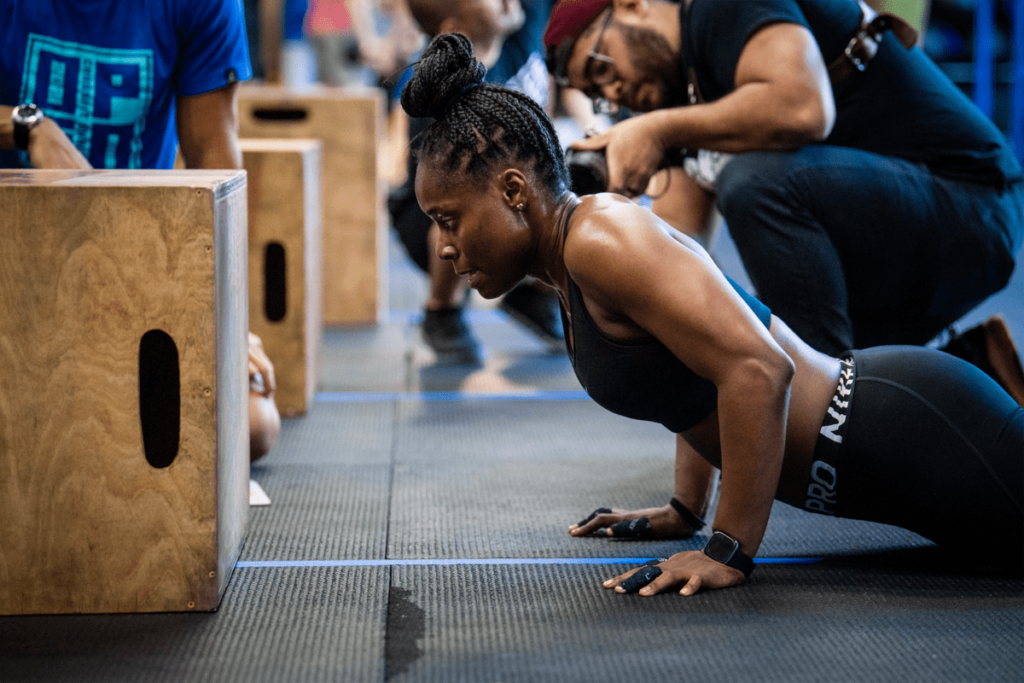
A push-up starts with your hands on the floor and your body held in a straight line. You lower your chest by bending your elbows, then press the floor away to return to the starting position. Your chest and shoulders help with the press, as do your triceps.
Both movements train more than one muscle. Neither is a triceps isolation exercise, such as a cable pushdown or an overhead extension. Still, you can shift the challenge toward your triceps by choosing a suitable variation and keeping your technique controlled.
Which Exercise Puts More Work on the Triceps?
The answer depends on the version. In a small study comparing bench, bar, and ring dips, researchers found differences in muscle activity and movement. Bar and ring dips produced higher peak triceps activity than bench dips in the 13 experienced men who took part. Bench dips also required more shoulder extension than the other versions. The study measured muscle activity during a few repetitions, not muscle growth over time, so it cannot establish which dip builds the most triceps size.
Push-ups can also challenge the triceps, especially when your hands are closer together. A study of different push-up hand positions found greater triceps activity with a narrow hand position than with a wide one. That does not mean your hands need to touch or that every beginner should start with diamond push-ups. A hand position that feels comfortable and lets you use controlled, pain free repetitions is a better place to begin.
A separate study compared push-ups with bench presses in resistance trained participants. It found lower triceps muscle activity during the push-up concentric phase than during the bench press. However, another study found that trained men had similar upper body muscle activation during push-ups and bench presses when the exercises used comparable loads. These results show why acute muscle activity measurements should not be treated as a simple ranking of exercises. They also do not tell us directly whether dips or push-ups produce more triceps growth.
Which One Is Better for Building Bigger Arms?
For a beginner who can already perform them comfortably, parallel bar dips may provide a greater challenge than standard push-ups because you support your body through your arms. They can become harder as you gain strength, and eventually you can add external weight. But being harder does not automatically make an exercise better. If you cannot control the lowering phase or the movement causes shoulder discomfort, dips are not a useful choice for you right now.
Push-ups are often easier to scale. You can place your hands on a sturdy elevated surface to reduce the challenge, use a standard floor push-up when that becomes manageable, and later make the exercise harder by elevating your feet or adding resistance. A small eight week study in untrained young men found that push-up training, adjusted to match the load of low load bench press training, increased triceps muscle thickness. The groups showed similar changes. This supports push-ups as a possible muscle building exercise, but the study did not compare push-ups with dips and involved only 18 men.
The clearest practical answer is to choose the exercise you can perform with good technique and progress gradually. If you can do controlled dips without pain and can make them challenging, they can be a strong triceps focused option. If dips feel uncomfortable or are too difficult, push-ups are a sensible way to build pressing strength and train your triceps while you develop your base.
Do Bench Dips and Bar Dips Feel the Same?
No. A bench dip and a parallel bar dip are different exercises, even though both involve bending and straightening your elbows while your hands support you. During a bench dip, your hands are behind your torso, and your shoulders move into a relatively extended position as you lower. In the study comparing dip variations, bench dips required greater shoulder extension than bar or ring dips. The researchers cautioned that this range of motion may be a concern, particularly for people with a history of shoulder pain or injury.
That finding is not proof that bench dips injure everyone. The study involved a small group of experienced men and measured movement and muscle activity, not injury rates. Still, it is a reason to avoid forcing a deep stretch at the bottom. If a dip produces shoulder pain, stop and try a different exercise or a more manageable variation.
Bar dips are harder for many beginners because they require you to support more of your body weight through your arms. If you cannot lower and rise without swinging or losing control, use an assisted dip machine, resistance band, or a higher hand position that lets your feet help. Rings demand extra balance and control, so they are usually not the easiest place to learn the movement.
How Should Beginners Train for Triceps Growth?
Start with a version of the movement that allows you to complete controlled repetitions. For push-ups, use an elevated surface if floor repetitions are too difficult. For dips, use assistance if you cannot control your body weight. Lower yourself only as far as you can maintain a comfortable shoulder position, and keep the movement smooth rather than dropping quickly.
Choose a number of repetitions that makes the final part of each set challenging while your form remains consistent. You do not need to force every set until you cannot complete another repetition. A 2024 meta analysis found that muscle growth tended to be greater when sets ended closer to failure, but the exact relationship was uncertain. For a beginner, leaving a small number of good repetitions in reserve is a practical way to work hard without turning every set into a test.
Progress gradually. When you can complete your chosen repetitions with steady form, add a repetition, choose a slightly harder variation, or add a small amount of resistance. Keeping a simple record of your sets and repetitions can help you see whether the exercise is becoming more challenging over time.
The Famous 5 Exercises for Beginners to Get A Muscular Upper Body
Weekly training volume also matters. A systematic review and meta analysis found a dose response relationship between weekly resistance training sets and muscle growth across the studies it examined. That does not mean beginners should immediately do a large number of sets. Start with a manageable amount, allow time to recover, and add work only if you are recovering well and continuing to improve.
If bigger arms are your main goal, remember that the triceps are only one part of the picture. Push-ups and dips train the back of your upper arm, but arm size also depends on the biceps and other muscles. A balanced program that includes pulling exercises and direct arm work can train more of the muscles that contribute to the appearance of your arms.
Verdict: Dips or Push-Ups?
Dips may offer a tougher triceps challenge once you have the strength and control to perform them comfortably. Push-ups are easier to scale and have direct evidence supporting their use for building triceps muscle, although the available study compared them with bench presses, not dips.
For most beginners, the best starting point is the exercise that feels comfortable and allows steady progress. Begin with an easier push-up variation if standard push-ups are too hard. Try assisted dips if you want to learn the movement, and avoid chasing depth if your shoulders feel uncomfortable. You can build bigger arms with either exercise when you train consistently, use a suitable level of difficulty, and increase the challenge over time.
Key Takeaways
| Topic | Takeaway |
|---|---|
| Best exercise for everyone | There is no direct long term study proving that dips or push-ups build more triceps muscle. |
| Dips | Bar and ring dips produced higher peak triceps activity than bench dips in a small study of experienced men. |
| Push-ups | Push-ups can build triceps muscle when adjusted to a challenging load and performed consistently. |
| Beginner choice | Start with the variation you can perform with control and without shoulder pain. |
| Progress | Gradually add repetitions, resistance, or a harder variation as your strength improves. |
References
- Alizadeh, S., Rayner, M., Mahmoud, M.M.I. and Behm, D.G. (2020) ‘Push-ups vs. bench press differences in repetitions and muscle activation between sexes’, Journal of Sports Science and Medicine, 19(2), pp. 289–297.
- Cogley, R.M., Archambault, T.A., Fibeger, J.F., Koverman, M.M., Youdas, J.W. and Hollman, J.H. (2005) ‘Comparison of muscle activation using various hand positions during the push-up exercise’, Journal of Strength and Conditioning Research, 19(3), pp. 628–633.
- Kikuchi, N. and Nakazato, K. (2017) ‘Low-load bench press and push-up induce similar muscle hypertrophy and strength gain’, Journal of Exercise Science and Fitness, 15(1), pp. 37–42.
- McKenzie, A., Crowley-McHattan, Z., Meir, R., Whitting, J. and Volschenk, W. (2022) ‘Bench, bar, and ring dips: Do kinematics and muscle activity differ?’, International Journal of Environmental Research and Public Health, 19(20), 13211.
- Robinson, Z.P., Pelland, J.C., Remmert, J.F., Refalo, M.C., Jukic, I., Steele, J. and Zourdos, M.C. (2024) ‘Exploring the dose–response relationship between estimated resistance training proximity to failure, strength gain, and muscle hypertrophy: A series of meta-regressions’, Sports Medicine, 54, pp. 2209–2231.
- Schoenfeld, B.J., Ogborn, D. and Krieger, J.W. (2017) ‘Dose-response relationship between weekly resistance training volume and increases in muscle mass: A systematic review and meta-analysis’, Journal of Sports Sciences, 35(11), pp. 1073–1082.