


The first place almost all new lifters look when it comes to bulking up their chest is the bench press. This is an excellent way to build strength and muscle, but there are many other factors that you need to know, and apply, if you want to really succeed.
If you want to transform your physique efficiently without wasting months on ineffective training, exercises and programming, you need to understand the underlying mechanics of muscle growth. You also need to follow these secrets.
Let’s find out what will actually work for you.
The Physiology of Pec Development
To build a muscular chest, you first need to understand what you are trying to stimulate. The pectoralis major is a large fan shaped muscle with two primary heads. The clavicular head sits at the upper portion near your collarbone, while the larger sternocostal head makes up the mid and lower regions. Beneath the pectoralis major lies the pectoralis minor, a smaller triangular muscle that helps stabilize the shoulder blade.

Muscle growth, scientifically referred to as hypertrophy, relies heavily on mechanical tension. Mechanical tension occurs when a muscle contracts against resistance while generating force. When you expose muscle fibers to high mechanical tension, special cellular sensors trigger a cascade of biological responses. This signaling pathway increases muscle protein synthesis, causing individual muscle fibers to repair themselves thicker and stronger over time.
For beginners, maximizing mechanical tension is not simply a matter of loading up a barbell. If your movement path is inefficient, secondary muscle groups such as the anterior deltoids and triceps brachii will gladly steal the workload. Learning how to direct tension straight into the pectoral fibers is the true foundation of chest development.
Secret 1: Harness Mechanical Tension Over Heavy Ego Lifting
Many beginners make the classic mistake of focusing solely on the total weight written on the side of the dumbbell or barbell. They bounce heavy weights off their sternum using momentum and aggressive hip drives. While this strategy might look impressive to an untrained eye, it drastically reduces the mechanical tension experienced by the target muscle.
When you drop a weight quickly, gravity does the work for you during the lowering phase. Muscle fibers experience peak tension when they are forced to control resistance slowly. By taking control of the weight and maintaining continuous tension throughout every single rep, you force your pectoralis major to do the actual mechanical work.

Controlling the speed of your repetitions, often called tempo training, ensures that the muscle stays under tension for an adequate duration. Emphasizing a controlled lowering phase maximizes muscle fiber recruitment without relying on joint strain.
Secret 2: Master Scapular Retraction to Isolate the Pecs
If you complete a chest workout and only feel a deep burning sensation in the front of your shoulders, your setup form is missing a crucial mechanical step. Your pectoral muscles attach from your sternum and clavicle to your upper arm bone. To allow these fibers to stretch and contract fully, your shoulder blades must remain fixed in a stable position.
Scapular retraction is the act of pulling your shoulder blades back and down, as if trying to pinch a pencil between them. Holding this position against the bench creates a stable structural platform. It elevates your ribcage slightly and places your chest in a dominant position over your shoulders.

Without proper scapular retraction, your shoulder joint rolls forward as you lower the weight. This mechanical shift shifts the force vector directly onto the delicate anterior deltoids and rotator cuff tendons. Locking your shoulder blades down protects your joints while keeping peak mechanical stress right on the pectoral muscles.
Secret 3: Prioritize the Stretch Position
For decades, lifters believed that the squeeze at the top of a chest press was the most vital part of the rep. Modern exercise physiology reveals a very different truth. The bottom position of a movement, where the target muscle is fully lengthened under load, is actually the most powerful driver of muscle hypertrophy.
This physiological phenomenon is known as stretch mediated hypertrophy. When muscle fibers are stretched while simultaneously producing force, internal structural proteins experience significant strain. This unique mechanical stimulus induces robust cellular signals for growth.
To capitalize on stretch mediated hypertrophy, focus on exercises that allow a deep, comfortable range of motion. Dumbbells and cable crossovers allow your hands to travel further back past the torso compared to a rigid straight barbell. Pausing briefly at the bottom of each rep eliminates momentum and forces your pectorals to initiate the upward drive directly from a lengthened state.
| Exercise Type | Range of Motion Quality | Stretch Level | Peak Contraction |
|---|---|---|---|
| Barbell Bench Press | Moderate | Moderate | Moderate |
| Dumbbell Press | High | High | High |
| Cable Flyes | High | Maximum | Maximum |
| Parallel Bar Dips | Moderate to High | High | Moderate |
Secret 4: Adjust Angles for Total Pectoral Coverage
Because the pectoralis major has fibers running in multiple directions, training flat on your back only addresses part of the muscle. The upper portion of the chest, or the clavicular head, has a distinct line of pull that aligns with incline movements.
Setting an adjustable bench to a mild incline between thirty and forty five degrees shifts the direction of resistance. This angle aligns the force directly with the upper chest fibers, ensuring balanced growth across the entire upper torso. Moving too high, such as a sixty degree incline, shifts the emphasis away from the chest and onto the shoulders.

Conversely, flat and slight decline angles target the larger sternocostal head. A well rounded training plan incorporates multiple angles over time to build uniform muscle density from top to bottom.
Secret 5: Train with Optimal Hypertrophy Volume
A common beginner trap is doing far too many exercises in a single session. Blasting your chest with twenty sets on a single day creates extreme muscle damage and systemic fatigue. When damage is too severe, your body spends all its energy repairing broken tissue rather than adding new muscle mass.
Scientific research shows that weekly training volume is the primary driver of hypertrophy, but there is a clear upper limit to what you can recover from. Beginners achieve exceptional results with a moderate volume of high quality sets performed close to muscular failure.
Instead of spending hours in the gym once a week, aim for a manageable volume spread out over multiple sessions. Keeping sets high in quality and low in junk fatigue optimizes muscle protein synthesis while keeping your joints fresh.
Secret 6: Distribute Frequency for Faster Growth
Training a muscle group only once every seven days, often called a body part split, is a slow path to muscular development. After a hard chest session, muscle protein synthesis remains elevated for roughly twenty four to forty eight hours before returning to baseline levels.
If you only train your chest on Mondays, your muscles spend the majority of the week in a dormant state. By splitting your total weekly volume across two separate days, such as Monday and Thursday, you double the number of growth windows triggered throughout the month.
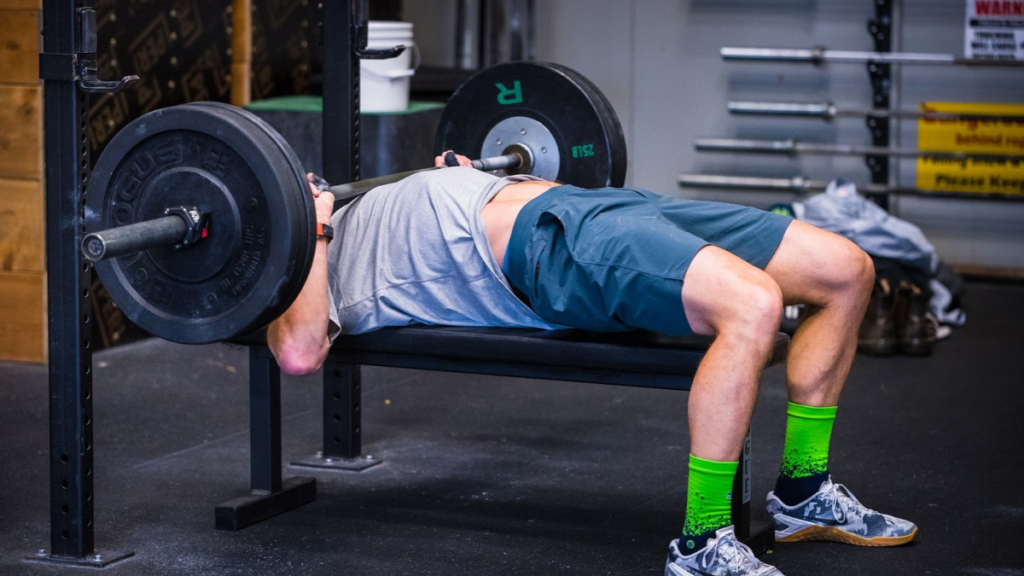
Training twice per week also allows you to perform every set with higher performance. Pushing heavy dumbbells when your muscles are fresh yields far superior mechanical tension compared to grinding through sets when you are already exhausted at the end of a long workout.
Secret 7: Apply Systematic Progressive Overload
Your body is an extraordinarily adaptable machine that conserves energy whenever possible. It will not build new, energy demanding muscle mass unless it is forced to adapt to an increasing challenge over time. This foundational principle is called progressive overload.
CrossFit – A Good Or Bad Way to Burn Body Fat and Get Ripped?
Progressive overload does not mean adding heavy weight to the bar every single workout. For a beginner, progression can take many forms. You can add a single repetition to your sets, improve your execution tempo, or shorten your rest intervals slightly while keeping the weight identical.
Tracking your workouts in a journal or phone app is essential. By logging your weights, sets, and repetitions, you can ensure that you are constantly demanding slightly more work from your muscles week after week. Consistent, incremental improvements compound into massive physical changes over a few months.
Key Takeaways
| Principle | Primary Focus | Practical Action |
|---|---|---|
| Mechanical Tension | Controlled Execution | Lower weights slowly under continuous muscle control |
| Scapular Retraction | Shoulder Stability | Pull shoulder blades back and down before every set |
| Stretch Position | Lengthened Load | Pause briefly at the bottom range of motion |
| Angle Variation | Balanced Growth | Combine incline and flat pressing movements |
| Training Frequency | Synthesis Windows | Divide your weekly chest training into two sessions |
| Progressive Overload | Systematic Adaptation | Track reps and load to increase work over time |
References
- American College of Sports Medicine, 2009. American College of Sports Medicine position stand. Progression models in resistance training for healthy adults. Medicine and Science in Sports and Exercise, 41(3), pp.687-708.
- Dankel, S.J., Mattocks, K.T., Jessee, M.B., Buckner, S.L., Mouser, J.G., Counts, B.R., Laurentino, G.C. and Loenneke, J.P., 2017. Do frequencies of resistance training affect the degree of muscle hypertrophy consisting of equalised volume? Sports Medicine, 47(3), pp.377-385.
- Hackett, D.A., Johnson, N.A. and Chow, C.M., 2013. Training practices and ergogenic aids used by male bodybuilders. Journal of Strength and Conditioning Research, 27(6), pp.1609-1617.
- Schoenfeld, B.J., Ogborn, D. and Krieger, J.W., 2016. Effects of resistance training frequency on measures of muscle hypertrophy: a systematic review and meta-analysis. Sports Medicine, 46(11), pp.1689-1699.
- Warneke, K., Freund, P.A. and Schiemann, S., 2022. Long-lasting stretching induces muscle hypertrophy: a meta-analysis of animal studies. Journal of Science in Sport and Exercise, 5(4), pp.289-301.