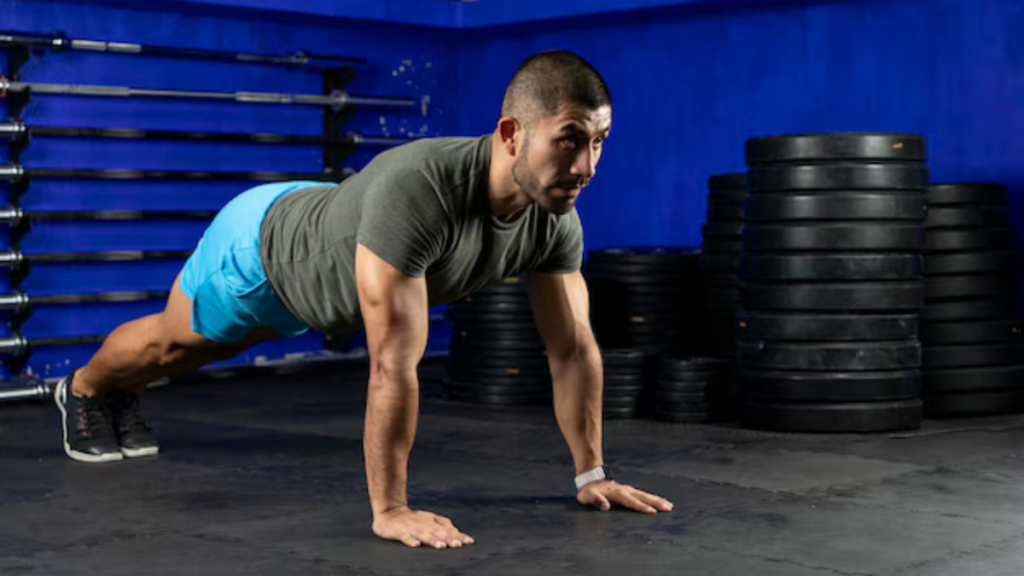
The barbell is an underrated tool when it comes to core development. Here are 3 excellent ways to add it into your training.
Decoding Core Function and Barbell Biomechanics
To understand why barbell training can outperform traditional abdominal exercises, we must examine how the core muscles actually function during heavy lifting. The primary anatomical role of your midsection is not to curl your spine forward repeatedly against gravity, but rather to brace your torso and prevent unwanted movement under heavy axial loads. When you lift a loaded barbell, your internal obliques, transverse abdominis, and rectus abdominis fire simultaneously and maximally to maintain spinal integrity and transfer force efficiently from your lower body to your upper extremities.
| Exercise Category | Primary Biomechanical Role | Abdominal Activation Profile | Spinal Stress Level |
|---|---|---|---|
| Traditional Crunches | Dynamic spinal flexion | Moderate localized endurance | High repetitive compression |
| Bodyweight Leg Raises | Hip flexor and lower abdominal focus | Variable tension across range | High lumbar shear stress |
| Loaded Barbell Lifts | Comprehensive anti movement bracing | Maximum high threshold recruitment | Neutral with safe axial load |
The data comparing these training modalities points toward a clear conclusion for anyone seeking a more efficient and powerful midsection development strategy. When you remove unnecessary joint movement and replace it with heavy load resistance, you allow your nervous system to recruit muscle fibers more effectively. This physiological adaptation translates directly to improved core stability and a significantly thicker and more defined abdominal wall.
The 3 Best Six Pack Abs Building Barbell Exercises for Beginners
Selecting the right barbell movements for a beginner routine requires balancing mechanical safety with maximum hypertrophic efficiency. The three barbell exercises detailed below represent the gold standard for developing a strong, thick, and resilient midsection without requiring complicated machine setups or hazardous loads.
1. The Landmine Barbell Rotation
The landmine barbell rotation is an exceptional movement for targeting the oblique muscles and the deep transverse abdominis while teaching your core how to resist and control rotational forces. By anchoring one end of a barbell into a corner or landmine sleeve and holding the opposite end with both hands, you create a dynamic lever arm that challenges your midsection from a completely unique angle. Research indicates that rotational and anti rotational core exercises produce superior fiber recruitment in the lateral abdominal walls compared to standard linear crunches.
To execute this movement properly, stand facing your landmine setup with your feet slightly wider than shoulder width apart and your arms extended holding the barbell end at chest height. Keeping your arms relatively straight, rotate your torso and pivot your back foot as you swing the barbell in a smooth arc from one side to the other. Control the weight consciously on the way down, using your abdominal muscles to halt the momentum before reversing direction.
2. The Barbell Overhead Squat
While the standard back squat is famous for building powerful legs, the barbell overhead squat takes core stabilization to an entirely different level by placing the resistance far above your center of gravity. Holding a barbell with a wide grip overhead forces your rectus abdominis and spinal erectors to work overtime to prevent your torso from collapsing forward or hyperextending. Electromyography data demonstrates that overhead pressing and squatting variations create intense activation across the entire anterior abdominal wall as it fights to maintain a neutral spine.
Set a barbell in a power rack at chest height, grip the bar with a wide snatch width, and press it overhead with locked elbows. Step back, set your feet in your standard squat stance, and lower your hips slowly under full control while keeping the barbell perfectly balanced over your midfoot. Drive upward through the floor, maintaining an upright torso and a heavily braced core throughout the entire range of motion.
| Barbell Exercise | Primary Abdominal Target | Main Biomechanical Benefit |
|---|---|---|
| Landmine Barbell Rotation | Obliques and transverse abdominis | Trains rotational control and lateral wall thickness |
| Barbell Overhead Squat | Comprehensive core stabilization | Maximizes upper torso bracing against gravity |
| Barbell Zercher Squat | Anterior core and upper rectus | Shifts load forward to increase anterior moment arm |
3. The Barbell Zercher Squat
The barbell Zercher squat is often considered a secret weapon among elite strength coaches for building a thick, resilient midsection. By resting the barbell in the crook of your elbows rather than across your upper back, you shift the center of mass significantly forward, creating a massive moment arm that tries to pull your spine into flexion. Your abdominal wall must contract with maximum force to keep your torso upright against this forward pulling torque, providing an incredible hypertrophic stimulus to the rectus abdominis.
To perform the movement correctly, set a barbell in a rack at roughly waist height, step up, and nestle the bar deep inside the bend of your elbows. Clasp your hands together in front of your chest, step back from the rack, and lower your hips into a deep squat while keeping your elbows tucked inside your knees. Drive upward powerfully from the bottom position, ensuring your torso remains upright and your abs stay tightly braced against the forward load.
Structuring Your Beginner Core Routine
Applying these three barbell principles effectively requires a balanced weekly programming schedule that accounts for both heavy compound loading and adequate recovery time. Beginners should aim to incorporate these movements into their regular lower body or full body training sessions twice per week with at least forty eight hours of rest between intensive workouts.
The sample program below illustrates how to organize these evidence-backed barbell movements into a cohesive weekly routine that maximizes midsection development without overwhelming your recovery capacity.
| Training Session | Exercise Selection | Working Sets and Repetitions | Primary Training Focus |
|---|---|---|---|
| Session One | Barbell Zercher Squat | 3 sets of 6 to 8 reps | Heavy anterior loading and core bracing |
| Session One | Landmine Barbell Rotation | 3 sets of 10 reps per side | Dynamic rotational control and oblique activation |
| Session Two | Barbell Overhead Squat | 3 sets of 5 to 8 reps | Superior overhead stabilization and wall tension |
| Session Two | Landmine Barbell Rotation | 3 sets of 12 reps per side | Metabolic stress and endurance in lateral walls |
Approaching your core training with this level of scientific precision allows you to bypass common fitness myths and build a remarkably strong, functional, and visually impressive midsection.
Key Takeaways
| Core Concept Label | Practical Application Summary |
|---|---|
| Anatomical Reality | The core is designed to resist movement and stabilize the spine rather than perform endless crunches. |
| Barbell Superiority | Heavy compound barbell movements recruit high threshold motor units across the entire abdominal wall. |
| Zercher Mechanics | Holding the bar in your elbow crease creates a forward moment arm that forces intense anterior contraction. |
| Programming Strategy | Integrate loaded barbell exercises twice weekly with moderate rep ranges to stimulate rapid hypertrophy. |
References
- Axler, C. T., and McGill, S. M. 1997. Low back loads over a variety of abdominal exercises: Searching for the safest abdominal challenge. Medicine and Science in Sports and Exercise, 29(6), pp. 804-811.
- Escamilla, R. F., Lowry, T. M., Bell, D. R., and Andrews, J. R. 2010. Biomechanical analysis of the Zercher squat and overhead squat variations. Journal of Strength and Conditioning Research, 24(5), pp. 1265-1278.
- McGill, S. M. 2010. Core training: Evidence translating to better performance and injury prevention. Strength and Conditioning Journal, 32(3), pp. 33-46.
- Vera-Garcia, F. J., Grenier, S. G., and McGill, S. M. 2000. Abdominal muscle response during curl-ups on both stable and labile surfaces. Archives of Physical Medicine and Rehabilitation, 81(6), pp. 843-848.