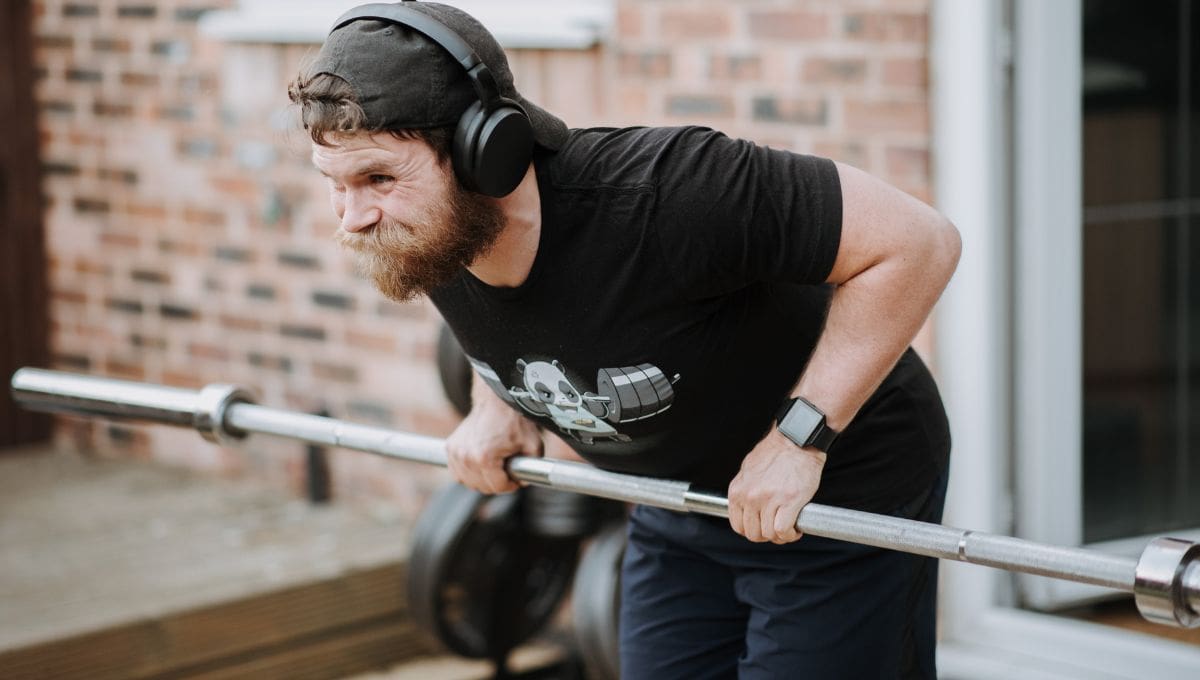


A strong, muscular back makes a major difference to how you look, lift, and move. It helps create the V shaped upper body many beginners want, supports better posture, and gives you the strength to pull, carry, climb, and control your body during athletic training. Two of the most effective free weight exercises for building it are the barbell row and the dumbbell row.
Both exercises train the latissimus dorsi, the large muscles that run down the sides of your back, alongside the middle back, rear shoulders, biceps, and forearms. However, they do not feel the same, and beginners often wonder which one deserves priority.


Are Bar Facing Burpees the Perfect Exercise for Burning Body Fat?
The short answer is that both can build excellent back muscle. The barbell row is usually better for learning to handle heavier total loads and building general pulling strength. The dumbbell row is often easier to learn, allows each side to work independently, and may make it easier to focus on the target muscles without your lower back becoming the limiting factor.
For most beginners, the dumbbell row is the better starting point. Once you can maintain a stable torso and control your shoulder blades, adding barbell rows can make your program more complete and help you build strength across your entire posterior chain.
What Your Back Needs to Grow
Muscle growth happens when resistance training provides enough mechanical tension, challenging effort, and repeated training exposure over time. The exercise itself matters, but consistent progression matters more. You need to gradually do more repetitions, use more load, improve your control, or complete more productive sets while recovering well enough to repeat the process.
Research shows that a wide range of resistance training loads can build muscle when sets are performed with sufficient effort. This means you do not need to use extremely heavy weights to grow your back. Moderate loads that allow clean sets of roughly eight to fifteen repetitions can work very well for beginners, especially while you are learning technique.
Training volume also plays an important role. Performing several challenging sets for a muscle group each week generally produces more growth than doing very little work. For a beginner, though, more is not always better. A smaller amount of high quality rowing, pulldown, and pulling work performed consistently is more valuable than adding so much volume that your form breaks down or your recovery suffers.
The barbell row and dumbbell row can both provide the tension and training volume needed for growth. The best choice comes down to which movement you can perform through a controlled range of motion while steadily improving over time.
The Barbell Row
The barbell row is a compound pulling exercise in which you hinge forward, hold a barbell with both hands, and pull it toward your lower chest or upper abdomen. Your torso remains inclined while your back and arms move the load.
Muscles Worked During the Barbell Row
The barbell row mainly trains the lats, middle trapezius, rhomboids, rear deltoids, and elbow flexors such as the biceps. Your spinal erectors, glutes, hamstrings, and core also work hard to hold the bent over position. This makes the movement more than a back exercise. It is a full posterior chain strength exercise with a major upper back emphasis.
Your lats help pull your upper arms back toward your torso. The middle trapezius and rhomboids help control and retract the shoulder blades. The spinal erectors resist rounding at the lower back, while the hips and legs create the stable base that lets you row with control.
Why Beginners Can Benefit From Barbell Rows
The biggest advantage of the barbell row is loading potential. Because both hands work together on a stable bar, you can usually use more total weight than you can with a single dumbbell. That makes it a useful exercise for building overall pulling strength.
Bilateral training, where both limbs work together, can improve strength specifically in bilateral tasks. This matters if you want to become stronger in exercises such as barbell rows, deadlifts, pull ups, and other movements where the body must produce force as one coordinated unit.
Barbell rows also teach you to brace your trunk under load. Learning to create abdominal tension, hinge at the hips, and maintain a neutral spine is useful for many gym exercises. A beginner who develops these skills will have a better foundation for deadlifts, Romanian deadlifts, squats, and loaded carries.
Limitations of the Barbell Row
The barbell row demands more from your lower back and hamstrings than the dumbbell row. This is not automatically a problem, but it can make the exercise harder to learn. If your legs, hips, or spinal erectors fatigue before your upper back, the set may stop being a productive back exercise.
Many beginners also turn the barbell row into a fast, swinging movement. A small amount of natural body movement can happen with very heavy rowing, but it is usually not the best approach for someone whose goal is to learn technique and build muscle. If the torso repeatedly rises and falls, the lower body is doing more of the work and the back muscles may receive less consistent tension.
Grip width and hand position can also affect comfort. An overhand grip often feels natural for upper back training, while an underhand grip can increase biceps involvement and may place more stress on the elbows or wrists for some people. Neither grip is universally superior. The best choice is the one that allows a controlled pull without joint discomfort.
The Dumbbell Row
The classic dumbbell row is usually performed with one hand holding a dumbbell while the other hand and one knee support the body on a bench. You pull the dumbbell toward your hip or lower rib cage, then lower it under control.
There are also unsupported dumbbell row variations, but the bench supported version is generally the best option for beginners because it reduces the balance demands and allows more focus on the working side of the back.
Muscles Worked During the Dumbbell Row
The dumbbell row trains the same major pulling muscles as the barbell row. Your lats, middle back, rear shoulders, biceps, and forearms all contribute. The key difference is that each side works independently.
Because the opposite hand is supported on a bench, the exercise usually places less demand on the spinal erectors. Your core still works to resist rotation, but you are less likely to end a set simply because your lower back is tired.
The independent nature of the movement can also make it easier to notice differences between your left and right sides. If one arm is weaker or one shoulder blade is harder to control, dumbbell rows make that easier to identify and address.
Why Dumbbell Rows Are Excellent for Beginners
A dumbbell lets your shoulder, elbow, and wrist move along a more natural path. Instead of being fixed to the straight path of a barbell, you can pull the weight toward the position that feels strongest and most comfortable for your body.
This freedom can be valuable for beginners still learning how to control the shoulder blade. Rather than thinking only about lifting the dumbbell, focus on moving the elbow toward the hip and keeping the shoulder away from the ear. This cue often helps lifters feel the lat working more clearly.
Unilateral training can also produce strength gains that transfer well to unilateral tasks. Research comparing unilateral and bilateral resistance training suggests that both approaches can build muscle effectively, while strength improvements tend to be more specific to the type of training performed. In practical terms, dumbbell rows can build plenty of back muscle while also improving side to side control.
The supported position is another major benefit. Beginners often have limited experience maintaining a hip hinge while pulling. A bench supported dumbbell row lets you train the back hard without asking your lower back to stabilize a heavy barbell at the same time.
Limitations of the Dumbbell Row
The main drawback is efficiency. Training one side at a time takes longer than rowing a barbell with both hands. If your workouts are short, this can matter.
You may also eventually run into a loading problem. Some gyms have heavy dumbbells, while others do not. Once the heaviest dumbbell available becomes too easy, you may need to use higher repetitions, slower lowering phases, pauses, or more advanced variations. These methods can still be effective, but barbell rows make it simpler to add small weight increases over time.
It is also possible to cheat with dumbbell rows. Twisting the torso heavily and pulling the dumbbell with momentum may let you use a heavier weight, but it reduces the quality of the movement. Keep the chest relatively square to the bench and allow only a small amount of natural rotation.
Which Exercise Builds Better Back Muscle?
For pure muscle growth, neither exercise has a clear universal advantage. Both can train the major muscles of the back through a meaningful range of motion and can be progressively overloaded over time. The quality of your execution, your weekly training volume, and how close you work to muscular fatigue will have a greater impact than the name of the exercise.
The dumbbell row may have a practical advantage for many beginners because it is easier to stabilize. When balance and lower back fatigue are reduced, you can focus more directly on pulling with the back and controlling the lowering phase. This may make it easier to accumulate productive repetitions.

The barbell row may become more useful as your technique improves and you want to build greater total body pulling strength. Its ability to use heavier loads can make it a valuable long term exercise, particularly when paired with movements such as pull ups, pulldowns, deadlifts, and Romanian deadlifts.
Instead of viewing the choice as one exercise against the other, think of them as tools with different strengths. Dumbbell rows are often the better teaching tool. Barbell rows are often the better tool for loading the whole posterior chain.
How Beginners Should Perform Each Exercise
Dumbbell Row Technique
Set one knee and the same side hand on a stable bench. Place the other foot firmly on the floor and hold the dumbbell in the free hand. Keep your spine long, brace your abdomen, and let the dumbbell hang beneath your shoulder.
Start the pull by moving your elbow back toward your hip. Avoid shrugging your shoulder toward your ear. At the top, pause briefly when your elbow reaches your torso, then lower the dumbbell slowly until the arm is straight and the shoulder blade can move naturally.
Use a weight that allows you to complete eight to fifteen controlled repetitions on each side. Stop the set when you can no longer maintain a stable torso or pull without using obvious momentum.
Barbell Row Technique
Stand with your feet about hip width apart and hold the bar with an overhand grip. Push your hips back, soften your knees, and lean forward until your torso is roughly between a forty five and sixty degree angle to the floor. Keep your chest open and brace your abdomen.
Pull the bar toward your lower ribs or upper abdomen while keeping your elbows relatively close to your body. Lower the bar with control until your arms are straight, then repeat. Your torso should stay stable throughout the set.
Begin with a manageable weight and aim for six to twelve repetitions. If your lower back rounds, your torso rises sharply, or you need to jerk the bar upward, reduce the load and rebuild the movement.
A Smart Way to Use Both
A simple beginner program can include dumbbell rows twice per week for the first several weeks. Start with two or three sets per side and focus on smooth, controlled repetitions. Combine them with a vertical pulling movement, such as a pulldown or assisted pull up, to train the back from more than one angle.
After your hinge and bracing skills improve, add barbell rows once per week. You can keep dumbbell rows in the program as a secondary exercise, especially if you want extra work for the lats or need to address a side to side strength difference.
You do not need to force the barbell row into your routine immediately. The best beginner exercise is the one you can perform safely, consistently, and progressively. If dumbbell rows help you feel your back working and make you eager to train, they are doing their job.
The Verdict
Dumbbell rows are the better choice for most beginners who want to build back muscle. They are easier to learn, place less stress on the lower back, allow each side to work independently, and make it easier to focus on quality repetitions.
Barbell rows are still an excellent exercise and deserve a place in many programs. They allow heavier total loading, strengthen the back alongside the hips and spinal erectors, and build useful whole body pulling strength.
Start with dumbbell rows if you are new to training. Add barbell rows when your technique and confidence improve. Over time, using both will give you a stronger, thicker, and more capable back than relying on either exercise alone.
References
- American College of Sports Medicine (2009) ‘Progression models in resistance training for healthy adults’, Medicine & Science in Sports & Exercise, 41(3), pp. 687–708.
- Grgic, J., Schoenfeld, B.J., Orazem, J. and Sabol, F. (2022) ‘Effects of resistance training performed to repetition failure or non failure on muscular strength and hypertrophy: A systematic review and meta analysis’, Journal of Sport and Health Science, 11(2), pp. 202–211.
- Kassiano, W., Nunes, J.P., Costa, B.D.V., Ribeiro, A.S., Schoenfeld, B.J. and Cyrino, E.S. (2025) ‘Comparison of muscle growth and dynamic strength adaptations induced by unilateral and bilateral resistance training: A systematic review and meta analysis’, Sports Medicine, 55, pp. 923–936.
- Schoenfeld, B.J., Grgic, J., Ogborn, D. and Krieger, J.W. (2017) ‘Strength and hypertrophy adaptations between low versus high load resistance training: A systematic review and meta analysis’, Journal of Strength and Conditioning Research, 31(12), pp. 3508–3523.
- Schoenfeld, B.J., Ogborn, D. and Krieger, J.W. (2017) ‘Dose response relationship between weekly resistance training volume and increases in muscle mass: A systematic review and meta analysis’, Journal of Sports Sciences, 35(11), pp. 1073–1082.
Key Takeaways
| Exercise | Best for beginners when | Main advantage | Main consideration |
|---|---|---|---|
| Dumbbell row | Learning back training and improving side to side control | Stable setup that makes it easier to focus on the lats and upper back | Takes longer because each side is trained separately |
| Barbell row | Building total body pulling strength after learning a sound hip hinge | Allows heavier total loads and trains the posterior chain | Lower back and technique can become limiting factors |
| Best overall approach | Building back muscle over the long term | Start with dumbbell rows, then add barbell rows as skill improves | Progress gradually and prioritize controlled repetitions |