

Building a muscular upper body after 30 is not only possible, it is often more efficient when you train intelligently. At this stage, your body responds best to smart programming, solid technique, and proper recovery rather than random high intensity workouts. Testosterone levels may gradually decline with age, recovery can take longer, and joint health becomes more important.
The good news is that resistance training remains one of the most powerful tools for maintaining muscle mass, strength, and overall health well into later life.


This article breaks down the five most effective exercises for building a strong, muscular upper body after 30. Each movement is backed by scientific evidence and chosen for its efficiency, safety, and ability to deliver results.
Why Training Changes After 30
Muscle Loss and Hormonal Shifts
Starting around your early 30s, the body naturally begins to lose muscle mass in a process known as sarcopenia. Research shows that inactive adults can lose between 3 percent and 8 percent of muscle mass per decade after age 30. Strength training is proven to slow or even reverse this process by stimulating muscle protein synthesis.

Hormonal changes also play a role. Testosterone and growth hormone levels gradually decrease, which can impact recovery and muscle growth. However, resistance training has been shown to acutely increase anabolic hormones and improve muscle building potential.
Recovery and Joint Health
Recovery becomes more important with age. Studies show that older lifters may require longer recovery periods between sessions due to slower muscle repair processes. Additionally, joint stress becomes a bigger concern. Exercises that allow controlled movement patterns and stable loading become more valuable.
Training Smarter, Not Just Harder
Evidence suggests that progressive overload, proper volume, and exercise selection matter more than extreme intensity. Compound movements that recruit multiple muscle groups are especially effective for maximizing hypertrophy and strength.
The 5 Best Upper Body Exercises for Men Over 30
These exercises were selected based on their ability to stimulate large amounts of muscle mass, their safety profile, and strong support in scientific literature.
1. Barbell Bench Press
Why It Works
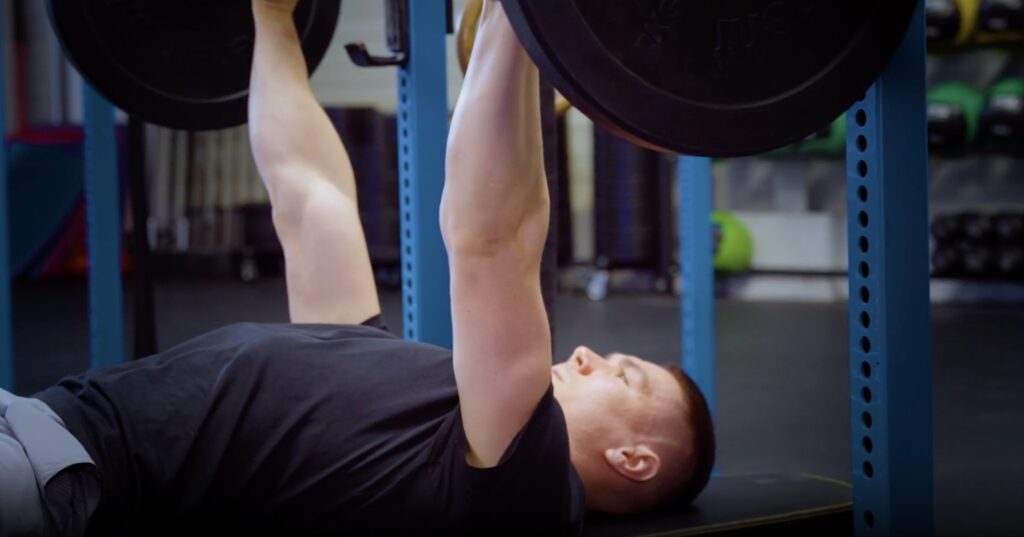
The barbell bench press is one of the most effective exercises for developing the chest, shoulders, and triceps. Electromyography studies show high activation of the pectoralis major during the bench press, especially when performed with proper form.
Key Benefits
• Builds chest thickness and upper body pressing strength
• Engages multiple muscle groups at once
• Allows for progressive overload over time
How to Do It Properly
Lie flat on a bench with your feet planted on the ground. Grip the bar slightly wider than shoulder width. Lower the bar to your mid chest in a controlled manner, then press it back up while keeping your shoulder blades retracted.
Training Tips for Over 30
Focus on controlled tempo rather than bouncing the bar. Keep your shoulders stable to reduce joint stress. Moderate rep ranges of 6 to 10 are effective for both strength and hypertrophy.
2. Pull Ups or Lat Pulldowns

Why It Works
Vertical pulling movements are essential for developing a wide, strong back. Pull ups activate the latissimus dorsi, biceps, and scapular stabilizers. Studies show that bodyweight pulling movements provide significant muscle activation and functional strength benefits.
Key Benefits
• Builds back width and upper body strength
• Improves posture and shoulder health
• Enhances grip strength
How to Do It Properly
For pull ups, grip the bar slightly wider than shoulder width and pull your chest toward the bar while keeping your core tight. For lat pulldowns, sit upright and pull the bar down toward your upper chest without leaning excessively.
Training Tips for Over 30
If pull ups are too difficult, start with assisted variations or lat pulldowns. Focus on full range of motion and controlled movement. Avoid swinging or using momentum.
3. Overhead Press
Why It Works
The overhead press is a compound movement that targets the shoulders, triceps, and upper chest. Research shows that multi joint pressing exercises like the overhead press stimulate significant muscle growth and improve functional strength.
Key Benefits
• Develops shoulder size and strength
• Improves core stability
• Enhances overall upper body coordination
How to Do It Properly
Stand with your feet shoulder width apart and hold a barbell or dumbbells at shoulder height. Press the weight overhead while keeping your core engaged and avoiding excessive lower back arch.

Training Tips for Over 30
Use a weight that allows strict form. Seated variations can reduce lower back strain. Aim for moderate rep ranges between 6 and 12.
4. Bent Over Row
Why It Works
The bent over row is one of the best exercises for building back thickness and strength. It targets the lats, rhomboids, and posterior deltoids. Studies confirm that horizontal pulling movements are essential for balanced upper body development.
Key Benefits
• Builds a thick and strong back
• Improves posture
• Balances pressing movements
How to Do It Properly
Hinge at the hips with a neutral spine and pull the barbell or dumbbells toward your lower ribcage. Keep your elbows close to your body and control the weight throughout the movement.
Training Tips for Over 30
Maintain proper spinal alignment to avoid injury. If lower back fatigue is an issue, use chest supported rows as an alternative.
5. Incline Dumbbell Press
Why It Works
The incline dumbbell press targets the upper portion of the chest and allows a greater range of motion compared to the barbell version. Research suggests that incline pressing increases activation of the clavicular head of the pectoralis major.
Key Benefits
• Builds upper chest development
• Improves muscle symmetry
• Reduces shoulder strain compared to flat barbell pressing
How to Do It Properly
Set the bench to a slight incline. Lower the dumbbells to chest level with control and press them upward while maintaining a stable shoulder position.
Training Tips for Over 30
Avoid excessive incline angles, as this shifts the focus too much to the shoulders. Use moderate weights and prioritize control.
Structuring Your Upper Body Training
Ideal Weekly Plan
Training frequency is key. Research suggests that training each muscle group at least twice per week leads to greater hypertrophy compared to once weekly training.
A simple structure could look like this:
• Day 1: Chest and shoulders
• Day 2: Back and arms
• Day 3: Rest or active recovery
• Day 4: Repeat
Volume and Repetitions
Evidence indicates that performing 10 to 20 sets per muscle group per week is effective for muscle growth. Moderate rep ranges between 6 and 12 are ideal for hypertrophy.
Progressive Overload
Gradually increasing weight, reps, or volume is essential. Without progressive overload, muscle growth stalls.
Recovery and Nutrition

Protein Intake
Protein is critical for muscle repair. Studies recommend consuming around 1.6 to 2.2 grams of protein per kilogram of body weight per day for optimal muscle growth.
Sleep and Recovery
Sleep plays a major role in muscle recovery. Research shows that inadequate sleep reduces muscle protein synthesis and increases fatigue.
Injury Prevention
Warm up properly before training and include mobility work. Controlled movements reduce the risk of joint stress and injury.
Key Points Summary
• Muscle loss begins after 30 but can be reversed with resistance training
• Compound exercises provide the best return on investment
• Recovery and technique are more important than extreme intensity
• Training each muscle group twice per week is optimal
• Proper nutrition and sleep are essential for results
Common Mistakes to Avoid
Training Too Heavy Too Often
Lifting maximal weights every session increases injury risk and slows recovery.
Ignoring Mobility
Poor mobility can lead to improper form and increased joint stress.
Skipping Pulling Movements
An imbalance between pushing and pulling exercises can lead to shoulder issues.
Final Thoughts
Building a jacked upper body after 30 is about consistency, intelligent exercise selection, and respecting recovery. The five exercises outlined in this article provide a solid foundation for strength and muscle growth. When combined with proper programming and nutrition, they can deliver impressive results regardless of age.
References
• American College of Sports Medicine (2009). Progression models in resistance training for healthy adults. Medicine and Science in Sports and Exercise.
• Grgic, J., Schoenfeld, B.J., Davies, T.B. et al. (2018). Effect of resistance training frequency on gains in muscular strength. Sports Medicine.
• Morton, R.W., Murphy, K.T., McKellar, S.R. et al. (2018). A systematic review of protein supplementation on resistance training. British Journal of Sports Medicine.
• Schoenfeld, B.J. (2010). The mechanisms of muscle hypertrophy and their application to resistance training. Journal of Strength and Conditioning Research.
• Schoenfeld, B.J., Ogborn, D., Krieger, J.W. (2017). Dose response relationship between weekly resistance training volume and muscle growth. Journal of Sports Sciences.