

If your bench press has been stuck for months, you are not alone. Many lifters assume the problem is simple. They think they just need to push harder, train more often, or add more weight. In reality, a weak bench press is rarely about effort alone. It is usually the result of specific physiological and technical limitations that can be identified and improved.
This article breaks down the real reasons why your bench press is underperforming and gives you three science backed strategies to fix it. The goal is not just to help you lift more weight, but to build a stronger, more efficient pressing pattern that carries over to long term progress.


Why Your Bench Press Is Not Improving
Before jumping into solutions, it is important to understand the underlying causes. Strength is not just about muscle size. It is influenced by neural efficiency, technique, muscle coordination, and biomechanics.
Poor Neuromuscular Coordination
The bench press is a compound movement that requires coordination between multiple muscle groups. The pectoralis major, anterior deltoids, and triceps all contribute, but their timing and activation matter just as much as their strength.
Research shows that strength gains in the early phases of training are primarily driven by neural adaptations rather than muscle growth. This includes improved motor unit recruitment, firing rate, and synchronization. If your nervous system is not efficiently activating the right muscles at the right time, your strength output will be limited.

Weak Supporting Muscle Groups
A weak bench press is often not about weak chest muscles. Instead, it can be caused by underdeveloped triceps, shoulders, or even upper back muscles.
The triceps are especially important for lockout strength. Studies using electromyography have shown that triceps activation increases significantly during the final portion of the lift. If your triceps are lagging, the bar will slow down or stall near the top.
The upper back also plays a critical role. It stabilizes the shoulder blades and provides a solid base to press from. Without proper scapular stability, force transfer becomes inefficient.
Inefficient Technique
Small technical errors can dramatically reduce your strength. These include:
• Poor bar path
• Lack of leg drive
• Unstable shoulder positioning
• Inconsistent grip width
Biomechanical analysis of the bench press shows that an optimal bar path is slightly curved rather than straight. Lifters who press in a straight vertical line often lose efficiency and produce less force.
Lack of Specific Strength Adaptation
Strength is highly specific to the movement pattern. If you are not practicing the bench press or similar variations frequently enough, your nervous system will not adapt optimally.
Research on resistance training specificity shows that strength gains are greatest when exercises closely match the movement pattern being trained. This means general chest exercises alone are not enough to improve your bench press significantly.
Tip 1: Fix Your Technique First
Technique is the fastest way to unlock immediate strength gains. Even small improvements can add significant weight to your lift without increasing muscle mass.
Set Up for Stability
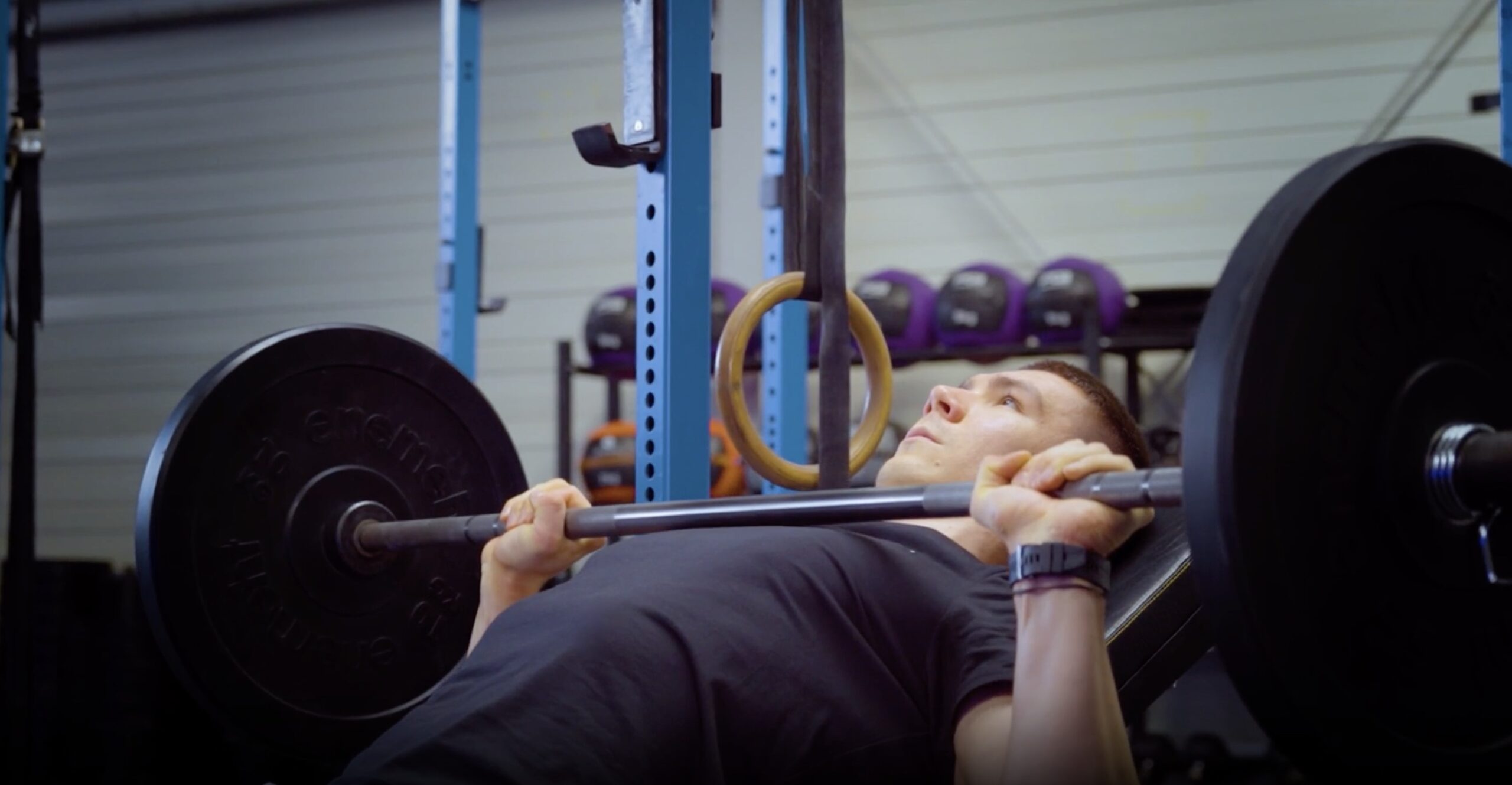
A strong bench press starts before the bar leaves the rack. Your setup determines how much force you can produce.
Focus on these key points:
• Retract and depress your shoulder blades
• Maintain a slight arch in your lower back
• Keep your feet firmly planted on the ground
• Create full body tension
Scapular retraction has been shown to improve shoulder stability and reduce injury risk. It also shortens the range of motion slightly, allowing for more efficient force production.
Optimize Your Bar Path
The most efficient bar path is not straight up and down. Instead, it follows a slight arc from the lower chest to above the shoulders.
This path allows you to take advantage of stronger joint angles and better muscle activation patterns. Studies analyzing elite powerlifters show that this curved bar path is consistently used among high level performers.
Use Leg Drive
Leg drive is often overlooked but plays a major role in force production. By pushing your feet into the ground, you create tension throughout your body and improve stability.

Research indicates that full body tension increases force output during compound lifts. Even though the legs are not directly pressing the weight, they contribute to overall system efficiency.
Control the Eccentric Phase
Lowering the bar under control improves muscle activation and prepares you for a stronger press.
Eccentric control has been shown to enhance motor unit recruitment and increase time under tension. This leads to better strength development over time.
Tip 2: Strengthen Your Weak Links
Once your technique is solid, the next step is addressing muscular imbalances. Weak points in the kinetic chain will limit your performance.
Build Stronger Triceps
The triceps are critical for finishing the lift. If you struggle near lockout, this is likely your limiting factor. Effective exercises include:
• Close grip bench press
• Skull crushers
• Triceps pushdowns
Studies on resistance training show that targeting specific muscle groups can improve performance in compound lifts when those muscles are limiting factors.
Develop Your Upper Back
A strong upper back provides stability and improves force transfer. It also helps maintain proper shoulder positioning. Key exercises include:
• Barbell rows
• Face pulls
• Pull ups
Research highlights the importance of antagonist muscle strength in improving overall joint stability and performance.
Improve Shoulder Strength
The anterior deltoids assist in pressing, especially during the initial phase of the lift. Useful exercises include:
• Overhead press
• Dumbbell shoulder press
• Front raises

Balanced shoulder development reduces injury risk and enhances pressing strength.
Address Muscle Imbalances
Unilateral exercises can help identify and correct asymmetries.
Examples include:
• Single arm dumbbell bench press
• Single arm cable press
Correcting imbalances improves coordination and ensures both sides contribute equally during the lift.
Tip 3: Train Smarter, Not Just Harder
Training volume and intensity matter, but they must be applied correctly.
Use Progressive Overload
Strength increases when you gradually increase the demands placed on your muscles. This can be done by:
• Adding weight
• Increasing repetitions
• Improving technique
Progressive overload is one of the most well established principles in resistance training science.
Adjust Training Frequency
Training the bench press more than once per week can accelerate progress. Research comparing training frequencies shows that higher frequency training leads to greater strength gains when total volume is controlled. A practical approach is to bench press two to three times per week with varying intensity levels.
Incorporate Variations
Bench press variations can target different sticking points. Examples include:
• Paused bench press
• Incline bench press
• Board press
These variations change the mechanics of the lift and help develop strength in specific ranges of motion.
Manage Fatigue
Recovery is essential for strength development. Overtraining can reduce performance and increase injury risk.
Key recovery strategies include:
• Getting enough sleep
• Managing training volume
• Allowing adequate rest between sessions
Studies show that insufficient recovery impairs neuromuscular performance and reduces strength gains.
Focus on Intent
Lifting with maximal intent, even when using lighter weights, improves neural activation. Research demonstrates that intent to move the bar quickly increases motor unit recruitment, leading to better strength adaptations.
The Role of Muscle Size Versus Neural Strength
Many lifters assume that bigger muscles automatically mean greater strength. While muscle cross sectional area is strongly correlated with strength, it is not the only factor. Neural adaptations play a major role, especially in trained individuals. This includes improved coordination, motor learning, and intermuscular efficiency.
This explains why two individuals with similar muscle size can have very different strength levels.
Common Mistakes That Keep Your Bench Weak
Even with good training habits, certain mistakes can hold you back.
Training to Failure Too Often
While training to failure can be useful, doing it too frequently leads to excessive fatigue and reduced performance.
Ignoring Technique Work
Many lifters prioritize weight over form. This leads to inefficient movement patterns that limit long term progress.
Neglecting Accessory Work
Focusing only on the bench press without strengthening supporting muscles creates imbalances and limits performance.
Inconsistent Programming
Random workouts without a structured plan make it difficult to apply progressive overload effectively.
Putting It All Together
Improving your bench press is not about a single factor. It requires a combination of:
• Efficient technique
• Balanced muscle development
• Smart training strategies
By addressing these areas, you can break through plateaus and build sustainable strength.
Final Thoughts
A weak bench press is not a mystery. It is the result of identifiable and fixable issues. When you understand the science behind strength, you can train with purpose and see consistent progress.
Focus on mastering your technique, strengthening your weak points, and applying structured training principles. These three strategies will not only improve your bench press but also enhance your overall performance in the gym.
Key Takeaways
| Area | Action | Result |
|---|---|---|
| Technique | Improve setup, bar path, and leg drive | Immediate strength gains |
| Weak Muscles | Train triceps, shoulders, and upper back | Better force production |
| Training | Use progressive overload and higher frequency | Long term strength improvement |
| Recovery | Manage fatigue and prioritize sleep | Consistent performance |
| Neural Efficiency | Train with intent and proper form | Improved muscle activation |
References
• Aagaard, P. et al. (2002). Increased rate of force development and neural drive of human skeletal muscle following resistance training. Journal of Applied Physiology, 93(4), 1318-1326.
• Barnett, C., Kippers, V. and Turner, P. (1995). Effects of variations of the bench press exercise on the EMG activity of five shoulder muscles. Journal of Strength and Conditioning Research, 9(4), 222-227.
• Behm, D.G. and Sale, D.G. (1993). Velocity specificity of resistance training. Sports Medicine, 15(6), 374-388.
• Bret Contreras, B. et al. (2015). An electromyographic comparison of triceps exercises. Journal of Strength and Conditioning Research, 29(7), 1929-1935.
• Dankel, S.J. et al. (2017). Frequency: The overlooked resistance training variable for inducing muscle hypertrophy. Sports Medicine, 47(5), 799-805.
• Fry, A.C. (2004). The role of resistance exercise intensity on muscle fibre adaptations. Sports Medicine, 34(10), 663-679.
• Glass, S.C. and Armstrong, T. (1997). Electromyographical activity of the pectoralis muscle during incline and decline bench presses. Journal of Strength and Conditioning Research, 11(3), 163-167.
• Schoenfeld, B.J. (2010). The mechanisms of muscle hypertrophy and their application to resistance training. Journal of Strength and Conditioning Research, 24(10), 2857-2872.