

Building a strong, muscular chest is one of the most common goals in fitness. It is also one of the most misunderstood. Many beginners believe that doing endless bench presses or push ups is enough. In reality, chest development depends on a combination of proper training technique, intelligent programming, progressive overload, nutrition, and recovery.
This article breaks down the five most important, science backed tips for beginners who want to build an impressive chest. Each tip is grounded in research and practical application so you can start making real progress right away.


Understanding Chest Anatomy and Function
Before jumping into training tips, it is important to understand what you are actually training. The chest is primarily made up of two muscles, the pectoralis major and the pectoralis minor.
The pectoralis major is the large, visible muscle that gives the chest its size. It has two main parts:
- Clavicular head, often called the upper chest
- Sternocostal head, often called the middle and lower chest
The pectoralis minor sits underneath and plays a role in shoulder stability.

The main functions of the chest include:
- Horizontal adduction of the arm, such as bringing your arms together in a chest fly
- Shoulder flexion, especially for the upper chest
- Internal rotation of the shoulder
Understanding these functions helps explain why certain exercises work better than others.
Tip 1: Focus on Proper Exercise Selection
Why Exercise Choice Matters
Not all chest exercises are equally effective. Research using electromyography shows that different exercises activate the chest muscles to different degrees. Choosing the right exercises ensures that you are actually targeting the chest rather than relying too much on the shoulders or triceps.
Best Compound Exercises for Chest Growth
Compound exercises should form the foundation of your chest training because they allow you to lift heavier weights and recruit more muscle fibers.
The most effective compound movements include:
- Barbell bench press
- Incline bench press
- Dumbbell bench press
- Weighted dips
Studies have shown that the barbell bench press produces high activation in the pectoralis major, making it a cornerstone for hypertrophy. Incline pressing shifts more emphasis to the upper chest, which is often underdeveloped in beginners.
Best Isolation Exercises for Chest Development
Isolation exercises complement compound lifts by targeting the chest more directly. Key movements include:
- Cable chest fly
- Dumbbell fly
- Pec deck machine
Cable exercises are particularly effective because they maintain constant tension throughout the movement, which has been shown to support muscle growth.
How to Structure Your Chest Workout
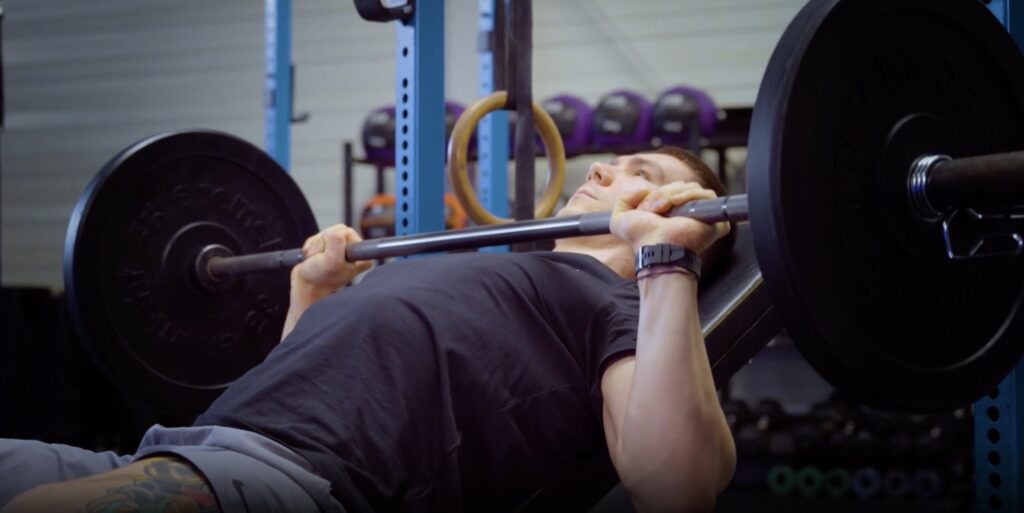
A simple beginner chest workout might include:
- One flat pressing movement
- One incline pressing movement
- One fly movement
This combination ensures full chest development without unnecessary complexity.
Tip 2: Master Technique Before Adding Weight
The Importance of Proper Form
One of the biggest mistakes beginners make is chasing heavier weights at the expense of proper technique. Poor form reduces muscle activation and increases injury risk. Research shows that controlled movements with full range of motion lead to greater hypertrophy compared to partial reps.
Key Technique Cues for Chest Exercises
For pressing movements:
- Keep your shoulder blades retracted
- Lower the weight under control
- Press with your chest, not just your arms
- Avoid flaring your elbows excessively
For fly movements:
- Maintain a slight bend in the elbows
- Focus on squeezing the chest at the top
- Do not overstretch at the bottom
Range of Motion and Muscle Growth
Training through a full range of motion has been shown to enhance muscle growth compared to shortened movements. This means lowering the bar or dumbbells all the way down in presses and allowing a deep stretch in fly exercises.
Mind Muscle Connection
Focusing on the chest during each repetition can improve activation. Studies suggest that consciously contracting the target muscle increases its involvement during the exercise. For beginners, this can make a significant difference in early progress.
Tip 3: Apply Progressive Overload Consistently
What is Progressive Overload
Progressive overload is the gradual increase of stress placed on the muscles. Without it, your body has no reason to grow. This can be achieved by:
- Increasing weight
- Increasing repetitions
- Increasing sets
- Improving technique
Why It is Essential for Chest Growth
Muscle hypertrophy occurs when the muscle is challenged beyond its current capacity. Research consistently shows that progressive overload is a key driver of muscle growth. Without progression, your chest development will stall.
How Beginners Should Progress
A simple progression model:
- Start with a weight you can lift for 8 to 12 reps
- Once you can perform 12 reps comfortably, increase the weight
- Repeat this cycle over time
Tracking your workouts is crucial. Writing down your sets and reps ensures that you are progressing rather than guessing.
Volume and Frequency
Training volume refers to the total amount of work performed. Studies indicate that higher weekly volume is associated with greater muscle growth, up to a point. For beginners:
- Train chest 2 times per week
- Perform 10 to 15 total sets per week
This provides enough stimulus without overtraining.
Tip 4: Prioritize Nutrition for Muscle Growth

The Role of Protein
Muscle growth requires adequate protein intake. Protein provides the amino acids needed to repair and build muscle tissue. Research suggests that consuming around 1.6 to 2.2 grams of protein per kilogram of body weight per day is optimal for hypertrophy.
Importance of Calories
To build muscle, you need to be in a slight calorie surplus. This means consuming more calories than you burn. Without enough energy intake, your body cannot support muscle growth effectively.
Nutrient Timing
While total daily intake matters most, consuming protein after training can support recovery and muscle protein synthesis. A simple guideline:
- Eat a protein rich meal within a few hours after training
Hydration and Performance
Staying hydrated is often overlooked. Even mild dehydration can reduce strength and performance, which indirectly affects muscle growth.
Supplements for Beginners
Supplements are not required but can be helpful:
- Whey protein for convenience
- Creatine monohydrate for strength and power
Creatine has strong scientific support for improving performance and increasing muscle mass over time.
Tip 5: Optimize Recovery and Consistency
Why Recovery is Crucial
Muscles grow during recovery, not during training. Resistance training creates micro damage in muscle fibers, and recovery allows them to rebuild stronger. Insufficient recovery limits progress and increases injury risk.
Sleep and Muscle Growth
Sleep is one of the most important factors for recovery. Research shows that poor sleep negatively affects muscle protein synthesis and hormonal balance. Aim for:
- 7 to 9 hours of sleep per night
Rest Between Workouts
Training chest every day is not effective. Muscles need time to recover. A good structure:
- At least 48 hours between chest sessions
Managing Fatigue
Pay attention to signs of excessive fatigue:
- Persistent soreness
- Decreased performance
- Lack of motivation
If these occur, reduce volume or intensity temporarily.
Consistency Over Perfection
The most important factor is consistency. Following a well structured plan over months and years leads to results. Short term intensity without long term consistency does not work.
Common Mistakes Beginners Should Avoid
Even with the best intentions, beginners often make mistakes that slow progress.
Overreliance on Machines
Machines can be useful, but relying only on them limits overall muscle development. Free weights engage stabilizing muscles and improve coordination.
Ignoring the Upper Chest
Many beginners focus only on flat bench pressing. This can lead to an imbalanced chest. Including incline work is essential for complete development.
Using Too Much Weight
Lifting too heavy often leads to poor form and reduced chest activation. Focus on control and proper execution.
Skipping Warm Ups
A proper warm up prepares the muscles and joints for training. This reduces injury risk and improves performance.
Lack of Patience
Muscle growth takes time. Expecting rapid results often leads to frustration and inconsistency.
Sample Beginner Chest Training Plan
Here is a simple and effective weekly plan:
Day 1:
- Barbell bench press: 3 sets of 8 to 12 reps
- Incline dumbbell press: 3 sets of 8 to 12 reps
- Cable fly: 3 sets of 12 to 15 reps
Day 2:
- Dumbbell bench press: 3 sets of 8 to 12 reps
- Incline barbell press: 3 sets of 8 to 12 reps
- Pec deck: 3 sets of 12 to 15 reps
Rest at least one day between sessions.
Final Thoughts
Building a muscular chest is not about doing more exercises or lifting the heaviest weights in the gym. It is about doing the right things consistently and with proper execution.
Focus on:
- Effective exercise selection
- Proper technique
- Progressive overload
- Solid nutrition
- Adequate recovery
These five principles are supported by scientific research and form the foundation of successful muscle building. Stick to them, stay consistent, and your chest will grow.
References
- Schoenfeld, B.J. (2010). The mechanisms of muscle hypertrophy and their application to resistance training. Journal of Strength and Conditioning Research, 24(10), 2857 to 2872.
- Schoenfeld, B.J., Ogborn, D. and Krieger, J.W. (2017). Dose response relationship between weekly resistance training volume and increases in muscle mass. Journal of Sports Sciences, 35(11), 1073 to 1082.
- Morton, R.W. et al. (2018). A systematic review of protein intake and muscle mass. British Journal of Sports Medicine, 52(6), 376 to 384.
- Wernbom, M., Augustsson, J. and Thomeé, R. (2007). The influence of frequency, intensity, volume and mode of strength training on muscle size. Sports Medicine, 37(3), 225 to 264.
- Gentil, P. et al. (2017). Effects of resistance training on muscle strength and hypertrophy. European Journal of Applied Physiology, 117(4), 703 to 712.