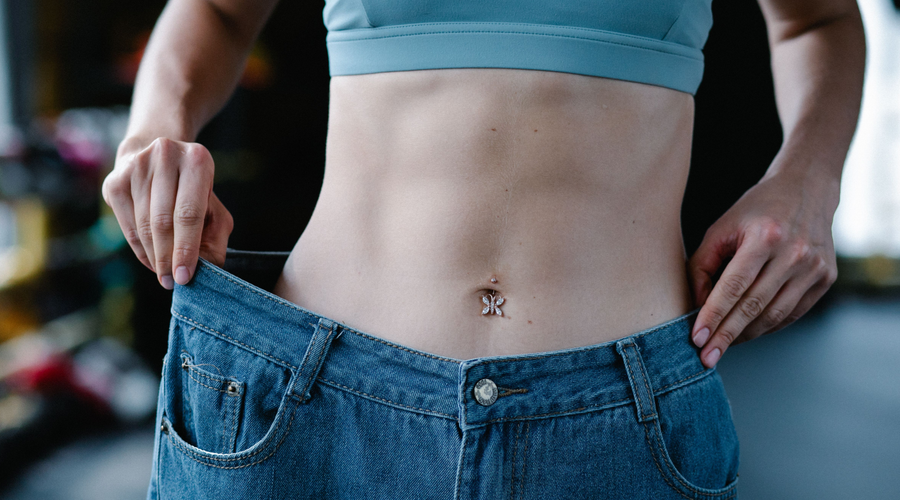


Losing stubborn belly fat does not always mean doing more cardio, training harder or following an increasingly restrictive diet.
In a recent YouTube video, Dr. Mike Diamonds shares the five daily habits he used with his client Alex, who went from 200 pounds to 177 pounds in just 10 weeks. The surprising part of the transformation was that the approach did not involve adding more intense exercise.


“We did not add more training. We took all of that intense stuff out.”
Instead, the focus was on creating consistent habits throughout the day, particularly around movement, food, stress and sleep.
1. Start the Day With a 10-Minute Walk
The first habit is what Diamonds calls the “morning ignition.”
He recommends going for a 10 to 15-minute walk after waking up, ideally before eating breakfast. The walk should be comfortable enough that you can hold a conversation without difficulty.
The goal is to start the day with some low-intensity movement rather than immediately turning to intense cardio.
“10 to 15 minutes. Go outside for a walk. Do it fasted if you can every single morning.”
Diamonds explains that the habit became part of Alex’s daily routine and helped establish consistency from the very beginning of the day.
2. Follow the PFC Lock
The second habit focuses on the order in which food is eaten.
Diamonds calls it the “PFC lock”: protein first, fiber second and carbohydrates last.
The strategy is designed to slow the digestion and absorption of carbohydrates while making protein and high-fiber foods the foundation of the meal.
According to Diamonds, this simple change can help manage the body’s response to a meal without requiring people to completely eliminate carbohydrates.
“Protein first, fiber second, carbohydrates last.”
Rather than obsessing over removing particular foods, the emphasis is on changing how a meal is structured.
3. Use the Squat Reset After Meals
The third habit requires just 60 seconds.
Diamonds recommends performing 10 air squats immediately after eating. He calls this the “squat reset,” while also noting that walking after a meal can be used as an alternative.
The reasoning is that contracting large muscle groups, particularly the legs, encourages muscles to take up glucose from the bloodstream.
“That’s three minutes of daily effort directly blocking an insulin spike.”
With three meals, the suggested routine adds only a few minutes of movement across the entire day.
4. Take an Evening Walk
The fourth habit shifts attention toward stress management.
Diamonds calls it the “cortisol cut” and recommends a 10 to 15-minute walk after dinner. Beyond the movement itself, he highlights the opportunity to step away from screens and use the walk as family time.
For Alex, this became something that could fit naturally around his busy schedule rather than another demanding workout.
“Go on a walk with your family. Go on a walk outside every night.”
The idea is to make the evening walk part of a predictable transition toward relaxation.
5. Protect Your Sleep
The final habit is the “sleep lock,” and Diamonds considers it one of the most important pieces of the routine.
He recommends getting seven to eight hours of sleep, maintaining consistent sleep and wake times, avoiding food two to three hours before bed and limiting screens during the hour before sleep.
He also discusses a Mayo Clinic study involving sleep restriction and visceral fat, highlighting why changes in body composition may not always be obvious from the number on the scale.
“The sleep lock is not this preference. It’s a foundation to your life.”
For Diamonds, sleep is not something to sacrifice when life becomes busy. It is part of the foundation that allows the other habits to work consistently.
The Daily Reset: Five Simple Habits
Put together, Diamonds’ approach is surprisingly straightforward: start the morning with a walk, structure meals around protein and fiber, move after eating, take an evening walk and protect sleep.
The transformation of Alex is presented as an example of what can happen when relatively small habits are repeated every day rather than relying on increasingly intense training.
“You don’t need the perfect life. You just need the same five moves.”
The bigger takeaway is that consistency may matter more than constantly adding more work. Instead of searching for another punishing workout or extreme diet, building sustainable habits into the morning, meals, evenings and bedtime can provide a more manageable foundation for improving body composition and overall health.
About the Author
Jeremiah Oliva

Jeremiah Oliva is a writer passionate about fitness, sports, and active living. He has experience in songwriting and managing content and social media for online radio and magazine platforms.
He covers HYROX, CrossFit®, and competitive fitness, with a focus on performance, mindset, and athlete development.
Outside of writing, Jeremiah trains in boxing, cycles, explores the outdoors with his kids, and plays the guitar.