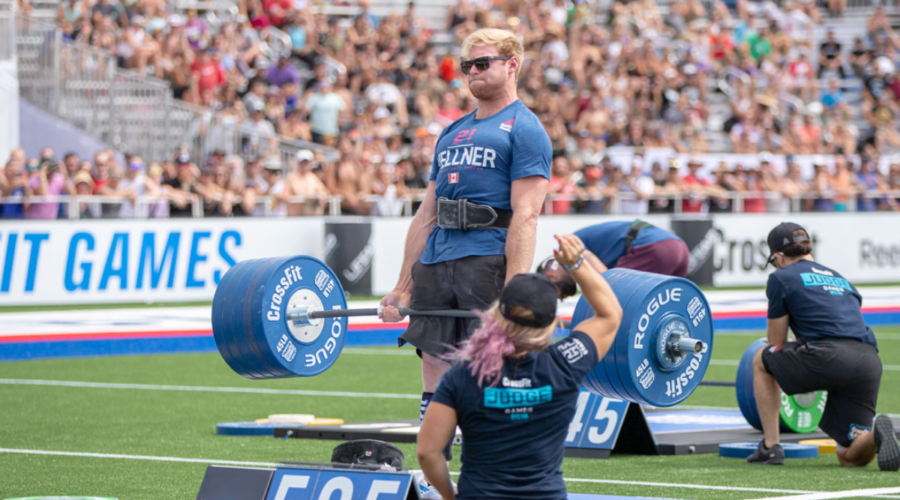


Your deadlift personal record can tell you something useful about your strength, but the number only means something when you put it in context. A 100 kg deadlift may be an outstanding lift for a new lifter, a meaningful milestone for someone returning after injury, or simply a warm up weight for an experienced powerlifter. Your age matters too, but it is not the only factor that does.
Training history, body mass, sex, technique, equipment, injury history, and the type of deadlift you perform all change the comparison. A conventional barbell deadlift from the floor is not identical to a sumo deadlift, trap bar deadlift, or a lift performed with straps. That does not make one version invalid. It simply means you should compare like with like.


The most useful question is not whether your deadlift makes you stronger than every other person your age. It is whether you have built a level of strength that is good for your body, your training goals, and the years ahead.
Why Age Changes the Deadlift Conversation
Maximal strength tends to improve through early adulthood, then gradually declines with age in people who are not training consistently. This is partly linked to changes in muscle mass, muscle quality, nervous system function, physical activity levels, and recovery capacity. The rate of change is highly individual, however, and regular resistance training can preserve a great deal of strength well into later life.
Research on masters athletes shows that long term training can substantially reduce the apparent effect of aging on muscle function. Age still matters, but being active and training intelligently matters a great deal more than many people assume. A 55 year old who has trained consistently for a decade may deadlift far more than a 25 year old who has never followed a structured strength program.
That is why raw age comparisons can be misleading. The average adult does not train the deadlift, does not test a one repetition maximum, and may not have the movement skill or joint tolerance to safely do so. Comparing your personal record with the entire population is therefore not especially useful. Comparing it with lifters who have similar body size, training experience, and lifting conditions is more informative.
Your Personal Record Is a Skill Test Too
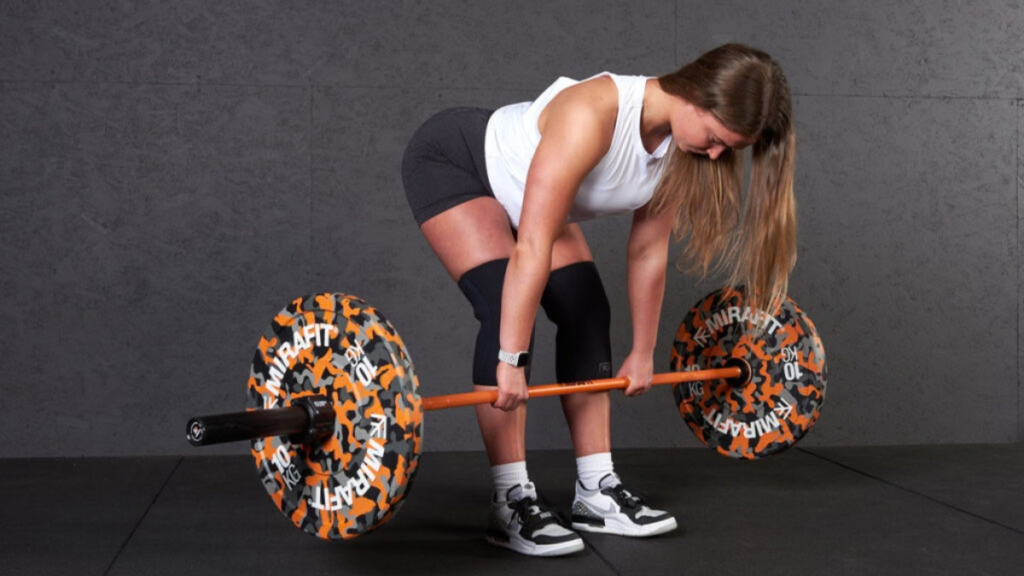
The deadlift measures more than the size of your back and legs. It requires coordination between the hips, knees, trunk, grip, and upper back. Small technique changes can make a large difference to a one repetition maximum.
A lifter who learns to create tension before the bar leaves the floor, keep the bar close to the body, and use their hips effectively can often improve their deadlift without gaining much muscle. This does not make the result less legitimate. Strength is the ability to produce force in a specific task, and practicing that task improves performance.
For a fair comparison, test your lift with a consistent setup. Use the same variation, use a standard height barbell, and record whether you used straps, a lifting belt, or a mixed grip. These details help you understand whether your progress is real training progress rather than a change in testing conditions.
A More Useful Way to Compare Your Deadlift
Rather than chasing a single age based number, start with your deadlift relative to body weight. This is not perfect, because taller lifters and heavier lifters have different leverages, but it is much more useful than comparing raw kilograms alone.
Curls vs Chin Ups: Which Builds Bigger Biceps?
A 75 kg person who deadlifts 150 kg has lifted twice their body weight. A 110 kg person who deadlifts 150 kg has still completed a strong lift, but the relative challenge is different. Body weight multiples offer a simple way to compare performance while keeping the conversation practical.
General Deadlift Milestones for Men
For adult men who train regularly with a barbell, a deadlift equal to body weight is a solid early milestone. It shows that basic technique and strength are developing. A deadlift of 1.5 times body weight is a strong achievement for many recreational lifters, while a double body weight deadlift usually reflects substantial training time, good technical skill, and consistent programming.
A deadlift of 2.5 times body weight is an advanced result. It is not required for health, athleticism, or an impressive physique. It is a performance goal that usually demands years of focused work, favorable leverages, and a serious interest in strength training.
These milestones apply more appropriately to people who train the barbell deadlift. They are not standards for the general male population, and they should never be used to shame someone who is younger, older, smaller, recovering from injury, or new to lifting.
General Deadlift Milestones for Women
For adult women who train regularly, a deadlift close to body weight is an excellent early strength target. A lift of 1.25 to 1.5 times body weight represents a strong level of recreational lifting ability for many women. Reaching double body weight is an advanced accomplishment that normally requires structured training, technical practice, and patience.
Women often make rapid deadlift progress in the first phase of training because the movement responds well to improved coordination and confidence. The deadlift can also be a useful tool for developing the hips, legs, trunk, and grip when it is coached and loaded appropriately.
As with men, these are not medical standards or universal expectations. They are useful reference points for people who choose to train the lift. The best target is one that matches your current ability and lets you train consistently without persistent pain or excessive fatigue.
How Your Deadlift May Change Across the Decades
In Your Teens and Twenties
Younger lifters often have the advantage of greater recovery capacity and more time to accumulate training volume. This does not mean you need to chase maximum weights every week. The most productive approach is usually to build technical consistency, add strength gradually, and avoid turning every session into a test.
For young adults, a deadlift personal record is often less important than establishing a long training runway. The ability to train well for several years will do more for your eventual strength than an early personal record achieved with poor form and inadequate recovery.
In Your Thirties
Your thirties are not a strength decline deadline. Many people make their best deadlift progress during this decade because they have more training experience, better movement awareness, and a more consistent approach to programming. The biggest obstacle is often lifestyle pressure rather than biology.
Work, family responsibilities, travel, disrupted sleep, and stress can all make recovery less predictable. You may need fewer maximal attempts and more productive submaximal training. That could mean sets of three to six repetitions performed with excellent form, rather than frequent all out lifts.
In Your Forties and Fifties
Strength can remain high through your forties and fifties, especially when you keep training. Recovery may require more attention, but reduced recovery is not a reason to stop lifting heavy. It is a reason to choose training doses more carefully.
You may benefit from longer warm ups, more gradual load increases, and more space between hard deadlift sessions. Variation can also help. A paused deadlift, Romanian deadlift, block pull, or trap bar deadlift can develop similar qualities while changing the stress placed on specific tissues.
The goal is to keep building or maintaining strength without allowing a single personal record to dominate the entire program. A slightly lower personal record paired with pain free, consistent training is often a better long term result than a lifetime best followed by weeks away from the gym.
In Your Sixties and Beyond
Resistance training remains valuable in older age because it can improve strength, physical function, and the ability to perform daily tasks. Deadlift training does not have to mean maximum barbell attempts from the floor. It can include kettlebell deadlifts, elevated barbell pulls, trap bar work, or lighter sets with deliberate control.
The right version depends on mobility, confidence, medical history, coaching, and personal goals. For many older lifters, maintaining a strong hip hinge pattern and the ability to lift safely from the ground is more meaningful than pursuing a large single repetition maximum.
A good deadlift in later life is one that supports independence, confidence, and an active lifestyle. If you can train the pattern consistently and progressively, you are doing something that many people never do.
Do Not Let Age Become an Excuse or a Trap
Age can provide context, but it should not become a ceiling. People often underestimate what they can achieve because they assume their best lifting years are behind them. Others make the opposite mistake by trying to match the numbers they lifted ten or twenty years earlier without adapting their training to current recovery.

Both approaches can create frustration. The better option is to use your age as information. If you recover more slowly than you once did, adjust your training frequency, volume, or exercise selection. If you are new to strength training at 45, 55, or 65, do not assume you have missed your chance to get stronger. Research consistently shows that resistance training improves strength in older adults.
Your deadlift should be part of a bigger picture that includes muscle mass, aerobic fitness, mobility, sleep, nutrition, and resilience. A personal record is exciting, but it is only one measurement.
How to Improve Your Deadlift Personal Record Safely
The most reliable way to improve your deadlift is to spend more time training below your maximum. Heavy singles have a place, but they are testing tools as much as training tools. Most strength development comes from accumulating quality repetitions with challenging but manageable loads.
Use a repeatable setup before every rep. Place your feet consistently, grip the bar firmly, pull tension into the bar before it moves, brace your trunk, and keep the load close as you stand. Video can be useful because it shows whether your technique changes as the weight gets heavier.
Train the muscles that support the lift. The glutes, hamstrings, quadriceps, spinal erectors, upper back, and grip all contribute to a strong deadlift. Squats, Romanian deadlifts, rows, pull ups, loaded carries, and single leg exercises can all support progress when they are programmed around your main deadlift work.
Protein intake, adequate energy intake, and sleep also matter because they support recovery and adaptation to resistance training. You do not need perfect conditions to get stronger, but progress is easier when your training is supported by the rest of your lifestyle.
The Bottom Line
Your age can help you understand your deadlift personal record, but it cannot define it. A strong deadlift at any age is built through consistent practice, smart progression, and enough recovery to keep training.
If you are young, focus on developing skill and patience. If you are in your thirties or forties, use experience to train with more purpose. If you are older, keep strength training in your life and choose the deadlift variation that lets you progress confidently.
The best comparison is not only with other people your age. It is with the lifter you were six months ago, one year ago, and several years ago. If your technique is improving, your training is consistent, and your strength is moving in the right direction, your deadlift is doing exactly what it should.
References
- Borde, R., Hortobágyi, T. and Granacher, U. (2015) ‘Dose response relationships of resistance training in healthy old adults: A systematic review and meta analysis’, Sports Medicine, 45(12), pp. 1693-1720.
- Grgic, J., Garofolini, A., Orazem, J., Sabol, F., Schoenfeld, B.J., Pedisic, Z. and Mikulic, P. (2020) ‘Effects of resistance training on muscle size and strength in very elderly adults: A systematic review and meta analysis of randomized controlled trials’, Sports Medicine, 50(11), pp. 1983-1999.
- Keller, K. and Engelhardt, M. (2013) ‘Strength and muscle mass loss with aging process: Age and strength loss’, Muscles, Ligaments and Tendons Journal, 3(4), pp. 346-350.
- Peterson, M.D., Rhea, M.R., Sen, A. and Gordon, P.M. (2010) ‘Resistance exercise for muscular strength in older adults: A meta analysis’, Ageing Research Reviews, 9(3), pp. 226-237.
- Scott, D., Blizzard, L., Fell, J. and Jones, G. (2011) ‘A prospective study of the associations between 12 month change in muscle mass and muscle function in older adults’, Clinical Endocrinology, 75(4), pp. 502-508.
- Suchomel, T.J., Comfort, P. and Stone, M.H. (2018) ‘The importance of muscular strength: Training considerations’, Sports Medicine, 48(4), pp. 765-785.
- Watanabe, Y., Madarame, H., Ogasawara, R., Nakazato, K. and Ishii, N. (2014) ‘Effect of very low intensity resistance training with slow movement on muscle size and strength in healthy older adults’, Clinical Physiology and Functional Imaging, 34(6), pp. 463-470.
Key takeaways
| Topic | What it means for your deadlift |
|---|---|
| Age comparison | Compare yourself primarily with lifters of similar body size, training experience, and lifting conditions. |
| Early milestone | A deadlift close to body weight is a meaningful goal for many new lifters. |
| Strong recreational lifting | Around 1.5 times body weight is a strong result for many regularly trained adults. |
| Advanced performance | A double body weight deadlift is an advanced target, not a requirement for health or fitness. |
| Training after 40 | Strength can remain high when training is consistent and recovery is managed well. |
| Long term priority | Choose the deadlift variation and loading approach that lets you train hard, safely, and consistently. |