

Fitness is not one number. A person can run well but struggle to control their body weight. Another person can lift heavy but lack the shoulder stability to complete clean push ups. That is why simple bodyweight tests can be useful. Push ups, pull ups and planks assess different parts of practical strength and endurance that matter in sport, training and everyday life.
These exercises will not tell you everything about your health. They do not measure aerobic fitness, mobility, blood pressure, body composition or skill in a particular sport. They can, however, provide an honest snapshot of upper body pushing strength, pulling strength, trunk endurance and movement control.


Age matters because muscle mass, strength, recovery capacity and physical activity levels can change across adulthood. Those changes are not inevitable in the same way for everyone. Regular resistance training and physical activity can preserve a great deal of function as people get older. Your test result is therefore not a verdict on your age. It is a starting point that can help you identify what to improve.
How to Use These Fitness Checks
Test yourself when you are reasonably rested, hydrated and free from pain. Spend five to ten minutes warming up with easy movement for the shoulders, wrists, hips and upper back. A few easier practice repetitions of each exercise can help you find a comfortable rhythm before the real test starts.
Use strict form and stop when you can no longer maintain it. Chasing an extra repetition with poor technique makes the result less useful and can increase stress on the shoulders, elbows, neck or lower back. A lower score completed with good control is more meaningful than a higher score achieved by cutting the range of motion.
Body weight has a major effect on push ups and pull ups. Someone carrying more body mass may need to produce more absolute force to complete each repetition. This does not mean that person is unfit. It simply means bodyweight tests should be read alongside training history, body size, injuries and goals.
The numbers below are practical fitness targets rather than medical diagnostic cutoffs. They are designed for healthy adults who want a clear challenge and a way to track progress. If you have chest pain, severe shortness of breath, dizziness, uncontrolled blood pressure, a recent injury or a condition that affects exercise safety, speak with a qualified health professional before testing.
The Push Up Test
Push ups test the chest, triceps, front of the shoulders and muscles that stabilize the shoulder blades and trunk. They also require you to resist excessive arching or sagging through the lower back. When performed with a consistent depth and full body tension, they are a useful measure of upper body muscular endurance.
Research has linked better push up capacity with lower cardiovascular disease event risk in one large occupational cohort of active men. That finding does not mean push ups alone protect the heart. It does suggest that a high push up score may reflect a broader pattern of strength, conditioning and physical activity.
How to Perform a Strict Push Up
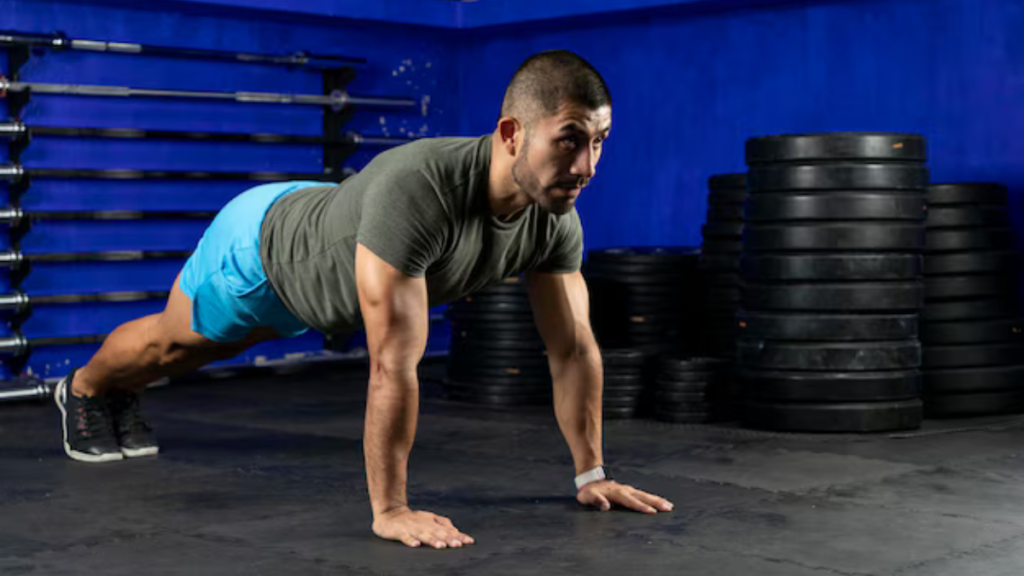
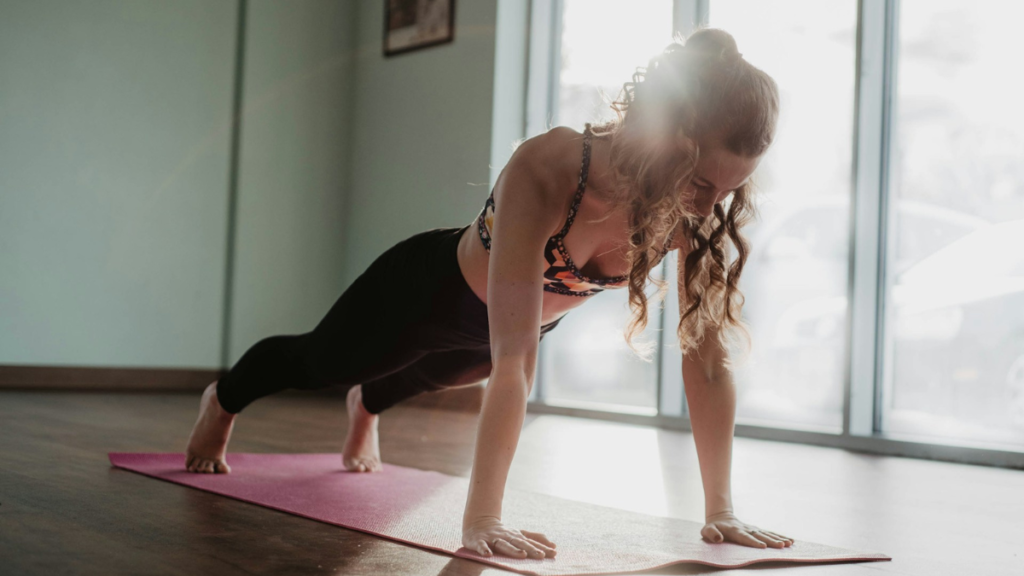
Start in a high plank with hands just wider than shoulder width. Create a straight line from your head to your heels by squeezing your glutes and lightly bracing your abs. Lower your chest toward the floor under control, keeping your elbows at a comfortable angle rather than flaring them directly out to the sides.
Your chest should come close to the floor, then you should press back to a straight armed position. Count only repetitions that use the same range of motion from start to finish. Resting briefly at the top is fine, but do not let your knees touch the floor or allow the hips to sag.
If full floor push ups are not yet suitable, use an elevated surface such as a sturdy bench or bar in a rack. The movement pattern remains useful, and you can gradually lower the height of the surface as you become stronger.
Push Up Targets by Age
For most healthy adults, completing a set of clean push ups without stopping is a valuable goal. Men and women should expect different average scores because upper body muscle mass and relative strength differ on average, although individual training experience matters more than sex alone.
Isolation vs Compound Exercises – Which Build More Muscle for Beginners in The Gym?
A man aged 20 to 39 who can complete 20 to 30 strict push ups has a solid base of upper body endurance. Reaching 35 or more shows an excellent level for general fitness. From age 40 to 59, 15 to 25 strict repetitions is a strong target, while 30 or more is excellent. From age 60 onward, 10 to 20 controlled repetitions is a valuable level of functional upper body capacity, with higher scores showing exceptional maintenance of strength and endurance.
A woman aged 20 to 39 who can complete 10 to 20 strict push ups has a strong foundation. Reaching 20 or more is an excellent result for general fitness. From age 40 to 59, 8 to 15 strict repetitions is a worthwhile target, while 15 or more is excellent. From age 60 onward, building toward 5 to 12 floor push ups can support upper body strength and confidence. Elevated push ups are an equally valid progression when full floor repetitions are not yet available.
The Pull Up Test
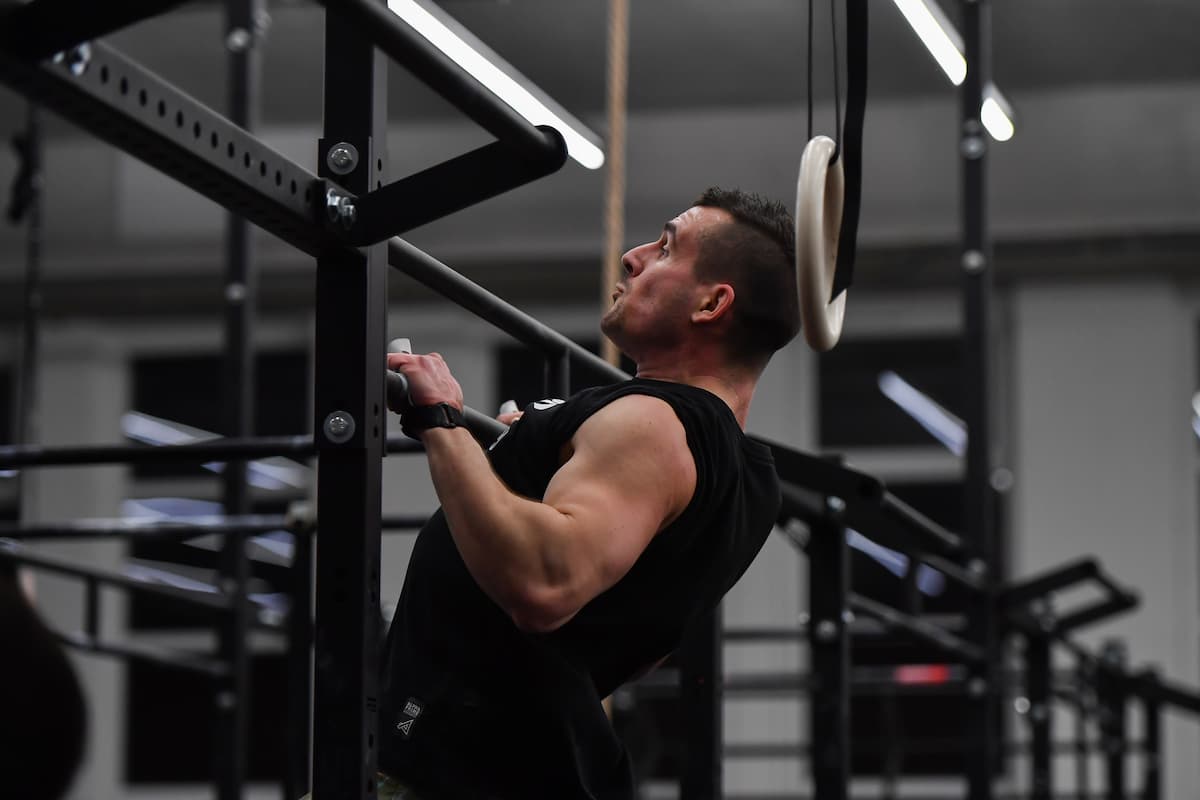
Pull ups are harder than push ups for many people because you must lift most of your body weight while controlling the shoulders, elbows and trunk. The primary muscles include the latissimus dorsi, biceps, forearms and muscles around the shoulder blades. A pull up also challenges grip strength, which is independently associated with health and functional outcomes in older adults.
Pull ups are not a perfect universal fitness test. They are strongly affected by body mass, arm length, hand size and whether a person has trained pulling movements before. They are still valuable because they reveal whether you can create and control meaningful upper body pulling strength.
How to Perform a Strict Pull Up
Hang from a bar with palms facing away from you and hands around shoulder width apart. Begin from a controlled hang with your shoulders active rather than completely loose. Pull your elbows down toward your ribs and bring your chin clearly above the bar.
Lower under control until your elbows are straight again. Avoid kicking, swinging or aggressively throwing the chest upward. A small natural movement is normal, but every repetition should begin and end in the same position.
If you cannot yet perform a pull up, start with assisted pull ups, slow lowering repetitions, hanging holds and rows. These exercises can build the muscles and coordination needed for the full movement. Do not assume that zero pull ups means you are unfit. It simply identifies a specific strength quality that needs development.
Pull Up Targets by Age
For men aged 20 to 39, five strict pull ups is a useful minimum general fitness target. Eight to 12 indicates strong relative upper body strength, while 15 or more is excellent. From age 40 to 59, three to eight strict repetitions is a good range, and 10 or more is an impressive score. From age 60 onward, one to five strict repetitions represents meaningful pulling strength, especially when completed with a full range of motion.
For women, one strict pull up is an excellent initial milestone at any adult age. Women aged 20 to 39 who can perform three to five strict repetitions have strong relative upper body strength, while six or more is excellent. From age 40 to 59, one to three repetitions is a strong goal, while four or more is excellent. From age 60 onward, a controlled assisted pull up, a slow lowering repetition or a sustained active hang can be a more appropriate and valuable test.
Your grip should not be the only limiting factor. If your hands fail long before your upper back does, include regular dead hangs, farmer carries and controlled rows in your training. Better grip strength can improve your ability to train the rest of the upper body effectively.
The Plank Test
A front plank measures the ability of your trunk muscles to resist movement. The rectus abdominis, transverse abdominis, obliques, spinal erectors, shoulders and glutes all contribute. The goal is not simply to endure discomfort. It is to maintain a stable body position without letting the lower back arch or the hips rise too high.
Core endurance is relevant because the trunk must transfer force and maintain position during many athletic and daily tasks. However, a long plank does not guarantee that you are free from back pain or that your abs are strong in every direction. It is one piece of the picture, not a complete assessment.
How to Perform a Strict Plank
Place your elbows under your shoulders and rest your forearms on the floor. Extend your legs behind you and lift your knees off the floor. Squeeze your glutes, brace your abs and keep your body in a straight line from head to heels.
Look down between your hands to keep your neck neutral. Breathe normally instead of holding your breath. Stop the test when your hips drop, your lower back arches, your hips rise significantly or you need to place a knee on the floor.
A stopwatch is useful, but form is more important than duration. A 45 second plank with a stable spine is more valuable than a three minute hold performed with an exaggerated arch through the lower back.
Plank Targets by Age
Adults aged 20 to 39 should aim to hold a strict front plank for 60 seconds as a basic target. A hold of 90 to 120 seconds with excellent control shows good trunk endurance. From age 40 to 59, 45 to 75 seconds is a useful target, while 90 seconds remains an excellent result. From age 60 onward, 30 to 60 seconds of clean positioning is a strong functional goal, with longer holds showing particularly good trunk endurance.
Do not keep adding time forever. Once you can hold a high quality plank for around 90 seconds, harder variations may be more productive. Side planks, long lever planks, body saws, dead bugs and controlled hanging knee raises can improve trunk strength through different demands. A well rounded core program should include resisting extension, rotation and side bending rather than relying on one static hold.
What Your Results Really Mean
If you perform well in all three tests, you likely have a useful base of upper body muscular endurance, relative pulling strength and trunk control. That can make gym training, sports and active daily life easier. It does not mean you should stop progressing. Fitness improves when you continue to expose the body to gradually greater and well managed demands.
If push ups are your strongest test but pull ups are poor, you may need more upper back, biceps and grip work. Include rows, assisted pull ups and pulldowns alongside your pushing exercises. If pull ups are strong but push ups are weak, increase practice with push ups, presses and triceps focused movements while improving shoulder control.
If the plank ends quickly despite decent push ups and pull ups, focus on bracing, breathing and hip position. Start with shorter holds that you can perform well. Several high quality sets are usually more useful than one long, untidy attempt.
The most important comparison is not with somebody else. It is with your own previous score. Retest every four to eight weeks under similar conditions. Even adding two push ups, one pull up or 15 seconds of high quality plank time can represent real progress.
Build a Better Score at Any Age
Train each movement pattern two or three times per week, leaving at least a day between demanding sessions for the same muscles. Progressive resistance training can improve muscular strength and function across the adult lifespan, including in older adults. The right starting point is the version of the exercise you can control.
For push ups, perform several sets that stop with one or two good repetitions left in reserve. Use an incline if necessary, then reduce the incline over time. For pull ups, combine assisted repetitions with slow descents and horizontal rows. For planks, use shorter precise holds and gradually increase either time or difficulty.
Sleep, protein intake, overall activity and recovery also influence your results. Strength and endurance are not built in one maximal test. They are built through repeated training sessions that are challenging enough to stimulate adaptation but manageable enough to recover from.
Key Takeaways
| Test | What it assesses | Strong general target | Best next step if you are below target |
|---|---|---|---|
| Push ups | Pushing endurance, shoulder control and trunk stiffness | 20 to 30 for men aged 20 to 39, 10 to 20 for women aged 20 to 39 | Use elevated push ups and build toward full floor repetitions |
| Pull ups | Relative pulling strength, grip and shoulder control | 8 to 12 for men aged 20 to 39, 3 to 5 for women aged 20 to 39 | Use assisted pull ups, slow lowering repetitions and rows |
| Plank | Trunk endurance and ability to resist spinal movement | 60 seconds for adults aged 20 to 39 | Build high quality holds before progressing to harder variations |
| Retesting | Progress over time | Every four to eight weeks | Keep the same form standards and test conditions |
References
- American College of Sports Medicine (2021) ACSM’s Guidelines for Exercise Testing and Prescription. 11th edn. Philadelphia: Wolters Kluwer.
- Bohannon, R.W. (2019) ‘Grip strength: An indispensable biomarker for older adults’, Clinical Interventions in Aging, 14, pp. 1681–1691.
- Cogley, R.M., Archambault, T.A., Fibeger, J.F., Koverman, M.M., Youdas, J.W. and Hollman, J.H. (2005) ‘Comparison of muscle activation using various hand positions during the push up exercise’, Journal of Strength and Conditioning Research, 19(3), pp. 628–633.
- da Silva, G.R., de Oliveira, R.J., Mazo, G.Z., Dias, J.M.D. and de Oliveira Brito, J. (2016) ‘Effects of resistance training on the physical performance of older adults: A systematic review’, Journal of Physical Therapy Science, 28(10), pp. 2844–2851.
- Harms Ringdahl, K. and Sjödin, A. (2018) ‘Muscle strength, physical activity and health related quality of life in middle aged and older adults’, BMC Geriatrics, 18, 171.
- Kibler, W.B., Press, J. and Sciascia, A. (2006) ‘The role of core stability in athletic function’, Sports Medicine, 36(3), pp. 189–198.
- Knapik, J.J., East, W.B., Kingston, C.S., Reynolds, K.L. and Harman, E. (2000) ‘Preseason strength and flexibility imbalances associated with athletic injuries in female collegiate athletes’, The American Journal of Sports Medicine, 28(1), pp. 55–62.