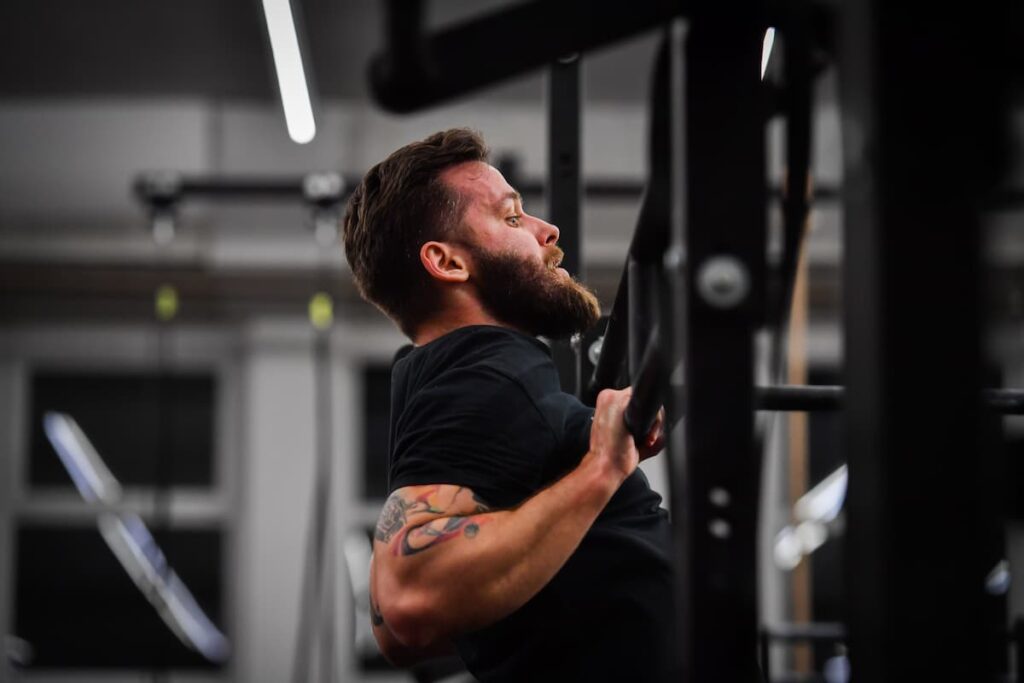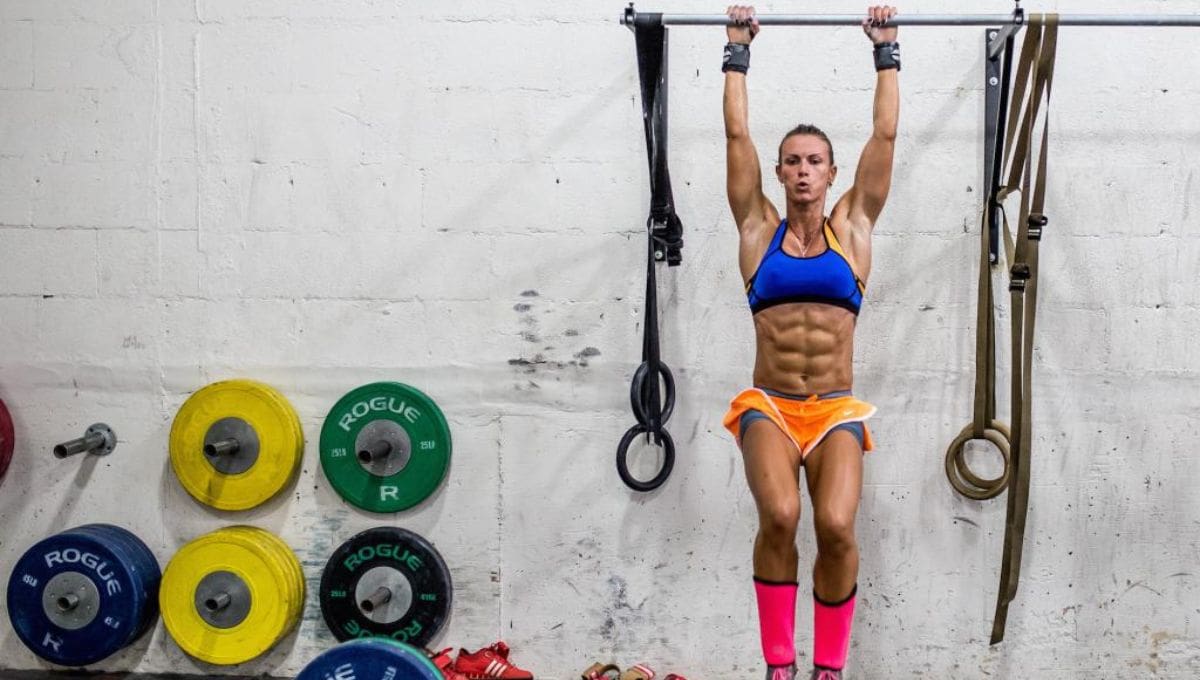


The dead hang looks almost too simple to matter. You grab a pull up bar, let your body hang freely, and wait until your grip gives out. Yet this basic exercise is one of the most effective ways to assess grip strength, shoulder health, upper body endurance, and overall functional fitness.
Unlike many gym tests that require heavy weights or advanced technique, the dead hang is accessible to almost everyone. It requires nothing more than a sturdy overhead bar and enough determination to keep holding on. That simplicity makes it a valuable benchmark for athletes, recreational gym goers, climbers, and anyone interested in improving their physical fitness.



Grip strength has become one of the most studied measures of human health. Researchers have repeatedly found that stronger grip strength is associated with better physical function, healthier aging, lower risk of disability, and even lower mortality. While a dead hang is not exactly the same as a laboratory grip strength test, both rely heavily on the muscles of the hands and forearms, making the exercise an excellent practical indicator of upper body endurance.
So how long should you actually be able to hold a dead hang? The answer depends on your age, sex, body weight, and training background.
Why the Dead Hang Matters
At first glance, the dead hang seems like a grip exercise. It certainly trains the fingers, hands, wrists, and forearms, but it also challenges much more. During a proper dead hang, the shoulders must stabilize under your body weight. The rotator cuff muscles work continuously to maintain joint position. The lats, traps, rhomboids, and core muscles provide stability while your grip resists the force of gravity. This combination makes the dead hang a unique full upper body endurance test.
How Many Bodyweight Squats Should You Be Able to Do?
Researchers have also shown that hanging exercises can improve shoulder mobility by gently decompressing the shoulder joint while strengthening the surrounding musculature. Although hanging should not be considered a treatment for shoulder injuries, many healthy individuals benefit from including it in their training.
The Muscles Used During a Dead Hang
A dead hang primarily challenges the muscles responsible for gripping the bar. These include the finger flexors, wrist flexors, brachioradialis, and numerous smaller muscles within the hand itself. The shoulders rely heavily on the rotator cuff muscles, while the latissimus dorsi and lower trapezius help stabilize the shoulder blades.
Your abdominal muscles and spinal stabilizers also remain active to prevent excessive swinging. Because so many muscles work together, failure usually occurs when grip endurance is exhausted rather than when larger muscles become fatigued.
What Is a Good Dead Hang Time?
The following standards assume a full bodyweight dead hang performed with both hands using an overhand grip.
Beginners
Most healthy adults who have never trained grip strength can usually hold a dead hang for between 10 and 30 seconds. If you cannot reach 10 seconds, it usually indicates that grip endurance is an area worth improving rather than a cause for concern.
Recreational Gym Goers
People who lift weights regularly often reach between 30 and 60 seconds. At this point, grip strength is generally well developed enough for most daily activities and recreational sports.
Advanced Fitness Enthusiasts
Holding a dead hang for 60 to 90 seconds demonstrates excellent grip endurance. Few casual exercisers achieve this level without deliberately training hanging exercises or performing sports such as climbing, gymnastics, obstacle racing, or CrossFit.
Elite
Athletes who consistently exceed two minutes possess exceptional grip endurance. Competitive climbers, gymnasts, ninja athletes, and some CrossFit competitors may hold hangs for three minutes or longer.
Dead Hang Standards by Age
Although aging naturally reduces muscle mass and grip strength, staying physically active dramatically slows this decline. These benchmarks represent realistic targets for healthy individuals.
| Age | Excellent | Good | Average | Needs Improvement |
|---|---|---|---|---|
| 18 to 29 | Over 90 sec | 60 to 90 sec | 30 to 60 sec | Under 30 sec |
| 30 to 39 | Over 75 sec | 50 to 75 sec | 25 to 50 sec | Under 25 sec |
| 40 to 49 | Over 60 sec | 40 to 60 sec | 20 to 40 sec | Under 20 sec |
| 50 to 59 | Over 50 sec | 30 to 50 sec | 15 to 30 sec | Under 15 sec |
| 60 plus | Over 40 sec | 20 to 40 sec | 10 to 20 sec | Under 10 sec |
These values are not official medical standards. Instead, they are practical benchmarks based on research into grip strength, healthy aging, and performance in physically active populations.
Why Grip Strength Predicts Overall Health
Grip strength has become one of the most valuable measurements in sports science and medicine. Large population studies have consistently shown that weaker grip strength is associated with higher rates of cardiovascular disease, disability, hospitalization, frailty, and premature death.
One of the largest studies ever conducted followed more than 140,000 adults across multiple countries. Researchers found that grip strength predicted mortality more accurately than systolic blood pressure. Scientists believe grip strength reflects the overall quality of the neuromuscular system. Strong grip usually accompanies greater muscle mass, higher physical activity levels, and better metabolic health.
Although the dead hang measures endurance rather than maximum force, individuals with better grip endurance generally also demonstrate greater overall grip capacity.
How Body Weight Affects Your Score
One important factor is body weight. Someone weighing 220 pounds must support far more mass than someone weighing 150 pounds.

This means heavier athletes often produce higher absolute grip strength while recording shorter dead hang times simply because they have more weight suspended from their hands.
Lean athletes frequently perform better on hanging tests because their grip strength relative to body weight is higher. That is why the dead hang is often considered a relative strength assessment instead of a pure strength test.
Common Reasons People Fail Early
Most people lose their grip because the finger flexor muscles become fatigued. However, several other factors may shorten your hang.
- Poor shoulder positioning creates unnecessary strain.
- Sweaty hands reduce friction.
- Insufficient recovery from previous training decreases endurance.
- Excessive body swinging forces the grip muscles to work much harder.
- Using an overly thick bar also significantly increases grip demands.
How to Perform a Perfect Dead Hang
- A proper dead hang begins by grasping the bar with an overhand grip approximately shoulder width apart.
- Lift your feet off the ground and allow your body to hang vertically.
- Keep your legs still and avoid swinging.
- Your elbows should remain straight without locking aggressively.
- Allow the shoulders to remain relaxed while maintaining control rather than shrugging forcefully upward.
- Continue hanging until your grip fails naturally.
- Stop immediately if you experience shoulder pain or numbness.
Can Dead Hangs Improve Pull Ups?
Yes. Many people cannot perform pull ups because their grip gives out before their back muscles become the limiting factor. Improving dead hang endurance allows you to spend more time practicing pull ups while strengthening the forearms, shoulders, and connective tissues.
Research consistently shows that grip strength is closely associated with pulling performance in climbing, gymnastics, military fitness testing, and resistance training. Although dead hangs alone will not guarantee your first pull up, they provide an excellent foundation.
Benefits Beyond Grip Strength
Better Shoulder Stability
The shoulder is the most mobile joint in the body, which also makes it one of the least stable. Dead hangs require the muscles surrounding the shoulder blade to work continuously. Over time, this may improve shoulder control during pulling exercises.
Improved Forearm Endurance
Most resistance exercises challenge the forearms only briefly. Dead hangs force sustained muscular contractions that improve local muscular endurance. This benefits rowing, climbing, racket sports, obstacle racing, and many daily activities.
Healthier Connective Tissue
Tendons and ligaments adapt more slowly than muscles. Regular hanging provides gradual loading that may improve tissue tolerance over time when performed appropriately.
Better Performance in Strength Training
Many heavy lifts are limited by grip rather than leg or back strength. A stronger grip allows you to train harder during deadlifts, rows, farmer carries, pull ups, and kettlebell exercises.
How to Improve Your Dead Hang Time
The simplest method is to practice hanging several times each week. Begin with three or four sets held well below failure. Gradually increase total hanging time each week. As endurance improves, increase the duration of each set.
Supporting exercises also help. Farmer carries build grip endurance while strengthening the core. Heavy rows improve pulling muscles. Pull ups develop both grip and upper body strength.
Wrist curls and reverse wrist curls strengthen the forearms directly. Pinch grip exercises strengthen the thumb and hand muscles. Consistency matters far more than intensity. Training grip for a few minutes several times each week usually produces noticeable improvements within one to two months.
When Should You Avoid Dead Hangs?
Most healthy adults can safely perform dead hangs. However, individuals with recent shoulder injuries, severe arthritis, acute elbow pain, or hand injuries should consult a qualified healthcare professional before beginning.
Pain should never be ignored. If hanging causes sharp pain rather than muscular fatigue, stop immediately. Using an assisted variation with your feet lightly touching the floor may provide a safer starting point during rehabilitation.
Final Thoughts
The dead hang is one of the simplest fitness tests you can perform, yet it reveals far more than just hand strength. It challenges grip endurance, shoulder stability, upper body control, and relative strength while requiring no equipment beyond a pull up bar.
For most healthy adults, reaching 30 to 60 seconds represents a solid level of fitness. Holding on for more than one minute places you well above average, while two minutes demonstrates exceptional grip endurance.
More importantly, improving your dead hang is about more than chasing numbers. Stronger grip strength has repeatedly been linked with healthier aging, better physical function, and improved athletic performance across numerous sports. Whether your goal is your first pull up, heavier deadlifts, or simply becoming more capable in everyday life, adding regular dead hangs to your routine is one of the simplest and most effective investments you can make.
Key Takeaways
| Measure | Recommendation |
|---|---|
| Beginner target | 10 to 30 seconds |
| Good general fitness | 30 to 60 seconds |
| Excellent fitness | 60 to 90 seconds |
| Elite performance | Over 2 minutes |
| Training frequency | 2 to 4 sessions per week |
| Main limiting factor | Grip endurance |
| Best supporting exercises | Farmer carries, pull ups, rows, wrist strengthening |
| Primary benefits | Grip strength, shoulder stability, forearm endurance, pulling performance |
References
- Bohannon, R.W. (2019). Grip strength: An indispensable biomarker for older adults. Clinical Interventions in Aging, 14, pp. 1681 to 1691.
- Carson, R.G. (2018). Get a grip: Individual variations in grip strength are a marker of brain health. Neurobiology of Aging, 71, pp. 189 to 222.
- García Hermoso, A., Cavero Redondo, I., Ramírez Vélez, R., Ruiz, J.R. and Ortega, F.B. (2018). Muscular strength as a predictor of all cause mortality in healthy populations. Journal of Science and Medicine in Sport, 21(11), pp. 1179 to 1184.
- Leong, D.P., Teo, K.K., Rangarajan, S., Lopez Jaramillo, P., Avezum, A., Orlandini, A. and Yusuf, S. (2015). Prognostic value of grip strength: Findings from the Prospective Urban Rural Epidemiology study. The Lancet, 386(9990), pp. 266 to 273.
- Lim, E.C.W. and Tay, M.G.X. (2015). The role of grip strength in health and disease. Singapore Medical Journal, 56(4), pp. 203 to 205.
- Page, P., Frank, C.C. and Lardner, R. (2010). Assessment and Treatment of Muscle Imbalance: The Janda Approach. Human Kinetics.
- Peterson, M.D., Zhang, P., Choksi, P., Markides, K.S. and Al Snih, S. (2016). Muscle weakness thresholds for prediction of diabetes in adults. Sports Medicine, 46(5), pp. 619 to 628.
- Souza, T.A. (2009). Differential Diagnosis and Management for the Chiropractor: Protocols and Algorithms. Jones and Bartlett Publishers.
- Warneke, K., Hillebrecht, M., Wirth, K., Schiemann, S. and Keiner, M. (2022). The effects of dead hangs and active hangs on shoulder function and grip performance. International Journal of Environmental Research and Public Health, 19(19), 12414.