

A better looking chest is not built by choosing one bench angle forever. It is built by giving the pectoral muscles enough challenging work, progressing that work over time, and training the areas that improve your overall shape. That said, incline and flat bench presses do not emphasize the chest in exactly the same way.
The flat bench press is the stronger all around choice for building overall pressing strength and loading the larger sternocostal portion of the pectoralis major. The incline bench press is especially useful for developing the clavicular portion of the pectoralis major, often called the upper chest. For most men who want a fuller, more balanced chest, the best answer is to use both.


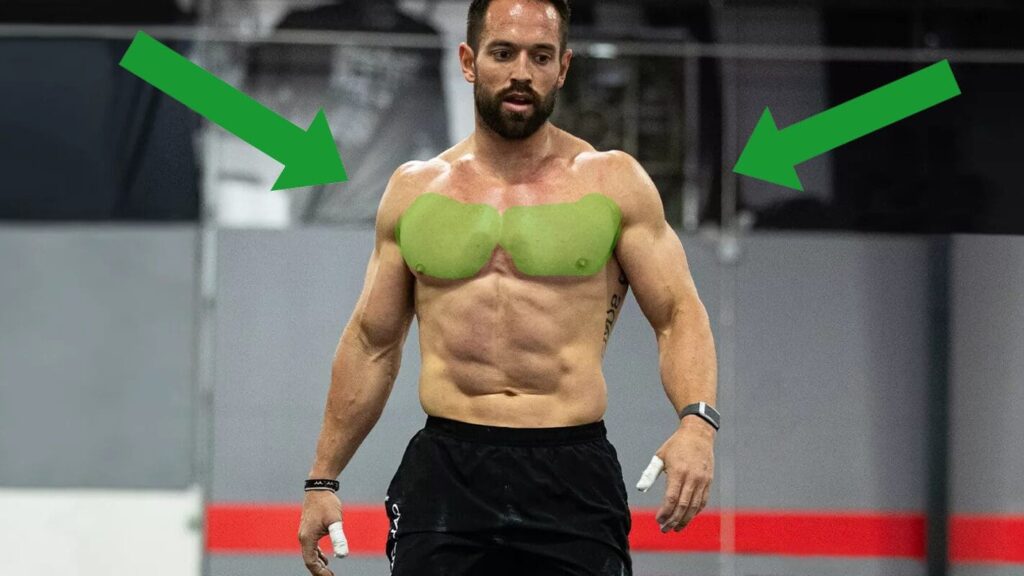
Your chest is a single large muscle rather than separate upper, middle, and lower muscles. However, its fibers run in different directions, and exercise angle can change which regions receive more mechanical demand. That matters because a chest that is well developed near the collarbones can look fuller from the front, more complete from the side, and more proportionate with the shoulders and arms.
Understanding the Chest Muscles
The pectoralis major is the main muscle trained during pressing exercises. It has a clavicular portion that originates near the collarbone and a much larger sternocostal portion that originates from the sternum and upper ribs. These sections work together to move the upper arm across the body, but their fiber direction means they may respond somewhat differently to pressing at different angles.
The anterior deltoid at the front of the shoulder and the triceps also contribute heavily to every bench press. As the bench becomes more upright, the exercise generally becomes more shoulder dominant. This is why setting an incline bench too high can turn a chest exercise into something much closer to a shoulder press.
Aesthetic chest development is not only about maximizing one muscle region. A well developed sternocostal portion gives the chest mass and depth, while a well developed clavicular portion helps fill the space below the collarbones. The balance between the two can make the chest look broader and more complete.
What the Flat Bench Press Does Best
Flat Bench Press Builds Overall Chest Mass
The flat barbell bench press allows most lifters to use more load than the incline version. That does not automatically make it superior for muscle growth, but it gives you an efficient way to accumulate hard sets and progressively challenge the chest, triceps, and shoulders.
Research examining muscle activity during different bench angles has generally found that a horizontal bench press produces high activity in the sternocostal portion of the pectoralis major. This matters because the sternocostal portion makes up a large share of the chest’s visible mass.
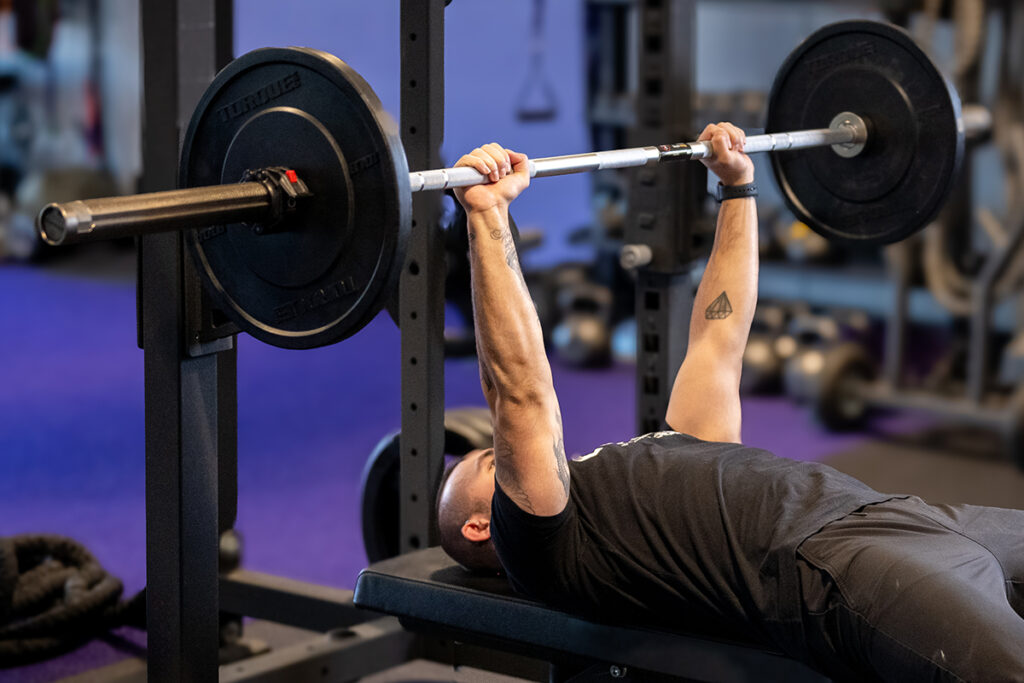
A flat bench press also has a simple and repeatable movement path. That makes it useful for tracking progress. If you can gradually perform more repetitions with the same weight, or increase the load while maintaining good form, you have a clear sign that your training is progressing.
For men who are relatively new to lifting, the flat bench press is often the best place to start. It teaches the basic pressing pattern, develops general upper body strength, and gives the chest a strong stimulus without requiring an overly complicated program.
Flat Bench Press Is Usually Better for Strength
Heavy resistance training tends to produce greater improvements in one repetition maximum strength than lighter training, although muscle growth can occur across a broad range of loads when effort is high. Because the flat bench press typically permits heavier loading, it is often the better choice when improving barbell bench strength is a major goal.
This does not mean you need to chase a maximal lift every week. Productive chest training can include moderate loads and controlled sets performed close to muscular failure. Still, having the flat bench press in your program gives you a useful platform for building strength over months and years.
The Limits of Flat Bench Press
The flat bench press is excellent, but it is not automatically enough for every lifter’s aesthetic goal. If your chest looks relatively flat near the collarbones or your shoulders visually overpower your chest, adding incline work can help provide a more balanced stimulus.
Flat pressing also requires careful technique. Excessively flared elbows, poor shoulder blade control, bouncing the bar, and lowering the bar to an uncomfortable position can make the movement less effective and less comfortable. Use a grip and range of motion that allow you to control the bar and train without pain.
What the Incline Bench Press Does Best
Incline Bench Press Emphasizes the Upper Chest
The incline bench press is the best bench press variation for placing greater emphasis on the clavicular portion of the pectoralis major. Studies using electromyography have found that bench angle changes the activation pattern of the chest and shoulders, with low to moderate inclines generally increasing the involvement of the clavicular chest fibers compared with a flat press.
This does not mean an incline press isolates the upper chest. The entire pectoralis major still works, along with the triceps and anterior deltoids. However, it can give the fibers near the collarbone a more useful training role than flat pressing alone.
For men who want a chest that looks fuller in a T shirt, from a front relaxed pose, or above the neckline of a low cut top, this emphasis can be valuable. More muscle in the upper chest can improve the transition between the chest, shoulders, and collarbones.
A Low Incline Is Usually the Best Choice
More incline is not always better. Research comparing several bench angles indicates that the anterior deltoid becomes increasingly involved as the bench becomes steeper. At a very steep angle, you may feel far more shoulder than chest, particularly if your front deltoids are already strong.
For most lifters, a bench angle around 15 to 30 degrees is a practical starting point. This is steep enough to change the line of press and emphasize the clavicular chest fibers, but low enough to avoid making the exercise predominantly shoulder driven.
Many commercial gym benches are set at approximately 45 degrees. This can still be a useful pressing exercise, but it is often more shoulder focused than necessary for chest development. If you have an adjustable bench, choose a low incline and see whether you can feel the chest working strongly while keeping the shoulders comfortable.
Incline Press Can Improve Chest Proportions
A large chest is not always a balanced chest. Some men build substantial thickness through flat pressing but still feel their upper torso lacks fullness. The incline press is valuable because it addresses that specific visual weakness.
This is especially relevant if you have long arms, naturally prominent shoulders, or a chest that appears to slope downward from the collarbones. Training the clavicular portion of the pectoralis major will not change your bone structure, but it can add muscular fullness where many lifters want it most.
Incline vs Flat Bench Press: The Direct Comparison
Neither exercise wins every category. The flat bench press is generally the stronger option for total load and overall chest strength. The incline bench press is the more targeted choice for building the upper portion of the chest.
The best looking chest usually comes from combining the strengths of both movements. You do not need equal volume from each exercise. Your preferred balance should depend on what your chest currently needs.

If your chest lacks overall size, make flat pressing the main lift and use incline pressing as additional work. If you already have solid chest mass but want more fullness near the collarbones, prioritize incline pressing for a training block while keeping some flat pressing in your routine.
Key Takeaways
| Exercise | Primary benefit | Best use | Practical bench angle |
|---|---|---|---|
| Flat bench press | Overall chest mass and pressing strength | Building a strong foundation and progressing heavy loads | Flat |
| Low incline bench press | Greater emphasis on the clavicular chest fibers | Improving upper chest fullness and chest proportions | About 15 to 30 degrees |
| Steep incline bench press | More anterior shoulder involvement | Shoulder focused pressing or variety | About 45 degrees or higher |
| Using both exercises | More complete chest development | Most men training for chest size and appearance | Flat plus a low incline |
How to Program Both Exercises for Chest Growth
Research shows a dose response relationship between weekly resistance training volume and muscle growth, with higher volumes generally producing more hypertrophy up to the point that recovery becomes limiting. The exact number of sets that works best varies between lifters, but consistent hard training and sufficient recovery matter more than finding a magical exercise ratio.
A simple starting point is to train the chest twice per week. On the first day, begin with the flat bench press and perform several challenging sets in a moderate repetition range. Follow this with a low incline dumbbell or barbell press. On the second day, reverse the order so the incline press receives your freshest effort.
Want a More Attractive Upper Body? Do These 3 Dumbbell Exercises
For example, you could perform three to four hard sets of flat bench press and two to three sets of incline pressing in one session. Later in the week, perform three to four hard sets of incline pressing and two to three sets of flat pressing. This gives both angles a meaningful role without making your workouts unnecessarily long.
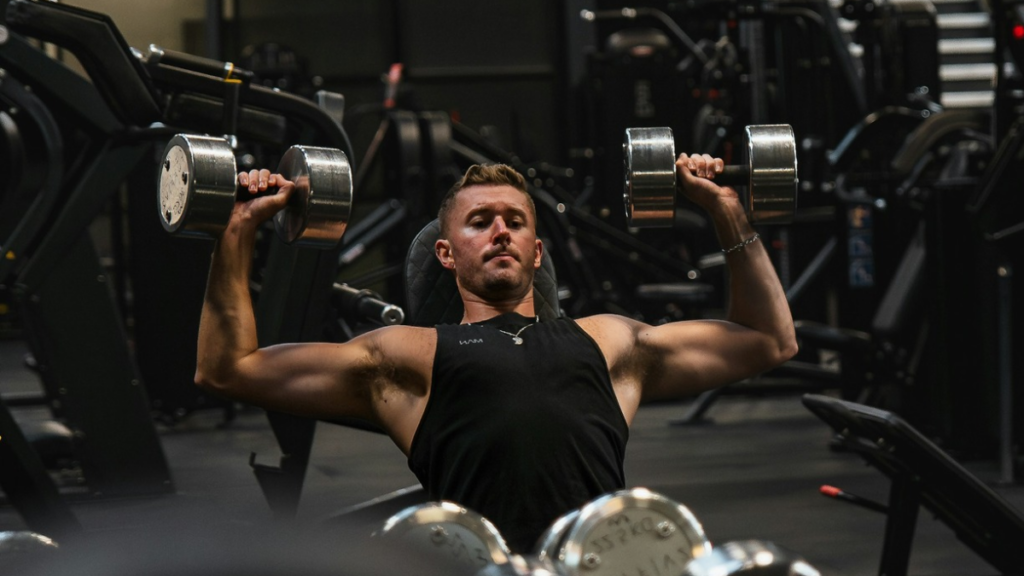
Dumbbells are also an effective option, particularly if a barbell bothers your shoulders or limits your range of motion. The key is to choose a load you can control, lower the weight through a comfortable range, and gradually increase repetitions or resistance as your strength improves.
Full range of motion resistance training generally produces at least comparable and often better muscle development than partial repetitions. Lower the bar or dumbbells under control to a comfortable depth, then press without bouncing or losing shoulder position. The goal is not to force an extreme stretch. The goal is to use a consistent range that loads the chest effectively and does not cause pain.
Technique That Keeps the Chest Working
Set your shoulder blades by pulling them gently together and down before each set. This creates a more stable base for pressing and helps prevent the shoulders from rolling forward as you lower the weight. Keep your feet firmly on the floor and maintain a stable torso.
On the flat bench press, lower the bar toward the lower portion of the chest rather than the neck. On the incline bench press, the bar usually travels toward the upper chest, but it should not come so high that your shoulders feel cramped. Keep your elbows at an angle that feels natural and controlled rather than forcing them directly out to the sides.
Use a grip that lets your forearms remain close to vertical near the bottom of the repetition. A very wide grip may reduce the range of motion and irritate some lifters’ shoulders, while an excessively narrow grip shifts more work to the triceps. There is no single perfect grip width for every man, so choose one that allows strong, pain free pressing.
The Verdict
If you can only choose one exercise, the flat bench press is the best all around option for building overall chest strength and mass. It is simple to progress, allows substantial loading, and effectively trains the large sternocostal portion of the pectoralis major.
However, the incline bench press deserves a regular place in most men’s programs. A low incline provides a useful emphasis on the clavicular chest fibers, which can improve upper chest fullness and make the chest look more complete.
For the best looking chest, do not treat incline and flat pressing as competitors. Treat them as complementary tools. Build strength and mass with the flat bench press, use a low incline press to develop the upper chest, train both consistently, and adjust the balance according to the areas you want to improve most.
References
- Barnett, C., Kippers, V. and Turner, P. (1995) ‘Effects of variations of the bench press exercise on the EMG activity of five shoulder muscles’, Journal of Strength and Conditioning Research, 9(4), pp. 222–227.
- Chaves, S.F.N., Rocha Júnior, V.A., Baroni, B.M., da Silva, D.P., Rigon, F.A., Scheffer, D.L., da Silva, R.A. and Vaz, M.A. (2020) ‘Effects of different bench press exercises on muscle adaptations in trained men’, International Journal of Exercise Science, 13(6), pp. 99–111.
- Lauver, J.D., Cayot, T.E. and Scheuermann, B.W. (2016) ‘Influence of bench angle on upper extremity muscular activation during bench press exercise’, European Journal of Sport Science, 16(3), pp. 309–316.
- Rodríguez Ridao, D., Antequera Vique, J.A., Martín Fuentes, I., Muyor, J.M. and Molina, A. (2020) ‘Effect of five bench inclinations on the electromyographic activity of the pectoralis major, anterior deltoid and triceps brachii during bench press exercise’, International Journal of Environmental Research and Public Health, 17(19), 7339.
- Schoenfeld, B.J., Grgic, J. and Krieger, J. (2019) ‘How many times per week should a muscle be trained to maximize muscle hypertrophy? A systematic review and meta analysis of studies examining the effects of resistance training frequency’, Sports Medicine, 49(10), pp. 1473–1482.
- Schoenfeld, B.J. and Grgic, J. (2020) ‘Effects of range of motion on muscle development during resistance training interventions: A systematic review’, SAGE Open Medicine, 8, pp. 1–11.
- Schoenfeld, B.J., Grgic, J., Ogborn, D. and Krieger, J.W. (2017) ‘Strength and hypertrophy adaptations between low and high load resistance training: A systematic review and meta analysis’, Journal of Strength and Conditioning Research, 31(12), pp. 3508–3523.
- Schoenfeld, B.J., Ogborn, D. and Krieger, J.W. (2017) ‘Dose response relationship between weekly resistance training volume and increases in muscle mass: A systematic review and meta analysis’, Journal of Sports Sciences, 35(11), pp. 1073–1082.