

Building a stronger, more muscular back is one of the best things a beginner can do in the gym. Your back helps you pull, lift, carry, support good posture, and create the wider upper body shape that many people want. It also matters for balanced training. A program that includes plenty of pressing but little pulling can leave important muscles undertrained.
Pull ups and rows are two of the most useful back exercises available. Both can build muscle, improve strength, and teach the body how to control the shoulder blades. However, they are not interchangeable. Pull ups are a vertical pulling exercise, while rows are a horizontal pulling exercise. That difference changes the way each movement feels, the muscles that receive the most attention, and how easy it is for a beginner to progress.


So, which is better? For most beginners, rows are the better place to start because they are easier to scale, easier to load gradually, and less likely to turn into a battle with body weight and poor technique. Pull ups remain an excellent long term goal and a valuable exercise once you can perform them with control. The strongest answer is not to choose one forever. It is to use rows to build the foundation, then add pull ups as your strength develops.
What Makes a Strong and Muscular Back?
Your back is made up of several muscle groups that work together during pulling movements. The latissimus dorsi, commonly called the lats, are the large muscles that run from the lower back toward the upper arm. Developing them contributes heavily to a wider looking torso. The trapezius, rhomboids, rear deltoids, and muscles around the shoulder blades help control the upper back and support strong posture.
Resistance training can increase muscle size and strength when the exercises are performed with enough effort, volume, and progression. Research shows that a range of resistance training loads can stimulate muscle growth when sets are challenging, although heavier loads are generally more useful for improving maximal strength. For beginners, the practical lesson is simple: the best exercise is one you can perform safely, consistently, and with a clear path to gradual improvement.
A well developed back does not come from one movement alone. Vertical pulling and horizontal pulling train the upper body from different angles. A beginner who learns both patterns will usually build a more complete back than someone who only performs one.
Pull Ups: What They Do Well
Pull Ups Train Vertical Pulling Strength
A pull up requires you to hang from a bar and pull your body upward until your chin clears the bar. During the movement, the lats, biceps, upper back, forearms, and muscles that stabilize the shoulder blades all contribute. It is a demanding exercise because you are lifting a large percentage of your body weight.
Pull ups can be especially rewarding because progress is easy to recognize. Going from zero repetitions to one clean pull up is a major achievement. Adding more repetitions over time is a clear sign that your pulling strength and relative strength have improved.
The movement also requires a stable torso and a controlled hanging position. This can help beginners develop grip strength and confidence while suspended from a bar. Those qualities can carry over to other gym exercises and everyday tasks that involve pulling and holding.
Pull Ups Can Build the Lats Effectively
The lats play a major role in bringing the upper arm down toward the body, which is exactly what happens during a pull up. This makes pull ups a useful choice for people who want to build a wider looking back. The exercise also trains the arms strongly, particularly the biceps, which may make it feel more demanding than a row performed with a moderate load.
Grip choice can change comfort and emphasis slightly. A chin up uses an underhand grip and is often easier for beginners because the biceps can contribute more. A pronated pull up uses an overhand grip and may feel more challenging. Both can be valuable, provided the movement is controlled and pain free.
The Main Limitation for Beginners
The problem is that many beginners cannot yet perform a full pull up with good form. This is not a failure. Pull ups are difficult because body weight is the resistance, and beginners may not yet have the pulling strength or strength to body mass ratio needed for full repetitions.
Trying to force full pull ups before you are ready can lead to shortened range of motion, swinging, shrugging, and excessive strain on the elbows or shoulders. These habits can make the exercise less effective and harder to progress.
Assisted pull up machines, resistance band assistance, and controlled lowering repetitions can help. However, they still require good shoulder control and can be harder to measure and progress than a well chosen row variation.
Rows: What They Do Well
Rows Are Easier to Learn and Progress
Rows involve pulling resistance toward your torso while keeping the upper body in a stable position. Examples include seated cable rows, chest supported dumbbell rows, machine rows, and one arm dumbbell rows. These variations allow beginners to choose a resistance level that matches their current ability.
This is a major advantage. You can start with a light weight, learn the movement, and make small increases over time. Progressive overload is one of the central principles of resistance training. As your body adapts, you gradually ask it to do more work through added load, more repetitions, more sets, or improved control.
A cable row or chest supported row is often easier to learn than a pull up because it reduces the need to control your full body weight. This allows a beginner to focus on pulling the elbows back, keeping the chest steady, and moving the shoulder blades through a controlled range.
Rows Target the Upper Back
Rows are particularly useful for training the muscles around the shoulder blades. The rhomboids, middle trapezius, rear deltoids, and lats all contribute as you pull your elbows behind your body. This makes rows an excellent choice for adding thickness to the upper and middle back.
The exact muscle emphasis will vary based on the row variation and elbow path. Pulling with the elbows close to the body usually places more emphasis on the lats. Pulling with the elbows slightly wider can involve more upper back and rear shoulder musculature. Both approaches can have a place in a beginner program.
Rows can also help teach scapular control. In simple terms, that means learning to let the shoulder blades move forward under control, then drawing them back as you pull. This is useful for efficient upper body movement and can improve how stable your shoulders feel during pressing and pulling exercises.
Rows Do Not Require Perfect Body Weight Strength
A beginner can perform a productive row even if they cannot yet do a single pull up. That makes rows more accessible and often more motivating. You can train hard enough to make progress without feeling limited by a movement that is currently too difficult.
This does not mean rows are easy. A heavy row performed with poor technique can become more of a lower back exercise than a back exercise. Beginners often benefit from seated, chest supported, or machine row variations because they reduce the temptation to use momentum. These exercises make it easier to focus on the target muscles.
Pull Ups vs Rows for Back Muscle Growth
Both pull ups and rows can build muscle when they are included in a progressive resistance training program. The more useful question is which movement lets a beginner perform enough high quality work consistently.
For a beginner who cannot perform multiple controlled pull ups, rows will usually provide a better muscle building stimulus. You can complete more good repetitions, use an appropriate load, and maintain technique from set to set. This gives you a reliable way to train the back without turning every set into an all out effort.
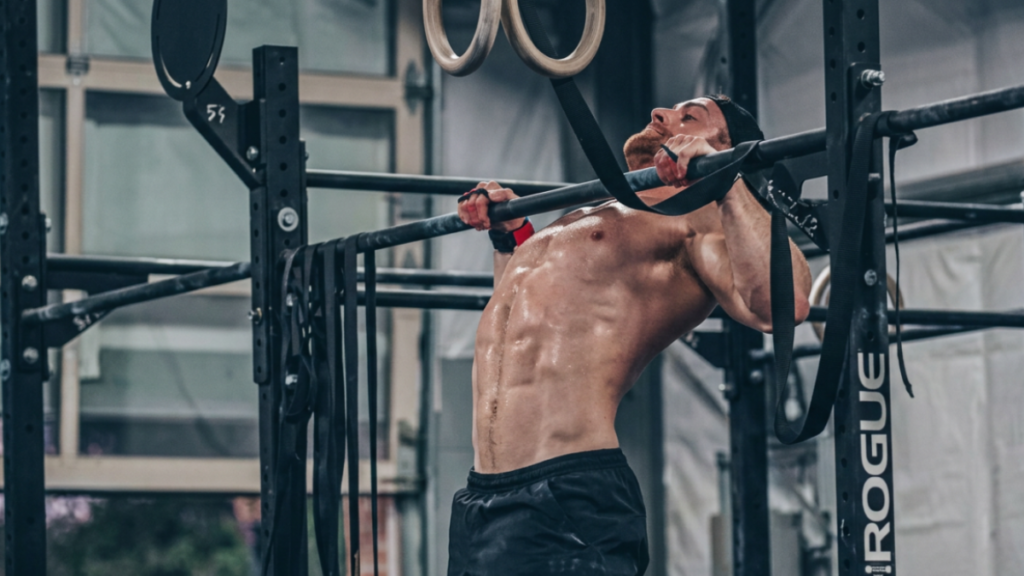
Pull ups become more useful as your strength increases. Once you can perform several strict repetitions, they can be loaded with extra weight or performed for higher total volume. At that point, they become a very efficient exercise for building the lats, arms, grip, and overall pulling strength.
Neither exercise is automatically superior for every part of the back. Pull ups have a stronger vertical pulling component and are often a better challenge for the lats and body weight pulling strength. Rows give more direct practice in horizontal pulling and can be especially useful for upper back thickness and shoulder blade control.
Which Exercise Is Better for Strength?
Pull ups are a demanding test of relative strength. They require you to move your body through space and keep the torso controlled throughout the repetition. For this reason, improving at pull ups can be satisfying and highly practical.
Rows are better for building the early strength foundation that supports pull ups. A beginner can increase the resistance steadily and practice the pulling motion without being limited by body weight. Stronger lats, upper back muscles, biceps, and grip can all make future pull up training more successful.
This is why rows are often the better starting exercise, while pull ups are the better benchmark. Rows build capacity. Pull ups show how well that capacity transfers to lifting your own body.
How Beginners Should Use Both Exercises
Start With Rows
Most beginners should begin with two or three weekly rowing sessions. You do not need to perform the same row every time. A seated cable row, chest supported dumbbell row, and machine row can all work well.
Use a weight that allows you to complete roughly eight to fifteen controlled repetitions. The final few repetitions should feel challenging, but your torso should remain stable and the movement should not become jerky. Over time, add a small amount of weight or perform more repetitions with the same weight.
A useful cue is to pull your elbows toward your hips or behind your body rather than thinking only about moving the handle. Let the shoulder blades move naturally, then finish each repetition with a controlled squeeze through the upper back.
Add Assisted Pull Ups
Once rows feel stronger and more confident, add assisted pull ups. An assisted pull up machine is often the simplest option because you can adjust the assistance precisely. Resistance bands can also work well, although the assistance changes throughout the range of motion.
Start with a level of assistance that allows you to perform controlled repetitions without swinging. Aim to use a full range of motion, beginning from a secure hang and finishing with the chin over the bar. Keep the movement smooth, and avoid rushing through the lowering phase.
As you improve, reduce assistance gradually. If you can perform one or two strict repetitions, use those first and then finish the set with assisted repetitions. This allows you to practice the full movement while still accumulating useful training volume.
Use Controlled Lowering Repetitions Carefully
Lowering repetitions involve stepping or jumping to the top of the pull up and taking several seconds to lower yourself. Eccentric training can help build strength, but it can also create considerable muscle soreness. Beginners should use it carefully, particularly if their elbows or shoulders are sensitive.
Perform a small number of controlled lowering repetitions after rows or assisted pull ups. Focus on a smooth descent instead of trying to make the lowering phase extremely long. If pain develops, stop and use a more manageable variation.
Common Beginner Mistakes
One common pull up mistake is trying to use momentum before you have built enough strength. Swinging and kicking may help get the chin over the bar, but they reduce the quality of the pulling work and make it harder to learn control. Use assistance instead.
A common rowing mistake is turning the exercise into a whole body heave. If your lower back is moving dramatically and the weight is snapping toward your torso, the load is probably too heavy. Reduce the resistance and use a slower, cleaner repetition.
Another mistake is only training one pulling direction. Rows alone can build a good back, but including vertical pulling over time makes training more complete. Pull ups alone can also be effective, but they do not replace the benefits of regular rowing work.
The Verdict
Rows build the better back for most beginners because they are easier to learn, easier to progress, and easier to perform with enough quality volume. They allow you to train the lats, upper back, rear deltoids, and arm muscles effectively while developing the strength needed for more advanced pulling exercises.
Pull ups are still one of the best body weight exercises you can learn. They build vertical pulling strength, challenge the lats and arms, and provide a clear measure of progress. They simply require more preparation for many beginners.
The best approach is to make rows the foundation and pull ups the goal. Train rows consistently, practice assisted pull ups when ready, and move toward strict repetitions over time. This combination gives beginners the most reliable route to a stronger, wider, and more balanced back.
Key Takeaways
| Question | Best answer for beginners |
|---|---|
| Which exercise is easiest to begin with? | Rows, because the load can be adjusted precisely and technique is easier to learn. |
| Which exercise is best for building early back muscle? | Rows are usually the better starting choice because beginners can perform more controlled training volume. |
| Which exercise is best for vertical pulling strength? | Pull ups, especially once you can perform strict repetitions with control. |
| Should beginners only perform rows or pull ups? | No. Start with rows, then add assisted pull ups and progress toward strict repetitions. |
| What is the best long term plan? | Use rows for upper back strength and muscle, then use pull ups to build complete vertical pulling ability. |
References
- American College of Sports Medicine (2009) ‘American College of Sports Medicine position stand: Progression models in resistance training for healthy adults’, Medicine and Science in Sports and Exercise, 41(3), pp. 687 to 708.
- Lusk, S.J., Hale, B.D. and Russell, D.M. (2010) ‘Grip width and forearm orientation effects on muscle activity during the lat pull down’, Journal of Strength and Conditioning Research, 24(7), pp. 1895 to 1900.
- Morton, R.W., Murphy, K.T., McKellar, S.R. et al. (2018) ‘A systematic review, meta analysis and meta regression of the effect of protein supplementation on resistance training induced gains in muscle mass and strength in healthy adults’, British Journal of Sports Medicine, 52(6), pp. 376 to 384.
- Schoenfeld, B.J., Grgic, J., Ogborn, D. and Krieger, J.W. (2017) ‘Strength and hypertrophy adaptations between low versus high load resistance training: A systematic review and meta analysis’, Journal of Strength and Conditioning Research, 31(12), pp. 3508 to 3523.
- Schoenfeld, B.J., Ogborn, D. and Krieger, J.W. (2017) ‘Dose response relationship between weekly resistance training volume and increases in muscle mass: A systematic review and meta analysis’, Journal of Sports Sciences, 35(11), pp. 1073 to 1082.
- Schoenfeld, B.J., Ogborn, D. and Krieger, J.W. (2019) ‘Effects of resistance training frequency on measures of muscle hypertrophy: A systematic review and meta analysis’, Sports Medicine, 49(2), pp. 255 to 262.