Dumbbells can build an excellent chest. You can press with a large range of motion, adjust your hand position to suit your shoulders, train each side independently, and use several effective movement patterns without needing a barbell or a machine. For many people training at home, dumbbells are enough to add real size and strength to the chest.
However, using dumbbells exclusively changes what you can prioritize. You will likely develop strong pressing muscles and a more controlled chest press, but you will not become as skilled at barbell bench pressing, and your available loading may eventually limit progress. Whether dumbbells alone are enough depends on your goal, how heavy your dumbbells are, how consistently you train, and whether you continue to make the exercises harder over time.


The good news is that muscle growth does not require one specific piece of equipment. The chest responds to hard resistance training, sufficient weekly work, a challenging effort, and progressive overload. Dumbbells can provide all of those things when they are used well.
What Dumbbells Train in Your Chest
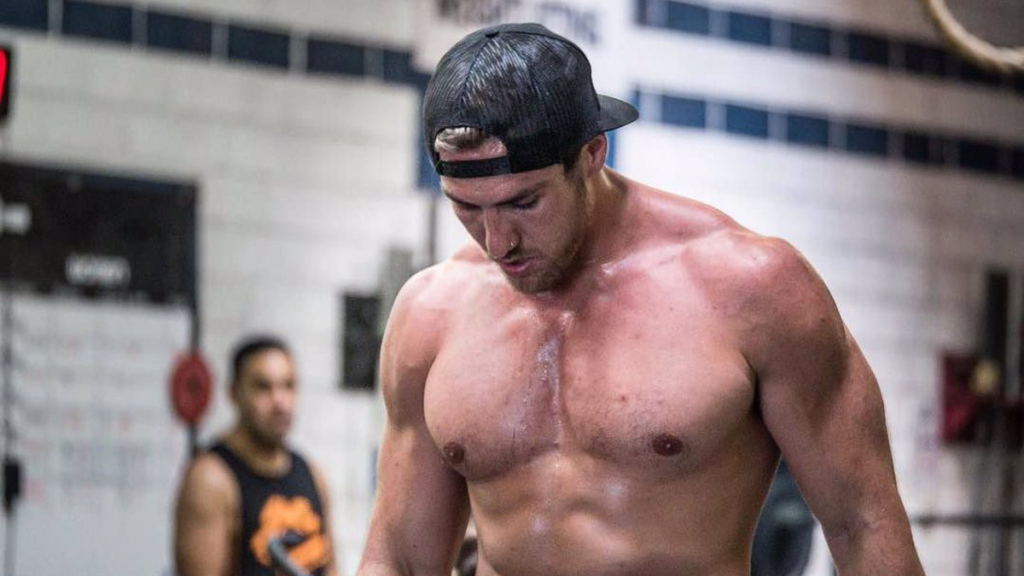
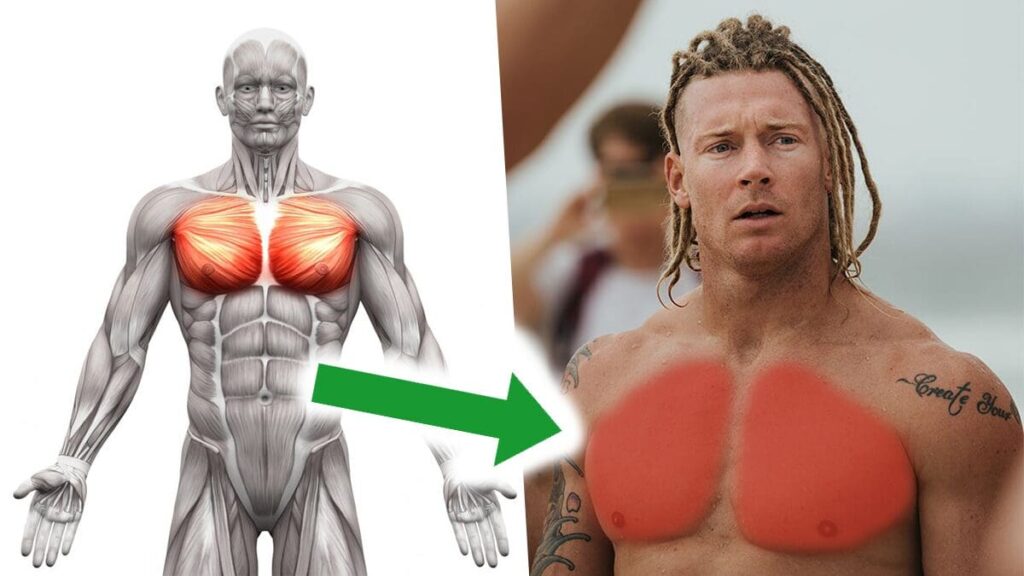
The pectoralis major is the large muscle that gives the chest most of its visible size. It contributes to bringing the upper arm toward the body, moving the arm across the body, and assisting pressing movements. Chest presses, flyes, and push up variations all train this muscle, although the relative contribution of the chest, shoulders, and triceps changes with the exercise and technique used.
A dumbbell press is a compound movement. Your chest produces force to bring the upper arms inward and upward, while your triceps straighten the elbows and your front shoulders assist the press. This makes presses an efficient foundation exercise because they allow you to use more load than a fly while training several important upper body muscles at once.

Dumbbell flyes are different. They use very little elbow movement, so they place more emphasis on bringing the upper arms toward the midline of the body. They can be useful for adding chest focused work after presses, but they require much lighter loading and careful control. Research comparing barbell bench presses and dumbbell flyes found that the bench press produced higher pectoralis major activity overall, which is a useful reminder that flyes should support pressing rather than replace it as the main chest builder.
Dumbbells Let Each Side Work Independently
A barbell connects both arms. Dumbbells do not. That means each arm must press and control its own weight through every repetition. If one side of your chest, shoulder, or triceps is stronger, the stronger side cannot quietly do more of the work in the same way it can during a barbell lift.
This does not mean dumbbells automatically fix every imbalance. Most people need focused technique and enough time for side to side differences to change. Still, dumbbells give you a clear way to notice whether one side is less stable, weaker, or losing position sooner. You can use that information to keep your reps even and avoid allowing your dominant arm to dictate every set.
The independent loading also increases the coordination demand. Your shoulders and upper back must stabilize each dumbbell while your chest and triceps press. That can make a dumbbell press feel difficult even with a load that appears modest compared with a barbell.
You Can Build Serious Chest Size With Dumbbells
The most important point is simple: dumbbells can stimulate hypertrophy when the sets are challenging and your training progresses. Studies comparing a range of training loads show that muscle growth can occur across a wide spectrum of repetitions when total work is comparable and sets are performed with a sufficiently hard effort. You do not need extremely heavy dumbbells to grow your chest.
If your dumbbells are light, you can use more repetitions. A set of 15 to 30 controlled reps can still be productive when it takes you close to the point where another clean repetition would be very difficult. The final few reps should require concentration, but your technique should remain controlled. Training to absolute failure on every set is not essential, although working reasonably close to failure is an effective way to ensure a light load is challenging enough.
Weekly training volume also matters. Research shows a dose response relationship between the amount of resistance training performed and muscle growth, although more sets are not automatically better forever. For most people, several hard chest sets performed across the week will work better than one occasional all out session.
If dumbbells are your only chest equipment, you can create enough useful variety with flat pressing, incline pressing, floor pressing, squeeze presses, flyes, and one arm presses. You do not need to perform every variation in every workout. You need a simple plan that lets you add repetitions, load, sets, or better execution over time.
A Bigger Range of Motion Can Be an Advantage
One of the biggest benefits of dumbbells is the freedom to use a comfortable range of motion. With a barbell, the bar touches the chest and ends the descent. With dumbbells, you may be able to lower the weights farther beside your torso if your shoulder mobility and control allow it.
A larger range can increase the amount of movement performed by the shoulder and chest. Research on resistance training range of motion generally supports using a full controlled range for strength development and muscle growth when it is comfortable and technically sound. This does not mean you should force your shoulders into an extreme stretched position. It means you should avoid cutting every repetition short when you have the mobility to lower the dumbbells under control.
For a dumbbell chest press, lower the weights slowly until your upper arms reach a position that feels stable and comfortable. Your elbows should not be forced far behind your torso simply because you think deeper is always better. The correct depth is the one you can control without shoulder discomfort, loss of position, or bouncing.

A dumbbell fly creates a long lever at the shoulder, especially at the bottom. That makes the stretched position demanding even with light weights. Keep a small bend in the elbows, use a load you can control, and stop the descent before your shoulders lose a strong position.
Your Chest Strength Will Improve, But It Will Be Specific
If you train dumbbell presses consistently, you will become stronger at dumbbell pressing. Your chest, triceps, front shoulders, and stabilizing muscles will adapt to the movement. You may also find that pressing everyday objects, getting up from the floor, or performing push ups feels easier.
But strength is specific to the movement you practice. If you only use dumbbells, you should not expect your barbell bench press to increase at exactly the same rate. A barbell bench press requires a different setup, a fixed hand position, a different bar path, and the ability to coordinate both arms against one shared load.
Research comparing dumbbell, barbell, and machine bench press variations has found meaningful differences in muscle activation and repetition performance between the exercises. In trained men, dumbbell bench pressing produced greater pectoralis major activity than barbell bench pressing in one study, while the barbell and machine variations produced greater triceps activity. These findings are useful, but they do not prove one movement is universally superior for chest growth. Electromyography measures activity during a single exercise session, not months of muscle gain.
The practical conclusion is more useful than arguing over the perfect exercise. Dumbbells are highly effective for building the chest, but a barbell remains the more specific tool if your goal is a bigger barbell bench press. If you compete in powerlifting or simply care deeply about your one repetition maximum bench press, some barbell practice is necessary.
Heavy Loading Can Become the Main Limitation
The main weakness of a dumbbell only chest plan is not that dumbbells are ineffective. It is that many gyms and home setups eventually run out of heavy dumbbells.
A strong lifter may be able to press far more weight with a barbell than they can realistically set up with two dumbbells. Getting heavy dumbbells into position can also become awkward. The lift may be limited by the effort of kicking the weights into place rather than by the capacity of the chest itself.
You can extend the usefulness of lighter dumbbells with more repetitions, slower lowering phases, pauses near the stretched position, and one arm pressing. These methods can make a modest load much more demanding. They are useful tools, but they do not completely replace the ability to add substantial external load forever.
For general muscle building, this may not matter for a long time. For advanced lifters with limited dumbbell options, it can eventually slow progression. Adjustable dumbbells, access to heavier pairs, push up variations with added load, or occasional barbell and machine work can solve the problem.
Dumbbells May Feel Better on Your Shoulders
Many lifters find dumbbells more comfortable than a barbell because the hands can rotate naturally during the press. Instead of locking into one fixed grip, you can use a neutral grip, a slightly angled grip, or a traditional palms forward position. You can also adjust the path of each dumbbell slightly to match your individual shoulder structure.
3 Forgotten Shoulder Exercises for a Broader Upper Body
Comfort matters because a chest program only works when you can repeat it consistently. If a straight bar aggravates your shoulders but a dumbbell press feels smooth, dumbbells may allow you to train the chest with better confidence and better quality repetitions.
That said, no dumbbell exercise is automatically safe for every shoulder. Pain, numbness, repeated instability, or a sharp pinching sensation should not be ignored. Reduce the range, lower the load, improve your setup, or seek advice from a qualified health professional if symptoms persist.
Keep your shoulder blades pulled gently back and down on bench presses, keep your feet firmly planted, and lower the weights under control. Your elbows do not need to flare directly outward. A position somewhat closer to your torso is often easier to control and can reduce unnecessary stress on the front of the shoulder.
The Best Dumbbell Only Chest Plan
A dumbbell only approach works best when it includes one main press, one variation that changes the angle or challenge, and optional fly work. The flat dumbbell bench press should usually be the foundation because it lets you use a meaningful load and progressively build strength.
An incline dumbbell press can shift the emphasis toward the upper portion of the chest, although it also increases the contribution from the front shoulders. A moderate incline is usually more practical than an extremely steep bench angle. If your shoulders take over every repetition, lower the bench angle slightly and focus on controlled pressing.
Dumbbell floor presses are useful if you do not have a bench or want to reduce the depth of the movement. The floor limits the bottom range, which can be more comfortable for some lifters, but it also removes some of the stretched position that makes a full dumbbell bench press valuable.
The dumbbell squeeze press is another useful option. Hold the dumbbells together and actively press them into each other as you press upward. The load will be lighter than a normal press, but the constant inward effort can make the chest work hard through the movement.
For a simple weekly structure, train chest twice per week. On each day, begin with three to five hard sets of a dumbbell press. Follow with two to four sets of a second press or squeeze press. Finish with two to three controlled sets of dumbbell flyes if your shoulders tolerate them well. This gives you enough practice and enough volume without turning your chest training into a complicated exercise collection.
Progress can be as simple as adding one repetition to a set. Once you reach the top of your chosen repetition range with good form, increase the load if possible. If you cannot increase the load, add reps, slow the lowering phase, add a pause, or add a set. Record your training so you can see whether your performance is actually improving.
The Bottom Line
Only using dumbbells for chest training can build a muscular, strong, and well developed chest. Dumbbells allow independent arm movement, a potentially larger controlled range of motion, flexible hand positions, and enough exercise variety to train the chest productively for a long time.
The tradeoff is specificity and loading. You will get better at dumbbell presses rather than barbell bench presses, and very strong lifters may eventually need heavier equipment or other progression methods. For anyone focused on chest size, general pressing strength, home training, or shoulder friendly exercise options, dumbbells are far more than a backup choice.
The quality of your training matters more than the equipment label. Use a stable technique, train hard enough, work through a comfortable range, and find a way to make your sets more demanding over time. Do that consistently, and your chest has every reason to grow.
References
- Farias, D.A., Willardson, J.M., Paz, G.A., Bezerra, E.S. and Miranda, H. (2017) ‘Maximal strength performance and muscle activation for the bench press and triceps extension exercises adopting dumbbell, barbell, and machine modalities over multiple sets’, Journal of Strength and Conditioning Research, 31(7), pp. 1879 to 1887.
- Kassiano, W., Costa, B., Nunes, J.P., Ribeiro, A.S., Schoenfeld, B.J. and Cyrino, E.S. (2023) ‘Which ROMs lead to Rome? A systematic review of the effects of range of motion on muscle hypertrophy’, Journal of Strength and Conditioning Research, 37(5), pp. 1135 to 1144.
- Pallarés, J.G., Hernández Belmonte, A., Martínez Cava, A., Vetrovsky, T., Steffl, M. and Courel Ibáñez, J. (2021) ‘Effects of range of motion on resistance training adaptations: A systematic review and meta analysis’, Scandinavian Journal of Medicine and Science in Sports, 31(10), pp. 1866 to 1881.
- Refalo, M.C., Helms, E.R., Trexler, E.T., Hamilton, D.L., Fyfe, J.J. and colleagues (2023) ‘Influence of resistance training proximity to failure on skeletal muscle hypertrophy: A systematic review with meta analysis’, Sports Medicine, 53(3), pp. 649 to 665.
- Schoenfeld, B.J., Ogborn, D. and Krieger, J.W. (2017) ‘Dose response relationship between weekly resistance training volume and increases in muscle mass: A systematic review and meta analysis’, Journal of Sports Sciences, 35(11), pp. 1073 to 1082.
- Schoenfeld, B.J., Grgic, J., Ogborn, D. and Krieger, J.W. (2017) ‘Strength and hypertrophy adaptations between low versus high load resistance training: A systematic review and meta analysis’, Journal of Strength and Conditioning Research, 31(12), pp. 3508 to 3523.
- Solstad, T.E., Andersen, V., Shaw, M., Hoel, E.M., Vonheim, A. and Saeterbakken, A.H. (2020) ‘A comparison of muscle activation between barbell bench press and dumbbell flyes in resistance trained males’, Journal of Sports Science and Medicine, 19(4), pp. 645 to 651.
Key Takeaways
| Topic | What it means |
|---|---|
| Chest growth | Dumbbells can build substantial chest muscle when training is challenging and progressive. |
| Main benefit | Each arm works independently, allowing more freedom of movement and control. |
| Range of motion | Dumbbells can allow a larger controlled range than a barbell press for many lifters. |
| Strength | Dumbbell strength improves well, but it does not fully replace barbell bench press skill. |
| Main limitation | Limited dumbbell loading can eventually slow progress for advanced lifters. |
| Best approach | Build training around dumbbell presses, add a second press variation, and use flyes carefully as accessory work. |