Push ups and bench presses are both effective chest exercises. The better choice depends less on gym tradition and more on whether you can apply enough resistance, train close enough to fatigue, progress the exercise over time, and perform it consistently without pain.
The bench press is often treated as the automatic winner for chest development because it makes heavy loading easy. Push ups are sometimes dismissed as a beginner exercise or a conditioning drill. Research does not support such a simple conclusion. When the resistance is matched, push ups can produce similar increases in pectoralis major muscle thickness and pressing strength.


That does not mean the two exercises are identical. The bench press is usually easier to load heavily and precisely. Push ups are convenient, demand trunk control, and can become very challenging with the right variation or external load. Understanding these differences will help you choose the exercise that is most likely to build chest muscle for you.
What Actually Builds Chest Muscle?
The pectoralis major grows when it receives repeated, challenging mechanical tension through resistance training. Exercise selection matters, but it is only one part of the picture. Weekly training volume, effort, range of motion, recovery, and progressive overload all influence hypertrophy.
Research comparing different resistance training loads shows that muscle growth can be similar across a wide range of loads when the work is sufficiently hard and total training volume is comparable. Heavier loads tend to be more effective for improving one repetition maximum strength, while lower loads can still build muscle when sets are taken close enough to muscular failure.
Over 30? 5 Barbell Exercises You Should Do to Protect Your Body Against Injury
This principle is central to the push up versus bench press debate. A standard push up can be challenging enough to stimulate the chest for some people, especially beginners. For stronger lifters who can perform many easy repetitions, it may no longer provide enough tension unless the exercise is progressed. The bench press makes progression simpler because you can add small amounts of weight to the bar.
Neither exercise builds muscle because of its name. Both work when they create a demanding and repeatable training stimulus.
Push Ups: A Powerful Chest Builder When They Are Challenging Enough
A push up is a compound pressing exercise that trains the pectoralis major, triceps, anterior deltoids, and several muscles that stabilize the shoulder blades and trunk. In a standard push up, you lift a substantial portion of your body mass rather than your entire body mass. The exact load depends on body position and individual body proportions.

Research measuring force during push ups has shown that the standard version requires the hands to support roughly two thirds of bodyweight. A knee push up reduces that amount, while changes in hand and foot position can alter both the resistance and muscle activity. This makes push ups much more flexible than they first appear.
A direct eight week study compared push up training with low load bench press training in young men. The researchers adjusted the push up position so its resistance was similar to 40 percent of the participants’ bench press maximum. Both groups increased pectoralis major thickness and pressing strength, with no meaningful difference in chest hypertrophy between the groups.
That finding is important. It shows that push ups can build chest muscle when they are loaded appropriately. It does not prove that ordinary bodyweight push ups will work forever for every lifter. The resistance must remain challenging as you get stronger.
How to Make Push Ups Harder
If you can perform more than about 20 controlled standard push ups, you may need a more difficult variation to keep the exercise effective for muscle growth. Elevating the feet is one option. This shifts more bodyweight toward the hands and increases the pressing demand. Wearing a weighted vest or placing a stable load across the upper back can also increase resistance.
Resistance bands can work well when attached behind the back and held in the hands. They provide less tension near the bottom and more tension as you press upward. This changes the resistance profile but gives you a practical way to progress without a barbell.
You can also slow the lowering phase, pause near the bottom, or use handles to increase the range of motion. These methods should be used to make the set more demanding while maintaining a natural shoulder position. Adding a difficult variation is more productive than endlessly performing high repetition sets that no longer approach fatigue.
Push ups also require more whole body control than bench presses because the body moves as one unit. The trunk and hips must remain organized as the arms press. This can be useful, although it does not automatically make push ups superior for chest growth. For hypertrophy, the chest still needs enough resistance and hard sets.
Push Up Technique for Chest Development
Place the hands slightly wider than shoulder width and keep them in a position that feels comfortable for your shoulders. Lower your chest toward the floor while allowing the elbows to travel at a moderate angle from the torso. An extremely narrow hand position tends to increase the relative contribution of the triceps, while a hand position that is excessively wide can reduce comfort and range of motion.
Keep the body in a straight line from the head through the heels. Lower under control until the chest reaches the floor or until you achieve your deepest comfortable range. Then press the floor away until the elbows are extended without forcefully locking or shrugging the shoulders toward the ears.
A controlled push up can produce high pectoralis major muscle activity. However, muscle activation measurements alone do not prove that an exercise produces more growth. The most useful lesson is that the chest is clearly working during a well performed push up, particularly when the variation is difficult enough.
Bench Press: The Easier Exercise to Progress Precisely
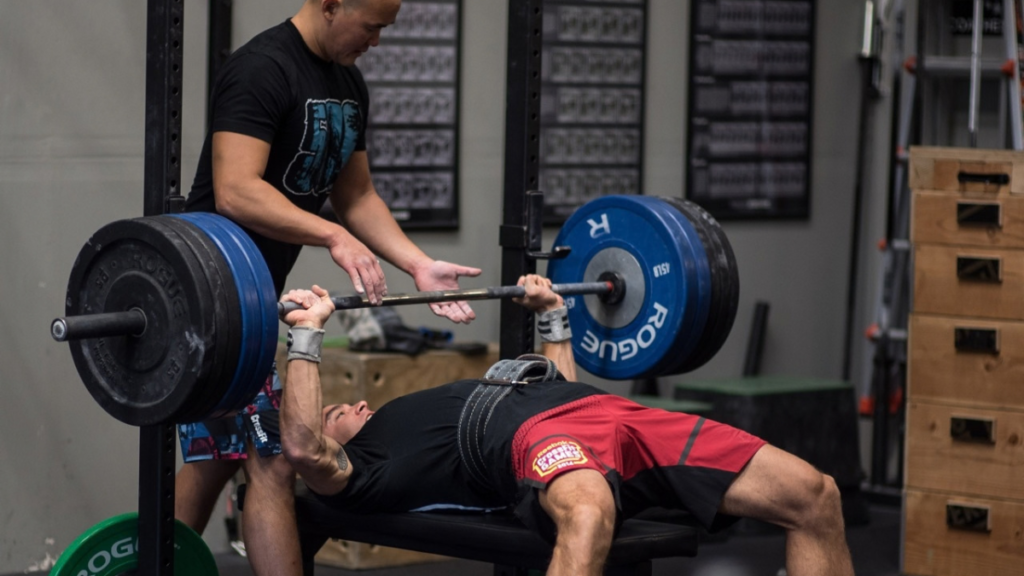
The bench press offers one major advantage for chest growth: it is easy to load in small, measurable increments. You can start with a barbell, dumbbells, a machine, or cables, then increase the resistance gradually as your strength improves.
This makes the bench press particularly useful for intermediate and advanced lifters. Once bodyweight push ups become easy, a barbell bench press lets you keep the repetition range moderate and challenging. You can perform sets of six to 12 repetitions with a load that brings you close to fatigue without needing an advanced push up variation.
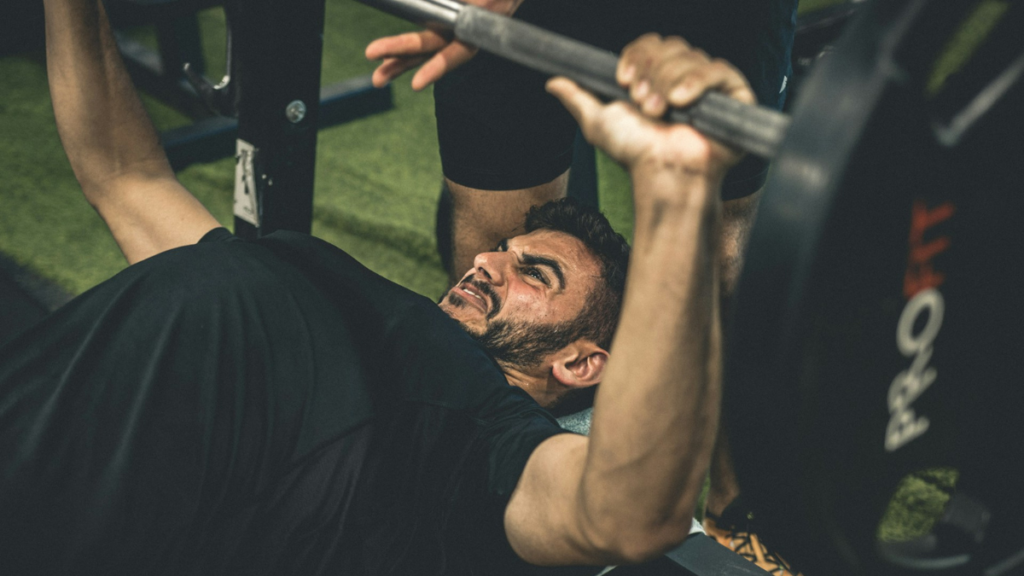
A study comparing push ups and bench presses across several comparable loads in resistance trained men found similar muscle activation and movement characteristics between the exercises. The researchers concluded that loaded push ups and bench presses can be used interchangeably for strength training when the external loads are comparable.
The word comparable is crucial. A light push up variation and a heavy bench press are not equivalent simply because both involve pressing. The effort, range of motion, and resistance must be matched as closely as possible.
Why the Bench Press Often Wins for Strong Lifters
A strong lifter may need a very difficult push up variation to reach failure within a practical repetition range. Weighted push ups can solve this problem, but they require equipment and a reliable way to load the movement. A bench press is often more convenient because plates, dumbbells, and machines allow precise adjustments.
The bench press can also be easier to standardize. You can use the same grip width, bar path, bench height, and load progression every week. This makes it straightforward to track strength changes and plan training volume.
Research on bench press training has shown increases in pectoralis major thickness after regular training in previously untrained men. The chest can adapt relatively quickly to a consistent pressing stimulus, although the amount and rate of growth will vary among individuals.
The bench press does not eliminate the need for good technique. Excessive bouncing, very short range repetitions, or dramatic changes in bar path make progress harder to measure and may reduce the chest stimulus. Lower the bar under control to a comfortable point on the chest, press with a stable shoulder position, and use a range of motion you can repeat without discomfort.
Bench Press Technique for Chest Development
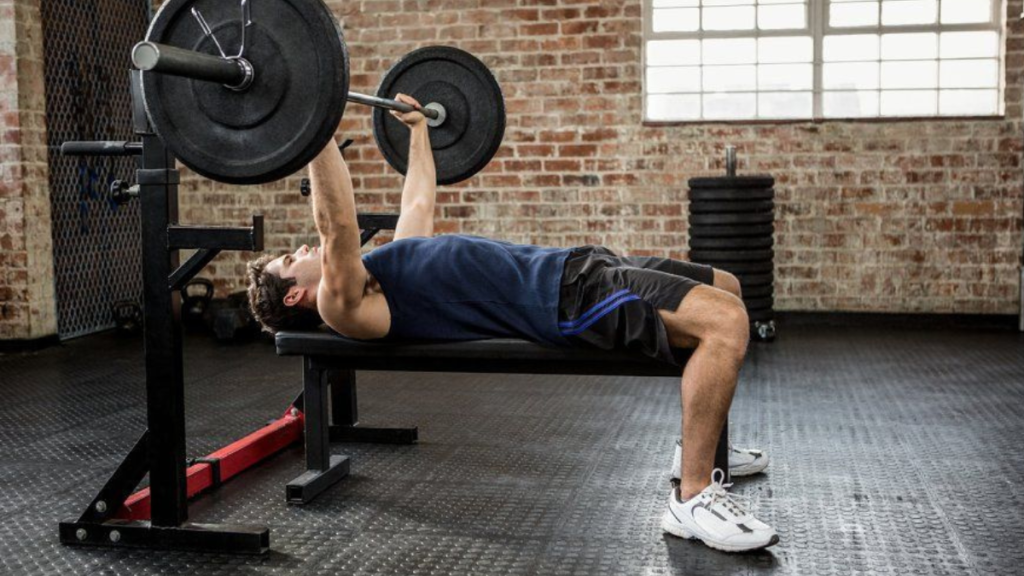
A moderate grip is a useful starting point for many lifters. Retract the shoulder blades gently into the bench, keep the feet planted, and maintain a stable torso. Lower the bar with control until it reaches the lower or middle chest, then press upward and slightly back toward the starting position.
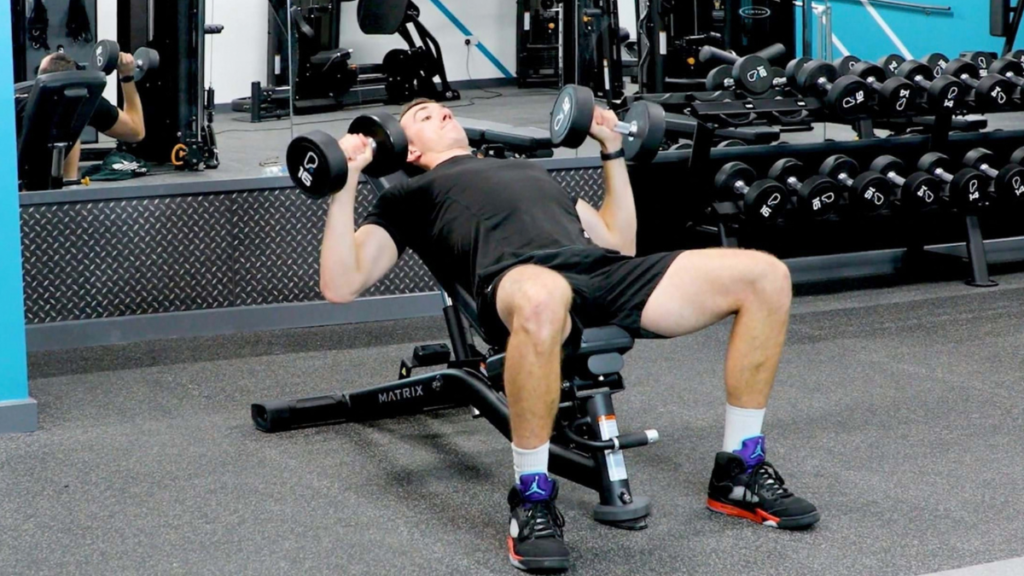
A small natural arch in the lower back is common, but the goal is stability rather than an exaggerated position. Keep the shoulder blades controlled and avoid allowing the shoulders to roll forward at the bottom. Dumbbell bench presses can be a useful alternative if they allow a more comfortable grip or a greater range of motion.
For hypertrophy, sets of six to 15 repetitions can work well. You can use lower repetitions with heavier loads or higher repetitions with lighter loads. What matters most is that the set becomes challenging, technique remains reliable, and the training load progresses over time.
Which Exercise Builds More Chest Muscle?
For a beginner, push ups can build chest muscle extremely well. They are accessible, require little equipment, and can provide meaningful resistance. The direct comparison study between adjusted push ups and low load bench presses supports this conclusion.
For an intermediate or advanced lifter, the bench press usually has a practical advantage because it is easier to overload gradually. This does not mean it produces more chest growth by default. It means it is easier to keep the exercise hard enough as strength increases.
For a home trainee with limited equipment, push ups may be the better choice. A weighted vest, resistance band, elevated feet, or push up handles can provide enough progression for a long time. For someone training in a fully equipped gym who wants simple load tracking, the bench press may be more efficient.
The best chest exercise is the one that lets you train hard, progress consistently, and recover well. You do not need to choose only one. Many people benefit from using the bench press as a primary heavy press and push ups as additional chest volume at the end of a session. Others may use push ups as their main movement and bench press when equipment is available.
How to Program Push Ups and Bench Press
Aim for two chest focused sessions each week. Begin with a total of six to 10 challenging chest sets per week, then adjust based on progress, recovery, and the rest of your training. Weekly volume can support hypertrophy, but more is only useful when you can recover and maintain performance.
If push ups are your primary exercise, choose a variation that brings you near failure in roughly six to 20 repetitions. Perform three or four sets, rest enough to repeat strong efforts, and track your progression. When the variation becomes too easy, increase the load or difficulty.
Best 3 Kettlebell Exercises for Beginners to Get a Jacked Upper Body
If bench press is your primary exercise, perform three or four sets of six to 12 repetitions. Add weight when you can complete the top of your planned repetition range with consistent form. Include one or two additional chest movements if your recovery allows it, such as push ups, dumbbell pressing, or cable fly variations.
You do not need to take every set to complete failure. Training close to failure is generally sufficient for hypertrophy, while leaving a small margin can help maintain technique and manage fatigue. The final repetitions should be difficult, but they should still look like the earlier repetitions.
The Bottom Line
Push ups can build as much chest muscle as low load bench pressing when the resistance is matched and the exercise is performed with enough effort. They are not merely a beginner movement. They are a legitimate chest building exercise that can be progressed with loading, leverage changes, and increased range of motion.
The bench press is usually the easier option for long term progressive overload, particularly for stronger lifters. It allows precise loading and makes it simple to keep chest training in an efficient muscle building repetition range.
Use push ups if they are challenging, convenient, and easy to progress. Use bench presses if you want more direct control over the load. Use both if you enjoy both. Chest growth comes from sustained, progressively challenging training, not from loyalty to one exercise.
Key Takeaways
Table: Push ups and bench press for chest muscle growth
| Factor | Push ups | Bench press |
|---|---|---|
| Chest growth potential | Can build pectoralis major muscle when resistance and effort are sufficient. | Can build pectoralis major muscle when progressed consistently. |
| Progression | Requires harder variations, added resistance, or leverage changes. | Allows precise weight increases with a barbell, dumbbells, or machines. |
| Best fit | Useful for beginners, home training, and lifters who prefer bodyweight exercise. | Useful for lifters who want simple load tracking and heavier resistance. |
| Main limitation | Standard bodyweight repetitions may become too easy for stronger lifters. | Requires equipment and careful setup for safe, consistent training. |
| Practical conclusion | A strong primary or supplemental chest exercise. | A strong primary or supplemental chest exercise. |
References
- Calatayud, J., Borreani, S., Colado, J.C., Martin, F., Flandez, J. and Page, P. (2015) ‘Muscle activation during push ups with different suspension training systems’, Journal of Sports Science and Medicine, 14(3), pp. 502–510.
- Carvalho, L., Moriggi Junior, R., Barreira, J., Schoenfeld, B.J., Orazem, J. and Barroso, R. (2022) ‘Muscle hypertrophy and strength gains after resistance training with different volume matched loads: A systematic review and meta analysis’, Applied Physiology, Nutrition, and Metabolism, 47(4), pp. 357–368.
- Kikuchi, N. and Nakazato, K. (2017) ‘Low load bench press and push up induce similar muscle hypertrophy and strength gain’, Journal of Exercise Science and Fitness, 15(1), pp. 37–42.
- Kotarsky, C.J., Christensen, B.K., Miller, J.S. and Hackney, K.J. (2018) ‘Effect of progressive calisthenic push up training on muscle strength and thickness’, Journal of Strength and Conditioning Research, 32(3), pp. 651–659.
- Suprak, D.N., Dawes, J. and Stephenson, M.D. (2011) ‘The effect of position on the percentage of body mass supported during traditional and modified push up variants’, Journal of Strength and Conditioning Research, 25(2), pp. 497–503.
- Vossen, J.F., Kramer, J.F., Burke, D.G. and Vossen, D.P. (2000) ‘Comparison of dynamic push up training and plyometric push up training on upper body power and strength’, Journal of Strength and Conditioning Research, 14(3), pp. 248–253.
- Yoshitaka, S., Yamaguchi, A., Morita, T., Ishii, N. and Fukunaga, T. (2013) ‘Time course for arm and chest muscle thickness changes following bench press training’, Journal of Strength and Conditioning Research, 27(3), pp. 647–651.