The best push up for building chest muscle is not the one with the most complicated name. For most people, it is a standard push up performed through a deep, controlled range of motion, made progressively harder over time with added load or a more demanding body position.
A wide hand position can increase chest involvement slightly in some people, while a narrow hand position shifts more work toward the triceps. However, the variation most likely to build noticeable chest size is the one that gives your pecs enough mechanical tension, lets you train close to muscular fatigue, and can continue to become harder as you get stronger.


That usually means a weighted standard push up. If you do not have access to weight plates, a feet elevated push up with a backpack can be an excellent option. Push ups can build chest muscle very effectively, but only if you stop treating them as a simple warm up exercise and start treating them as resistance training.
What Actually Makes a Push Up Build Chest Muscle?
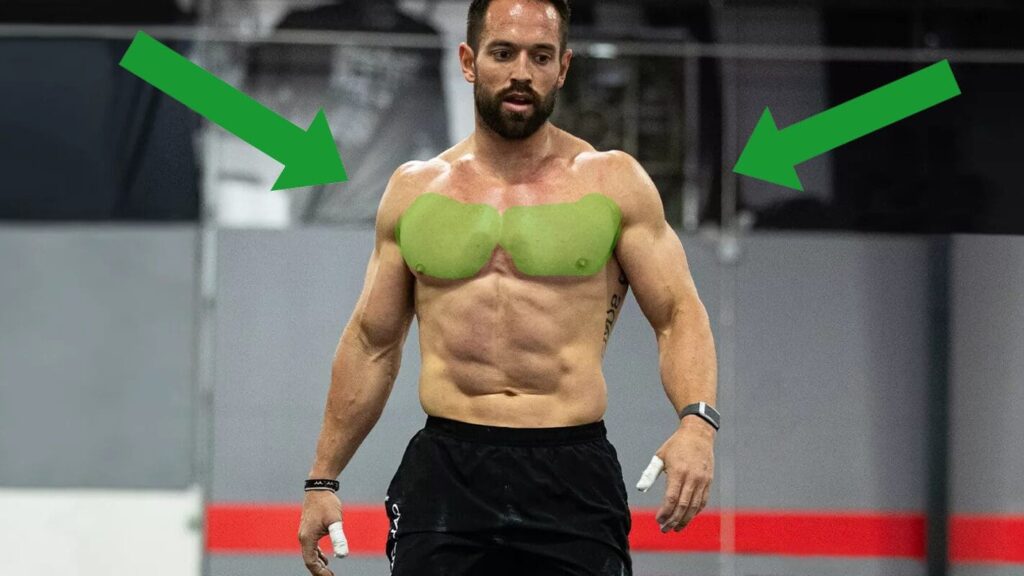
Your chest muscles, particularly the pectoralis major, help move your upper arm across the front of your body and press it away from your torso. During a push up, the pecs work with the triceps and front deltoids to lower and raise your body.
Muscle growth is driven primarily by sufficient mechanical tension, repeated hard efforts, adequate training volume, and progressive overload. Mechanical tension means the muscle has to produce force against meaningful resistance. This does not require a barbell. A push up can create a strong training stimulus when the exercise is difficult enough and performed close to the point where another high quality repetition would not be possible.
Research comparing low load bench pressing with push ups found that both methods can increase chest muscle thickness and pressing strength when participants train with sufficiently demanding sets. This is important because it shows that push ups are not a second rate chest exercise. The limitation is not the movement itself. The limitation is often that people become able to complete very high repetitions without making the exercise harder.
Once you can perform 30, 40, or more standard push ups without approaching fatigue, the movement may still build muscular endurance, but it becomes less efficient for maximizing chest hypertrophy. At that stage, increasing the resistance is usually more useful than simply chasing hundreds of repetitions.
The Best Overall Choice: Weighted Standard Push Ups
A weighted standard push up is the best chest building push up for most lifters because it combines a stable pressing pattern with a straightforward way to increase resistance over time.
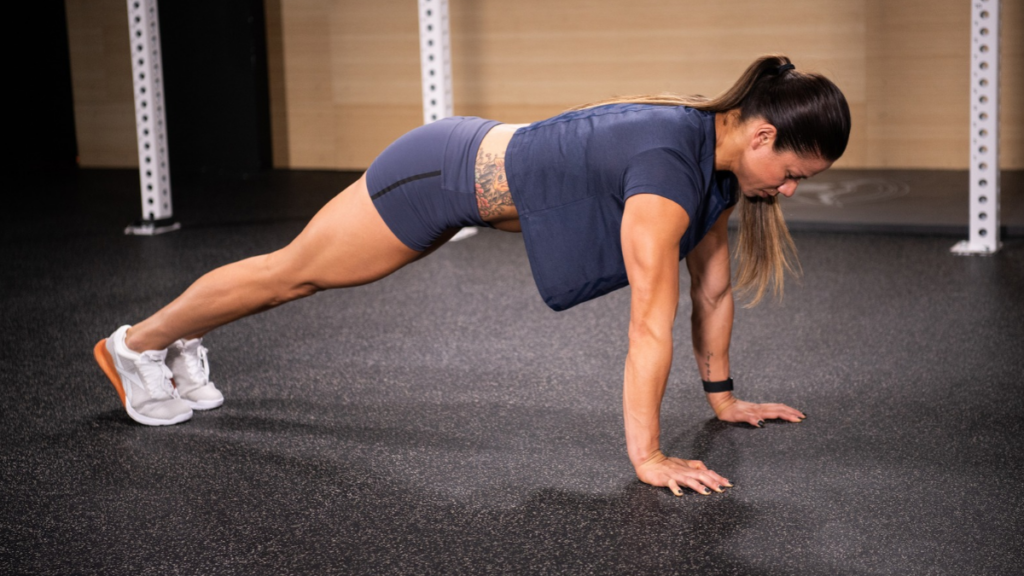
Use a hand position around shoulder width, or just slightly wider than shoulder width. This position allows a strong pressing path while keeping the shoulders in a generally comfortable position. Lower your chest toward the floor under control, then press back up while maintaining a straight line from your shoulders to your heels.
Adding a weighted vest is the most practical option because it distributes resistance securely over your upper back. A loaded backpack can also work well when packed firmly enough that the weight does not move around during the set. Plate loading is another option if you have a training partner to position the load safely.
The key advantage is progression. If you can complete three sets of 12 controlled standard push ups, add enough load that six to 12 repetitions become challenging again. That puts the exercise back into a productive range for building muscle, while still allowing you to use clean technique and a deep range of motion.
A standard push up supports a substantial proportion of body mass through the hands. The exact percentage changes with body size, technique, and body angle, but research consistently shows that a full push up represents a meaningful upper body loading exercise. Adding external resistance gives you a reliable way to make that load continue rising as your strength improves.
Why a Slightly Wider Hand Position Can Help
A wide push up is performed with the hands placed farther apart than shoulder width. It can feel more chest focused because the upper arm moves through a larger degree of horizontal movement across the body, which is one of the primary functions of the pectoralis major.
Electromyography studies have found that hand position can change the distribution of muscular activity during a push up. A wider position may increase pectoralis major activation compared with a narrow position, while a narrow position generally increases the relative contribution of the triceps. However, muscle activation research does not prove that one movement will automatically produce more long term growth than another.
A wider position is useful if it feels comfortable in your shoulders and lets you keep your chest as the limiting muscle. It is not necessary to place your hands extremely far apart. Very wide hand placement can reduce your pressing strength, make the bottom position less controlled, and place some shoulders in an uncomfortable position.
For most people, the best compromise is hands just outside shoulder width, with the fingers pointing forward or turned out slightly if needed for comfort. This gives the chest plenty of work without turning the exercise into an awkward shoulder stretch.
Feet Elevated Push Ups: A Strong Bodyweight Progression
Feet elevated push ups increase the percentage of your body weight supported by your upper body. Raising the feet also changes the angle of the movement, usually increasing the demand on the upper chest area, front deltoids, and triceps.
This makes the feet elevated push up a highly useful progression once a standard push up becomes too easy. Put your feet on a sturdy bench, box, or step, then keep your body rigid as you lower your chest toward the floor. Start with a modest elevation. A higher surface creates more resistance, but it also increases the contribution from the shoulders.
For chest growth, the goal is not to elevate your feet as high as possible. The goal is to find an angle that makes the movement harder while still allowing a deep range of motion and controlled repetitions. If your shoulders become the main limiting factor before your chest gets a strong stimulus, lower the foot elevation or use less external load.
A feet elevated push up can be especially useful for people who train at home. Combining a moderate foot elevation with a weighted backpack can make push ups difficult enough for experienced lifters without needing a bench press setup.
Deficit Push Ups for More Range of Motion
A deficit push up is performed with the hands elevated on handles, parallettes, sturdy dumbbells, or push up bars. This allows your chest to travel below the level of your hands, increasing the range of motion compared with a floor push up.
Training through a larger range of motion can be useful for hypertrophy because the chest is challenged through a longer portion of the movement. This variation also gives the shoulder blades room to move naturally as you descend and press away from the floor.
The extra depth should be earned, not forced. Lower under control until you feel a strong stretch through the chest without discomfort at the front of the shoulder. If the bottom position causes pinching, reduce the depth, narrow the hand placement slightly, or return to a regular floor push up.
Deficit push ups are particularly effective when paired with added resistance. A weighted deficit push up gives the pecs a demanding stretch and meaningful load, making it one of the best advanced options for building chest muscle at home.
Why Diamond Push Ups Are Not the Best Chest Builder
Diamond push ups involve placing the hands close together beneath the chest, often with the thumbs and index fingers forming a diamond shape. They are difficult, but difficulty alone does not make them the best choice for chest hypertrophy.
A narrow hand position generally increases the demand on the triceps. This can make diamond push ups a valuable arm exercise and a useful pressing variation, but it means they are not the most direct choice when your primary goal is maximum chest development.
They may also be less comfortable for people with wrist, elbow, or shoulder irritation. If you enjoy them, include them as an accessory movement after your harder chest focused push ups. Do not rely on them as the main exercise if your goal is to make your pecs bigger.
Do Explosive Push Ups Build More Chest?
Explosive push ups, including clap push ups, are excellent for developing upper body power. They require rapid force production and can improve athletic qualities that matter in many sports.
However, they are not the best choice for chest hypertrophy. Power exercises prioritize speed, which usually means sets end before the chest accumulates the controlled, high tension repetitions that are useful for muscle growth. Landing also creates fatigue and impact that can limit total productive training volume.
Use explosive push ups if you want to become more powerful or athletic. Use loaded, controlled push ups if your main goal is chest size. The two variations can work well in the same program, but they serve different purposes.
How Close to Failure Should You Train?
For muscle growth, your working sets need to be hard. You do not need to take every set to absolute failure, but you should finish most chest focused push up sets with only a small number of repetitions left in reserve.
For example, if you could complete 15 repetitions before your technique failed, ending the set at 13 or 14 repetitions would be close enough to provide a strong hypertrophy stimulus. Stopping at six repetitions would probably leave too much productive work on the table.
This matters particularly when using bodyweight exercises. A standard push up may feel challenging at the start of a set, but if you stop far from fatigue it may not provide enough stimulus for growth. Make the exercise harder, slow the lowering phase, increase the range of motion, elevate your feet, or add load until sets of roughly six to 20 repetitions are genuinely demanding.
How to Perform Chest Focused Push Ups
Set your hands slightly wider than shoulder width and position them at about chest level. Start in a strong plank with your ribs down, glutes tight, and legs straight. Your body should move as one unit rather than sagging through the hips.
As you lower, allow your elbows to travel at a moderate angle from your torso. Extremely tucked elbows tend to emphasize the triceps, while elbows flared directly to the sides can be uncomfortable for some shoulders. A moderate angle gives the chest, shoulders, and triceps room to work together efficiently.
Lower until your chest nearly reaches the floor, or lower farther if you are using handles and can do so comfortably. Press through the full hand and think about bringing your upper arms toward the center of your body as you rise. Finish each repetition under control rather than snapping the elbows hard into lockout.
A Simple Chest Growth Push Up Plan
Train push ups for chest growth two or three times per week, with at least one day between demanding sessions. Start with a variation that allows you to complete six to 15 hard repetitions with good form.
Perform three or four working sets. Rest for around two minutes between sets so that fatigue does not force you to compromise technique. When you can complete the top of your target repetition range on every set, add a small amount of weight, increase the foot elevation slightly, or use a deeper deficit.
What are the Best Rep Ranges for Beginners to Build Massive Biceps?
For example, begin with three sets of eight to 12 weighted standard push ups. Once you can complete 12 repetitions on all three sets with control, increase the load and work back toward eight repetitions. This simple progression creates the long term overload your chest needs to grow.
If you already perform bench presses, dumbbell presses, or dips, push ups can still be useful. Use them as a higher repetition chest exercise near the end of a workout, or make them the main movement on a home training day. What matters is your total hard chest training, your recovery, and your ability to keep progressing.
The Bottom Line
The push up that will build the most chest muscle is usually a weighted standard push up performed with hands around shoulder width or slightly wider, a deep controlled range of motion, and sets taken close to muscular failure.
Feet elevated push ups are the best bodyweight progression when regular push ups become too easy. Deficit push ups can add useful range of motion, especially when loaded. Wide push ups may feel more chest focused, but an extremely wide position is not required and is not automatically better.
The best exercise is the variation you can progressively overload while keeping your shoulders comfortable and your chest working hard. Master that, add load over time, and push ups can be a genuinely effective tool for building a bigger chest.
Key takeaways
| Question | Practical answer |
|---|---|
| Best overall push up for chest growth | Weighted standard push ups with hands around shoulder width or slightly wider |
| Best no equipment progression | Feet elevated push ups performed close to muscular fatigue |
| Best option for additional depth | Deficit push ups on stable handles or parallettes |
| Are wide push ups better? | A slightly wider position may increase chest emphasis, but very wide placement is not necessary |
| Are diamond push ups best for chest? | No. They usually shift more work toward the triceps |
| Main progression method | Add external load, increase range of motion, or increase foot elevation once the movement becomes too easy |
| Best training effort | Finish most working sets with roughly zero to three repetitions left in reserve |
References
- Calatayud, J., Borreani, S., Colado, J.C., Martin, F., Flandez, J., Page, P. and Andersen, L.L. (2015) ‘Muscle activation levels in upper body push exercises with different loads and stability conditions’, The Physician and Sportsmedicine, 43(1), pp. 54–60.
- Cogley, R.M., Archambault, T.A., Fibeger, J.F., Koverman, M.M., Youdas, J.W. and Hollman, J.H. (2005) ‘Comparison of muscle activation using various hand positions during the push up exercise’, Journal of Strength and Conditioning Research, 19(3), pp. 628–633.
- Dhahbi, W., Chaabene, H., Chaouachi, A., Padulo, J., Behm, D.G., Cochrane, J., Burnett, A. and Chamari, K. (2022) ‘Kinetic analysis of push up exercises: a systematic review with practical recommendations’, Sports Biomechanics, 21(1), pp. 1–40.
- Grgic, J., Schoenfeld, B.J., Orazem, J. and Sabol, F. (2022) ‘Effects of resistance training performed to repetition failure or non failure on muscular strength and hypertrophy: a systematic review and meta analysis’, Journal of Sport and Health Science, 11(2), pp. 202–211.
- Kikuchi, N. and Nakazato, K. (2017) ‘Low load bench press and push up induce similar muscle hypertrophy and strength gain’, Journal of Exercise Science and Fitness, 15(1), pp. 37–42.
- Lasevicius, T., Ugrinowitsch, C., Schoenfeld, B.J., Roschel, H., Tavares, L.D., De Souza, E.O., Tricoli, V. and Teixeira, E.L. (2018) ‘Effects of different intensities of resistance training with equated volume load on muscle strength and hypertrophy’, European Journal of Sport Science, 18(6), pp. 772–780.
- Schoenfeld, B.J., Ogborn, D. and Krieger, J.W. (2017) ‘Dose response relationship between weekly resistance training volume and increases in muscle mass: a systematic review and meta analysis’, Journal of Sports Sciences, 35(11), pp. 1073–1082.
- Suprak, D.N., Dawes, J. and Stephenson, M.D. (2011) ‘The effect of position on the percentage of body mass supported during traditional and modified push up variants’, Journal of Strength and Conditioning Research, 25(2), pp. 497–503.