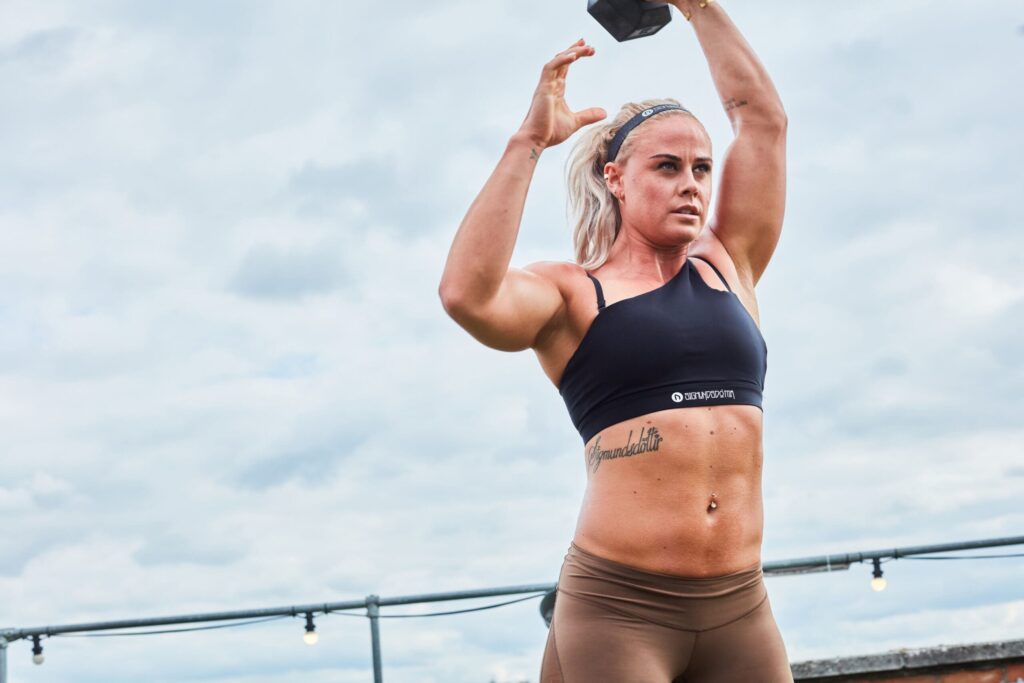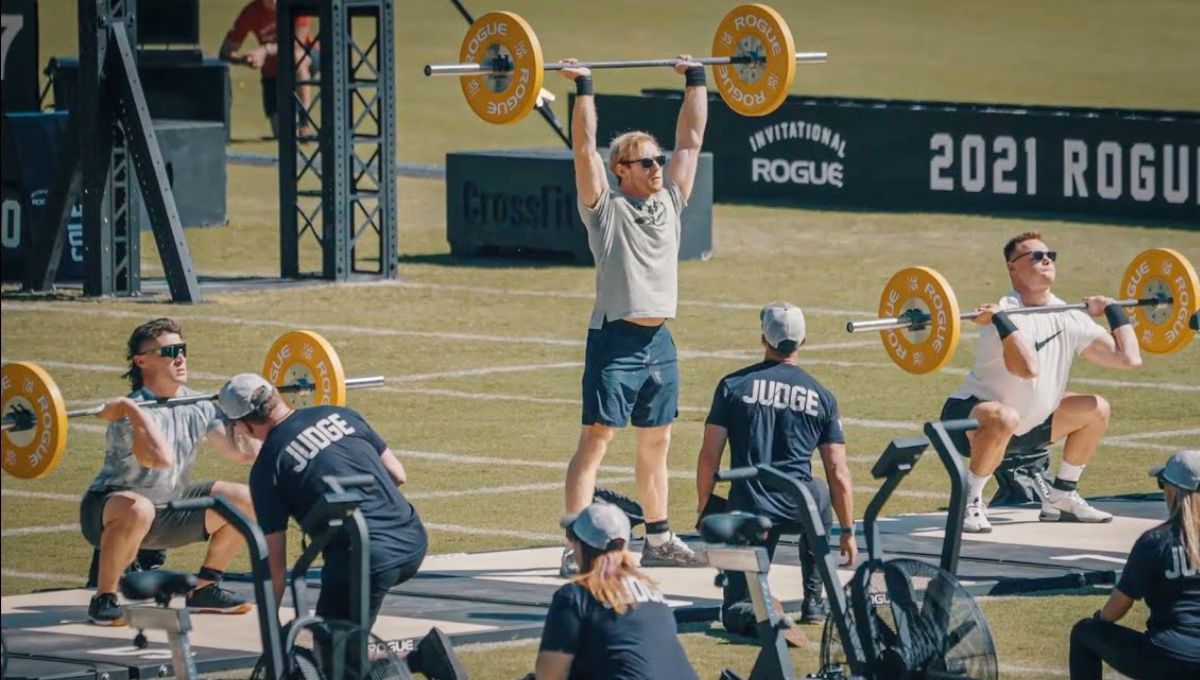


Building muscle quickly as a beginner does not require complicated workouts, expensive supplements, or living in the gym. It requires doing the fundamentals consistently enough that your body has a reason to adapt. Beginners are in a useful position because the body tends to respond rapidly to well structured resistance training, especially when training, food, and recovery improve at the same time.
Looking more muscular is not only about adding body weight. It comes from developing your shoulders, chest, back, arms, legs, and glutes while keeping enough control over body fat to let that new muscle show. The best approach is therefore simple: train hard with good technique, gradually do more over time, eat to support growth, and recover properly.


These ten hacks will help you make the most of your first months of training and build a physique that looks stronger, wider, and more athletic.
1. Train Each Major Muscle Group at Least Twice Per Week
A beginner does not need a six day bodybuilding split to gain muscle. Training each major muscle group twice per week is a practical place to start because it gives you regular practice with the main movements and enough weekly stimulus to grow.
Research shows that muscle hypertrophy is strongly related to the amount of challenging resistance training performed over the week. Spreading that work over two or more sessions can make it easier to maintain high quality sets and recover between workouts. For a beginner, this could mean two full body workouts, or an upper body and lower body routine repeated twice weekly.
A simple full body session might include a squat or leg press, a press, a row, a hip hinge movement, a vertical pull, and one direct arm exercise. You do not need to destroy every muscle in one workout. You need to train it well, then return to it consistently.
A schedule such as Monday, Wednesday, and Friday works extremely well. It provides frequent practice while leaving recovery days between sessions. If you can only train twice per week, make those sessions full body and focus on quality rather than trying to cram in endless exercises.
2. Build Your Workouts Around Big, Stable Exercises
Compound exercises train several muscles at once and allow you to use meaningful resistance. For beginners, they are the fastest way to build a foundation of muscle and strength because they make training more efficient.
Choose movements that feel stable, comfortable, and easy to progress. Barbell exercises can be excellent, but machines, dumbbells, cables, and bodyweight movements can be just as effective when they are performed hard enough and progressed over time. The best exercise is not necessarily the one that looks most impressive. It is the one you can perform safely, feel in the target muscles, and repeat consistently.
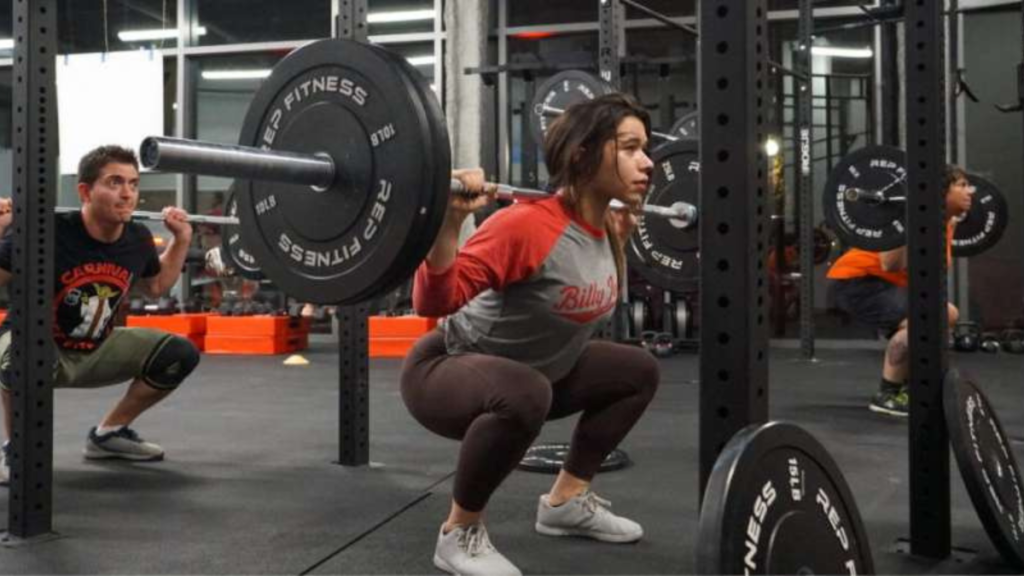
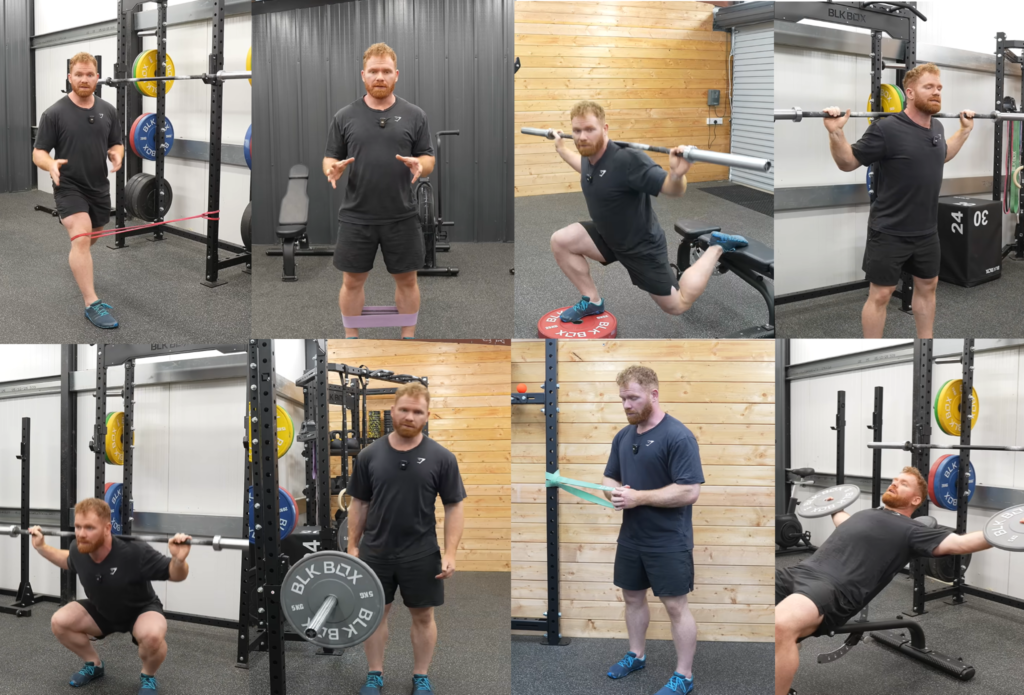
For your lower body, options include leg presses, squats, split squats, Romanian deadlifts, and leg curls. For your upper body, focus on pressing movements, rows, pulldowns, and chest supported pulling exercises. These movements give your body the broad stimulus required for visible size.
Stable exercises can be especially useful for beginners because they reduce the amount of balance and coordination needed. That lets you direct more effort into the muscles you are trying to build. A leg press is not inferior simply because it is a machine. If you can progressively add repetitions or load while using a controlled range of motion, it can be an excellent muscle building tool.
3. Use a Full Range of Motion You Can Control
Partial repetitions have their place, but beginners should make controlled full range repetitions their default. Training through a longer muscle length generally provides a powerful stimulus for hypertrophy and ensures you are not leaving the hardest part of the movement untrained.
That does not mean forcing your joints into uncomfortable positions. A full range of motion is the deepest or longest position you can reach while maintaining control, comfort, and good technique. On a squat, this might mean lowering until your hips are clearly below parallel if that feels comfortable. On a chest press, it means bringing the handles or dumbbells down under control rather than stopping halfway.
Controlled lowering is particularly important. The lowering phase of a repetition places substantial tension on the muscles and gives you a chance to stay in the correct position. Avoid dropping weights, bouncing through the bottom of repetitions, or rushing every set just to finish faster.
Good technique helps you identify whether the target muscle is doing the work. If your lower back is doing most of a row, reduce the load and improve your body position. If your shoulders hurt during a chest press, adjust the bench angle, grip, or range of motion. Muscle growth comes from productive training, not from forcing painful repetitions.
4. Finish Most Sets Close to Failure
You do not need to train to absolute failure on every set, but your sets should be challenging enough to demand adaptation. If you finish every set knowing you could have done ten more repetitions, the load is probably too light to maximize your results.
A useful target is to end many working sets with around one to three repetitions left in reserve. In other words, you should feel that you could only perform one, two, or three more good repetitions before your technique would break down. This creates high effort without requiring you to grind every exercise until complete fatigue.
For example, if you perform a set of ten leg presses and could realistically have completed twelve, that is a productive set. If you could have done twenty, increase the weight or perform more repetitions next time. If you fail at repetition six despite aiming for ten, reduce the load slightly on the next set.
You can take some machine, cable, and isolation exercises closer to failure because the risk of losing position is lower. Save a little more in reserve on demanding free weight movements such as squats, presses, and Romanian deadlifts. The goal is to train hard enough to grow while preserving good form and the ability to recover for your next session.
5. Track Your Repetitions and Gradually Do More
Progressive overload is not a secret trick. It means asking your muscles to do slightly more work over time. Without progression, your body has little reason to build more muscle because it has already adapted to the challenge you are giving it.
Keep a notebook or use your phone to record your exercises, weights, sets, and repetitions. This is one of the simplest habits that separates productive training from random exercise. It gives you a clear target when you return to the gym.
Use a repetition range to make progression straightforward. For example, you could perform three sets of eight to twelve repetitions on the chest press. Once you can complete twelve controlled repetitions on all three sets, add a small amount of weight at your next session. Your repetitions may fall back to eight or nine, then build upward again.
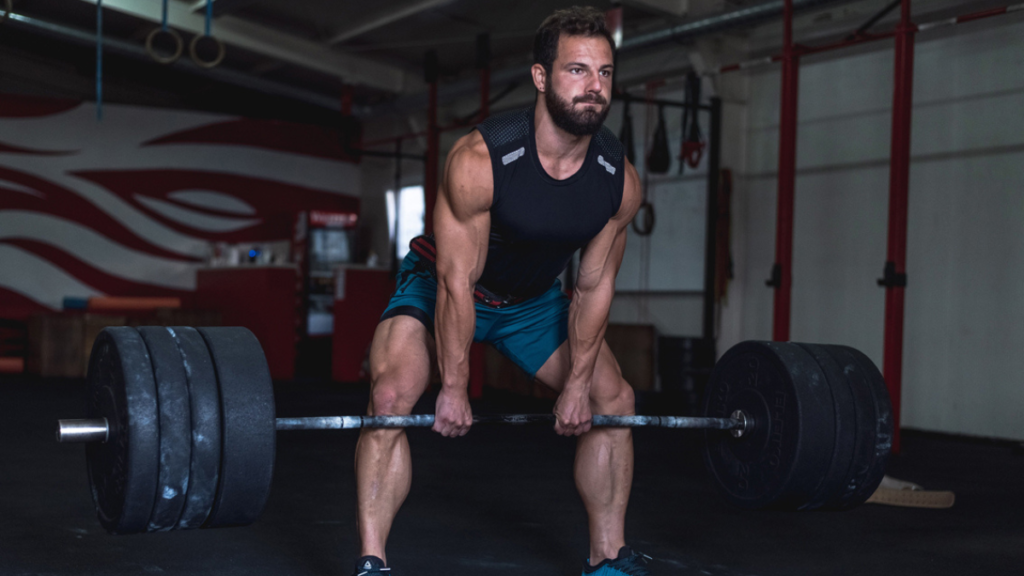
Progress can also mean improving technique, using a fuller range of motion, or completing the same work with better control. Not every workout needs a personal record. Over weeks and months, however, your numbers should move in the right direction.
Beginners often change programs too quickly. Give a sensible routine enough time to work. If you are gradually becoming stronger in the main movements and your body weight, measurements, or photos are improving, the program is doing its job.
6. Eat Enough Protein Every Day
Resistance training provides the signal to build muscle, while dietary protein provides amino acids that support muscle protein synthesis. If your protein intake is consistently too low, you make it harder for your body to turn productive training into visible results.
A practical target for most healthy people who lift weights is around 1.6 grams of protein per kilogram of body weight each day. This amount is supported by research examining protein intake alongside resistance training. Some people may choose to consume more, particularly when dieting, but consistency matters more than chasing an extreme number.
For a person weighing 80 kilograms, this target equals roughly 128 grams of protein daily. Spread it across three or four meals rather than trying to eat almost all of it at dinner. Meals containing high quality protein sources such as dairy, eggs, lean meat, fish, soy, legumes, or protein powder can all contribute.

Protein shakes are convenient, but they are not magic. They are simply an easy way to increase daily protein intake when food preparation is difficult. A balanced diet that includes fruit, vegetables, carbohydrate sources, healthy fats, and enough overall calories will support training performance far better than a diet based only on protein snacks.
7. Use a Small Calorie Surplus, Not a Reckless Bulk
Muscle growth requires energy. If you are very lean, highly active, or unintentionally losing weight, eating more will usually improve training performance and make gaining muscle easier. However, a huge calorie surplus does not force your body to build muscle at a faster rate. It mainly increases the amount of body fat gained alongside muscle.
For beginners who want to look jacked rather than simply heavier, a modest calorie surplus is usually the smarter route. Aim to gain weight slowly while training progressively. This gives you a better chance of supporting muscle gain without losing the definition that makes new muscle visible.
Start by eating regular meals and monitoring your body weight two or three times per week under similar conditions. If your weight is unchanged for several weeks and strength is not improving, add a little more food. If weight rises very quickly and your waist measurement climbs much faster than your gym performance, reduce your intake slightly.
Carbohydrates deserve attention because they can support hard training. They provide a major fuel source for resistance exercise and can help you maintain training quality across repeated sets. Include carbohydrate rich foods around your workouts if they help you feel more energetic and perform better.
8. Prioritize Sleep Like It Is Part of the Program
Muscle is built during recovery, not while you are lifting. Training creates the stimulus, but sleep supports the processes that help you recover, perform, and return to the gym ready to improve.
Poor sleep can reduce training quality, affect appetite regulation, and make hard sessions feel much harder than they should. Research also suggests that sleep restriction can negatively affect the hormonal and metabolic environment associated with muscle recovery. One bad night will not ruin your progress, but consistently short sleep can make building muscle more difficult.

Aim for seven to nine hours of sleep per night. Keep your wake time reasonably consistent, reduce bright screen exposure close to bedtime if it disrupts your sleep, and make your room dark and cool where possible. These habits are simple, but they can make a meaningful difference to your energy and training consistency.
If you are choosing between an extra hour of sleep and adding a fourth arm exercise to an already long workout, the extra sleep will usually be the better decision. You grow from the quality of your overall routine, not from finding the most exhausting session possible.
9. Give Extra Attention to Muscles That Change Your Shape
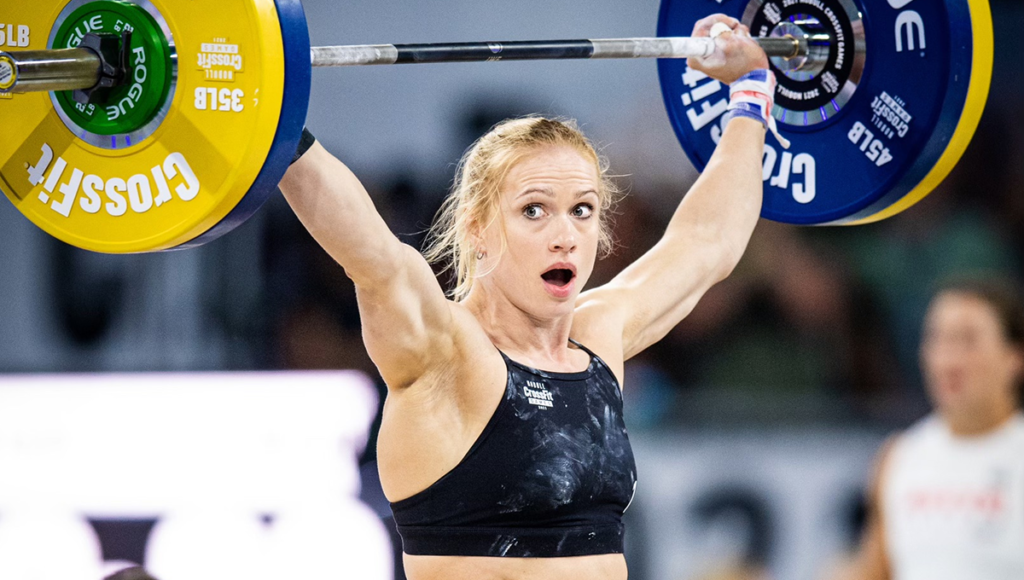
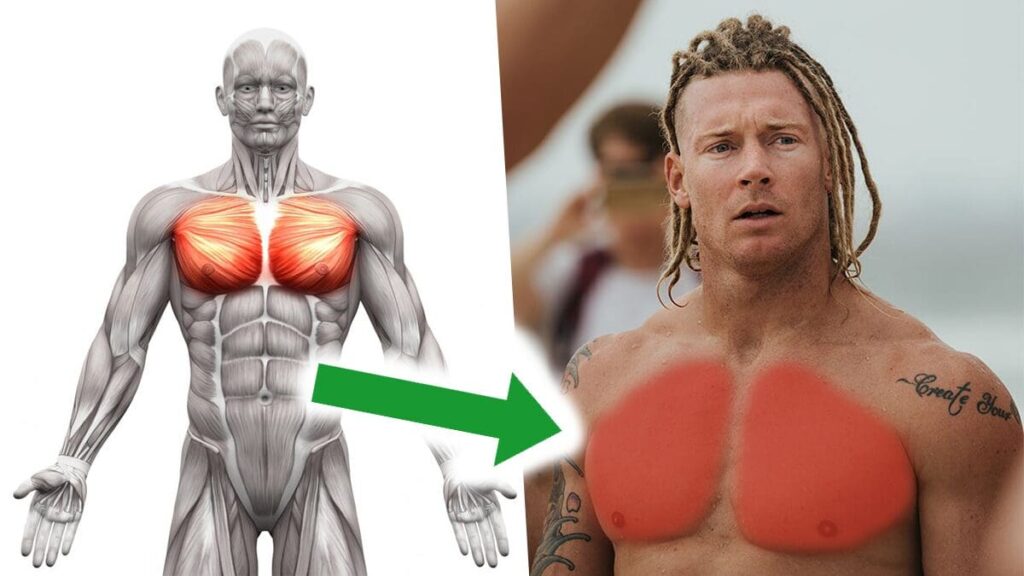
Every muscle matters, but certain areas create a stronger visual change when you are starting out. Building your shoulders, upper chest, back, arms, glutes, and legs can make your body look noticeably more muscular because these muscles shape your silhouette in clothes and without them.
For broader looking shoulders, include overhead pressing and lateral raise variations. For a wider upper body, include pulldowns, pull ups, and rows. For arms, train biceps and triceps directly after your pressing and pulling work. Compound exercises develop the arms, but direct work can add useful volume and improve your ability to focus on those muscles.
Do not neglect your lower body. Bigger legs and glutes make your physique look more complete and provide a stronger foundation for the upper body. Squat patterns, hip hinges, leg presses, split squats, leg curls, and calf raises all have value.
The key is not to perform an endless list of exercises. Start with a few movements you can improve consistently. Add one or two extra exercises for the muscles you want to prioritize, then assess whether you can still recover and get stronger.
10. Be Consistent Long Enough to Let the Results Show
The biggest hack is boring, but it works: stay consistent. Beginners often expect a dramatic physical transformation in a few weeks, then abandon a good routine because the mirror has not changed fast enough. Muscle gain is gradual, yet the changes become significant when you stack months of productive training.
3 Best Cable Machine Exercises for a Jacked and More Attractive Upper Body
Take progress photos every four weeks in similar lighting and clothing. Record body weight, gym performance, and waist measurements. These give you a clearer picture than checking the mirror every day, when normal changes in hydration, food intake, and lighting can make you feel as though nothing is happening.
Avoid changing your training plan every week because you saw a new workout online. Learn the movements, get stronger, eat enough protein, sleep well, and show up. Those habits are not exciting, but they are what make an average beginner look visibly more muscular over time.
There is no need to chase perfection. Missing one workout, eating one lower protein meal, or having a poor night of sleep will not stop your progress. What matters is returning to the plan and repeating the habits that produce results.
Conclusion
Building muscle faster as a beginner comes down to making the right basics automatic. Train every major muscle group consistently, use exercises you can progressively improve, work close enough to failure, eat enough protein and calories, and recover properly. Add a small amount of extra work for the muscles that create the shape you want, then give the process time.
The goal is not to become exhausted after every workout. The goal is to become stronger, more capable, and more muscular month after month. Do that long enough, and looking jacked becomes the visible result of a routine you can actually sustain.
Key Takeaways
| Hack | What to Do | Why It Matters |
|---|---|---|
| Train frequently | Train each major muscle group around twice weekly | Regular high quality training helps accumulate productive weekly volume |
| Choose effective movements | Use stable compound exercises alongside targeted isolation work | These exercises make it easier to train hard and progress |
| Use controlled repetitions | Work through a comfortable, controlled range of motion | This improves training quality and exposes muscles to meaningful tension |
| Train hard | Finish most sets with one to three repetitions left in reserve | Challenging sets provide a stronger stimulus for growth |
| Track progress | Record loads and repetitions and gradually improve them | Progressive overload gives your body a reason to adapt |
| Eat sufficient protein | Aim for around 1.6 grams of protein per kilogram daily | Protein supports muscle protein synthesis alongside resistance training |
| Avoid aggressive bulking | Use a modest calorie surplus when gaining weight | This supports growth while limiting unnecessary fat gain |
| Sleep consistently | Aim for seven to nine hours nightly | Recovery, performance, and training consistency all depend on sleep |
| Build visual priority muscles | Give shoulders, back, chest, arms, legs, and glutes focused work | These muscles strongly influence how muscular your physique looks |
| Stay patient | Follow the plan for months, not days | Consistency turns small weekly improvements into visible change |
References
- Burke, R., Piñero, A., Coleman, M., Mohan, A., Sapuppo, M., Augustin, F., Aragon, A.A., Candow, D.G., Forbes, S.C., Swinton, P. and Schoenfeld, B.J. (2023) ‘The effects of creatine supplementation combined with resistance training on regional measures of muscle hypertrophy: A systematic review with meta analysis’, Nutrients, 15(9), 2116.
- Grgic, J., Schoenfeld, B.J., Skrepnik, M., Davies, T.B. and Mikulic, P. (2021) ‘Effects of rest interval duration in resistance training on measures of muscular strength: A systematic review’, Sports Medicine, 51(8), pp. 1623 to 1644.
- Jäger, R., Kerksick, C.M., Campbell, B.I., Cribb, P.J., Wells, S.D., Skwiat, T.M., Purpura, M., Ziegenfuss, T.N., Ferrando, A.A., Arent, S.M., Smith Ryan, A.E., Stout, J.R., Arciero, P.J., Ormsbee, M.J., Taylor, L.W., Wilborn, C.D., Kalman, D.S., Kreider, R.B., Willoughby, D.S., Hoffman, J.R., Krzykowski, J.L., Antonio, J. and International Society of Sports Nutrition (2017) ‘International Society of Sports Nutrition position stand: Protein and exercise’, Journal of the International Society of Sports Nutrition, 14, 20.
- Lasevicius, T., Schoenfeld, B.J., Silva Batista, M.A., Barros, T.D.S., Aihara, A.Y., Brendon, H., Longo, A.R., Tricoli, V. and Ugrinowitsch, C. (2019) ‘Muscle failure promotes greater muscle hypertrophy in low load but not in high load resistance training’, Journal of Strength and Conditioning Research, 33(Suppl 1), pp. S113 to S120.
- Morton, R.W., Murphy, K.T., McKellar, S.R., Schoch, R.D., Henselmans, M., Helms, E., Aragon, A.A., Devries, M.C., Banfield, L., Krieger, J.W. and Phillips, S.M. (2018) ‘A systematic review, meta analysis and meta regression of the effect of protein supplementation on resistance training induced gains in muscle mass and strength in healthy adults’, British Journal of Sports Medicine, 52(6), pp. 376 to 384.