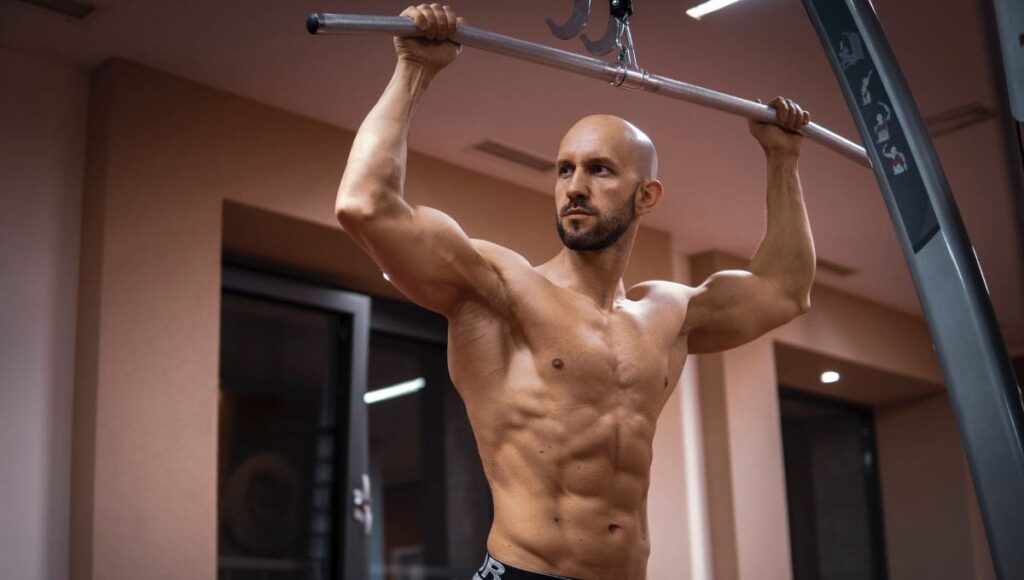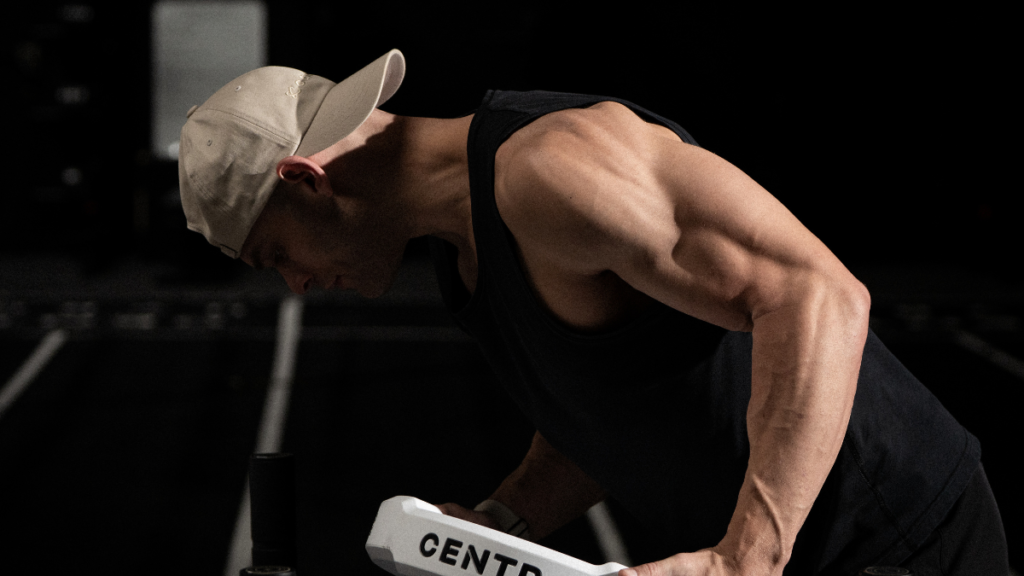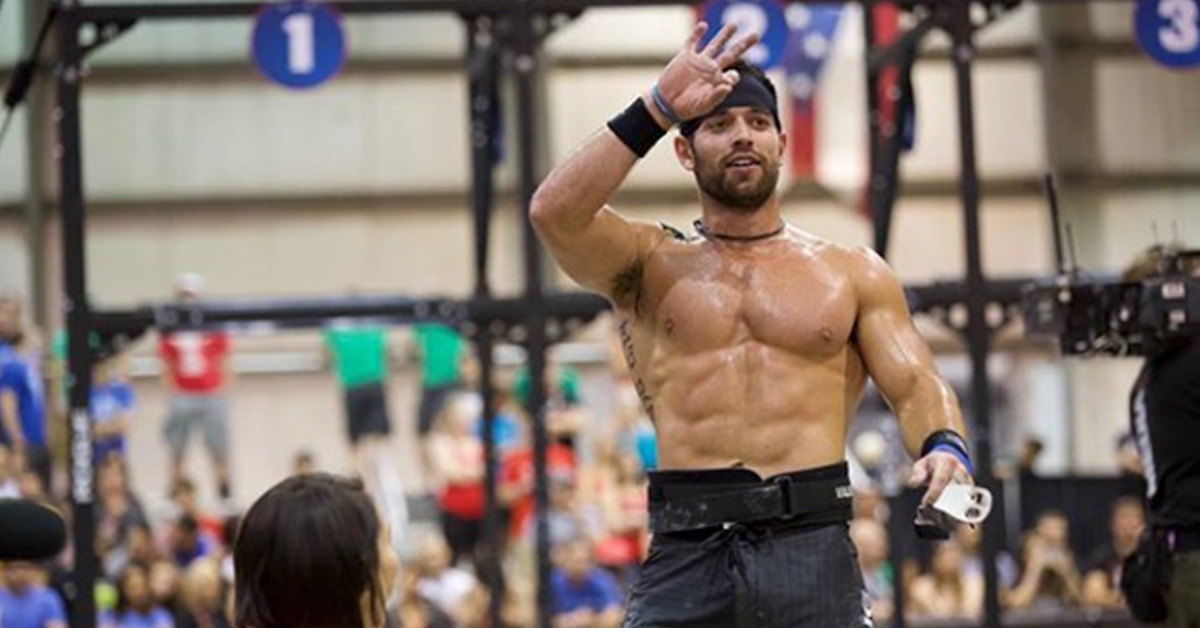


A V shaped torso comes from building more size and strength through the upper back, lats, shoulders, and chest while maintaining a waistline that suits your body composition and natural frame. It is a useful visual goal because it gives beginners a clear training direction. You do not need to chase dozens of exercises or copy an advanced bodybuilding split to start making progress.
The most productive place to begin is with a small number of compound exercises. A compound exercise uses movement at more than one joint and trains several muscle groups in the same repetition. This makes each exercise time efficient and gives beginners repeated practice with the major movement patterns that support long term strength development.


For a V shaped torso, your priorities are simple. You want to develop the lats to create visible width across the upper back, build the deltoids to make the shoulders look broader, and strengthen the chest, triceps, and upper body as a whole. The three exercises below cover those needs without making your training unnecessarily complicated.
Why Compound Exercises Work So Well for Beginners
Beginners make their best progress when training is consistent, technically sound, and easy enough to repeat week after week. Compound movements allow you to train large areas of muscle in a manageable workout. They also encourage coordinated movement across the shoulders, elbows, and trunk rather than treating every muscle as a separate project.
Resistance training improves muscular strength and can increase muscle size when it is performed consistently and progressed over time. For beginners, a practical starting point is to train major muscle groups two or three times per week, use loads that allow controlled sets of roughly eight to twelve repetitions, and add weight or repetitions gradually when the current work becomes easier.
The goal is not to make every set a maximal effort. The goal is to create enough challenge to stimulate adaptation while maintaining good technique. Leaving one or two repetitions in reserve on most working sets gives a beginner room to learn the movement and recover for the next session.
A V shaped torso is also not created by upper body training alone. Nutrition, daily activity, sleep, and overall training consistency all influence body composition. However, building the lats, shoulders, chest, and arms can make a meaningful difference to how broad and athletic the upper body looks.
1. Lat Pulldown
The lat pulldown is the most accessible vertical pulling exercise for beginners who cannot yet perform controlled bodyweight pull ups. It trains the latissimus dorsi, commonly called the lats, alongside the biceps, forearms, rear shoulder muscles, and muscles that help control the shoulder blades.
The lats are especially important for the V shaped look because they run from the upper arm toward the lower back and create visible width when they become stronger and more developed. A pulldown lets you practice this pattern with a load that can be adjusted precisely, which is a major advantage when you are learning.
Use a pulldown machine with a handle that feels comfortable for your shoulders. A medium overhand grip is an excellent starting point. Sit tall with your feet planted, lightly brace your stomach, and position your thighs firmly under the pads. Before pulling, allow your shoulders to rise naturally without losing control of your torso.
Pull the bar down toward the upper chest by driving your elbows down and slightly toward your sides. Think about bringing your upper arms toward your ribs instead of simply pulling with your hands. Pause briefly when the bar reaches the bottom position, then return it slowly until your arms are straight and your shoulders have moved freely upward again.
Avoid leaning far backward and turning the exercise into a row. A small natural lean is fine, but a large swing usually means the load is too heavy. Do not pull the bar behind your neck. Pulling to the front of the body is easier to control and avoids forcing the shoulder into an unnecessarily awkward position.
Research examining muscle activity during lat pulldown variations confirms that the movement strongly involves the lats while also recruiting the biceps, deltoids, trapezius, and pectoral muscles. That makes it an efficient pulling movement for a beginner who wants more upper body width and stronger arms.
Start with three sets of eight to twelve repetitions. Choose a weight that makes the final few repetitions challenging but still allows you to avoid jerking the bar or changing your body position. Once you can complete all three sets at the top of the repetition range with clean form, increase the load by the smallest available amount.
Progressing From Lat Pulldowns to Pull Ups
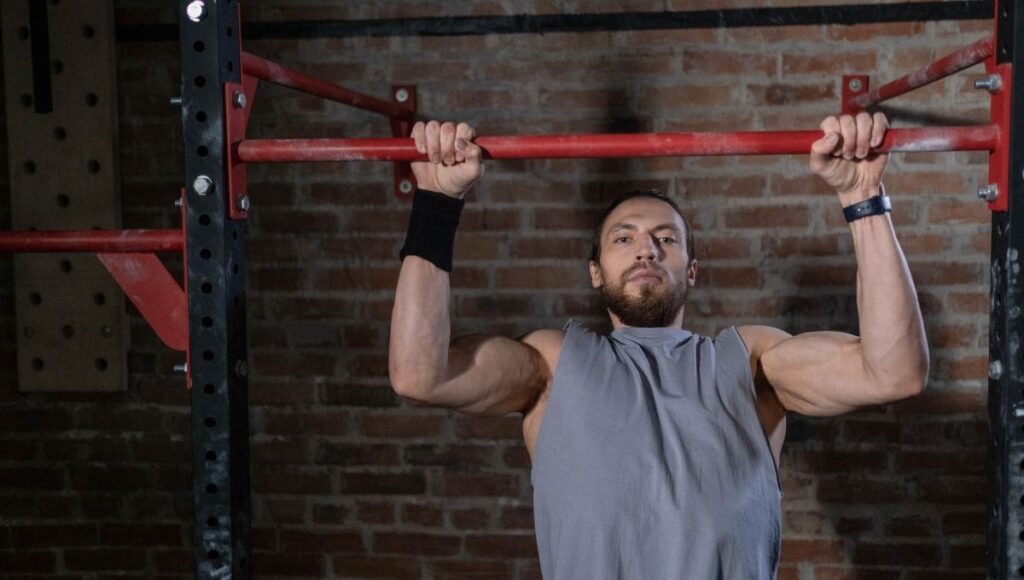
The lat pulldown is not a lesser version of the pull up. It is a useful exercise in its own right. Still, if performing a pull up is one of your goals, pulldowns can help build the strength and control needed to work toward it.
As you progress, you can include assisted pull ups alongside pulldowns. The assisted machine, a resistance band, or a coach can reduce enough bodyweight resistance to let you practice the full motion. Keep the same principle: move with control, pull your elbows down, and avoid using momentum.
2. Dumbbell Overhead Press
The dumbbell overhead press is one of the best compound exercises for building the shoulders. It works the deltoids, especially the front and middle portions, while also challenging the triceps, upper chest, upper back, and trunk muscles that keep your body steady.
Broader shoulders are central to the V shaped torso. Your bone structure determines your starting shoulder width, but increasing the size and strength of the deltoids can create a visibly stronger shoulder line. The overhead press also teaches you to control your upper body while the arms move above the head, which is useful for general strength and athletic function.
Dumbbells are a particularly good option for beginners because each arm can move independently. This often makes it easier to find a comfortable pressing path and can reveal obvious differences in strength or coordination from side to side. A seated version with back support is suitable if standing balance and trunk control are still limiting factors. A standing version is a good next step once you can press without leaning backward.
Begin with the dumbbells at shoulder height, with your wrists stacked over your elbows. Your palms can face forward or slightly toward each other, depending on which position feels more comfortable. Brace your stomach, squeeze your glutes if standing, and press the dumbbells up until your elbows are straight and the weights are above your shoulders.
Lower the dumbbells slowly to the starting position. Keep your ribs from flaring upward as the weights rise. If you need to lean back dramatically to finish the repetition, the dumbbells are too heavy. Reducing the load is not a setback. It gives you the opportunity to train the intended muscles and build the movement properly.
Studies using electromyography show that overhead pressing recruits the deltoids and triceps substantially, while changes in the resistance implement can alter the amount of muscular activity and stability demand. For a beginner, this supports the practical choice of using a controlled dumbbell press rather than chasing unstable variations before the basic movement is reliable.
Perform three sets of eight to twelve repetitions. Rest long enough to make the next set technically solid, usually around one to two minutes. When you can complete all sets with the same range of motion and no excessive back arch, add a small amount of weight.
A Simple Shoulder Press Cue
Think, “ribs down, press up.” This cue helps you avoid turning the movement into a standing backbend. Your torso should stay tall and controlled while your arms do the pressing. If your shoulders feel pinched or painful, stop the set, reduce the load, and consider asking a qualified coach to check your setup.
3. Push Up
The push up is a highly effective compound exercise for beginners because it trains the chest, triceps, front deltoids, and trunk without requiring a barbell, bench, or machine. It is also scalable. You can begin with your hands elevated on a sturdy bench or rack, then gradually lower the hand position as your strength improves.
While push ups do not directly create lat width, they build the chest and front shoulders that make the upper body look more complete from the front and side. They also train your body to maintain a stable plank position while the arms move, which develops useful strength through the chest, arms, and trunk together.
Set your hands slightly wider than shoulder width, with your fingers spread comfortably. Walk your feet back until your body forms a long line from head to heels. Brace your stomach and lightly squeeze your glutes so your hips do not sink toward the floor.
Lower your chest toward the floor or elevated surface by bending your elbows. Let the elbows travel at a comfortable angle between your sides and a straight out position. Pause briefly near the bottom, then press the floor away until your arms are straight again. Keep your neck neutral by looking slightly ahead of your hands rather than lifting your chin.
If a floor push up is too difficult, elevate your hands on a bench, squat rack, or stable countertop. The higher the surface, the less bodyweight you need to press. Once you can perform three sets of twelve controlled repetitions, use a slightly lower surface. This gradual approach lets you build strength without sacrificing position.
Push ups and bench press variations can produce similar chest and triceps muscle activation when relative loading is matched. This makes push ups a valuable beginner exercise, particularly when you can adjust difficulty through hand elevation, band resistance, or weighted loading as strength improves.
Aim for three sets of six to twelve repetitions. Focus on maintaining a straight body position and a full range of motion rather than chasing a high repetition total with rushed form. Over time, progress from higher elevations to lower elevations, then to floor push ups, and eventually to more demanding variations if they suit your goals.
How to Build a Beginner V Shape Workout
Train these exercises twice per week on nonconsecutive days. This frequency gives you regular practice while allowing time for recovery. Use the same movements long enough to become competent at them. Changing exercises every session makes it harder to measure progress and often distracts from the simple work that produces results.
Begin each workout with the lat pulldown, followed by the dumbbell overhead press and push up. This order places the most technical pulling movement first, when your concentration is highest. Complete three working sets of each exercise. Keep notes on the weight, repetitions, and the push up variation you used.
You can add lower body work, walking, cycling, running, or other activity according to your goals, but do not mistake more exercises for a better program. A beginner can make excellent progress from a small plan performed consistently. The most important result in the first few months is not finding the perfect routine. It is learning the exercises, showing up regularly, and gradually doing more than you could before.
Nutrition matters too. Muscle growth requires sufficient energy and protein, while reducing body fat requires a sustained energy deficit. Trying to pursue aggressive fat loss and maximum muscle gain at the same time can make training feel harder and progress slower. For many beginners, a balanced approach of regular resistance training, high quality food, adequate protein, and a manageable calorie intake is more sustainable than an extreme plan.
The Bottom Line
The best three compound exercises for a beginner who wants a more attractive V shaped torso are the lat pulldown, dumbbell overhead press, and push up. Together, they develop the upper back, shoulders, chest, triceps, arms, and trunk with movements that are easy to scale and progress.
The Only 3 Compound Exercises Every Guy Needs for a Jacked and Strong Body
Give these exercises time to work. Train them with clean form, add repetitions or load gradually, and keep your effort consistent across months rather than days. That approach will build real strength first, and the visual changes in your upper body can follow.
Key Takeaways
| Focus | What to do | Why it matters |
|---|---|---|
| Upper back width | Perform lat pulldowns for three controlled sets of eight to twelve repetitions | The lats are a major contributor to a broader looking upper torso |
| Shoulder development | Use dumbbell overhead presses for three controlled sets of eight to twelve repetitions | Stronger deltoids help create a wider shoulder line |
| Chest and trunk strength | Build push ups from an elevated surface to the floor | Push ups train the chest, triceps, shoulders, and trunk in one scalable movement |
| Weekly structure | Train the three exercises twice per week on nonconsecutive days | Regular exposure supports skill development, strength gains, and muscle growth |
| Progression | Add repetitions first, then use a small increase in load or difficulty | Gradual progression creates a clear and sustainable training stimulus |
| Technique | Keep every repetition controlled and stop before form breaks down | Good technique helps target the intended muscles and makes training more repeatable |
References
- American College of Sports Medicine (2009) ‘American College of Sports Medicine position stand. Progression models in resistance training for healthy adults’, Medicine and Science in Sports and Exercise, 41(3), pp. 687–708.
- Calatayud, J., Borreani, S., Colado, J.C., Martin, F., Flandez, J., Page, P. and Andersen, L.L. (2015) ‘Muscle activation during push ups with different suspension training systems’, Journal of Sports Science and Medicine, 14(2), pp. 258–264.
- Kim, E., Park, J. and Kim, T. (2017) ‘An electromyographic analysis of muscle activation in the latissimus dorsi, pectoralis major, deltoid, trapezius, and biceps brachii muscles according to the type of lat pull down exercise’, Journal of Korean Academy of Kinesiology, 19(1), pp. 55–62.
- Kwon, Y.J., Lee, H.O. and Jung, M.C. (2024) ‘Electromyographic analysis of shoulder complex muscles performing overhead presses with dumbbell, kettlebell, and bottom up kettlebell’, Journal of Strength and Conditioning Research, 38(7), pp. 1230–1237.
- Schoenfeld, B.J., Ogborn, D. and Krieger, J.W. (2016) ‘Effects of resistance training frequency on measures of muscle hypertrophy: A systematic review and meta analysis’, Sports Medicine, 46(11), pp. 1689–1697.
- Schoenfeld, B.J., Grgic, J., Ogborn, D. and Krieger, J.W. (2017) ‘Strength and hypertrophy adaptations between low versus high load resistance training: A systematic review and meta analysis’, Journal of Strength and Conditioning Research, 31(12), pp. 3508–3523.
- Seitz, L.B., Reyes, A., Tran, T.T., Saez de Villarreal, E. and Haff, G.G. (2014) ‘Increases in lower body strength transfer positively to sprint performance: A systematic review with meta analysis’, Sports Medicine, 44(12), pp. 1693–1702.
- Youdas, J.W., Budach, B.D., Ellerbusch, J.V., Stucky, C.M., Wait, K.R. and Hollman, J.H. (2010) ‘Comparison of muscle activation levels during standard push up and perfect pushup exercises’, Journal of Strength and Conditioning Research, 24(12), pp. 3356–3362.