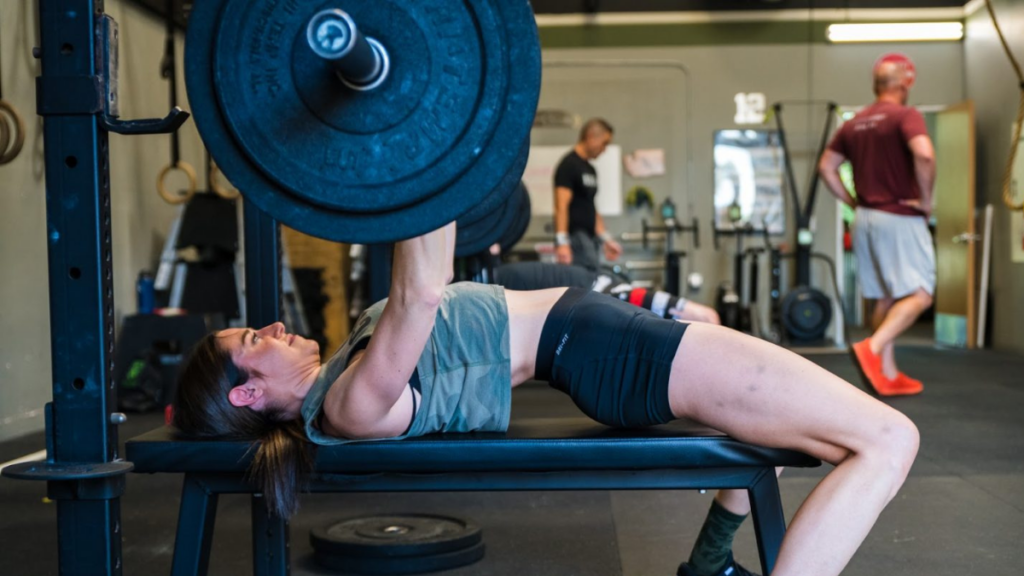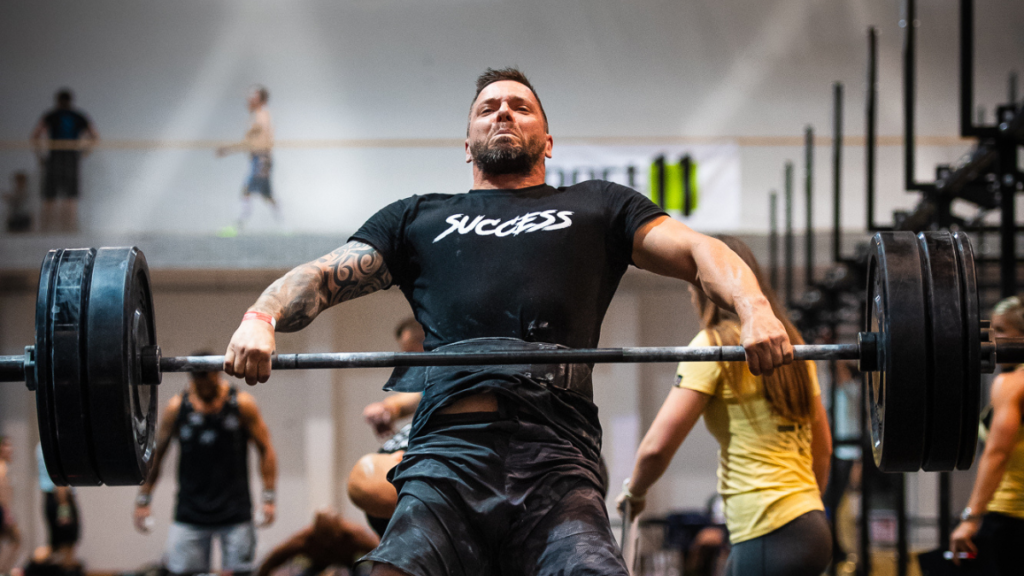


A stronger back makes everyday movement easier, supports better lifting technique, and gives your upper body a more powerful shape. The muscles that create back width are mainly the latissimus dorsi, often called the lats. Building a complete back also requires work for the upper back, traps, and spinal erectors, which help keep your torso stable under load.
Barbells are particularly useful because they allow gradual loading. You can start with an empty bar, learn the movement, and make small increases as your technique improves. That makes them a strong long term training tool for beginners who want to build muscle and strength without needing complicated equipment.


One important point is worth being clear about. Vertical pulling exercises such as pullups and lat pulldowns are usually the most direct way to train the lats through a full overhead range of motion. However, barbells can still build an impressively strong and muscular back when you use the right movements, train consistently, and progress patiently.
The three exercises below cover rowing strength, total posterior chain strength, and a long range movement for the lats. Together, they give beginners a simple barbell foundation for a wider and stronger back.
Why Back Training Matters for Beginners
Your back is not one single muscle. It is a large group of muscles that work together to control your shoulder blades, move your arms, and stabilize your spine. The lats run from the lower back and pelvis toward the upper arm. When they become more developed, they contribute heavily to the broad upper body shape that many lifters want.
The middle back contains muscles including the rhomboids and middle trapezius. These muscles help pull the shoulder blades back and support strong rowing movements. The spinal erectors run alongside the spine and resist unwanted rounding during hinges, rows, carries, and many athletic movements.
What Happens If You Do a Dead Hang Every Day for 30 Days?
Resistance training is effective for increasing muscle size and strength when it is performed consistently with sufficient effort and progressive overload. Research shows that higher weekly training volumes generally produce greater muscle growth, although beginners can make meaningful progress with a modest amount of work while learning movement quality.
For a beginner, the aim is not to use the heaviest possible load immediately. The aim is to build repeatable technique, finish each set with a few repetitions still available, and add weight only when you can control the bar from start to finish. This approach makes training more productive and reduces the chance that fatigue will turn a useful back exercise into a poor quality full body movement.
Exercise One: Bent Over Barbell Row
The bent over barbell row is one of the best beginner exercises for building the muscles that make the back look wider and thicker. It trains the lats, middle back, rear shoulders, biceps, and muscles that stabilize the torso. It also teaches you how to maintain a strong hip hinge while pulling weight toward your body.
How to Perform the Bent Over Barbell Row
Start with the bar on the floor or in a rack at about knee height. Stand with your feet around hip width apart and grip the bar slightly wider than shoulder width. Use an overhand grip to begin with, since it is simple and gives you a secure connection to the bar.
Push your hips back and soften your knees until your torso is leaning forward. Your back should stay neutral, meaning it maintains its natural curve without excessive rounding or arching. Let the bar hang just below your knees with your arms straight.
Pull the bar toward the lower part of your ribs or upper stomach. Think about driving your elbows back rather than lifting the bar with your hands. Pause briefly when the bar reaches your torso, then lower it under control until your elbows are straight again.
Keep your torso position as still as possible. A small amount of natural movement is normal, but beginners should avoid using a large hip swing to throw the bar upward. If you must jerk the bar to finish each repetition, the weight is too heavy for the goal of building quality back strength.
Why It Builds a Wider Back
Rows train the lats because the upper arm moves behind the torso during the pulling phase. They also train the muscles between the shoulder blades, which add thickness and help create a strong posture under load. Electromyography research on the bent over barbell row has found substantial lat activity, with a wider grip producing greater lat activity than a narrower grip in the study tested.
That does not mean you need an extremely wide grip. A grip that is only slightly wider than shoulder width is usually more comfortable and easier to control. Beginners should prioritize a position that allows a smooth pull, stable wrists, and a pain free shoulder path.
Begin with two or three sets of eight to twelve repetitions. Use a weight that lets you pause briefly at the top without losing your torso position. Once you can complete all sets with clean technique, add a small amount of weight or perform another repetition per set.
Exercise Two: Conventional Barbell Deadlift
The conventional deadlift is often thought of as a leg exercise, but it is also one of the most effective full posterior chain movements a beginner can learn. Your back does not actively row the bar upward during a deadlift. Instead, the muscles of the back work hard to keep the spine and upper body stable while the hips and knees extend.
This makes the deadlift a valuable exercise for building strong spinal erectors, traps, grip, and overall bracing ability. A strong deadlift can also improve your confidence with loaded movements, because it teaches you how to create tension through your whole body before the bar leaves the floor.
How to Perform the Conventional Barbell Deadlift
Stand with the bar over the middle of your feet. Your feet should be about hip width apart, with the bar close enough that it is nearly touching your shins. Reach down and grip the bar just outside your legs.
Bend your knees until your shins meet the bar, then pull your chest up slightly while keeping your ribs controlled. Take a deep breath into your abdomen and tighten your trunk as though you are preparing to absorb a light punch. Before lifting, take the slack out of the bar by pulling gently until you feel tension through your arms, back, and legs.
Push the floor away and stand up with the bar close to your body. Your hips and shoulders should rise together during the first part of the lift. Finish standing tall with your glutes squeezed, but do not lean backward at the top.
Lower the bar by pushing your hips back first, then bending your knees once the bar reaches them. Reset your position before each repetition rather than rushing into the next one.
Why It Makes Your Back Stronger
Deadlifts require substantial activation from the spinal erectors and upper back muscles to maintain the position of the spine and shoulders while heavy weight is lifted. A systematic review of electromyography research found that deadlift variations create meaningful activity in the erector spinae and other posterior chain muscles, although activation varies with the variation, load, and lifting technique used.
For beginners, the benefit is not just muscle development. The deadlift teaches how to brace, hinge at the hips, and keep a load close to the body. These are useful movement skills for rows, squats, athletic activity, and daily tasks involving lifting from the floor.
Start with two or three sets of five to eight repetitions. A slightly lower repetition range is useful because each repetition begins from the floor and demands concentration. Stop a set if your lower back begins to round significantly or the bar moves away from your legs. Better repetitions with a lighter load will build more useful strength than strained repetitions with poor control.
Exercise Three: Barbell Pullover
The barbell pullover is a less common choice, but it can be a useful beginner accessory exercise when performed carefully. It trains the lats through a long range of motion while the arms move from above the chest toward the hips. The chest and triceps also contribute, which makes it a compound upper body movement rather than a completely isolated lat exercise.
Use a light barbell for this exercise. An empty fixed weight bar, short barbell, or light straight bar is often easier to handle than a full Olympic bar. If only a long Olympic bar is available, start very conservatively and make sure you can control it securely with both hands.
How to Perform the Barbell Pullover
Lie lengthwise on a flat bench with your head, upper back, and hips supported. Hold the bar directly over your chest with straight arms and hands about shoulder width apart. Keep a soft bend in your elbows rather than locking them aggressively.
Slowly lower the bar backward over your head until you feel a comfortable stretch through your lats and chest. Your ribs should remain controlled rather than flaring dramatically upward. Do not chase an extreme range of motion. Lower only as far as you can maintain control and keep the shoulders comfortable.
Pull the bar back to the starting position by bringing your upper arms toward your sides. Think about drawing the bar with the muscles under your armpits rather than simply pressing it upward with your arms. Move slowly enough that you can feel the stretch and control the return.
Why It Can Help Back Width
The lats cross both the shoulder and the torso, so they contribute when the arm moves from an overhead position down toward the body. Research comparing pullover muscle activity has shown that the exercise involves both the pectoralis major and latissimus dorsi. This makes it a useful supplement to rows, especially for beginners who want more direct lat work but only have barbells available.
The pullover should not replace rows or deadlifts. It does not load the middle back or spinal erectors in the same way. Instead, it adds a different movement pattern that may help you train the lats through a long and controlled range.
Perform two or three sets of ten to fifteen repetitions after your rows and deadlifts. Keep the weight light enough that you can lower the bar smoothly and return it without twisting your wrists or bending your elbows excessively. Shoulder discomfort is a reason to shorten the range of motion or choose another exercise.
How to Build Your Beginner Back Workout
You do not need a complicated routine to build a stronger back. Train these movements once or twice each week, leaving at least one full day between hard sessions for the same muscle groups. A simple session could start with deadlifts, move to bent over rows, and finish with pullovers.
Begin with fewer sets than you think you need. Two hard, technically sound sets are far more valuable than many sets completed with poor bracing and rushed repetitions. As you gain experience, you can gradually add another set, more repetitions, or small increases in bar weight.
Muscle growth is supported by progressive resistance training, but recovery matters too. Eating enough total food and protein, sleeping well, and allowing time between demanding sessions all help your body adapt to training. Research suggests that protein supplementation can provide a small additional benefit for resistance training related gains in muscle mass and strength, particularly when total dietary protein intake would otherwise be insufficient.
You should also judge progress by more than the number on the bar. Better control, smoother repetitions, a stronger grip, and less unwanted torso movement are all signs that your back is getting stronger. Add load when your current weight looks controlled, not simply because you feel impatient to move faster.
References
- American College of Sports Medicine (2009) ‘American College of Sports Medicine position stand: Progression models in resistance training for healthy adults’, Medicine and Science in Sports and Exercise, 41(3), pp. 687 to 708.
- Baz Vallez, J.A., Balsalobre Fernandez, C., Alix Fages, C. and Santos Conde, E. (2020) ‘Effects of the pullover exercise on the pectoralis major and latissimus dorsi muscles as evaluated by electromyography’, Journal of Applied Biomechanics, 27(4), pp. 380 to 384.
- Cuthbert, M., Ripley, N., McMahon, J.J., Evans, M., Haff, G.G. and Comfort, P. (2020) ‘The effect of deadlift exercise and its variations on muscle activity: A systematic review’, PLOS ONE, 15(2), e0229507.
- Morton, R.W., Murphy, K.T., McKellar, S.R., Schoenfeld, B.J., Henselmans, M., Helms, E., Aragon, A.A., Devries, M.C., Banfield, L., Krieger, J.W. and Phillips, S.M. (2018) ‘A systematic review, meta analysis and meta regression of the effect of protein supplementation on resistance training induced gains in muscle mass and strength in healthy adults’, British Journal of Sports Medicine, 52(6), pp. 376 to 384.
- Schoenfeld, B.J., Ogborn, D. and Krieger, J.W. (2017) ‘Dose response relationship between weekly resistance training volume and increases in muscle mass: A systematic review and meta analysis’, Journal of Sports Sciences, 35(11), pp. 1073 to 1082.
- Swann, G. and Barry, G. (2026) ‘Optimising lat activation: A comparative analysis of grip width in the bent over barbell row’, Graduate Journal of Sports Science, Coaching, Management and Rehabilitation, 2(1), pp. 1 to 15.
Key Takeaways
| Exercise | Main back benefit | Beginner focus |
|---|---|---|
| Bent over barbell row | Builds the lats, upper back, and rear shoulders for back width and thickness | Keep the torso stable and pull the bar toward the lower ribs |
| Conventional barbell deadlift | Strengthens the spinal erectors, traps, grip, and whole posterior chain | Brace hard, keep the bar close, and reset each repetition |
| Barbell pullover | Adds controlled lat training through a long range of motion | Use a light bar and stop before shoulder discomfort begins |
| Weekly approach | Builds strength and muscle through consistent progressive training | Train one or two times weekly and increase load only when technique stays solid |