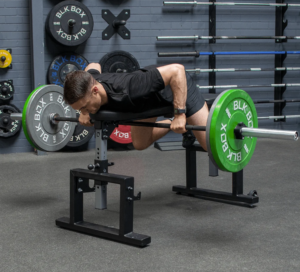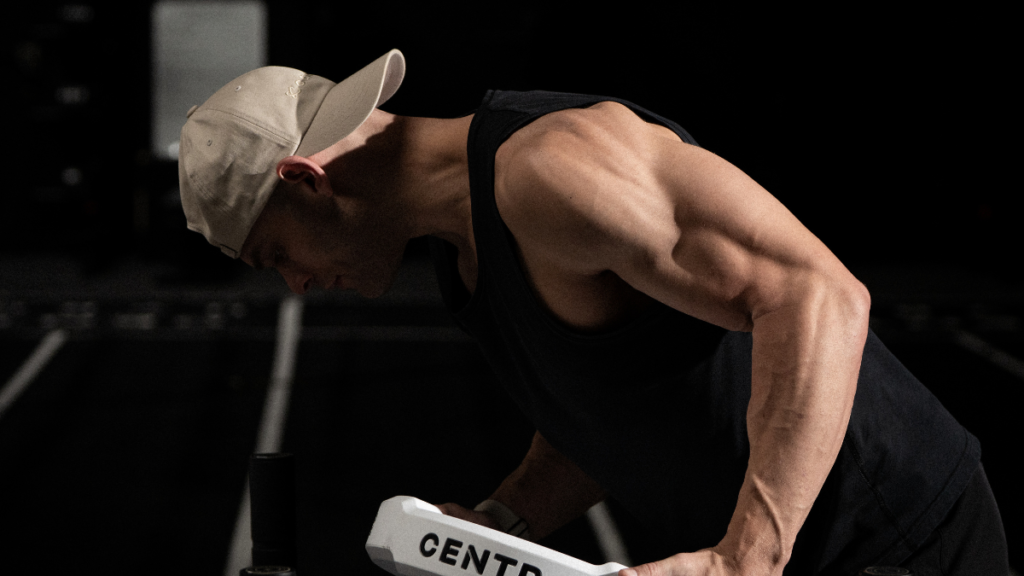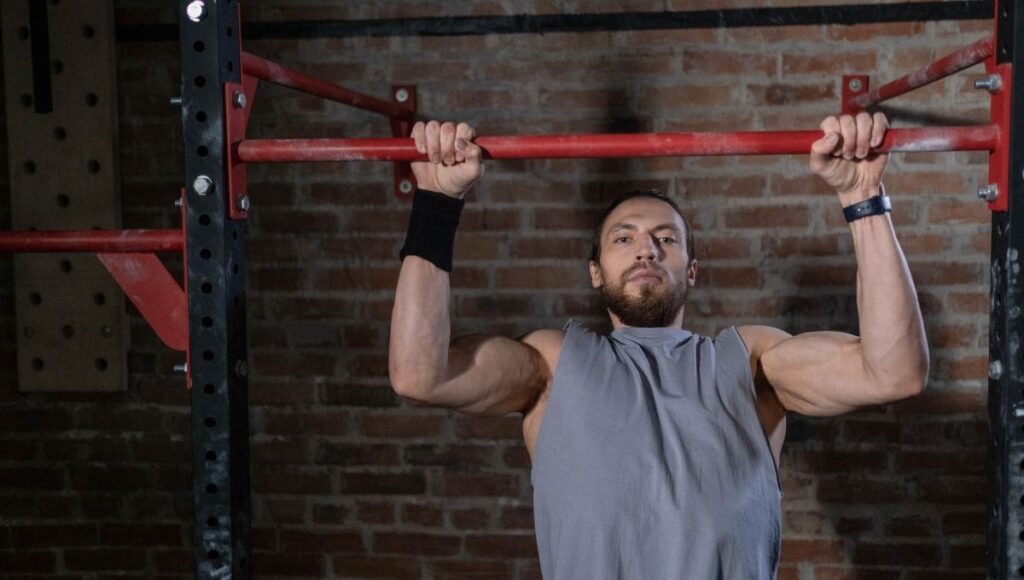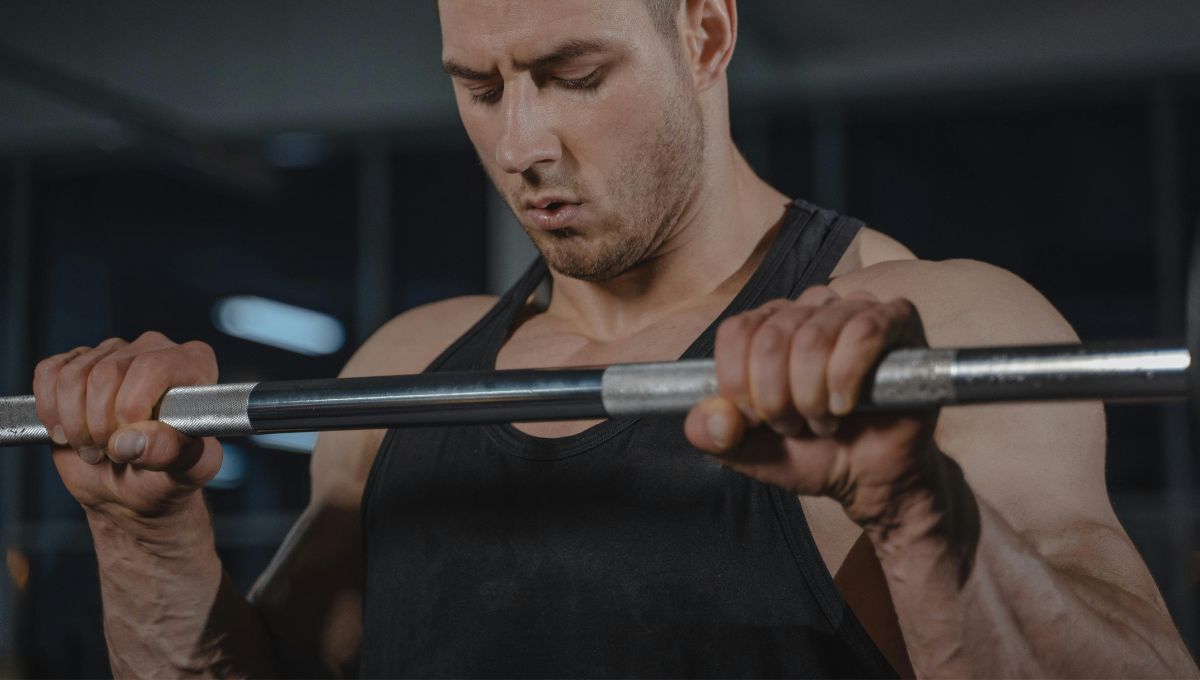


Strong forearms do far more than improve the way your arms look. They allow you to lift heavier weights, perform more repetitions, carry heavy objects with confidence, and improve performance in sports ranging from CrossFit and rock climbing to tennis and golf. A powerful grip also reduces the chance that your hands become the weak link during pulling exercises such as deadlifts, rows, pull ups, and farmer’s carries.

Many beginners spend hours training their chest, shoulders, and biceps while ignoring their forearms. Eventually, progress stalls because they cannot hold onto heavier weights long enough to challenge larger muscle groups. The good news is that forearm training does not have to be complicated. A few carefully chosen exercises performed consistently can dramatically improve both muscle size and grip strength.


Research consistently shows that grip strength is not just important in the gym. It is also associated with overall physical function, athletic performance, healthy aging, and even long term health outcomes. Developing stronger hands and forearms early in your training career can pay dividends for decades.
Here are three of the best beginner friendly exercises to build bigger forearms and a stronger grip.
Why Forearm Training Matters
The forearm contains more than 20 muscles that control wrist movement, finger movement, and grip force. These muscles work constantly throughout the day whenever you lift, pull, carry, twist, or squeeze.
Unlike muscles such as the chest or quadriceps, the forearms are active during almost every upper body exercise. However, indirect work alone is often not enough to maximize growth or significantly improve grip strength.

Research has shown that resistance training stimulates muscle hypertrophy through mechanical tension, metabolic stress, and muscle fiber recruitment. Since the forearms perform repeated gripping actions, they respond particularly well to progressive overload using controlled, high quality repetitions.
Grip strength itself has become an important marker in sports science. Numerous studies have demonstrated that stronger grip strength correlates with improved athletic performance and functional capacity across multiple populations.
Understanding Grip Strength
Crush Grip
This is the ability to squeeze something as hard as possible, such as closing your hand around a dumbbell or crushing a hand gripper.
Support Grip
Support grip refers to holding onto an object for time. Deadlifts, pull ups, and farmer’s carries depend heavily on this quality.
Pinch Grip
Pinch grip involves holding an object between the fingers and thumb without wrapping the fingers around it completely. The three exercises below primarily develop crush grip and support grip while also stimulating forearm muscle growth.
Exercise 1: Farmer’s Carry
If there were only one forearm exercise worth performing, many strength coaches would choose the farmer’s carry.
This deceptively simple movement trains nearly every muscle involved in gripping while simultaneously strengthening the shoulders, upper back, core, and legs.

Research examining loaded carries has shown that they produce high muscular activation throughout the body while improving functional strength and stability.
Benefits
Holding heavy weights for prolonged periods forces the finger flexors, wrist stabilizers, and forearm muscles to work continuously. Unlike traditional curls, there is no opportunity for the muscles to relax until the set is complete. The exercise also develops postural control because the body must stabilize the load while walking.
Beginners often notice rapid improvements in grip endurance within only a few weeks of regular farmer’s carries.
How to Perform It
- Choose two moderately heavy dumbbells or kettlebells.
- Stand tall with your shoulders pulled slightly back and your chest lifted.
- Grip the handles as hard as possible.
- Walk slowly while maintaining good posture.
- Avoid leaning from side to side or allowing the shoulders to slump forward.
- Continue walking until your grip begins to fail while maintaining perfect technique.
- Rest and repeat.
Programming
Perform three to four sets lasting between twenty and forty five seconds. Gradually increase either the weight or the walking distance each week.
Exercise 2: Dead Hangs
The dead hang may look simple, but it is one of the most effective bodyweight exercises for strengthening the hands and forearms. Simply hanging from a pull up bar forces the muscles of the fingers, hands, wrists, forearms, shoulders, and upper back to remain under continuous tension.
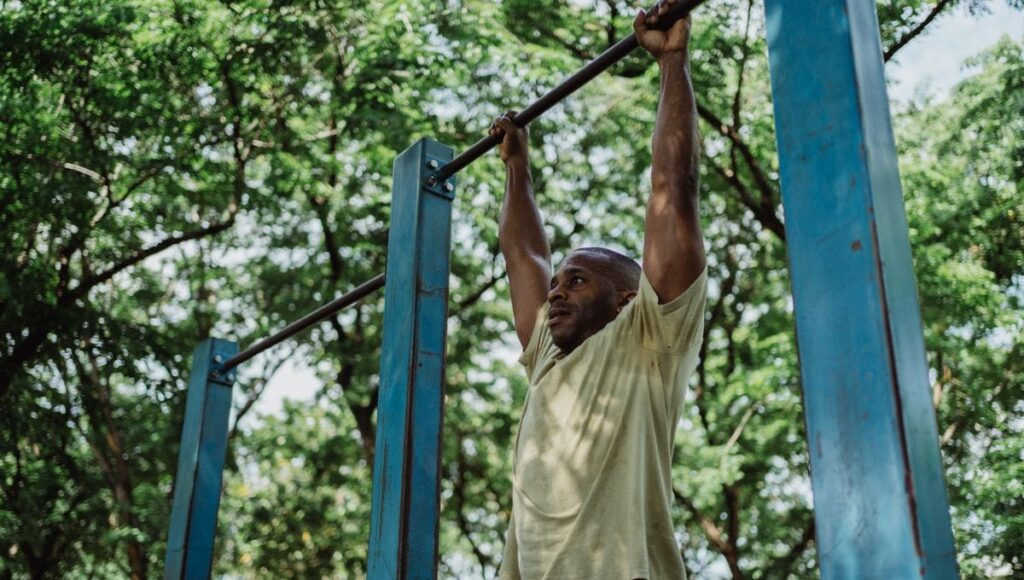
Research has shown that isometric contractions can produce significant strength improvements while also enhancing tendon stiffness, which contributes to joint stability and force production.
Benefits
Dead hangs build exceptional support grip strength. They improve shoulder stability while gently decompressing the shoulder joint under bodyweight. The exercise also strengthens connective tissue throughout the hands and wrists, which may improve resilience during pulling exercises.
For beginners working toward their first pull up, dead hangs provide an excellent foundation.
How to Perform It
- Grab a pull up bar using an overhand grip.
- Allow your body to hang naturally while keeping the shoulders gently engaged rather than completely relaxed.
- Squeeze the bar throughout the entire movement.
- Avoid swinging.
- Continue until your grip starts to weaken.
- Step down safely before your hands completely fail.
Programming
Complete three to five sets. Aim to hold each hang for fifteen to sixty seconds depending on your current ability. When sixty seconds becomes comfortable, progress by adding weight with a dipping belt or weighted vest.
Exercise 3: Wrist Curls and Reverse Wrist Curls
While compound exercises build functional grip strength, isolation work remains valuable for maximizing forearm size.
- Traditional wrist curls emphasize the wrist flexors located on the underside of the forearm.
- Reverse wrist curls target the wrist extensors located on the top of the forearm.
Balanced development of both muscle groups contributes to stronger wrists, improved appearance, and reduced muscular imbalance. Electromyography studies have consistently shown substantial activation of these muscle groups during isolated wrist flexion and extension exercises.
Benefits
These exercises directly target muscles that often receive less attention during conventional strength training. They are beginner friendly because they require minimal equipment and are easy to learn. Increasing forearm muscle size may also improve overall grip strength by increasing the muscles available to generate force.
How to Perform Wrist Curls
- Sit on a bench holding a light dumbbell or barbell.
- Rest your forearms on your thighs with your palms facing upward.
- Allow the wrists to extend fully.
- Curl the weight upward using only your wrists.
- Pause briefly before lowering under control.
How to Perform Reverse Wrist Curls
- Use the same position.
- Turn the palms downward.
- Raise the weight using only wrist extension.
- Lower slowly through the full range of motion.
- Avoid using momentum.
Programming
Perform two to four sets of ten to twenty repetitions.
Use slow controlled repetitions while focusing on muscular fatigue rather than heavy weight.
How Many Chin-Ups Should You Be Able to Do Based on Your Age?
Why These Three Exercises Work So Well Together
Each exercise targets a slightly different aspect of forearm development.
- Farmer’s carries build whole body grip endurance and support strength.
- Dead hangs strengthen the fingers and improve the ability to hold bodyweight.
- Wrist curls develop the muscles responsible for increasing forearm size.
Together they provide a balanced approach that combines functional performance with muscular development.
How Often Should Beginners Train Forearms?
Most beginners achieve excellent results by training forearms two or three times each week. Because the forearms recover relatively quickly, moderate training frequency often produces better results than a single exhausting session.
A simple weekly routine might include farmer’s carries after lower body workouts, dead hangs after pulling sessions, and wrist curls at the end of upper body workouts. Gradually increasing training volume over time is more effective than dramatically increasing weight too soon.
How Long Does It Take to Notice Results?
Most beginners experience improvements in grip strength within three to six weeks of consistent training. Visible increases in forearm size generally take longer, with noticeable hypertrophy often occurring after eight to twelve weeks depending on genetics, nutrition, training quality, and overall muscle mass.
Progressive overload remains the key driver of long term improvement. Whether that means carrying heavier weights, hanging longer, or performing more controlled wrist curls, gradual progression ensures continued adaptation.
Final Thoughts
Building bigger forearms does not require complicated equipment or endless isolation exercises. A handful of carefully selected movements performed consistently can transform both your grip strength and forearm development.
Farmer’s carries develop full body strength while dramatically improving support grip. Dead hangs strengthen the hands, fingers, and shoulders while preparing beginners for more advanced pulling exercises. Wrist curls and reverse wrist curls provide the direct muscular stimulus needed for noticeable forearm growth.
Together these three exercises cover nearly every function of the forearm muscles while remaining simple enough for complete beginners. Combine them with progressive overload, adequate protein, and consistent training, and you will develop stronger hands, larger forearms, and a grip that supports every other lift in the gym.
Key Takeaways
| Exercise | Primary Benefit | Recommended Sets | Recommended Repetitions or Duration |
|---|---|---|---|
| Farmer’s Carry | Builds grip endurance and whole body stability | 3 to 4 | 20 to 45 seconds |
| Dead Hang | Improves support grip and shoulder stability | 3 to 5 | 15 to 60 seconds |
| Wrist Curl | Increases forearm flexor size | 2 to 4 | 10 to 20 repetitions |
| Reverse Wrist Curl | Strengthens forearm extensors and wrist stability | 2 to 4 | 10 to 20 repetitions |
| Weekly Frequency | Supports steady progress | 2 to 3 sessions | Progressive overload over time |
References
- American College of Sports Medicine. (2009). Progression models in resistance training for healthy adults. Medicine and Science in Sports and Exercise, 41(3), pp. 687 to 708.
- Bohannon, R.W. (2019). Grip strength: An indispensable biomarker for older adults. Clinical Interventions in Aging, 14, pp. 1681 to 1691.
- Folland, J.P. and Williams, A.G. (2007). The adaptations to strength training. Sports Medicine, 37(2), pp. 145 to 168.
- Fragala, M.S., Cadore, E.L., Dorgo, S., Izquierdo, M., Kraemer, W.J., Peterson, M.D. and Ryan, E.D. (2019). Resistance training for older adults. Journal of Strength and Conditioning Research, 33(8), pp. 2019 to 2052.
- Leong, D.P., Teo, K.K., Rangarajan, S., Lopez Jaramillo, P., Avezum, A., Orlandini, A. and Yusuf, S. (2015). Prognostic value of grip strength. The Lancet, 386(9990), pp. 266 to 273.
- Morton, R.W., Murphy, K.T., McKellar, S.R., Schoenfeld, B.J., Henselmans, M., Helms, E., Aragon, A.A., Devries, M.C., Banfield, L., Krieger, J.W. and Phillips, S.M. (2018). Protein supplementation to support resistance exercise induced gains in muscle mass and strength. British Journal of Sports Medicine, 52(6), pp. 376 to 384.
- Schoenfeld, B.J. (2010). The mechanisms of muscle hypertrophy and their application to resistance training. Journal of Strength and Conditioning Research, 24(10), pp. 2857 to 2872.
- Schoenfeld, B.J., Ogborn, D. and Krieger, J.W. (2017). Dose response relationship between weekly resistance training volume and increases in muscle mass. Journal of Sports Sciences, 35(11), pp. 1073 to 1082.
- Steele, J., Fisher, J., Giessing, J. and Gentil, P. (2017). Clarity in reporting terminology and definitions of resistance training. Sports Medicine, 47(10), pp. 2093 to 2100.
- Tillin, N.A. and Folland, J.P. (2014). Maximal and explosive strength training. Scandinavian Journal of Medicine and Science in Sports, 24(4), pp. 603 to 612.