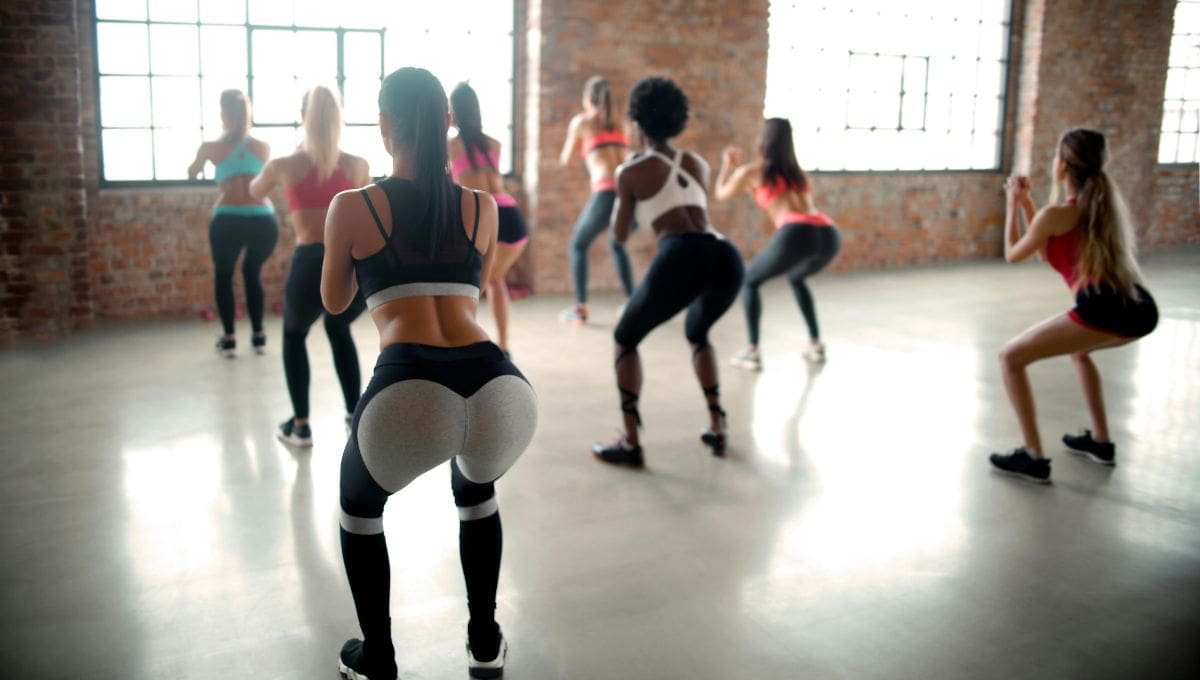


Strong glutes do much more than improve the way your body looks. The glute muscles play a central role in walking, running, climbing stairs, lifting weights, jumping, and maintaining healthy posture. They also help stabilize the hips, protect the knees, and support the lower back during everyday movement and athletic performance.
Unfortunately, many beginners struggle to activate their glutes properly. Hours of sitting, limited physical activity, and poor movement habits can reduce glute activation, causing other muscles such as the lower back or hamstrings to compensate during exercise. This can limit strength gains and may increase the risk of discomfort or injury over time.



The good news is that beginners do not need complicated workouts or expensive equipment to build stronger glutes. Research consistently shows that a small number of well chosen exercises performed with good technique can produce significant improvements in muscle activation and strength.
This article covers three of the best beginner friendly glute exercises backed by scientific evidence. Each movement is easy to learn, can be progressed over time, and effectively targets the gluteus maximus, gluteus medius, and supporting muscles.
Why Strong Glutes Matter
The glutes consist of three muscles.
- The gluteus maximus is the largest muscle in the body and is responsible for powerful hip extension during movements such as standing up, sprinting, climbing stairs, and lifting objects from the floor.
- The gluteus medius sits on the outside of the hip and helps stabilize the pelvis during walking, running, and single leg movements.
- The gluteus minimus works alongside the gluteus medius to control hip movement and maintain balance.
Weak glutes are associated with reduced athletic performance, poor movement mechanics, and a greater likelihood of knee pain, hip instability, and lower back discomfort. Studies have shown that improving glute strength can enhance lower body function while reducing excessive stress on surrounding joints.
For beginners, the goal should not simply be making the muscles tired. The goal is learning to activate the glutes correctly before progressing toward heavier resistance and more advanced exercises.
What Makes a Good Beginner Glute Exercise?
The best beginner exercises share several important characteristics.
- First, they teach proper movement patterns without requiring advanced coordination.
- Second, they allow beginners to focus on muscle control rather than balancing heavy loads.
- Third, they produce high levels of glute muscle activation according to electromyography, also known as EMG, research.
- Finally, they can easily become more challenging as strength improves.
The following three exercises meet all of these criteria.
Your Grip Strength Could Predict How Long You’ll Live
1. Glute Bridge
The glute bridge is one of the most effective exercises for teaching hip extension while minimizing stress on the lower back. It is often recommended by physical therapists, strength coaches, and sports scientists because it allows beginners to isolate the glutes without needing heavy weights.
EMG studies consistently show high activation of the gluteus maximus during bridge variations. As technique improves, the exercise can also be progressed with resistance bands, dumbbells, barbells, or single leg variations.
How to Perform the Glute Bridge
Lie on your back with your knees bent and your feet flat on the floor about shoulder width apart. Position your heels close enough that your fingertips can nearly touch them.
Brace your core and press through your heels as you lift your hips toward the ceiling. Squeeze your glutes at the top without excessively arching your lower back. Slowly lower your hips back to the starting position under control.
The movement should come primarily from the hips instead of the lower back. Beginners should focus on slow repetitions with a pause at the top to improve muscle activation.
Common Mistakes
One of the most common mistakes is pushing through the toes instead of the heels. This shifts more work toward the quadriceps and reduces glute involvement.
Another frequent error is hyperextending the lower back at the top of the movement. Instead of lifting as high as possible, concentrate on creating a straight line from your shoulders to your knees while squeezing the glutes. Rushing through repetitions also decreases muscle activation. A controlled tempo generally produces better results.
Why It Works
Hip extension is the primary function of the gluteus maximus. The glute bridge trains this movement pattern while keeping spinal loading relatively low, making it an excellent starting point for beginners.
Research comparing glute activation across multiple exercises consistently ranks bridge variations among the highest for gluteus maximus recruitment. This makes the movement valuable both for strength development and for improving neuromuscular control.
2. Bodyweight Squat
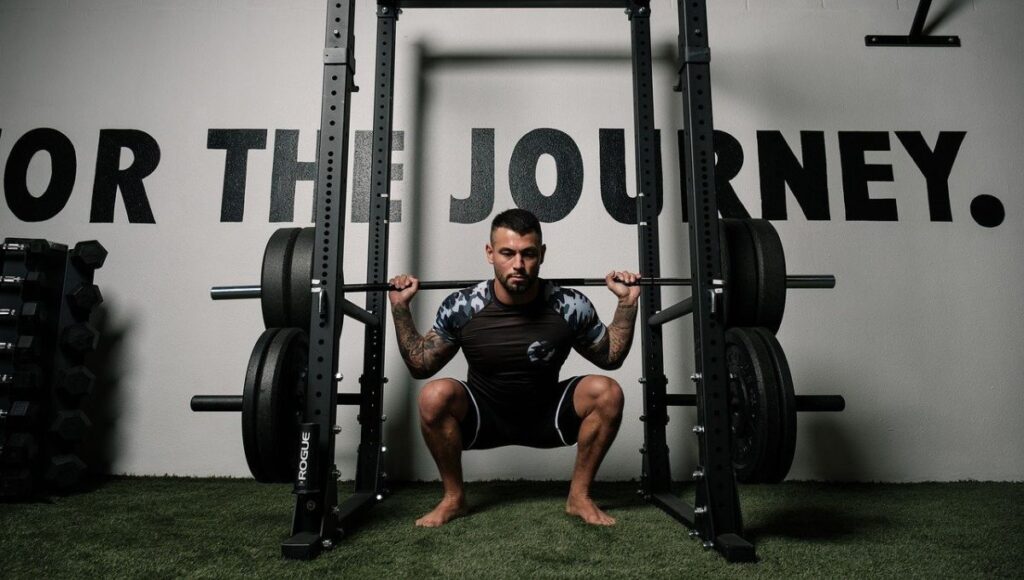
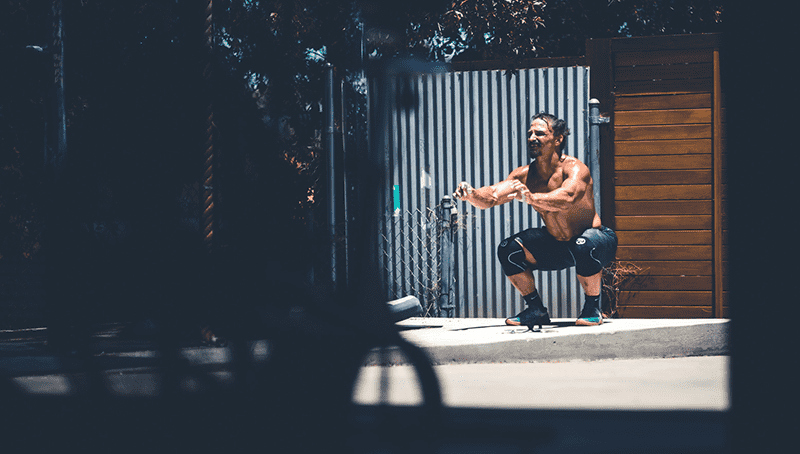
The bodyweight squat is one of the most fundamental lower body exercises. While it trains the quadriceps, hamstrings, and core, it also provides significant stimulation for the glutes, especially when performed through an appropriate depth. Many beginners avoid squats because they worry about technique, but mastering the bodyweight version creates a foundation for more advanced exercises later.
How to Perform the Bodyweight Squat
- Stand with your feet about shoulder width apart and your toes turned slightly outward if that feels comfortable.
- Brace your core before beginning the movement.
- Push your hips back while bending your knees at the same time.
- Lower yourself until your thighs are at least parallel to the floor or as low as your mobility allows without losing control.
- Drive through your whole foot to return to standing while squeezing your glutes near the top.
- Keep your chest lifted throughout the movement and allow your knees to track naturally in line with your toes.
Common Mistakes
Many beginners perform only shallow squats because they fear losing balance. Research shows that deeper squats generally increase glute activation by requiring greater hip flexion and extension.
Another mistake is allowing the knees to collapse inward. This reduces hip stability and can place unnecessary stress on the knee joint. Strengthening the gluteus medius helps improve knee alignment over time.
Lifting the heels from the floor can also reduce stability. Keeping the feet firmly planted encourages proper force production.
Why It Works
The squat strengthens multiple muscle groups simultaneously while teaching coordination and balance. It also reflects everyday movements such as sitting down and standing up.
Scientific studies demonstrate that squat depth influences muscle recruitment. As hip flexion increases, the gluteus maximus contributes more force during the upward phase of the lift. Beginners who gradually improve squat depth often experience greater glute development while also improving mobility and functional strength.
Although bodyweight squats may eventually become too easy for continued muscle growth, they remain one of the best introductory exercises for learning efficient movement mechanics.
3. Step Up
The step up is one of the most practical exercises for building glute strength because it closely resembles climbing stairs and other daily activities.
Unlike bilateral exercises where both legs share the work, the step up forces each leg to produce force independently. This increases demand on the gluteus maximus and gluteus medius while also improving balance and coordination.
Research has shown that step ups generate high levels of glute activation, making them an excellent choice for beginners who want functional strength improvements.
How to Perform the Step Up
- Stand in front of a sturdy bench, step, or box that places your knee roughly at a ninety degree angle or slightly lower.
- Place one foot completely on the platform.
- Press through the entire foot while extending your hip and knee until you are standing fully on the platform.
- Bring the other foot up only after the working leg has completed most of the effort.
- Lower yourself under control and repeat before switching sides.
- Focus on driving with the front leg instead of pushing off aggressively with the trailing foot.
Common Mistakes
Using excessive momentum is one of the biggest errors. If the back leg performs too much of the work, glute activation decreases significantly.
Choosing a platform that is too high may also compromise technique. Beginners should prioritize smooth movement over height.
Leaning excessively forward shifts the emphasis toward the lower back instead of the glutes.
Why It Works
Step ups combine strength, stability, and balance in a single movement. The exercise challenges hip extension while requiring the gluteus medius to stabilize the pelvis throughout the movement. This combination makes it especially useful for improving everyday function and reducing movement asymmetries between the legs.
Because each repetition begins from a dead stop, the glutes must generate force without assistance from stored elastic energy. This increases muscular demand despite using only body weight.
How Often Should Beginners Train Their Glutes?
Research on resistance training suggests that training each muscle group at least twice per week is effective for increasing strength and muscle growth. Beginners can make excellent progress with two or three weekly sessions that include these exercises.
Quality matters far more than quantity. Performing each repetition with proper control and focusing on squeezing the glutes usually produces better long term results than adding unnecessary volume. As strength improves, resistance can gradually be added through dumbbells, barbells, resistance bands, or weighted vests.
Progressive overload remains one of the most important principles for continued improvement. This means gradually increasing the challenge over time by adding resistance, repetitions, sets, or improving exercise technique.
Tips to Maximize Glute Growth
Learning to feel the glutes working is often one of the biggest challenges for beginners. Performing a few slow warm up repetitions before each exercise can improve muscle activation. Maintaining a full range of motion is also important. Research consistently shows that muscles generally experience greater growth when trained through longer muscle lengths, provided the movement is performed safely.
Recovery is equally important. Muscle growth occurs after training rather than during the workout. Consuming enough dietary protein, getting adequate sleep, and allowing sufficient recovery between sessions all contribute to better results.
Patience is another key factor. Beginners often experience rapid improvements in strength during the first several weeks because the nervous system becomes more efficient at activating muscles. Visible muscle growth usually follows with consistent training over time.
Final Thoughts
Building stronger glutes does not require advanced training methods or complicated exercise routines. For beginners, mastering a few fundamental movements often provides the fastest path toward better strength, improved posture, and healthier movement patterns.
The glute bridge teaches proper hip extension while maximizing glute activation with minimal stress on the spine. The bodyweight squat develops functional lower body strength and reinforces essential movement mechanics. The step up strengthens each leg individually while improving balance, coordination, and hip stability.
Performed consistently with good technique and progressive overload, these three exercises create an excellent foundation for stronger glutes and long term athletic development.
Key Takeaways
| Exercise | Primary Benefits | Why It Is Beginner Friendly |
|---|---|---|
| Glute Bridge | High glute activation, improved hip extension, low spinal loading | Easy to learn and ideal for developing mind muscle connection |
| Bodyweight Squat | Builds lower body strength, improves movement mechanics, strengthens glutes through deeper ranges | Requires no equipment and teaches fundamental movement patterns |
| Step Up | Improves single leg strength, balance, hip stability, and functional performance | Closely mimics everyday activities and helps correct strength imbalances |
| Training Frequency | Two to three sessions per week | Allows sufficient practice and recovery for beginners |
| Progression | Increase resistance, repetitions, or exercise difficulty gradually | Supports continued strength and muscle development over time |
References
- Boren, K., Conrey, C., Le Coguic, J., Paprocki, L., Voight, M. and Robinson, T. (2011) ‘Electromyographic analysis of gluteus medius and gluteus maximus during rehabilitation exercises’, International Journal of Sports Physical Therapy, 6(3), pp. 206 to 223.
- Contreras, B., Vigotsky, A.D., Schoenfeld, B.J., Beardsley, C. and Cronin, J. (2015) ‘A comparison of gluteus maximus, biceps femoris and vastus lateralis electromyographic activity in the back squat and barbell hip thrust’, Journal of Applied Biomechanics, 31(6), pp. 452 to 458.
- Escamilla, R.F. (2001) ‘Knee biomechanics of the dynamic squat exercise’, Medicine & Science in Sports & Exercise, 33(1), pp. 127 to 141.
- Kubo, K., Ikebukuro, T. and Yata, H. (2019) ‘Effects of squat training with different depths on lower limb muscle volumes’, European Journal of Applied Physiology, 119(9), pp. 1933 to 1942.
- Schoenfeld, B.J. (2010) ‘The mechanisms of muscle hypertrophy and their application to resistance training’, Journal of Strength and Conditioning Research, 24(10), pp. 2857 to 2872.
- Schoenfeld, B.J., Ogborn, D. and Krieger, J.W. (2016) ‘Effects of resistance training frequency on measures of muscle hypertrophy: A systematic review and meta analysis’, Sports Medicine, 46(11), pp. 1689 to 1697.
- Selkowitz, D.M., Beneck, G.J. and Powers, C.M. (2013) ‘Which exercises target the gluteal muscles while minimizing activation of the tensor fascia lata?’, Journal of Orthopaedic & Sports Physical Therapy, 43(2), pp. 54 to 64.
- Williams, M.J., Bowser, B.J. and Claiborne, T.L. (2021) ‘Electromyographic activity of the gluteus medius during functional weight bearing exercises’, International Journal of Sports Physical Therapy, 16(5), pp. 1258 to 1268.