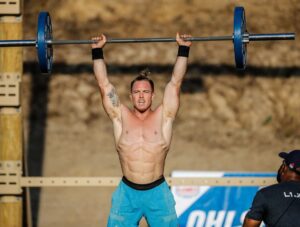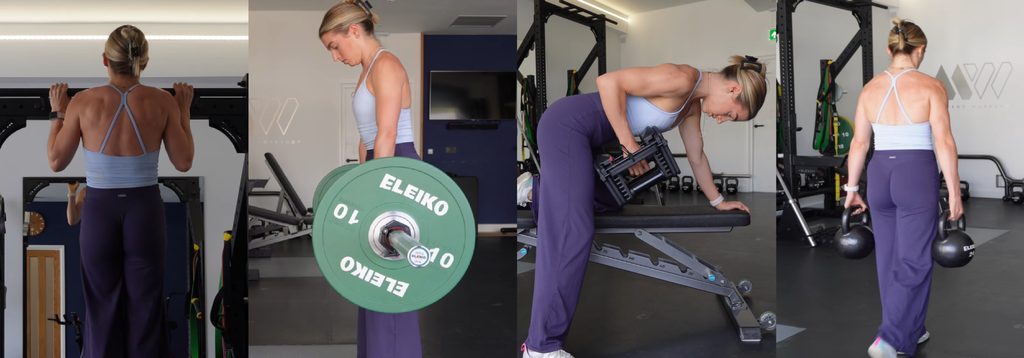


When your chest stops growing, the answer is not always adding more bench press sets. The bench press is an excellent compound lift, but it can become repetitive over time. Your body gets highly skilled at the movement, and the same loading pattern may no longer provide the fresh challenge needed to keep building muscle.
Chest growth depends on progressive resistance training, enough hard weekly sets, good technique, recovery, and food intake that supports muscle protein synthesis. However, exercise selection also matters. Different chest exercises can change the resistance curve, range of motion, stability demands, and the position in which the pecs are most challenged.



The pectoralis major is a large fan shaped muscle with fibers that run in different directions. Its main roles include bringing the arm toward the body, moving the arm across the chest, and helping rotate the upper arm inward. This means that pressing movements are useful, but they are not the only way to train it effectively. Exercises that create a strong contraction when the arms move toward each other can add a valuable growth stimulus that traditional barbell pressing may not fully provide.
If your pecs refuse to grow despite consistent training, these three unusual chest exercises can help you attack the muscle from a new angle. They are not magic movements, but each gives you a practical way to create high quality chest tension while keeping your training interesting and progressive.
Why Your Chest May Have Stopped Growing
Muscle hypertrophy is strongly linked to performing enough challenging resistance training over time. Research consistently shows that resistance training increases muscle size, with higher training volumes often producing greater hypertrophy when recovery is managed well. However, more work is only useful when the sets are hard enough, technically sound, and recoverable.
A plateau can happen when you perform the same exercise, with similar loads and similar repetitions, for too long. Your chest may also be limited by triceps fatigue, shoulder discomfort, poor control at the bottom of pressing movements, or an inability to take the pecs through a long and controlled range of motion.
The best solution is usually not replacing all of your pressing. Instead, keep a stable foundation of compound work and add exercises that address what your existing program lacks. For many lifters, that means more controlled adduction work, more challenge in stretched positions, or a way to train the chest hard without needing very heavy loads.
1. Dumbbell Squeeze Press
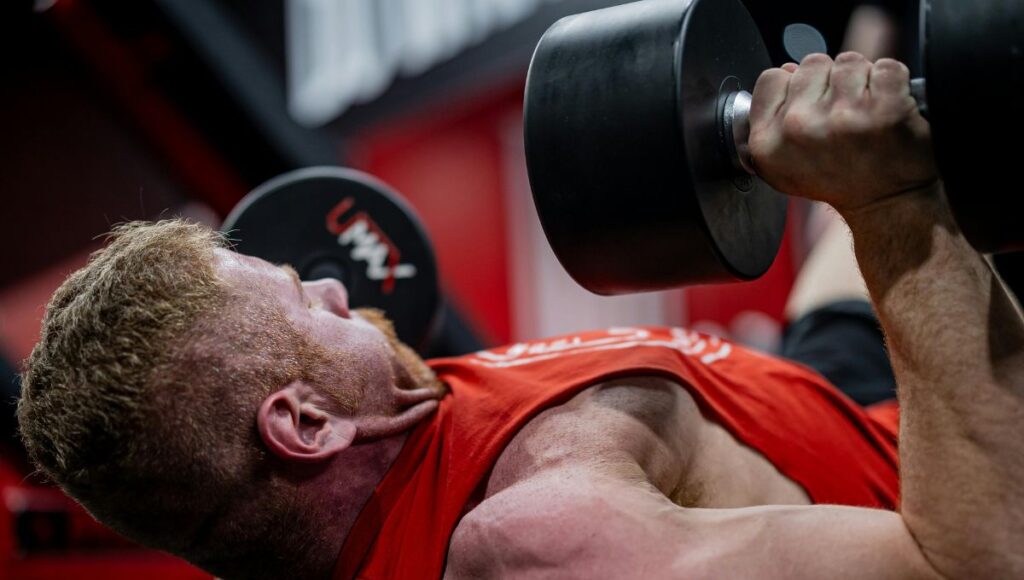
The dumbbell squeeze press looks simple, but it creates a very different chest training experience from a normal dumbbell press. Lie on a flat or slightly inclined bench, press two dumbbells together firmly, and keep them touching throughout the repetition. Lower the weights under control, then press them upward while continuing to squeeze them together as hard as possible.
The unusual feature is the constant inward force. In a standard dumbbell bench press, the hands move upward and slightly inward, but the dumbbells are not pressed directly into each other. During a squeeze press, you actively create an isometric chest contraction while also completing the pressing movement.
3 Unusual Cable Exercises for Stronger and Wider Shoulders
Why It Can Help Stubborn Pecs
The pectoralis major contributes heavily to horizontal adduction, which is the action of bringing the upper arm toward the midline of the body. The squeeze press asks the chest to contribute to this action continuously, rather than only near the top of a normal press. This can make relatively light dumbbells feel surprisingly difficult.
The exercise is also useful for lifters whose shoulders become irritated by deep, heavy dumbbell pressing. The dumbbells remain close together and the elbows are generally tucked closer to the body, which may make the position more manageable for some people. That does not make it risk free, but it can be a useful variation when conventional pressing feels uncomfortable.
The squeeze press should not replace a heavy press if building overall strength is your goal. It is better viewed as a hypertrophy accessory exercise. It allows you to train the pecs with high effort and controlled form after your heavier compound work.
How to Do It Well
Choose dumbbells that you can control for eight to fifteen repetitions. Begin with the dumbbells touching directly above your chest. Create a strong squeeze before lowering them, then maintain that pressure throughout the full range of motion.
Lower slowly until the dumbbells reach your chest or until your shoulder position becomes uncomfortable. Press upward without allowing the weights to drift apart. Your goal is not simply to move the dumbbells. Your goal is to create hard, uninterrupted chest tension from the first repetition to the last.
2. Cable Press Around
The cable press around is a standing cable chest movement that combines a pressing action with a deliberate movement of the arm across the body. Set a cable pulley around chest height, take one handle, and stand far enough away to maintain tension. Start with the elbow bent and the hand near the side of your chest. Press forward and then guide the hand slightly across your body in a smooth arc.
You can perform it one arm at a time, which makes it easier to focus on the chest contracting through the full movement. The cable provides resistance throughout the range, including the shortened position when the hand finishes across the body.
Why It Can Help Stubborn Pecs
Free weights are affected by gravity, so their resistance changes depending on the angle of the limb. With dumbbell flyes, for example, tension can decrease significantly near the top because the dumbbells are directly above the shoulder joint. Cables can provide more consistent resistance through a larger portion of the movement.
The press around also lets you train the pecs through horizontal adduction without asking the triceps to do as much work as they would in a barbell or dumbbell press. This matters if your triceps fail before your chest during pressing exercises. By reducing the limiting role of the triceps, you may be able to bring the pecs closer to fatigue with better control.
Research comparing different resistance training exercises suggests that muscle growth can occur across a wide range of movements when training volume and effort are sufficient. This gives you useful freedom. You do not need to rely entirely on one lift, especially if it no longer feels productive or causes discomfort.
How to Do It Well
Keep your torso tall and stable. Do not turn the exercise into a full body rotation. A small natural rotation is acceptable, but the movement should come mainly from the shoulder joint and chest.
Start with the cable handle near the outer edge of your chest. Press forward and across until your hand reaches the centerline of your body or moves slightly beyond it. Pause briefly and squeeze the chest before returning slowly.
Use a load that lets you maintain a smooth path. Heavy, sloppy repetitions remove much of the benefit. Aim for ten to twenty controlled repetitions per side, taking the final few repetitions close to muscular failure while keeping your shoulder position stable.
3. Ring Push Ups
Ring push ups are a demanding variation of the classic push up. Set gymnastic rings low enough that you can place your hands in them while holding a plank position. Lower your chest between the rings, then press back up while controlling the handles.
They look like a basic bodyweight movement, but the rings create an unstable surface that demands more control from the chest, shoulders, arms, and trunk. You can make the exercise easier by raising the rings or placing them in a rack. You can make it harder by lowering the rings, elevating your feet, wearing a weighted vest, or gradually turning the rings outward near the top.
Why It Can Help Stubborn Pecs
Push ups can build chest muscle when they are performed with sufficient resistance and taken close to failure. Studies have found that push up training can produce improvements in chest muscle thickness and strength that are comparable with low load bench press training when the effort is matched.
Rings add another useful element. Your hands can move more naturally than they can on a fixed bar or the floor. During the upward portion, you can allow the rings to come slightly inward, which creates an adduction component similar to a fly or cable movement. This may help you achieve a stronger chest contraction without using a machine.
Unstable training can increase the challenge of a movement, but instability should not become the goal. If the rings shake so much that you cannot control the range of motion, the exercise is too difficult. Muscle growth requires productive tension and enough proximity to failure, not simply making an exercise look more advanced.
How to Do It Well
Set the rings at a height that allows you to complete at least six controlled repetitions. Start in a straight body position with your hands beneath or slightly wider than your shoulders. Keep your ribs controlled and avoid allowing your lower back to sag.
Lower your chest between the rings while keeping your shoulders comfortable and your elbows at a moderate angle from the torso. Press back to the top, then bring the rings subtly inward without forcing an exaggerated range. Think about bringing your upper arms toward each other rather than aggressively twisting your hands.
Use ring push ups early in the workout if they are challenging enough to function as your main press. Use them later if you are performing them as a controlled finisher. Progress by lowering the rings in small steps, adding repetitions, slowing the lowering phase, or adding external load only after your technique is reliable.
How to Program These Exercises for Chest Growth
You do not need all three exercises in every workout. In fact, rotating them can help you maintain quality and avoid accumulating unnecessary fatigue. Keep one major pressing movement in your program, such as a bench press, dumbbell press, machine press, or weighted push up. Then add one or two of these exercises for chest focused volume.
A practical approach is to train your chest two times per week. On one day, complete your heavier press first, then use the dumbbell squeeze press for two or three sets of eight to fifteen repetitions. On the second day, use ring push ups as your main bodyweight press and finish with cable press arounds for two or three sets of ten to twenty repetitions per side.

Training close to failure is important, particularly when using lighter loads. You do not need to fail every set, but the last few repetitions should feel genuinely difficult. If you could comfortably perform five or six more repetitions, the set is unlikely to provide an optimal hypertrophy stimulus.
Progression remains essential. Add a small amount of load, perform an extra repetition, improve your range of motion, or gain better control with the same load. Keep a record of your work so that the exercises do not become random variations with no measurable progress.
The Bigger Picture for Pecs That Refuse to Grow
Odd exercises can refresh your chest training, but they cannot overcome a program that lacks consistency. Build your training around enough hard sets, progressive overload, adequate protein intake, and recovery. Resistance training research supports a broad range of loads for hypertrophy, provided the sets are sufficiently challenging and the overall work is appropriate.
The dumbbell squeeze press, cable press around, and ring push up each give the chest a slightly different problem to solve. The squeeze press adds constant inward pressure. The cable press around maintains tension through a strong shortened contraction. Ring push ups let you train hard with bodyweight while introducing a more natural and demanding path for the arms.
Use them with patience. Choose one, improve it for several weeks, and judge it by whether you can perform more quality work over time. That is how unusual exercises become useful tools rather than short lived gym entertainment.
Key Takeaways
| Exercise | Main Benefit | Best Rep Range | Key Technique Focus |
|---|---|---|---|
| Dumbbell squeeze press | Adds continuous inward chest tension during a press | 8 to 15 | Press the dumbbells firmly together throughout every repetition |
| Cable press around | Trains the chest through pressing and across body adduction | 10 to 20 per side | Keep the torso stable and finish with a controlled chest squeeze |
| Ring push up | Provides a scalable bodyweight press with high stability demands | 6 to 15 | Maintain a strong plank and control the rings through the full range |
| Programming approach | Adds productive chest volume without replacing all compound pressing | 2 to 6 weekly accessory sets per exercise | Progress gradually through load, reps, range of motion, or control |
References
- Calatayud, J., Borreani, S., Colado, J.C., Martin, F., Flandez, J., Page, P. and Andersen, L.L. (2015) ‘Bench press and push up at comparable levels of muscle activity results in similar strength gains’, Journal of Strength and Conditioning Research, 29(1), pp. 246 to 253.
- Fink, J., Kikuchi, N. and Nakazato, K. (2018) ‘Effects of rest intervals and training loads on metabolic stress and muscle hypertrophy’, Clinical Physiology and Functional Imaging, 38(2), pp. 261 to 268.
- Gentil, P., Soares, S. and Bottaro, M. (2015) ‘Single versus multi joint resistance exercises: Effects on muscle strength and hypertrophy’, Asian Journal of Sports Medicine, 6(2), e24057.
- Grgic, J., Schoenfeld, B.J., Orazem, J., Sabol, F., Pereira, L.A. and Pedisic, Z. (2022) ‘Effects of resistance training performed to repetition failure or non failure on muscular strength and hypertrophy: A systematic review and meta analysis’, Journal of Sport and Health Science, 11(2), pp. 202 to 211.
- Lasevicius, T., Schoenfeld, B.J., Silva Batista, M.A., Barros, T.S., Brendon, H., Aihara, A.Y., Cardoso, F.N., Tricoli, V. and Teixeira, E.L. (2018) ‘Muscle failure promotes greater muscle hypertrophy in low load but not in high load resistance training’, Journal of Strength and Conditioning Research, 36(2), pp. 346 to 352.
- Maeo, S., Yoshitake, Y., Takai, Y., Fukunaga, T. and Kanehisa, H. (2014) ‘Neuromuscular adaptations following three months of resistance training using loads of 20, 50, and 80 percent of one repetition maximum in the leg extension exercise’, European Journal of Applied Physiology, 114(12), pp. 2593 to 2602.
- Schoenfeld, B.J., Ogborn, D. and Krieger, J.W. (2017) ‘Dose response relationship between weekly resistance training volume and increases in muscle mass: A systematic review and meta analysis’, Journal of Sports Sciences, 35(11), pp. 1073 to 1082.
- Schoenfeld, B.J., Grgic, J., Van Every, D.W. and Plotkin, D.L. (2021) ‘Loading recommendations for muscle strength, hypertrophy, and local endurance: A re examination of the repetition continuum’, Sports, 9(2), 32.