Big arms are not built by training one muscle and hoping the rest follows. The biceps get most of the attention because they sit at the front of the upper arm and create the classic flexed arm pose. However, the triceps make up a larger share of upper arm muscle mass and have a much bigger influence on how thick your arms look when they are relaxed at your sides.
If your goal is to make your sleeves feel tighter and create visibly bigger arms from every angle, the triceps deserve at least as much attention as the biceps. That does not mean biceps training is less important. The biceps affect the shape of the front of the arm, the look of your flex, and the visual contrast between your upper arm and forearm. The best answer is not to choose one muscle forever. It is to understand which muscle creates which visual effect, then train both with enough quality work.


The Short Answer
The triceps are usually the more important muscle for making your upper arms look bigger overall. They occupy most of the back and outer portion of the upper arm, and their three heads contribute substantially to arm circumference. Building the triceps can make the arm look thicker from the side, back, and front, especially when it is relaxed.
The biceps are more important for the front of the arm and for the peak people notice when you flex. Well developed biceps can make arms look more athletic, particularly when body fat is low enough for the muscle shape to show clearly. They are also important for a balanced arm because a large triceps paired with underdeveloped biceps can look incomplete from the front.
For the biggest visual change in upper arm size, prioritize triceps growth while continuing to train the biceps hard and consistently.
Why the Triceps Usually Add More Overall Size
The triceps brachii sits on the back of the upper arm and consists of the long head, lateral head, and medial head. Together, these muscles extend the elbow during movements such as pressing, push ups, dips, and overhead extensions. The long head also crosses the shoulder joint, which means its training can be influenced by shoulder position as well as elbow movement.
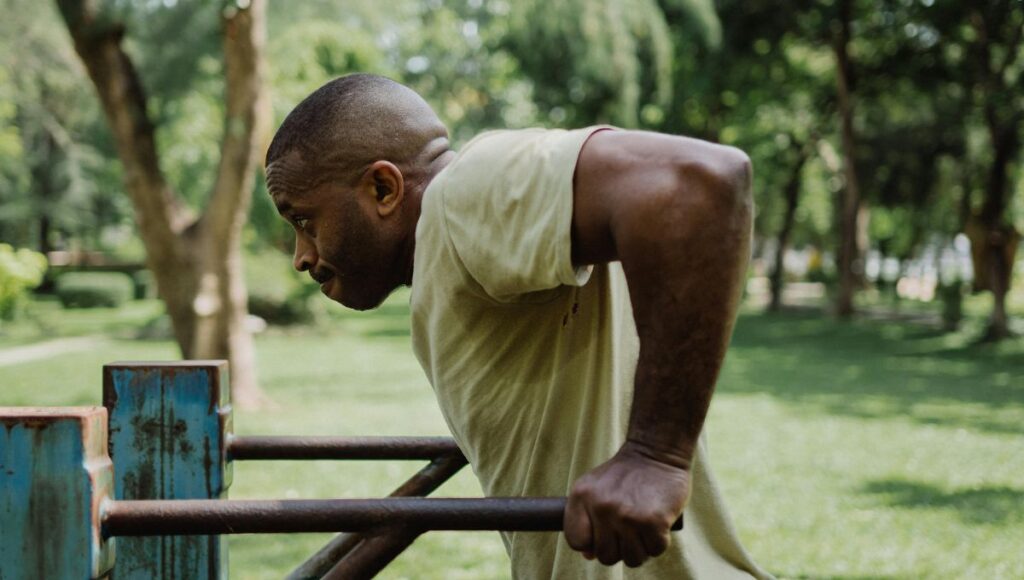
Magnetic resonance imaging research shows that the triceps are a major contributor to upper arm muscle volume. This makes sense visually because the muscle covers so much of the upper arm, particularly when viewed from the side or behind. The lateral head can create the distinctive horseshoe appearance associated with muscular arms, while the long head helps create thickness closer to the torso.
The triceps also receive work from many compound pressing exercises. Bench presses, overhead presses, push ups, close grip pressing, and dips all involve elbow extension. This means people who train their chest and shoulders often develop some triceps size without making direct triceps work their main priority.
However, compound pressing may not provide enough stimulus for maximum triceps development in every lifter. Muscle growth is specific to the training volume, range of motion, resistance profile, and effort applied to a muscle. Adding direct triceps work allows you to train elbow extension through movement patterns that might not be covered fully by pressing alone.
The Long Head Matters for Arm Thickness
The long head is especially valuable when the goal is a fuller upper arm. Unlike the other triceps heads, it crosses both the elbow and shoulder joints. Exercises performed with the arms overhead can place the long head in a more lengthened position than pushdowns or lying extensions performed with the upper arm near the torso.
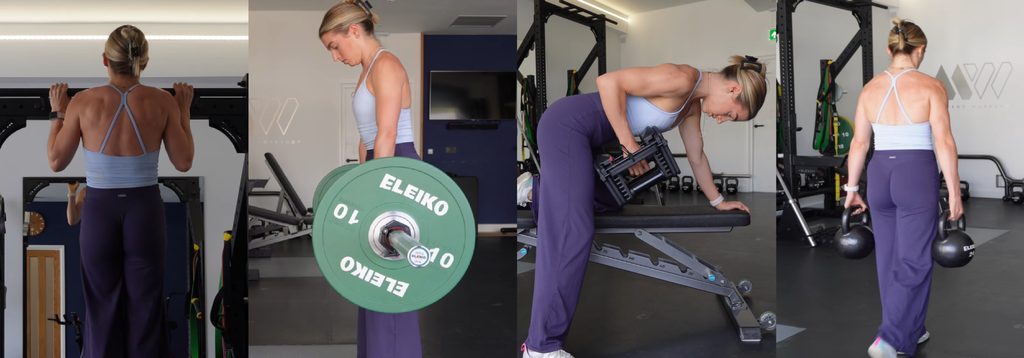
5 Best Free Weights Exercises for A Wider Back
Research on resistance training increasingly suggests that training muscles at longer lengths can be a useful strategy for hypertrophy. This does not make every overhead triceps movement automatically superior, but it gives overhead extensions a strong place in a well rounded arm program. Cable overhead extensions, dumbbell overhead extensions, and similar movements can complement pushdowns and close grip presses.
Why Biceps Still Matter So Much
The biceps brachii has two heads and sits at the front of the upper arm. Its main roles include elbow flexion and forearm supination, which is the action of turning the palm upward. It works alongside the brachialis and brachioradialis during curls, chin ups, and many pulling movements.
Although the biceps are smaller than the triceps, they have a huge effect on how your arms look. When you raise your arm, bend your elbow, and flex, the biceps become the visual centerpiece. Bigger biceps can create a more pronounced peak and make the arm look more impressive from the front.
The biceps also help define the connection between the shoulder, upper arm, and forearm. That matters because attractive arms are not only about circumference. They are also about proportion. A lifter with developed biceps, triceps, and forearms will often look more muscular than someone with the same upper arm measurement but less balanced development.
Peak Is Not Entirely Trainable
It is worth being realistic about biceps peak. The length of the biceps muscle belly and the position of its tendon attachments are influenced by genetics. Some lifters naturally have a high, rounded peak, while others have longer biceps that create a fuller appearance down the arm.
Training can make the biceps larger, which can improve their appearance substantially, but it cannot completely change the underlying structure of the muscle. This is not a reason to avoid biceps work. Bigger biceps tend to look better regardless of your natural shape, and strong elbow flexors also support pulling performance in the gym.
Biceps vs Triceps for Different Visual Goals
If you want your arms to look bigger in a fitted T shirt, triceps should receive serious attention. The triceps create much of the width visible through sleeves, particularly from the side. This is why improving triceps size can change the appearance of the upper body even when the biceps are already reasonably developed.
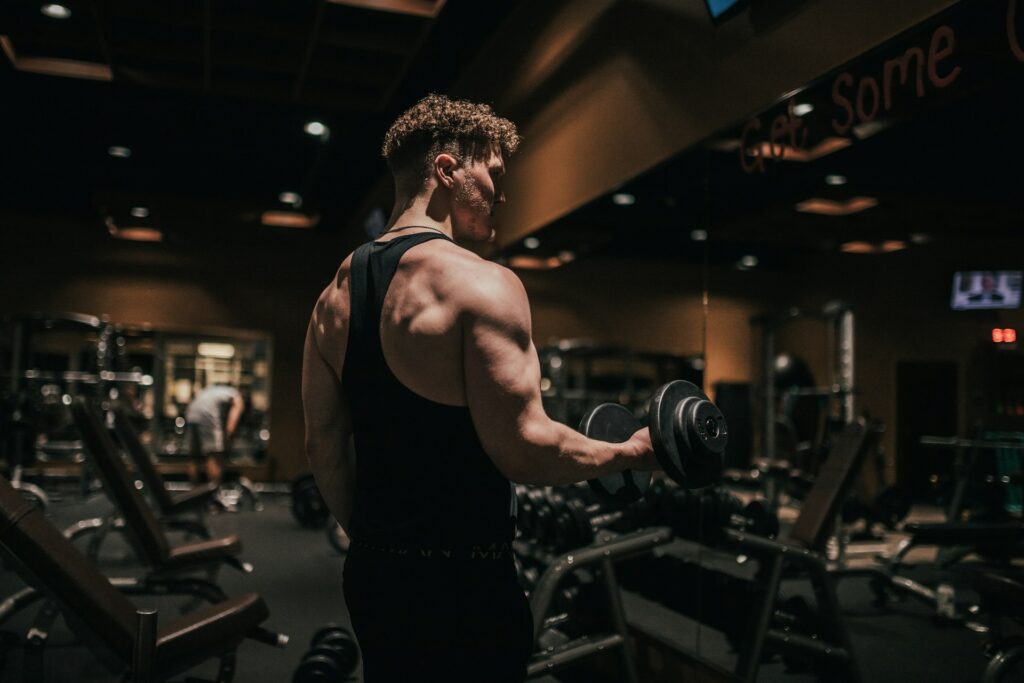
If you want a more impressive front double biceps pose, biceps training deserves extra attention. Exercises that involve elbow flexion and supination can help you develop the biceps directly. Incline dumbbell curls, cable curls, preacher curls, and chin ups all have a place, depending on your equipment and comfort.
If you want complete arms, neither muscle should be neglected. Building only biceps can leave the upper arm looking narrow from the side. Building only triceps can reduce the shape and detail seen from the front. The most visually effective approach is to train both muscles through their main functions while progressing gradually over time.
The Best Exercises for Bigger Triceps
Close grip bench presses are a useful compound exercise because they allow you to use relatively heavy loads while training the chest, shoulders, and triceps together. They are especially practical for lifters who want to build pressing strength alongside arm size. Keep the grip comfortable rather than extremely narrow, and use a controlled range of motion.
Cable pushdowns are effective because they are stable, easy to adjust, and simple to take close to muscular fatigue. A rope attachment allows a comfortable grip and can make it easier to use a full elbow extension. The goal is not to force the elbows into an exaggerated position but to control the movement and keep tension on the triceps.
Overhead cable extensions are an excellent choice for training the triceps with the arms elevated. Use a load that allows the elbows to bend deeply without losing control of the shoulder position. This movement can be particularly useful for lifters whose triceps have stalled after relying only on pressing and pushdowns.
Dips can also build the triceps, chest, and shoulders, but they are not essential for everyone. They demand good control through the shoulder and can be uncomfortable for some lifters. If dips cause pain, use a different pressing or extension movement instead.
The Best Exercises for Bigger Biceps
Incline dumbbell curls train the biceps with the upper arm positioned behind the torso. This can create a challenging stretch at the bottom of the movement. Use a controlled lowering phase and avoid swinging the torso to move the weight.
Preacher curls provide support for the upper arm and reduce the opportunity to use momentum. They can be performed with dumbbells, an EZ bar, a barbell, or a cable. Because the arm is supported, it is usually best to use a load that allows smooth repetitions rather than chasing maximum weight.
Cable curls are useful because cables can provide resistance throughout much of the range of motion. They are also easy to modify by changing handle type, angle, and body position. For many lifters, cables are a joint friendly way to accumulate hard biceps work.
Chin ups are a valuable compound option because they train the biceps alongside the lats and upper back. An underhand grip generally increases the contribution of the elbow flexors compared with an overhand pull up. They are particularly useful when you want muscular arms without turning your training into a long list of isolation exercises.
How Much Direct Arm Training Do You Need?
Resistance training research supports the idea that multiple hard sets per muscle group each week can promote hypertrophy, with greater weekly volume often producing more growth up to an individual’s recoverable limit. The ideal amount varies with training experience, exercise selection, sleep, nutrition, and how close each set is taken to failure.
For many lifters, six to 12 challenging direct sets per week for biceps and six to 12 direct sets for triceps is a sensible starting range. Compound pulling and pressing also contribute to the weekly stimulus, so a person doing a high volume of bench presses, rows, chin ups, and overhead presses may need less isolation work than someone whose program is built mostly around lower body training.
Split the work over at least two sessions if possible. This can improve exercise quality and make it easier to complete enough productive sets without letting fatigue ruin technique. Use a variety of repetition ranges, but make sure the final repetitions are demanding. Light sets can build muscle when performed close to failure, while moderate and heavier loads also work well when technique remains controlled.
Progress is the key. Add repetitions, load, sets, or improved control over time. If your arm measurements, gym performance, and photos are not changing after several weeks, consider adding a small amount of direct work rather than completely redesigning your program.
Do Not Forget Nutrition and Body Composition
Training provides the stimulus for muscle growth, but adequate protein and energy intake support the adaptation. Research indicates that protein intakes around 1.6 grams per kilogram of body mass per day are sufficient for maximizing average resistance training related gains in fat free mass for many healthy adults, although individual needs can vary.

Your arms also need to be visible. A person can build substantial biceps and triceps, but high levels of body fat may hide the detail that makes the arms look muscular. You do not need to become extremely lean to look athletic. Building muscle steadily while maintaining a body composition that suits your goals will usually produce a better visual result than aggressive bulking and cutting cycles.
The Verdict
The triceps make your arms look bigger overall because they contribute more of the upper arm’s total mass and create much of the thickness seen from the side and back. If you have been training curls relentlessly but your arms still look small in a T shirt, increasing direct triceps work is likely the most productive change.
The biceps still matter because they create the front arm shape that stands out when you flex. Strong, developed biceps also make your arms look balanced and complement a muscular back, shoulders, and forearms.
Train both, but give the triceps at least equal attention. Use compound lifts for strength and efficient volume, add direct extensions and curls for targeted growth, and progress patiently. That combination will do far more for bigger looking arms than choosing between biceps and triceps.
Key Takeaways
| Focus | What it means for bigger looking arms |
|---|---|
| Overall upper arm size | Triceps usually have the larger influence because they account for much of upper arm muscle mass. |
| Front arm appearance | Biceps contribute strongly to the shape seen from the front and the look of a flexed arm. |
| Best practical priority | Train both muscles, while giving triceps at least equal direct training volume. |
| Useful triceps exercises | Close grip bench presses, cable pushdowns, and overhead extensions provide complementary stimulus. |
| Useful biceps exercises | Incline curls, preacher curls, cable curls, and chin ups can develop elbow flexor size. |
| Weekly training approach | Begin with six to 12 hard direct sets weekly for each muscle, then adjust according to progress and recovery. |
| What drives results | Consistent progression, quality technique, sufficient protein, and patience matter more than chasing one perfect exercise. |
References
- American College of Sports Medicine (2009) ‘Progression models in resistance training for healthy adults’, Medicine and Science in Sports and Exercise, 41(3), pp. 687–708.
- Grgic, J., Schoenfeld, B.J., Orazem, J. and Sabol, F. (2018) ‘Effects of resistance training performed to repetition failure or non failure on muscular strength and hypertrophy: A systematic review and meta analysis’, Journal of Sport and Health Science, 11(2), pp. 202–211.
- Lasevicius, T., Schoenfeld, B.J., Silva Batista, C., Barros, T.S., Leite Cordeiro, C., Izidoro, L. and Tricoli, V. (2019) ‘Muscle failure promotes greater muscle hypertrophy in low load but not in high load resistance training’, Journal of Strength and Conditioning Research, 36(2), pp. 346–351.
- Maeo, S., Jesmin, S., Otsuka, S., Yamanaka, T., Kohada, K., Fukutani, A. and Kanehisa, H. (2021) ‘Effects of lengthened partial versus full range of motion resistance training on muscle hypertrophy and strength in trained men’, European Journal of Sport Science, 21(7), pp. 1032–1040.
- Schoenfeld, B.J., Ogborn, D. and Krieger, J.W. (2017) ‘Dose response relationship between weekly resistance training volume and increases in muscle mass: A systematic review and meta analysis’, Journal of Sports Sciences, 35(11), pp. 1073–1082.
- Schoenfeld, B.J., Grgic, J., Ogborn, D. and Krieger, J.W. (2017) ‘Strength and hypertrophy adaptations between low versus high load resistance training: A systematic review and meta analysis’, Journal of Strength and Conditioning Research, 31(12), pp. 3508–3523.