

Strong shoulders do much more than improve your appearance. They help you lift heavier weights, stabilize your upper body during pressing and pulling exercises, improve posture, and make everyday tasks much easier. Whether you want broader shoulders, better athletic performance, or healthier joints, choosing the right exercises from the beginning can save months of wasted effort.
Many beginners make the mistake of doing endless front raises or relying only on the bench press to build their shoulders. In reality, the shoulder is one of the most complex joints in the body. It depends on several muscles working together to create strength while maintaining stability.


The deltoid muscle has three distinct heads. The anterior deltoid helps lift the arm forward and assists with pressing movements. The lateral deltoid creates shoulder width by raising the arm to the side. The posterior deltoid is responsible for pulling the arm backward and plays an important role in posture and shoulder health. Supporting muscles such as the rotator cuff and trapezius also contribute to shoulder stability and function.
Research consistently shows that beginners can build muscle and strength effectively by focusing on compound movements while adding a few well chosen isolation exercises to ensure complete muscle development.
Here are the five best shoulder exercises every beginner should master.
Why Beginners Should Prioritize Compound Exercises
Compound exercises recruit multiple muscle groups while allowing progressively heavier loads. Progressive overload remains one of the primary drivers of muscle growth and strength development. Beginners benefit even more because their nervous system adapts rapidly during the first months of resistance training.
Large compound movements also improve coordination, balance, and movement quality while stimulating greater overall muscle growth than isolation exercises alone. Isolation work remains valuable, especially for the lateral and posterior deltoids, which often receive less stimulation during pressing exercises.
A balanced combination of compound and isolation exercises provides the best foundation for long term shoulder development.
1. Standing Overhead Press
The standing overhead press is arguably the best overall exercise for building stronger shoulders. It develops the anterior and lateral deltoids while also strengthening the triceps, upper chest, trapezius, and core.
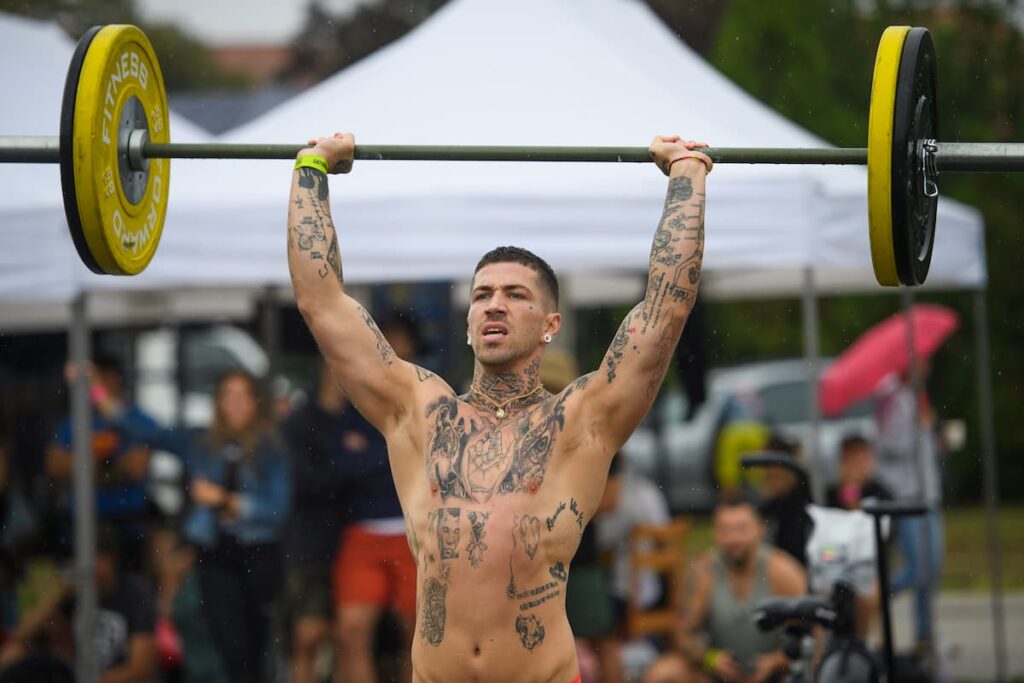
Unlike machine presses, the standing version forces your entire body to stabilize the weight. This improves coordination while teaching proper shoulder mechanics.
Why It Works
Electromyography studies consistently demonstrate high activation of the anterior deltoid during overhead pressing. The movement also creates significant loading across multiple muscles, making it highly efficient for beginners.
Because the exercise involves pressing a weight vertically overhead, it closely matches one of the shoulder’s primary movement patterns.
How to Perform It
Stand with your feet about shoulder width apart while holding a barbell at shoulder height. Brace your core and squeeze your glutes before pressing the bar straight overhead until your elbows lock out naturally.
Lower the weight under control back to shoulder level before repeating. Avoid leaning backward excessively because this shifts stress toward the lower back instead of the shoulders.
Common Beginner Mistakes
Many beginners arch their backs excessively when the weight becomes challenging. This usually indicates poor core bracing or using more weight than they can safely control. Another mistake is lowering the bar too quickly. Controlled lowering increases muscle tension and helps reinforce proper movement patterns.
2. Dumbbell Shoulder Press
The dumbbell shoulder press is an excellent variation that allows each shoulder to work independently. This helps correct strength imbalances while improving shoulder stability.
Many beginners find dumbbells more comfortable because they allow the shoulders to move through a more natural range of motion.

Why It Works
Unlike a barbell, dumbbells require each arm to stabilize the weight individually. This increases the contribution of smaller stabilizing muscles around the shoulder joint.
Research comparing free weights with machines suggests that free weight exercises generally produce greater activation of stabilizing muscles while providing similar strength improvements.
How to Perform It
- Sit or stand while holding a dumbbell in each hand at shoulder height.
- Press both weights upward until your arms are nearly straight.
- Lower them slowly until your elbows reach roughly shoulder height before beginning the next repetition.
- Keep your wrists neutral and avoid allowing the dumbbells to drift too far behind your head.
Progression Tips
Start with lighter weights and focus on full control. Once you can comfortably complete three sets of twelve repetitions with perfect form, increase the weight slightly.
3. Dumbbell Lateral Raise
No exercise isolates the lateral deltoid more effectively than the dumbbell lateral raise. Since the lateral deltoid contributes most to shoulder width, this exercise is essential for building broader shoulders. Many pressing exercises emphasize the front deltoid, leaving the side deltoid underdeveloped if direct work is ignored.
5 Best Exercises for Every Beginner Who Wants Bigger Arms
Why It Works
Electromyography research consistently shows very high activation of the middle deltoid during properly performed lateral raises. Although the exercise uses relatively light weights, the targeted muscle tension creates an excellent stimulus for hypertrophy.
How to Perform It
- Stand with a dumbbell in each hand resting at your sides.
- Raise both arms out to the sides until they reach approximately shoulder height.
- Pause briefly before lowering the weights slowly under control.
- Maintain a slight bend in your elbows throughout the movement.
- Avoid swinging your body or using momentum to lift the weights.
Common Beginner Mistakes
One of the biggest mistakes is lifting too heavy. Heavy weights often lead to excessive swinging, which reduces tension on the deltoids.
Another mistake is raising the dumbbells much higher than shoulder level. This increases involvement of the upper trapezius without providing additional benefits for shoulder growth.
4. Face Pull
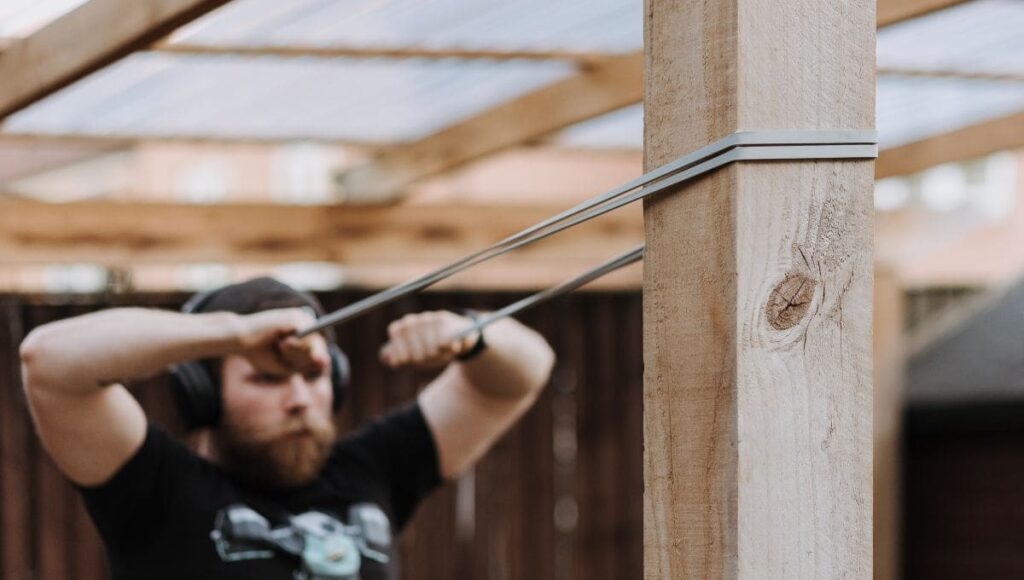
The face pull is one of the most valuable exercises for long term shoulder health. It strengthens the posterior deltoids, external rotators, and upper back muscles that stabilize the shoulder joint.
Modern lifestyles often encourage rounded shoulders from prolonged sitting and computer use. Face pulls help counteract these postural changes.
Why It Works
Strong posterior shoulder muscles improve shoulder stability and balance the heavy pressing that dominates many training programs.
Research on shoulder rehabilitation and injury prevention consistently highlights the importance of strengthening the external rotators and scapular stabilizers to reduce injury risk. Face pulls accomplish both goals with a single exercise.
How to Perform It
- Attach a rope handle to a cable machine at face height.
- Grip the rope with both hands and step backward until the cable becomes tight.
- Pull the rope toward your face while driving your elbows outward.
- Finish by squeezing your shoulder blades together before returning slowly to the starting position.
- Keep your chest tall throughout the movement.
Why Beginners Should Never Skip It
Many beginners focus almost entirely on pressing exercises.
Adding face pulls helps maintain balanced shoulder development while improving posture and potentially reducing the likelihood of overuse injuries.
5. Rear Delt Fly
The rear delt fly directly targets the posterior deltoids, which are often neglected in beginner training programs.
Weak rear delts contribute to poor posture and limit balanced shoulder development.
Why It Works
The posterior deltoid receives relatively little stimulation during traditional pressing exercises. Dedicated rear delt work improves muscle symmetry while enhancing shoulder stability during larger compound lifts.
Electromyography research shows that rear delt fly variations effectively activate the posterior deltoid with relatively little assistance from larger surrounding muscles.
How to Perform It
- Hold a dumbbell in each hand while bending forward at the hips with a flat back.
- Allow your arms to hang directly beneath your shoulders.
- Raise both arms outward until they align with your torso.
- Pause briefly before lowering under control.
- Keep the movement smooth and avoid jerking the weights upward.
Beginner Tips
Use lighter weights than you expect. Proper technique matters much more than lifting heavy because the posterior deltoids are relatively small muscles.
How Many Shoulder Exercises Should Beginners Perform?
More is not always better. Research indicates that beginners respond well to approximately ten to twenty weekly sets per muscle group when distributed across multiple training sessions.
For shoulders, this can often be achieved with three to four exercises performed twice each week. A beginner session might include the overhead press, lateral raise, and face pull. Another session later in the week could feature the dumbbell shoulder press, rear delt fly, and another pressing variation. This balanced approach trains every part of the shoulder while allowing sufficient recovery for muscle growth.
How Heavy Should Beginners Lift?
The ideal training weight allows good technique while bringing the muscles close to fatigue. Research suggests that muscle growth can occur across a wide range of repetition ranges as long as sets are performed with sufficient effort.
Most beginners benefit from performing between eight and fifteen repetitions for each set. Focus on gradually increasing either the weight or the number of repetitions over time while maintaining excellent technique.
Final Thoughts
Building stronger and more muscular shoulders does not require dozens of complicated exercises. Beginners achieve the best results by mastering a handful of proven movements and applying consistent progressive overload over time.
The standing overhead press and dumbbell shoulder press provide the foundation for strength and overall muscle growth. Dumbbell lateral raises develop shoulder width by targeting the middle deltoids directly. Face pulls improve shoulder health while strengthening the muscles responsible for posture and stability. Rear delt flies complete balanced shoulder development by targeting the often neglected posterior deltoids.
Combined with proper nutrition, adequate recovery, and consistent training, these five exercises provide everything most beginners need to build bigger, stronger, and healthier shoulders.
Key Takeaways
| Topic | Key Point |
|---|---|
| Best overall exercise | The standing overhead press develops strength, muscle mass, and coordination simultaneously. |
| Best exercise for shoulder width | Dumbbell lateral raises directly target the lateral deltoids. |
| Best exercise for shoulder health | Face pulls strengthen the posterior shoulder and improve stability. |
| Best exercise for balanced development | Rear delt flies ensure the posterior deltoids receive enough training. |
| Training frequency | Train shoulders two times per week with ten to twenty total weekly sets. |
| Rep range | Eight to fifteen repetitions work well for most beginners. |
| Recovery | Adequate protein intake and quality sleep are essential for muscle growth. |
References
- American College of Sports Medicine. (2009) ‘Progression Models in Resistance Training for Healthy Adults’, Medicine & Science in Sports & Exercise, 41(3), pp. 687 to 708.
- Andersen, V., Fimland, M.S., Brennset, O., Haslestad, L., Lundteigen, M., Skalleberg, K. and Saeterbakken, A.H. (2014) ‘Muscle activation and strength in shoulder exercises’, Journal of Strength and Conditioning Research, 28(6), pp. 1599 to 1606.
- Campos, G.E.R., Luecke, T.J., Wendeln, H.K., Toma, K., Hagerman, F.C., Murray, T.F., Ragg, K.E., Ratamess, N.A., Kraemer, W.J. and Staron, R.S. (2002) ‘Muscular adaptations in response to three different resistance training regimens’, Journal of Applied Physiology, 88(1), pp. 50 to 60.
- Grgic, J., Schoenfeld, B.J., Orazem, J. and Sabol, F. (2018) ‘Effects of resistance training performed to repetition failure or non failure on muscular strength and hypertrophy’, Journal of Sport and Health Science, 10(3), pp. 275 to 283.
- Kraemer, W.J. and Ratamess, N.A. (2004) ‘Fundamentals of resistance training: Progression and exercise prescription’, Medicine & Science in Sports &Exercise, 36(4), pp. 674 to 688.
- Schoenfeld, B.J. (2010) ‘The mechanisms of muscle hypertrophy and their application to resistance training’, Journal of Strength and Conditioning Research, 24(10), pp. 2857 to 2872.
- Schoenfeld, B.J., Ogborn, D. and Krieger, J.W. (2017) ‘Dose response relationship between weekly resistance training volume and increases in muscle mass’, Journal of Sports Sciences, 35(11), pp. 1073 to 1082.