

Building bigger arms is one of the most common goals for people who start lifting weights. Bigger biceps and triceps improve appearance, increase confidence, and help with performance in many upper body exercises. While countless arm workouts promise fast results, beginners do not need complicated routines. They need to master a handful of proven exercises, perform them consistently, and gradually increase the challenge over time.
Many new lifters make the mistake of chasing variety instead of quality. They constantly switch exercises or perform advanced techniques before building a solid foundation. Research consistently shows that progressive resistance training is the key driver of muscle growth, regardless of whether someone is training for aesthetics, health, or athletic performance.



The five exercises below target every major muscle of the upper arm while also teaching good movement patterns that will continue to pay off as strength increases. Combined with proper nutrition, sufficient protein intake, and consistent training, they provide everything a beginner needs to start building impressive arms.
How Arm Muscles Grow
Before looking at the exercises, it helps to understand what actually makes muscles grow.
Muscle hypertrophy occurs when resistance training creates enough mechanical tension to stimulate muscle protein synthesis. When training is combined with adequate dietary protein and recovery, muscle fibers repair themselves and become larger over time.
Research has shown that total weekly training volume, training close to muscular failure, and progressive overload are among the most important factors for maximizing muscle growth. Beginners often experience especially rapid improvements because they respond very well to even moderate training volumes.
The upper arm is made up of several important muscles. The biceps brachii flexes the elbow and rotates the forearm. The brachialis sits underneath the biceps and contributes significantly to arm thickness. The triceps brachii makes up roughly two thirds of the upper arm’s muscle mass and is responsible for elbow extension. Ignoring the triceps while chasing bigger arms is one of the biggest mistakes beginners make.
1. Barbell Curl
The barbell curl has earned its reputation as one of the most effective biceps builders ever created. It allows beginners to lift relatively heavy loads while training both arms equally.
Unlike isolation machines, the barbell curl requires stabilization throughout the body while emphasizing elbow flexion. This makes it highly effective for building overall arm strength alongside muscle size.

Stand with your feet shoulder width apart and hold a barbell with an underhand grip. Keep your elbows close to your sides throughout the movement. Curl the bar until your forearms approach your biceps before lowering it slowly under control.
One of the most common beginner mistakes is swinging the body to move heavier weight. Momentum reduces the work performed by the biceps and increases stress on the lower back. Choosing a lighter weight and maintaining strict form produces better long term results.
Electromyography studies have consistently shown high levels of biceps activation during traditional barbell curls, making them an excellent cornerstone exercise for hypertrophy.
Aim for two to four sets of eight to twelve repetitions while maintaining complete control of every repetition.
2. Hammer Curl
While many beginners focus entirely on the biceps, the brachialis deserves equal attention. Developing this muscle helps push the biceps upward, creating thicker looking arms. Hammer curls use a neutral grip, meaning the palms face each other throughout the lift. This position increases involvement of the brachialis and brachioradialis while still heavily recruiting the biceps.
Hold a dumbbell in each hand with your palms facing inward. Keep your elbows close to your body and curl the weights upward without rotating the wrists. Pause briefly at the top before lowering under control.

Hammer curls also improve grip strength because the forearm muscles work harder to stabilize the dumbbells.
Many beginners find hammer curls easier on the wrists than traditional curls, making them an excellent alternative for anyone experiencing discomfort during supinated movements.
Perform two to four sets of ten to fifteen repetitions with controlled movement and avoid using momentum.
3. Close Grip Bench Press
If your goal is bigger arms, you cannot ignore compound exercises. The close grip bench press trains all three heads of the triceps while also involving the chest and shoulders. Because the triceps make up the majority of upper arm mass, strengthening them has a major impact on arm size.
Lie on a flat bench and grip the bar slightly narrower than shoulder width. Lower the bar toward the lower chest while keeping your elbows relatively close to your body. Press the weight back to the starting position without bouncing the bar off your chest.
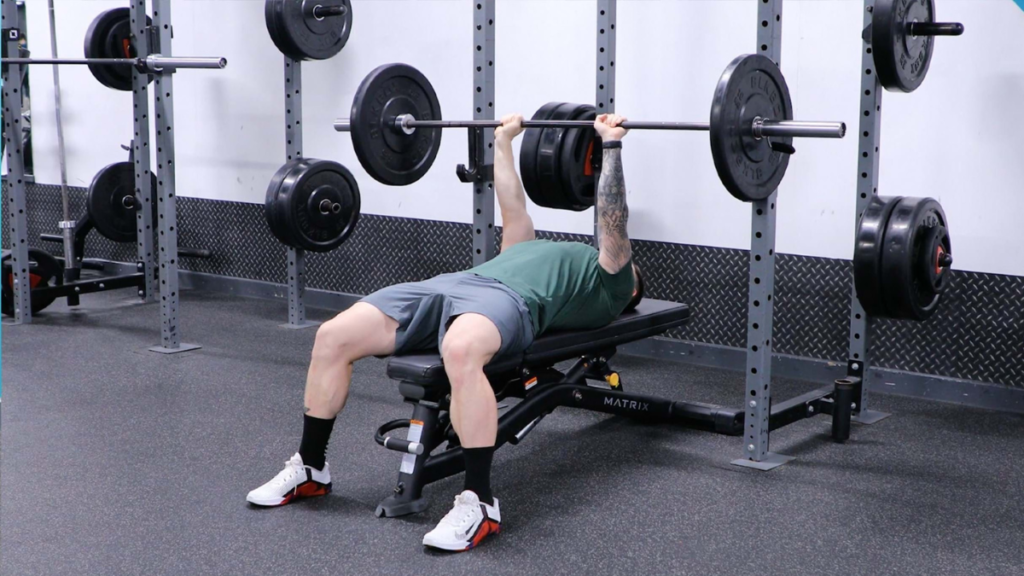
Many beginners place their hands far too close together. This can create unnecessary wrist stress without increasing triceps activation. A grip just inside shoulder width generally provides the best combination of comfort and muscle recruitment.
Research comparing compound and isolation exercises has shown that multi joint movements remain highly effective for stimulating muscle growth, especially when incorporated into a balanced training program.
Perform three to four sets of six to ten repetitions using a weight that allows excellent technique.
4. Triceps Pushdown
The triceps pushdown is one of the safest and most beginner friendly isolation exercises available. Unlike many overhead movements, pushdowns place relatively little stress on the shoulder while allowing consistent tension on the triceps throughout the movement.

Using a cable machine with a straight bar or rope attachment, stand upright with your elbows tucked against your sides. Extend your elbows until your arms are fully straight before slowly returning to the starting position.
The key is to keep the upper arms stationary. If the elbows move excessively, the shoulders begin assisting the movement and triceps activation decreases. Cable exercises also provide resistance throughout the entire range of motion, unlike free weights where resistance changes with gravity. Most beginners benefit from performing three sets of ten to fifteen repetitions while focusing on full elbow extension and slow lowering.
5. Chin Up
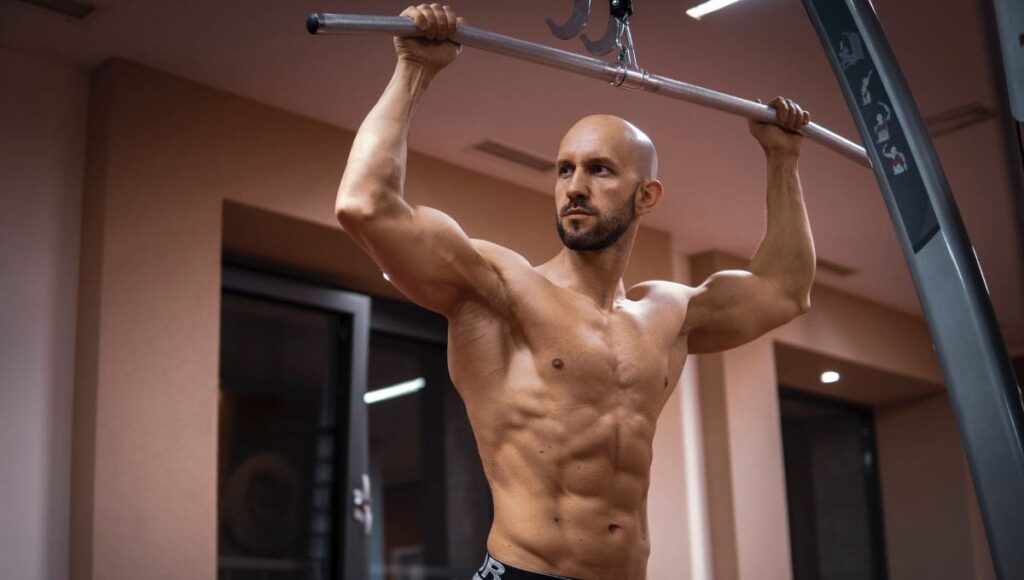
Many people think of chin ups as primarily a back exercise, but they are also one of the best arm builders available. Using an underhand grip significantly increases biceps involvement compared with traditional pull ups. At the same time, the movement develops the back, shoulders, and grip, making it one of the highest value exercises in any beginner program.
Grab the bar with your palms facing you and your hands approximately shoulder width apart. Pull your chest toward the bar by driving your elbows downward. Lower yourself under complete control until your arms are fully extended.
If you cannot perform a full bodyweight chin up yet, use an assisted pull up machine or resistance bands to gradually build strength.

Research has repeatedly shown that compound pulling exercises create substantial activation of the elbow flexors while simultaneously improving total upper body strength.
Beginners should aim for three sets performed close to muscular fatigue. Even if only a few repetitions are possible initially, consistent practice leads to rapid improvements.
Why Progressive Overload Matters More Than Exercise Variety
Many beginners believe they need dozens of different arm exercises to maximize growth. In reality, consistently improving performance on a few quality movements is much more important.
Progressive overload simply means gradually increasing the demands placed on the muscles. This can involve adding weight, performing additional repetitions, increasing training volume, or improving technique while lifting the same load.
Without progressive overload, muscle growth eventually slows because the body no longer receives a sufficient stimulus to adapt.
Beginners should focus on adding one or two repetitions before increasing the weight. This simple strategy encourages steady progress while reducing injury risk.
How Often Should Beginners Train Arms?
Research suggests that training each muscle group at least twice per week generally produces greater muscle growth than training it only once weekly when total training volume is matched.
A beginner could include direct arm work after upper body sessions twice each week. This provides enough stimulus for growth while allowing sufficient recovery between workouts.
A simple weekly structure might include one day emphasizing compound pushing exercises, one day emphasizing pulling exercises, and a small amount of direct biceps and triceps work at the end of each session.
Because the arms are involved in many chest and back exercises, they already receive indirect training throughout the week.
Final Thoughts
Building bigger arms does not require an endless collection of exercises or complicated workout programs. Beginners make the fastest progress by mastering a few highly effective movements and performing them consistently over several months.
Is The PJR Pullover the Perfect Triceps Exercise for Super Strong and Muscular Arms?
The barbell curl and hammer curl develop the biceps and brachialis. The close grip bench press and triceps pushdown build the larger triceps muscles that create most upper arm size. Chin ups tie everything together by strengthening the arms alongside the back and grip.
Combine these exercises with progressive overload, adequate protein intake, sufficient sleep, and consistent training, and beginners can build stronger, larger arms while establishing habits that continue delivering results for years.
Key Takeaways
| Topic | Key Point |
|---|---|
| Best biceps exercise | The barbell curl allows heavy loading and excellent overall biceps development. |
| Best exercise for arm thickness | Hammer curls emphasize the brachialis, adding overall upper arm size. |
| Best triceps compound movement | Close grip bench presses build strength and target all three triceps heads. |
| Best triceps isolation exercise | Triceps pushdowns provide consistent tension with minimal shoulder stress. |
| Best bodyweight arm exercise | Chin ups strongly activate the biceps while building total upper body strength. |
| Training frequency | Train arms at least twice per week for optimal muscle growth. |
| Progression | Gradually increase weight or repetitions over time to continue building muscle. |
| Nutrition | Consume enough protein and calories to support muscle repair and growth. |
| Recovery | Sleep seven to nine hours each night and allow muscles adequate recovery. |
| Biggest mistake | Prioritizing exercise variety over consistent progressive overload. |
References
- American College of Sports Medicine. (2009) ‘Progression models in resistance training for healthy adults’, Medicine & Science in Sports & Exercise, 41(3), pp. 687 to 708.
- Grgic, J., Schoenfeld, B.J., Orazem, J. and Sabol, F. (2022) ‘Effects of resistance training performed to repetition failure or non failure on muscular strength and hypertrophy’, Journal of Sport and Health Science, 11(2), pp. 202 to 211.
- Morton, R.W., Murphy, K.T., McKellar, S.R., Schoenfeld, B.J., Henselmans, M., Helms, E., Aragon, A.A., Devries, M.C., Banfield, L., Krieger, J.W. and Phillips, S.M. (2018) ‘A systematic review, meta analysis and meta regression of protein supplementation on resistance training induced gains in muscle mass and strength in healthy adults’, British Journal of Sports Medicine, 52(6), pp. 376 to 384.
- Schoenfeld, B.J. (2010) ‘The mechanisms of muscle hypertrophy and their application to resistance training’, Journal of Strength and Conditioning Research, 24(10), pp. 2857 to 2872.
- Schoenfeld, B.J., Ogborn, D. and Krieger, J.W. (2016) ‘Effects of resistance training frequency on measures of muscle hypertrophy. A systematic review and meta analysis’, Sports Medicine, 46(11), pp. 1689 to 1697.