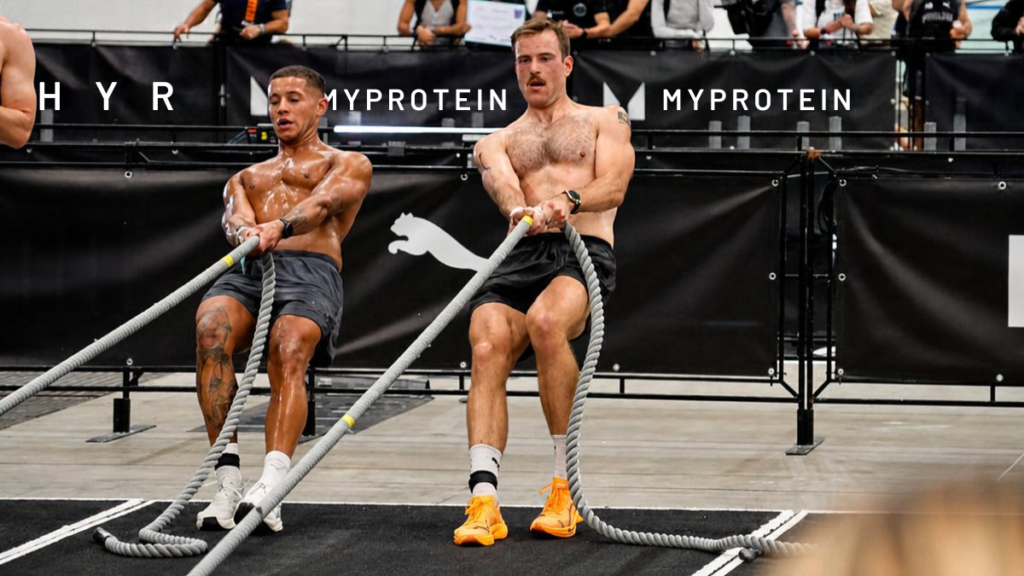


HYROX racing demands a rare combination of endurance, strength, power, and repeated high intensity effort. Athletes move quickly between runs and demanding functional movements such as sled pushes, sled pulls, lunges, wall balls, and rowing. Performance depends on the ability to produce force rapidly while maintaining aerobic efficiency for over an hour of racing.
For athletes aged 35 and older, preparation before the first run or workout station becomes increasingly important. Many experienced competitors notice that it takes longer to feel “ready” compared with when they were younger. This observation is not just anecdotal.



A growing body of research shows that physiological changes associated with aging affect muscles, tendons, nervous system activation, joint mobility, and metabolic responses to exercise. All of these systems benefit from a longer and more progressive warm-up.
This does not mean that athletes over 35 are fragile or unable to perform at elite levels. In fact, many master athletes outperform younger competitors due to years of training experience and pacing discipline. However, they must respect the biological reality that the body takes more time to reach peak readiness.
A well designed warm-up prepares the cardiovascular system, activates neuromuscular pathways, improves mobility, increases muscle temperature, and reduces injury risk. For HYROX athletes in the 35+ category, extending this preparation phase can significantly improve both performance and durability.
How Aging Changes the Athletic Body

Muscle Elasticity and Tissue Stiffness
One of the most important changes with aging involves connective tissue. Tendons and ligaments gradually become less elastic due to structural alterations in collagen fibers. Collagen cross linking increases with age, making tissues stiffer and less able to stretch quickly.
Reduced tissue elasticity can limit explosive force production and increase injury risk when muscles and tendons are exposed to sudden high loads. Studies examining tendon mechanics show that older adults exhibit lower tendon compliance and slower force transmission compared with younger individuals.
A longer warm-up increases tissue temperature and temporarily improves the elasticity of both muscles and connective tissues. As temperature rises, collagen fibers become more flexible and muscle viscosity decreases. This allows tendons and muscles to absorb force more effectively.
For HYROX athletes performing movements like sled pushes or wall balls, this improved elasticity can reduce strain on the Achilles tendon, patellar tendon, and hamstrings.
Reduced Muscle Power and Rate of Force Development
Muscle strength can remain relatively high in trained athletes as they age, but explosive power often declines more rapidly. This occurs partly because of changes in muscle fiber composition.
Type II muscle fibers, which generate high force quickly, tend to shrink or decrease in number with aging. Neuromuscular activation also becomes slower, meaning it takes longer for the brain and nervous system to recruit motor units during rapid movements.
Research on aging athletes consistently shows reductions in rate of force development even when maximal strength remains stable.
A gradual warm-up helps the nervous system “wake up.” Progressive activation drills increase neural drive to the muscles and improve coordination between motor units. By performing controlled power movements before competition, athletes can enhance neuromuscular efficiency.
This is particularly valuable for HYROX race stations such as burpee broad jumps, sled pushes, and wall balls where rapid force production determines pacing.
Joint Mobility and Synovial Fluid Dynamics
Joint mobility often declines with age due to several factors including cartilage wear, reduced movement frequency, and changes in connective tissue stiffness.
Another important factor involves synovial fluid, the lubricant within joints. Movement increases synovial fluid circulation and improves joint lubrication. When joints are inactive for extended periods, the fluid becomes more viscous and less evenly distributed.
A warm-up stimulates joint movement and improves the distribution of synovial fluid across cartilage surfaces. This reduces friction and enhances joint range of motion.
For HYROX athletes who must transition between running and deep squatting movements, better joint lubrication can improve efficiency and reduce discomfort.
Slower Metabolic Activation
The cardiovascular and metabolic systems also take longer to reach peak output with age. Oxygen delivery, muscle blood flow, and mitochondrial activity may increase more slowly during the first minutes of exercise.
This means that older athletes may experience a longer lag before reaching steady state aerobic output. Starting intense exercise without adequate preparation can feel unusually difficult and lead to premature fatigue.
An extended warm-up gradually increases heart rate, stroke volume, and oxygen delivery to working muscles. This prepares the aerobic system to support high intensity intervals throughout a HYROX race.
The Science of Warming Up
Increased Muscle Temperature
Raising muscle temperature is one of the most important goals of a warm-up. Even a small increase in temperature can produce meaningful improvements in muscle function.
When muscle temperature rises, several physiological changes occur. Enzyme activity increases, nerve conduction velocity improves, and muscle fibers contract more efficiently.
Higher temperatures also reduce muscle stiffness and increase the speed of metabolic reactions involved in energy production.
Research consistently shows that warmed muscles can produce greater power and contract more rapidly than cold muscles.
For athletes over 35, this temperature dependent improvement in muscle function is particularly valuable because it offsets some age related reductions in elasticity and neuromuscular responsiveness.
Improved Nerve Conduction and Motor Unit Recruitment
The nervous system controls every aspect of athletic performance. During explosive movements, the brain must recruit large numbers of motor units rapidly.
Warm-up activities increase nerve conduction velocity and enhance communication between the nervous system and muscles.
Studies examining electromyography responses show that activation levels increase after progressive warm-up protocols.
This means muscles can generate force more quickly and coordination between muscle groups improves.
For complex HYROX movements such as sled pushes or lunges, improved neuromuscular coordination reduces energy waste and improves efficiency.
Enhanced Oxygen Delivery
A progressive warm-up increases blood flow to working muscles. Blood vessels dilate, and oxygen delivery improves.
This prepares the body for high intensity exercise by reducing the oxygen deficit that normally occurs at the start of activity.
When athletes begin intense exercise without warming up, the body initially relies more heavily on anaerobic metabolism. This leads to faster accumulation of metabolic byproducts that contribute to fatigue.
Gradual increases in intensity help the cardiovascular system reach optimal function before maximal efforts begin.
Injury Prevention
One of the most widely accepted benefits of warming up involves injury reduction. Several large studies examining athletic populations show that structured warm-up routines reduce the incidence of muscle strains, ligament injuries, and tendon issues.
The protective effects likely result from multiple factors including improved mobility, better neuromuscular control, and increased tissue elasticity.
For athletes over 35, injury prevention becomes even more important. Recovery times tend to increase with age, and connective tissues may require more careful preparation before exposure to high forces.
HYROX training and racing involve repeated high load movements, making warm-up quality critical for long term performance.
Why HYROX Demands a Longer Warm-Up
HYROX races combine endurance running with functional strength stations. Athletes repeatedly switch between steady aerobic output and explosive muscular effort.
This type of hybrid demand places stress on several physiological systems simultaneously.
For athletes aged 35+, preparing these systems thoroughly requires more time.
Rapid Transitions Between Movement Patterns
A typical HYROX race includes transitions from running to strength tasks such as sled pushes or farmer carries. These movements require very different neuromuscular patterns.
Running relies heavily on elastic energy storage and cyclical movement patterns, while strength stations require high levels of muscular tension and coordination.
A warm-up that includes both running drills and strength activation prepares the body for these transitions.
Older athletes may need additional time to activate the specific muscles involved in each movement pattern.
High Force Movements
Sled pushes, sled pulls, and lunges place large forces on the lower body. These movements demand strong activation of the quadriceps, glutes, and hamstrings.
Without adequate preparation, these muscles and tendons may not be ready to tolerate sudden loads.
Gradually increasing force production during a warm-up helps prepare connective tissues and reduces the likelihood of strain.
Repeated High Intensity Efforts
HYROX races involve repeated surges of effort that push the cardiovascular system close to maximal capacity.
A progressive warm-up primes the aerobic and anaerobic systems to handle these fluctuations.

Research shows that athletes who perform structured warm-ups often demonstrate improved time to exhaustion and better pacing during high intensity exercise.
For master athletes, this metabolic preparation can significantly influence race performance.
How Long Should a Warm-Up Be for Athletes Over 35?
Many traditional warm-ups last about ten minutes. While this may be adequate for younger athletes, research suggests that older athletes often benefit from longer preparation periods.
A warm-up lasting fifteen to twenty five minutes allows more gradual increases in muscle temperature, heart rate, and neuromuscular activation.
This timeframe provides enough space to progress through several stages.
Stage 1: General Cardiovascular Activation
The first stage should focus on increasing heart rate and circulation. Light running, rowing, cycling, or jump rope can accomplish this.
Five to eight minutes of low intensity movement gradually increases body temperature and prepares the cardiovascular system.
Stage 2: Mobility and Range of Motion
Once the body is warm, dynamic mobility exercises help restore joint range of motion.
Examples include hip circles, leg swings, deep squat holds, and thoracic spine rotations.
These movements activate the joints used most heavily during HYROX racing.
Stage 3: Muscle Activation
Activation drills target key muscle groups such as the glutes, hamstrings, core, and upper back.
Exercises like glute bridges, band walks, and plank variations improve stability and neuromuscular engagement.
This stage prepares the body for heavy functional movements.
Stage 4: Movement Specific Preparation
The final stage should mimic the movements used in competition.
Short running intervals, light sled pushes, medicine ball throws, and controlled lunges can all be effective.
Gradually increasing intensity prepares the nervous system for maximal efforts.
The Role of Experience in Master Athletes
Athletes aged 35 and older often bring decades of training knowledge. This experience can be a major advantage in HYROX competition.
However, experienced athletes must also recognize that training strategies from their twenties may not produce the same results today.
A longer warm-up is one simple adjustment that respects physiological changes while maintaining performance potential.
Many elite master athletes report that their best performances occur when they allow enough time to prepare fully before competition.
Rushing through warm-ups often leads to sluggish early race pacing and increased injury risk.
Practical Warm-Up Example for HYROX Athletes Over 35
A practical warm-up for HYROX athletes aged 35+ might look like the following:
- Five minutes easy jog or row.
- Three minutes of dynamic mobility including hip openers and leg swings.
- Three minutes of glute activation and core stability drills.
- Five minutes of movement specific preparation including light sled pushes and lunges.
- Three short running accelerations to near race pace.
- This sequence takes approximately twenty minutes and prepares multiple systems simultaneously.
Athletes may adjust the duration based on individual needs, weather conditions, and race intensity.
Listening to the Body
While scientific research provides valuable guidelines, individual variation remains important.
Some athletes over 35 may feel ready after fifteen minutes of warm-up, while others require closer to thirty minutes.
Factors such as sleep quality, training load, stress, and previous injuries all influence readiness.
Athletes should pay attention to signs that the body is fully prepared. These signs may include improved joint mobility, smooth running mechanics, and the feeling that muscles are responsive rather than stiff.
If the body still feels tight or sluggish, extending the warm-up slightly may improve performance and reduce injury risk.
Long Term Benefits of Proper Warm-Ups
- Consistent warm-up habits can provide long term benefits beyond immediate performance improvements.
- Regular mobility and activation work help maintain joint health and muscle function as athletes age.
- Warm-ups also create an opportunity to identify small aches or imbalances before they develop into larger injuries.
- For HYROX athletes who train year round, these preventive benefits can support longevity in the sport.
Master athletes often aim to compete for decades, not just seasons. A thoughtful warm-up routine is a simple but powerful tool for achieving that goal.
Conclusion
Athletes aged 35 and older remain capable of remarkable athletic performance. HYROX competitions across the world demonstrate that master athletes can compete at extremely high levels.
However, the physiology of aging introduces subtle changes that influence how the body prepares for intense exercise.
Connective tissue stiffness, slower neuromuscular activation, reduced explosive power, and longer metabolic activation all contribute to the need for longer warm-ups.
By extending warm-up time and using a structured progression of cardiovascular activation, mobility work, muscle activation, and movement specific drills, athletes can prepare their bodies more effectively.
This approach improves muscle function, enhances coordination, reduces injury risk, and allows athletes to perform closer to their true potential.
For HYROX athletes over 35, a longer warm-up is not a sign of aging weakness. It is a strategic advantage that respects the science of human physiology.
References
• Behm, D.G. and Chaouachi, A. (2011). A review of the acute effects of static and dynamic stretching on performance. European Journal of Applied Physiology, 111(11), pp.2633–2651.
• Bishop, D. (2003). Warm up I: Potential mechanisms and the effects of passive warm up on exercise performance. Sports Medicine, 33(6), pp.439–454.
• Bishop, D. (2003). Warm up II: Performance changes following active warm up and how to structure the warm up. Sports Medicine, 33(7), pp.483–498.
• Folland, J.P., McCauley, T.M. and Williams, A.G. (2008). Allometric scaling of strength measurements to body size. European Journal of Applied Physiology, 102(6), pp.739–745.
• Hunter, S.K., Pereira, H.M. and Keenan, K.G. (2016). The aging neuromuscular system and motor performance. Journal of Applied Physiology, 121(4), pp.982–995.
• Kubo, K., Kanehisa, H., Kawakami, Y. and Fukunaga, T. (2003). Age related differences in the viscoelastic properties of tendon structures. Journal of Applied Physiology, 95(1), pp.226–232.
• McGowan, C.J., Pyne, D.B., Thompson, K.G. and Rattray, B. (2015). Warm up strategies for sport and exercise. Sports Medicine, 45(11), pp.1523–1546.
• Petrofsky, J.S. and Lind, A.R. (1975). The influence of temperature on the isometric characteristics of fast and slow muscle in the cat. Journal of Physiology, 252(2), pp.491–503.
• Reaburn, P. and Dascombe, B. (2008). Endurance performance in masters athletes. European Review of Aging and Physical Activity, 5(1), pp.31–42.
• Seals, D.R., Justice, J.N. and LaRocca, T.J. (2016). Physiological geroscience: Targeting function to increase healthspan and achieve optimal longevity. Journal of Physiology, 594(8), pp.2001–2024.
• Shellock, F.G. and Prentice, W.E. (1985). Warming up and stretching for improved physical performance and prevention of sports related injuries. Sports Medicine, 2(4), pp.267–278.