

A wide upper back, capped shoulders, and a tight waist have long been the foundation of the classic V shaped torso. While genetics influence your shoulder width and rib cage structure, your training choices play a huge role in how dramatic your physique can become. If you want to maximize upper back thickness, lat development, and pulling strength at the same time, dead stop exercises deserve far more attention.
Unlike traditional repetitions that rely on momentum or the stretch shortening cycle, dead stop exercises force you to generate force from a complete stop. Every repetition begins with zero momentum. That means your muscles have to recruit more motor units to overcome inertia, making each rep more demanding and technically honest.



Dead stop training also exposes weaknesses that normal repetitions often hide. If you cannot move the weight from a complete stop, you know exactly where your strength deficits exist. Over time, this leads to better force production, improved muscle recruitment, and greater hypertrophy when combined with sufficient training volume. Here are three of the best dead stop exercises to help build a stronger, wider, and more muscular V shaped torso.
Why Dead Stop Exercises Build More Muscle
Before diving into the exercises, it helps to understand why dead stop training works so well.
Traditional repetitions often benefit from stored elastic energy inside muscles and tendons. When you lower a weight under control and immediately reverse the movement, your body uses this stored energy to assist the lift. This mechanism is known as the stretch shortening cycle.
A dead stop removes that advantage. Since the weight comes to a complete rest, your muscles must produce force without elastic assistance. Research shows that this increases neural drive and demands greater motor unit recruitment, particularly during the initial phase of the lift.
The 5 Fat Loss Mistakes Even Experienced Gym-Goers Make
Dead stop repetitions can also improve rate of force development, which is your ability to generate force quickly. While this quality is often discussed in athletic performance, it also has value for bodybuilding because greater force production allows heavier loading over time, which remains one of the primary drivers of muscle growth.
Finally, dead stop training encourages cleaner technique. Without momentum, it becomes much harder to cheat through difficult portions of the movement.
Exercise 1. Dead Stop Chest Supported Row
Why It Works
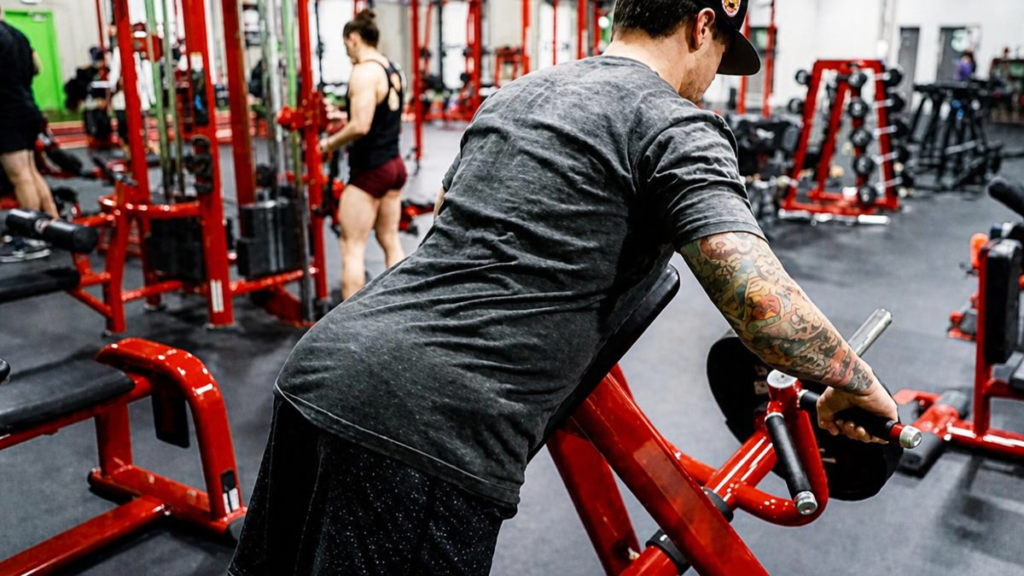
The chest supported row is already one of the best upper back builders because it removes lower back fatigue and minimizes body English. Adding a dead stop at the bottom of every repetition makes it even more effective.
Allow the dumbbells or bar to rest completely on blocks or safety pins between reps. Pause briefly before initiating the next pull. Every repetition begins from a dead stop.
This variation places tremendous tension on the lats, rhomboids, middle trapezius, rear deltoids, and biceps while eliminating momentum. The result is more work performed by the muscles you actually want to grow.
Electromyography research consistently shows that rowing exercises produce high activation of the middle trapezius and rhomboids, both of which contribute to upper back thickness and improved posture. A thicker upper back enhances the illusion of a narrower waist, making the V taper appear even more dramatic.
Because the chest is supported throughout the exercise, fatigue is concentrated where you want it instead of being limited by spinal erector endurance.
How to Perform It
- Set an incline bench to approximately 30 to 45 degrees. Position dumbbells or a barbell so they rest on blocks or safety pins directly below the bench.
- Lie chest down on the bench with your feet firmly planted on the floor. Reach down, grip the weight, and pull your elbows toward your hips while squeezing your shoulder blades together.
- Lower the weight under control until it returns completely to the supports. Pause for about one second before beginning the next repetition.
- Avoid shrugging your shoulders upward. Instead, focus on driving your elbows back while keeping your chest firmly against the bench.
Programming
Three to four sets of six to ten repetitions work exceptionally well for both strength and hypertrophy. Use a controlled eccentric and maintain the dead stop between every repetition.
Exercise 2. Pendlay Row

Why It Works
The Pendlay row has become a favorite among strength athletes for good reason. Every repetition begins with the barbell resting on the floor.
Unlike conventional bent over rows where tension remains continuous, the Pendlay row forces you to generate force from complete stillness. This develops explosive pulling strength while heavily recruiting the lats, traps, rhomboids, rear deltoids, spinal stabilizers, and biceps. Because the torso stays nearly parallel to the floor, the exercise emphasizes horizontal pulling with minimal assistance from momentum.
Research examining resistance training mechanics suggests that multi joint compound pulling exercises recruit large amounts of muscle mass while allowing progressively heavier loading. Heavy rowing movements are strongly associated with improvements in back hypertrophy and overall pulling strength.
The Pendlay row also improves scapular retraction strength, which plays an important role in shoulder health and upper body stability.
How to Perform It
- Stand with your feet approximately hip width apart.
- Hinge forward until your torso is almost parallel to the ground while maintaining a neutral spine.
- Grip the bar slightly wider than shoulder width.
- From the floor, explosively pull the bar toward your lower chest or upper abdomen. Lower it under control until it comes to a complete stop on the floor.
- Reset your body position before every repetition instead of bouncing the bar.
- The reset is what separates this movement from a standard bent over row.
Programming
Perform three to five sets of five to eight repetitions with relatively heavy loads. Rest two to three minutes between sets to maintain force production.
Exercise 3. Dead Stop Pull Up

Why It Works
Pull ups are already among the best exercises for developing wide lats, but many people unknowingly reduce their effectiveness by swinging or using momentum. Adding a dead stop completely changes the challenge.
Instead of immediately beginning the next repetition, step onto a box or platform after each rep so your body returns to a fully unloaded position. Pause briefly before initiating another pull from complete stillness. If your setup allows your feet to lightly touch the floor without losing grip, you can also perform each repetition from a complete stop that way.
This eliminates rebound and forces the lats, teres major, lower trapezius, biceps, and core to produce force independently every time. Studies comparing different pull up variations consistently report very high activation of the latissimus dorsi and biceps brachii. Since the lats contribute significantly to upper body width, improving their size has one of the biggest visual impacts on creating a V shaped physique.
Dead stop pull ups also improve starting strength, which often becomes the limiting factor for athletes attempting weighted pull ups.
How to Perform It
- Hang from the pull up bar using a shoulder width or slightly wider overhand grip.
- Before beginning each repetition, remain completely motionless.
- Pull yourself upward by driving your elbows toward your ribs.
- Lower yourself under control until your feet return to the box or platform and your body becomes fully unloaded.
- Pause briefly before beginning another repetition.
- Avoid kicking your legs or using excessive body swing.
Programming
Perform three to four sets of five to ten repetitions. Add weight once you can complete ten clean repetitions with perfect control.
How Dead Stop Training Enhances Hypertrophy
Muscle growth depends primarily on mechanical tension, sufficient training volume, progressive overload, and recovery. Dead stop exercises contribute to several of these factors simultaneously.
First, every repetition requires high force production because momentum has been eliminated. Second, technique becomes more consistent across the set, increasing the quality of muscular tension. Third, dead stops expose sticking points that can be strengthened over time, leading to heavier loading in traditional lifts.
Current evidence suggests that muscle hypertrophy occurs across a wide range of repetition schemes provided that sets are performed with sufficient effort and total training volume. Dead stop exercises fit easily into this framework because they can be programmed for strength, hypertrophy, or both.
The greater motor unit recruitment required during dead stop repetitions may also improve neuromuscular efficiency, allowing more muscle fibers to contribute during challenging lifts.
Building the Complete V Shape
While these exercises are outstanding, they should not be your entire upper body program. The most impressive V shaped physiques combine well developed lats with broad shoulders and balanced upper back musculature. Pair these dead stop exercises with overhead pressing, lateral raises, face pulls, and intelligent nutrition.
Maintaining relatively low body fat also dramatically improves the appearance of the V taper because abdominal definition and a smaller waist increase the visual contrast between the shoulders and hips.
Adequate dietary protein remains essential for maximizing muscle protein synthesis. Current sports nutrition research supports daily protein intakes of approximately 1.6 to 2.2 grams per kilogram of body weight for individuals seeking maximal muscle growth while performing resistance training.
Sleep is equally important. Most recovery processes that support muscle repair and adaptation occur outside the gym. Consistently sleeping seven to nine hours each night supports strength gains, hormonal regulation, and recovery.
Final Thoughts
Dead stop training is one of the simplest ways to make familiar pulling exercises significantly more effective. By removing momentum and forcing every repetition to begin from complete stillness, you increase muscle recruitment, improve force production, and expose weaknesses that would otherwise remain hidden.
The dead stop chest supported row builds upper back thickness with minimal lower back fatigue. The Pendlay row develops explosive pulling strength and dense back musculature. The dead stop pull up maximizes lat recruitment while improving starting strength and upper body control.
Combine these movements with progressive overload, consistent nutrition, adequate protein intake, and quality recovery, and you will have a science backed strategy for building the muscular V shaped torso that most lifters are chasing.
Key Takeaways
| Exercise | Primary Benefit | Main Muscles Worked | Best Rep Range |
|---|---|---|---|
| Dead Stop Chest Supported Row | Maximizes upper back tension without momentum | Lats, rhomboids, middle trapezius, rear deltoids | 6 to 10 |
| Pendlay Row | Builds explosive pulling strength and back thickness | Lats, traps, rhomboids, biceps | 5 to 8 |
| Dead Stop Pull Up | Increases lat width and starting strength | Lats, teres major, biceps, lower traps | 5 to 10 |
| Dead Stop Training Overall | Improves motor unit recruitment and force production while reducing momentum | Entire upper back and pulling chain | Use across strength and hypertrophy phases |
References
- Aagaard, P., Simonsen, E.B., Andersen, J.L., Magnusson, P. and Dyhre Poulsen, P. (2002) ‘Increased rate of force development and neural drive of human skeletal muscle following resistance training’, Journal of Applied Physiology, 93(4), pp. 1318 to 1326.
- American College of Sports Medicine (2009) ‘Progression models in resistance training for healthy adults’, Medicine and Science in Sports and Exercise, 41(3), pp. 687 to 708.
- Andersen, V., Fimland, M.S., Brennset, O., Haslestad, L.R., Lundteigen, M.S., Skalleberg, K., Saeterbakken, A.H. and Aagaard, P. (2014) ‘Muscle activation and strength in squat and deadlift exercises’, Journal of Strength and Conditioning Research, 28(12), pp. 3402 to 3410.
- Gentil, P., Fisher, J. and Steele, J. (2017) ‘A review of the acute effects and long term adaptations of single and multi joint exercises during resistance training’, Sports Medicine, 47(5), pp. 843 to 855.
- Grgic, J., Schoenfeld, B.J., Orazem, J. and Sabol, F. (2022) ‘Effects of resistance training performed to repetition failure or non failure on muscular strength and hypertrophy’, Journal of Sport and Health Science, 11(2), pp. 202 to 211.
- Lehman, G.J. (2005) ‘The influence of grip width and forearm pronation or supination on upper body myoelectric activity during the lat pull down’, Journal of Strength and Conditioning Research, 19(3), pp. 587 to 591.