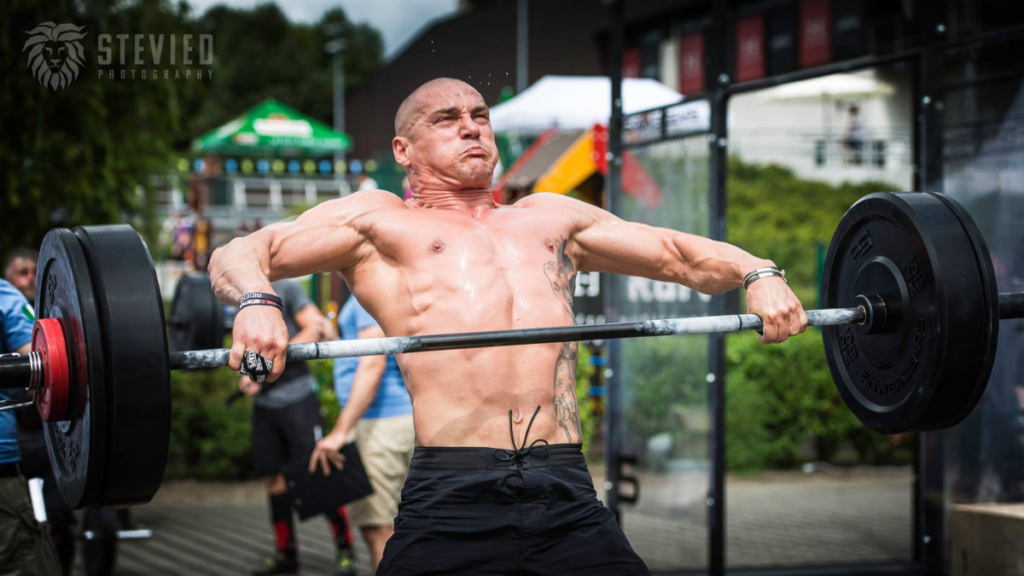
Building muscle as a beginner is exciting because your body is highly responsive to training. With the right approach, you can make meaningful progress in strength, muscle size, confidence, and overall fitness within your first few months in the gym. The key is not finding a magic exercise or copying an advanced athlete’s routine. It is learning how to consistently give your body the right training stimulus, enough food, and enough recovery.
The tips below are “secret” only because many beginners overlook them. They focus on the habits that make the biggest difference over time, rather than the flashy details that matter far less. Use them well and you will build a stronger, more muscular body faster while also creating a training routine you can sustain.


Why Beginners Can Build Muscle Quickly
When you first start resistance training, your body adapts rapidly. Part of this early progress comes from improvements in coordination and skill. You become more efficient at performing exercises, recruiting the right muscles, and producing force. At the same time, your muscles begin adapting to the new demands placed on them.
This is why beginners often see progress from relatively simple programs. You do not need to spend hours in the gym or train every body part with dozens of exercises. You need to train hard enough, use good technique, add challenge over time, eat to support your goal, and recover well enough to repeat the process.
Tip One: Make Your Basic Exercises Stronger
The fastest route to more muscle is usually becoming stronger in well chosen exercises. You do not need to chase a personal best every workout, but gradually improving your performance gives your body a reason to adapt.
Choose movements that let you train several muscles at once and perform them with control. Squats or leg presses can train your thighs and glutes. Romanian deadlifts can develop the hamstrings and glutes. Bench presses, push ups, and dumbbell presses can build the chest, shoulders, and triceps. Rows and pulldowns develop the upper back and biceps. Overhead presses strengthen the shoulders and triceps.
These exercises are useful because they allow you to use challenging loads and perform enough quality repetitions. Research shows that muscle growth can occur across a wide range of loads, provided sets are performed with sufficient effort. This means you can build muscle with moderate weights for higher repetitions or heavier weights for lower repetitions. For beginners, a moderate rep range is usually practical because it allows you to learn good technique while accumulating useful training volume.
Aim to keep a training log. Write down the exercise, weight, repetitions, and number of sets. Your goal is to improve something gradually. Perhaps you perform one additional repetition with the same dumbbells. Perhaps you add a small amount of weight after reaching the top of your target rep range. Perhaps your technique becomes more controlled at the same load.
This is called progressive overload. It does not need to be dramatic. In fact, slow and steady progression is usually more reliable than forcing large jumps in weight. When you repeatedly ask your muscles to handle slightly greater demands, they adapt by becoming larger and stronger.
Tip Two: Train Close Enough to Failure
Many beginners stop a set because it feels difficult, rather than because the target muscle has received enough stimulus. Training should feel challenging if you want it to promote muscle growth. That does not mean every set needs to end with your muscles completely unable to move the weight. It means you should regularly finish sets with only a small number of good repetitions left.
A useful guideline is to end most working sets with around one to three repetitions in reserve. In practical terms, that means you could perhaps have completed one, two, or three more clean repetitions before your technique broke down or the weight stopped moving.
Training close to failure helps ensure that you recruit a large number of muscle fibers. As a set becomes harder, your body calls upon more motor units to continue producing force. This is particularly important when using lighter or moderate weights. If you stop far too early, the set may not provide enough stimulus for maximum muscle growth.
However, training close to failure is not the same as training recklessly. Technique still comes first. A beginner should not grind out ugly repetitions on a squat, deadlift, or overhead press just to reach failure. For more technically demanding movements, stop the set when form noticeably deteriorates. You can safely push closer to failure on stable exercises such as machine presses, leg extensions, hamstring curls, cable rows, and dumbbell curls.
This approach also helps you avoid a common mistake: doing many sets that feel productive but are actually too easy. Three focused sets performed with genuine effort can be more valuable than six sets completed while chatting, scrolling on your phone, or stopping long before the muscle is challenged.
Tip Three: Eat Enough Protein and Do Not Accidentally Undereat
Muscle is built from protein, so your diet has a direct effect on your results. Resistance training provides the signal to grow, but nutrition supplies the materials needed for recovery and adaptation.
Research consistently shows that higher protein intakes support greater gains in muscle mass and strength during resistance training. For most healthy adults trying to build muscle, a daily protein intake of around 1.6 grams per kilogram of body weight is an effective target. Some people may benefit from slightly more, especially if they are very lean, highly active, or trying to gain muscle while losing fat.
For example, a person weighing 80 kilograms would aim for roughly 128 grams of protein per day. You do not need to hit an exact number every day, but consistently getting close to your target is helpful.

Spread your protein across several meals instead of trying to get most of it at dinner. A protein rich breakfast, lunch, dinner, and snack can make the target easier to reach. Good options include eggs, Greek yogurt, cottage cheese, chicken, turkey, lean beef, fish, tofu, tempeh, lentils, beans, protein powder, and fortified plant based products.
You also need enough total calories. Beginners who want to build muscle often make the mistake of eating very clean but not eating enough. If your body weight is dropping quickly, you are frequently hungry, your training performance is flat, and you struggle to recover, you may be in too large a calorie deficit to maximize muscle gain.
A small calorie surplus can support muscle growth, particularly for naturally lean beginners. This does not mean eating without limits. A gradual rate of weight gain is usually more sensible than rapidly gaining body fat. Focus on regular meals that include protein, carbohydrate rich foods for training energy, fruits and vegetables, and dietary fats that support overall health.
Tip Four: Do More Quality Sets, Not More Random Exercises
Your muscles need enough weekly training volume to grow. Training volume is commonly measured as the number of challenging sets you perform for a muscle group each week. More is not always better, but doing too little is one reason progress stalls.
For beginners, around eight to twelve challenging sets per muscle group each week is often a productive starting point. You do not need to calculate every exercise perfectly. The important point is that each major muscle group should receive repeated, challenging work over the week.
For example, you might train your chest with bench press, incline dumbbell press, and push ups across two or three workouts. Your back might receive work from rows and pulldowns. Your legs could be trained through squats or leg presses, Romanian deadlifts, and leg curls. The arms and shoulders also receive substantial work from pressing and pulling movements, although a few direct sets of curls, triceps extensions, or lateral raises can be useful.
Research suggests that training a muscle more than once per week can be helpful because it allows you to distribute your weekly work across multiple sessions. Instead of trying to complete every chest exercise on Monday and then waiting a full week to train it again, you could train chest on Monday and Thursday. This often improves exercise quality, makes sessions more manageable, and gives you more chances to practice the movements.
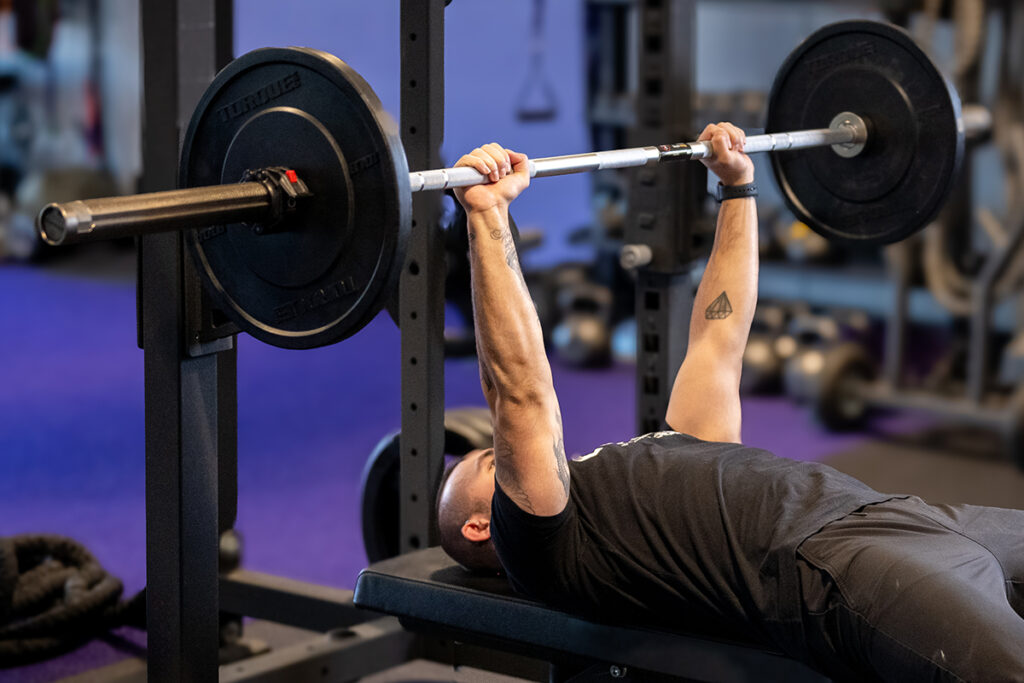
The important word is quality. Adding exercises simply to make a workout longer is not productive. Ten different chest movements performed with poor focus are usually less effective than two or three movements performed with excellent technique and consistent effort.
Start with a simple full body routine two or three times per week, or an upper body and lower body split completed four times per week. Repeat the key movements long enough to improve at them. Changing your entire workout every week makes it harder to measure progress and master technique.
Tip Five: Take Recovery as Seriously as Your Workouts
Muscle growth does not happen while you are lifting a dumbbell. Training creates the stimulus, but recovery is when your body repairs and adapts to that stimulus. Beginners often underestimate this because the gym session feels like the most important part of the process. It is important, but it is only one part of the equation.
Sleep is one of the most valuable recovery tools available. Poor sleep can negatively affect physical performance, recovery, appetite regulation, and the hormonal environment that supports training adaptation. Adults should generally aim for seven to nine hours of sleep per night. If that sounds unrealistic at first, improve what you can. Go to bed at a more consistent time, reduce bright screen use before bed, and create a bedroom environment that is dark and cool.
Rest days are useful too. They do not make you lazy or less committed. They help you return to training with better performance and a lower chance of developing persistent aches and excessive fatigue. You can still walk, stretch, cycle gently, or play a sport on rest days, but avoid turning every day into a hard training day.
You should also manage soreness sensibly. Muscle soreness is common when you begin training or introduce a new exercise, but it is not a reliable measure of workout quality. A good program should make you stronger and more capable, not leave you so sore that you cannot train properly for several days. If soreness is severe, reduce the number of sets, use lighter weights, and build up gradually.
Recovery also includes stress management. Work, family responsibilities, travel, and poor sleep can all affect your ability to train hard. On difficult weeks, it is better to complete a shorter workout than skip the gym entirely. Consistency beats perfection.
A Simple Way to Put These Tips Into Practice
A beginner could train three times per week using a full body program. Each workout could include one lower body pushing movement, one lower body pulling movement, one chest press, one upper back pull, and a small amount of direct work for the shoulders or arms.
Keep the exercises consistent for at least six to eight weeks. Use controlled repetitions, stop most sets with one to three repetitions left, and record every session. When you can complete the upper end of your target rep range with good form, increase the load slightly.
3 Best Exercises for Beginners that Want to Tone Their Leg Muscles
Support those workouts with enough protein, regular meals, and consistent sleep. You do not need expensive supplements, complicated workout splits, or a perfect diet. The basics work exceptionally well when you apply them consistently.
The Bottom Line
Building muscle faster as a beginner comes down to doing the simple things well. Get stronger in fundamental exercises, train close enough to failure, eat enough protein and calories, complete enough quality weekly sets, and recover properly.
These habits are not temporary tricks. They are the foundations of effective muscle building at every level. Start with a manageable program, stay patient, and focus on making small improvements week after week. That is how beginners turn early motivation into visible, lasting progress.
References
- American Academy of Sleep Medicine and Sleep Research Society (2015) ‘Recommended amount of sleep for a healthy adult: A joint consensus statement of the American Academy of Sleep Medicine and Sleep Research Society’, Sleep, 38(6), pp. 843 to 844.
- Grgic, J., Schoenfeld, B.J., Davies, T.B., Lazinica, B., Krieger, J.W. and Pedisic, Z. (2018) ‘Effect of resistance training frequency on gains in muscular strength: A systematic review and meta analysis’, Sports Medicine, 48(5), pp. 1207 to 1220.
- Helms, E.R., Aragon, A.A. and Fitschen, P.J. (2014) ‘Evidence based recommendations for natural bodybuilding contest preparation: Nutrition and supplementation’, Journal of the International Society of Sports Nutrition, 11, 20.
- Jager, R., Kerksick, C.M., Campbell, B.I., Cribb, P.J., Wells, S.D., Skwiat, T.M., Purpura, M., Ziegenfuss, T.N., Ferrando, A.A., Arent, S.M., Smith Ryan, A.E., Stout, J.R., Arciero, P.J., Ormsbee, M.J., Taylor, L.W., Wilborn, C.D., Kalman, D.S., Kreider, R.B., Willoughby, D.S., Hoffman, J.R., Krzykowski, J.L., Antonio, J. and International Society of Sports Nutrition (2017) ‘International Society of Sports Nutrition position stand: Protein and exercise’, Journal of the International Society of Sports Nutrition, 14, 20.
- Krieger, J.W. (2010) ‘Single versus multiple sets of resistance exercise for muscle hypertrophy: A meta analysis’, Journal of Strength and Conditioning Research, 24(4), pp. 1150 to 1159.
- Morton, R.W., Murphy, K.T., McKellar, S.R., Schoenfeld, B.J., Henselmans, M., Helms, E., Aragon, A.A., Devries, M.C., Banfield, L., Krieger, J.W. and Phillips, S.M. (2018) ‘A systematic review, meta analysis and meta regression of the effect of protein supplementation on resistance training induced gains in muscle mass and strength in healthy adults’, British Journal of Sports Medicine, 52(6), pp. 376 to 384.
- Schoenfeld, B.J., Grgic, J., Ogborn, D. and Krieger, J.W. (2017) ‘Strength and hypertrophy adaptations between low versus high load resistance training: A systematic review and meta analysis’, Journal of Strength and Conditioning Research, 31(12), pp. 3508 to 3523.
- Schoenfeld, B.J., Ogborn, D. and Krieger, J.W. (2017) ‘Dose response relationship between weekly resistance training volume and increases in muscle mass: A systematic review and meta analysis’, Journal of Sports Sciences, 35(11), pp. 1073 to 1082.
- Schoenfeld, B.J., Grgic, J., Van Every, D.W. and Plotkin, D.L. (2021) ‘Loading recommendations for muscle strength, hypertrophy, and local endurance: A re examination of the repetition continuum’, Sports, 9(2), 32.
- Vieira, A.F., Umpierre, D., Teodoro, J.L., Lisboa, S.C., Baroni, B.M., Izquierdo, M. and Cadore, E.L. (2021) ‘Effects of resistance training performed to failure or not to failure on muscle strength, hypertrophy, and power output: A systematic review with meta analysis’, Journal of Strength and Conditioning Research, 35(4), pp. 1165 to 1175.
Key Takeaways
| Tip | What to do | Why it helps |
|---|---|---|
| Get stronger in core exercises | Track your lifts and aim for gradual improvement | Progressive overload gives your muscles a reason to adapt |
| Train with real effort | Finish most sets with one to three repetitions left | Hard sets recruit more muscle fibers and create a stronger growth stimulus |
| Prioritize protein and calories | Eat around 1.6 grams of protein per kilogram of body weight daily | Protein supports muscle repair and growth after training |
| Use enough weekly volume | Train each major muscle group with several challenging sets each week | Regular exposure to quality training supports hypertrophy |
| Protect your recovery | Sleep seven to nine hours and include rest days | Recovery allows training adaptations to take place |